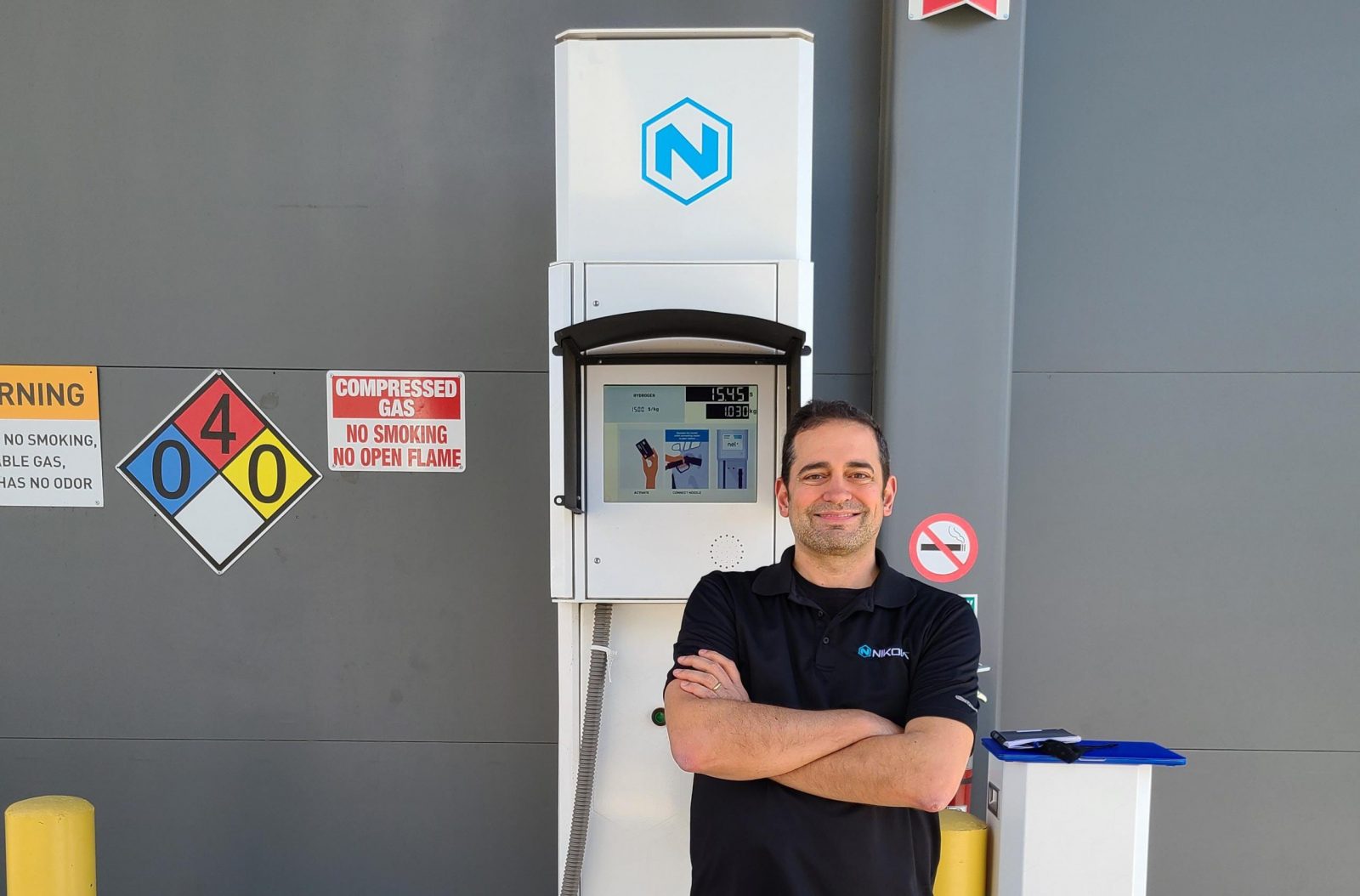
That’s a far cry from the 700 stations at $17 million a station that Nikola outlined in its pitch deck in 2020. It’s unclear how much Nikola will pay per kilogram of production. But it probably will be substantially more than Milton’s claim of sub-$4 a kilogram. Government funding will help shave several dollars off per kilogram.
Land purchased for hydrogen-making hub
Nikola plans to begin series production of hydrogen-powered Class 8 fuel cell daycab variants of its battery-electric Tre model in its plant in Coolidge, Arizona. That’s about 90 miles east of Buckeye. The Buckeye hydrogen hub will produce 30 metric tons per day in its first phase. It will scale to 50 metric tons per day at completion.
300 metric tons per day
Nikola aims to develop access to up to 300 metric tons of low-carbon hydrogen supply per day. It is counting on the IRA and other federal and state incentives to reach cost parity with diesel trucks.
“The energy and climate investments included in the IRA are anticipated to help accelerate our strategic initiatives and drive new growth opportunities,” Nikola President Michael Lohscheller said.
“Given the expected scale of our hydrogen business model, and our early mover advantage, we believe Nikola is ideally positioned to benefit from nearly every aspect of the legislation at a scale ahead of current industry participants.”