Belgian tanker fleet owner has contracted the vessels to be built by South Korea’s Daehan Shipbuilding Group (DHSC), with delivery scheduled two years out
Euronav will add two Suezmax tankers to its more than 70-vessel fleet after the conclusion of a contract with DHSC.
The South Korean shipyard, recently acquired and rebranded as DH Shipbuilding, is a favourite with Greek tanker owners and operators, and the new contract will push the yard’s current orderbook to 18 tankers, including six LR2 tankers for Tsakos Energy Navigation, three Aframax tankers for Atlas Maritime (Leon Patitsas interests), two Aframax tankers for Pleiades Shipping (Constantine Peraticos interests), and two LR2 tankers for Eastern Mediterranean (Thanasis Martinos interests) in addition to Euronav’s Suezmax sister vessels.
The two new Suezmaxes will also be sister vessels to a pair that Euronav had built at the same yard and took delivery of in early 2022, 157,310-dwt Cedar and Cypress tankers.
Euronav has three more Suezmax newbuilding vessels contracted and under construction with deliveries scheduled for Q1 and Q2 2023.
The Q3 2024 delivery schedule for Euronav’s latest order with DHSC is further indication that 2024 represents the earliest available delivery date for large tanker newbuilding deliveries, with shipyards seeing slots for large vessels snapped up as part of extensive LNG and container ship newbuilding initiatives.
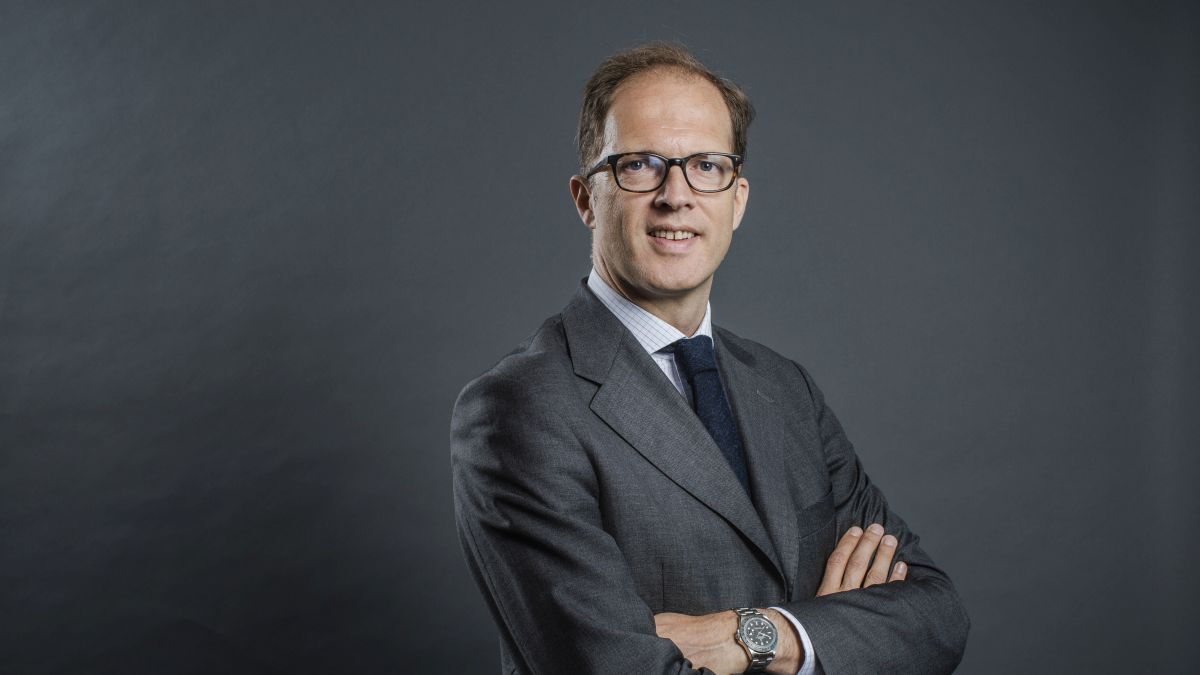
The two-year delivery timeline was hailed as “very attractive” by Euronav chief executive Hugo De Stoop, who acknowledged the competitive landscape for large-vessel newbuilding contracts.
“As a market leader in our segment, Euronav has been able to source a highly competitive contract with a very attractive delivery schedule. Sustained elevated contracting activity from other shipping segments has reduced available capacity to build crude tankers, at a time when the sector needs to replace maturing vessels with more environmentally friendly designs,” Mr De Stoop said.
The Euronav fleet’s environmental credentials are one element of an ongoing battle for control of the company and its future direction by some of Euronav’s major stakeholders, withEuronav’s largest stakeholders, Compagnie Maritime Belge (CMB), owned by the Saverys family, facing loss of control over the company’s direction if a bid by shipping mogul John Fredriksen’s Frontline tankers group is successful.
In July, Frontline and Euronav jointly announced a stock-for-stock voluntary share exchange in which Frontline is posting 1.45 of its shares for every Euronav share. Under the terms of the deal, Mr De Stoop would be chief executive of the combined group, which would retain the Frontline name, and Frontline’s current chief executive Lars Barstad would join the board of the newly integrated company whose combined fleet would have nearly 150 vessels and a market capitalisation of more than US$4Bn.
“Frontline, with a fleet of 146 vessels, will be able to offer value-enhancing services for our customers and increase fleet utilisation and revenues which will benefit all stakeholders. I am very excited and give my full support and commitment to this combined platform,” Frontline owner John Fredriksen said of the proposed merger.
During the course of several months of public relations wars and tit-for-tat stock purchases between Euronav’s competing interests, CMB and the Saverys have expressed the belief that Euronav should pursue a different strategy that would diversify the company into other shipping asset types and focus on decarbonisation.
“CMB believes this will create positive value for all of Euronav’s stakeholders, not least its employees, and make the company ’future-proof’. CMB is of the opinion this alternative strategy is in Euronav’s best interest. This strategy does not mean Euronav would sell all of its tankers at once, just before a tanker upcycle. CMB continues to believe the tanker market will generate good returns in the years to come, but that cash flows from oil transportation should be reinvested in the diversification and decarbonisation of the Euronav fleet,” a statement from CMB said.
According to Euronav, its latest vessel-building contract is “consistent with the core company objectives and strategy. The vessels are the latest generation of eco-Suezmax tankers and are fitted with both exhaust gas scrubber technology and ballast water treatment systems. The vessels have the structural notation to be LNG-ready, with both parties working closely to also have the structural notation to be ammonia and methanol-ready. This provides the option to switch to other fuels at a later stage,” Euronav said.