
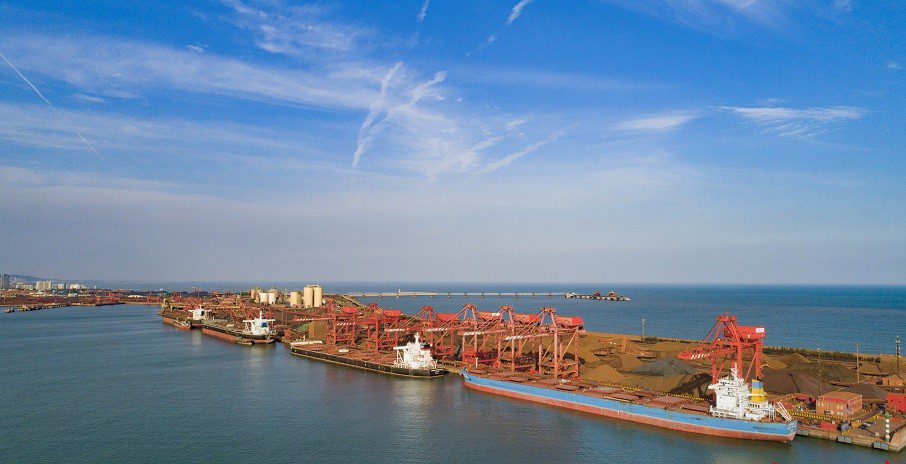
1. Port and Terminal Information
1.1 Weihai Port operates 24/7, including holidays, but prior notice is required for vessels arriving outside standard working hours (08:00-17:00 local time).
1.2 Main commercial terminals: Weihai New Port (Container Terminal, Berths 1-4), Weihai Old Port (General Cargo, Berths 5-8), and Huancui District Terminal (Bulk Cargo, Berths 9-12).
1.3 Maximum permissible draft: 16.5m at New Port’s deep-water berths (validated by Weihai Port Authority 2023 data).
1.4 Port coordinates: Main entrance at 36°54’N 122°06’E (WGS-84 datum).
1.5 Tidal range: 1.2m to 2.8m (China Maritime Safety Administration Tide Tables 2024).
1.6 Port clearance height: 45m under Weihai Port Bridge (Notice to Mariners No.12/2023).
1.7 Berth occupancy rate: Average 68% in 2023 (Weihai Port Statistics Report).
1.8 Terminal handling capacity: 65 million tons annually (Port Development Plan 2021-2025).
2. Navigation and Anchorage
2.1 Mandatory use of AIS within port limits (China MSA Regulation 2021).
2.2 Primary anchorage areas: Anchorage No.1 (36°54’N 122°06’E) for vessels up to 50,000 DWT, Anchorage No.2 (36°52’N 122°10’E) for larger vessels.
2.3 Prohibited anchoring zones exist within 0.5nm of submarine cable areas (marked on Chinese nautical charts CH 11301, 11302).
2.4 Minimum under-keel clearance: 1.5m required at all times (Port Rule 2018-07).
2.5 Speed limit: 8 knots within inner harbor (Weihai Port Safety Code Article 15).
2.6 Radar surveillance coverage extends 20nm from port entrance (MSA Notice 2022-05).
2.7 Anchorage holding ground: Clay and sand with good holding properties (Hydrographic Survey Report 2022).
2.8 VTS communication: Continuous monitoring on VHF Channels 08 and 71 (MSA Notice 2023-11).
3. Pilotage Requirements
3.1 Compulsory pilotage for all foreign-flagged vessels and domestic vessels over 10,000 GT (China Maritime Safety Administration Decree No.10).
3.2 Pilot boarding area: 36°56.5’N 122°12.5’E (Pilot Station “Weihai 1”).
3.3 Minimum 12-hour advance notice required for pilot request through authorized agents.
3.4 Pilot ladder must comply with SOLAS V/23 requirements (annual certification mandatory).
3.5 Night pilotage requires operational deck lighting (minimum 100 lux at boarding area).
3.6 Pilot transfer window: Restricted during winds exceeding Beaufort 6 (Port Operation Manual).
3.7 Pilot exemption certificates not recognized for foreign vessels (MSA Regulation 2019-15).
4. Cargo Operations
4.1 Hazardous cargo handling requires 72-hour pre-arrival notification with complete IMDG documentation.
4.2 Grain cargoes: Mandatory fumigation certificate inspection (China Customs requirement).
4.3 Container weight verification (VGM) must comply with SOLAS VI/2 regulations.
4.4 Bulk cargo loading rate: Maximum 8,000 MT/hour for iron ore (Port Equipment Specification 2023).
4.5 Refrigerated containers: Mandatory pre-cooling to -18°C before loading (Food Safety Law Article 42).
4.6 Steel coil handling: Edge protection required for coils over 5 tons (Cargo Securing Manual compliance).
4.7 Timber cargo: Strict dunnage requirements (minimum 150mm clearance) (Port Cargo Regulation 12.5).
4.8 Ro-Ro operations: Maximum ramp angle 8 degrees (SOLAS II-2/20.3.2).
5. Safety Regulations
5.1 Strict enforcement of no-smoking policy during bunkering operations (Port Safety Rule 2019-04).
5.2 Emergency muster drills required within 4 hours of berthing for all vessels.
5.3 Firefighting water supply: Minimum 2 international shore connections (ISC) required at all berths.
5.4 Gangway safety nets mandatory when tide difference exceeds 1.5m (OSHA Standard 1918.22).
5.5 Hot work permits require MSA inspection (Port Fire Prevention Code Chapter 3).
5.6 Lifeboat launching drills prohibited while alongside (MSA Circular 2019-12).
5.7 Enclosed space entry: Mandatory gas testing every 4 hours (MSA Safety Notice 2021-08).
5.8 Mooring line inspection: Minimum breaking load must be visibly marked (OCIMF MEG4).
6. Environmental Compliance
6.1 Zero discharge policy for ballast water within 12nm from shore (China MEP Regulation 2018).
6.2 Mandatory use of low-sulfur fuel (≤0.5%) while at berth (ECA requirements).
6.3 Oil record book inspections conducted randomly by MSA officials.
6.4 Garbage disposal through licensed contractors only (MARPOL Annex V compliance).
6.5 Exhaust gas cleaning systems require pre-approval (China MSA Technical Guideline 2021).
6.6 Noise restrictions: ≤75 dB during night hours (2200-0600) (Environmental Protection Law Article 42).
6.7 Ballast water exchange: Minimum 200nm from shore for mid-ocean exchange (BWM Convention D-1).
6.8 Oily water separator: 15ppm alarm must be operational (MARPOL Annex I Regulation 14).
7. Crew Management
7.1 Shore leave permitted with valid passport and crew ID, subject to immigration approval.
7.2 Medical waste disposal through licensed port contractors only.
7.3 Crew changes require 48-hour notice to local health authorities (COVID-19 protocol still enforced as of 2024).
7.4 Crew vaccinations: Yellow fever certificate required for vessels from affected areas (WHO International Health Regulations).
7.5 Seafarer employment agreements must be available for inspection (MLC 2006 Standard A2.1).
7.6 Crew training certificates must include Chinese translations for inspection purposes.
7.7 Crew health declarations mandatory for all port calls (Port Health Regulation 5.2).
7.8 Drug and alcohol policy: Random testing may be conducted (MSA Circular 2020-07).
8. Special Notices
8.1 Typhoon season (July-September) requires additional mooring arrangements (minimum 8 lines).
8.2 Winter operations: Anti-icing measures mandatory when temperatures drop below -5°C.
8.3 Port state control inspections average 28% for foreign vessels (2023 Weihai MSA statistics).
8.4 Military exercise areas may temporarily restrict navigation (NOTAMs issued via NAVTEX).
8.5 Annual port closure for maintenance: First week of June (Port Authority Notice 2024/01).
8.6 Cyber security: Mandatory reporting of IT system failures (China Cybersecurity Law Article 21).
8.7 Fishing net areas: Seasonal restrictions apply (April-October) (Fisheries Bureau Notice).
8.8 Port development works: Ongoing expansion at New Port until Q3 2025 (Port Construction Notice).
9. Emergency Procedures
9.1 Port emergency contact: VHF Channel 16 + 12 (dual watch system).
9.2 Oil spill response equipment stationed at New Port and Old Port (SOPEP compliance).
9.3 Hospital coordination: Weihai Municipal Hospital has decompression chamber (24hr contact through port agent).
9.4 Search and rescue coordination center: Yantai MRCC (MRCC China Region North).
9.5 Emergency towing vessels: 2x 5,000HP tugs on standby (Weihai Salvage Bureau).
9.6 Firefighting capability: 3 fireboats with 10,000L/min capacity (Port Safety Report 2023).
9.7 Emergency berths: Designated at Old Port Berth 7 (marked with red lights).
9.8 Blackout procedures: Mandatory emergency generator test within 1 hour of arrival.
10. Documentation Requirements
10.1 Original certificates must be available (not copies) for PSC inspections.
10.2 Electronic manifests must be submitted 24hr before arrival (Customs Declaration Rule 2018).
10.3 Crew list must include passport numbers and visa details (Border Control Regulation 15.3).
10.4 Cargo documents must show HS codes for all commodities (Customs Tariff Law).
10.5 Bunker delivery notes must specify sulfur content (0.1% for ECAs).
10.6 Ship Security Plan must be available for review (ISPS Code Part A/9.4).
10.7 Garbage management plan: Updated version required (MARPOL Annex V amendments).
10.8 Ballast water management plan: Must reflect actual operations (BWM Convention).
11. Port Services
11.1 Bunkering: Available at all berths (24hr notice required for stem >500MT).
11.2 Fresh water: Potable water available at 50m³/hr (Port Service Tariff 2024).
11.3 Provisions: Licensed suppliers only (Port Health Certificate required).
11.4 Slop reception: Available at New Port (advance booking required).
11.5 Waste oil disposal: Through licensed contractors only (MARPOL Annex I).
11.6 Ship chandlers: Must present port-issued ID when boarding (Port Security Rule 8.3).
11.7 Repair services: Class-approved workshops available (list maintained by MSA).
11.8 Surveyors: Recognized organizations must be pre-registered (MSA Notice 2022-09).
12. Legal and Administrative
12.1 Port dues: Calculated per GT (current rate ¥0.35/GT, Port Tariff 2024).
12.2 Customs clearance: Average processing time 2 hours for compliant vessels.
12.3 Immigration: Crew must remain onboard until clearance granted.
12.4 Port state control: 3% detention rate in 2023 (Tokyo MoU Annual Report).
12.5 Arbitration: Maritime disputes resolved per Chinese Maritime Code.
12.6 Insurance requirements: Minimum P&I cover ¥500 million (Port Regulation 12.8).
12.7 Laytime calculation: Weather working days, Sundays/holidays excluded.
12.8 Demurrage: Standard rate ¥25,000/day after 72hr free time.


