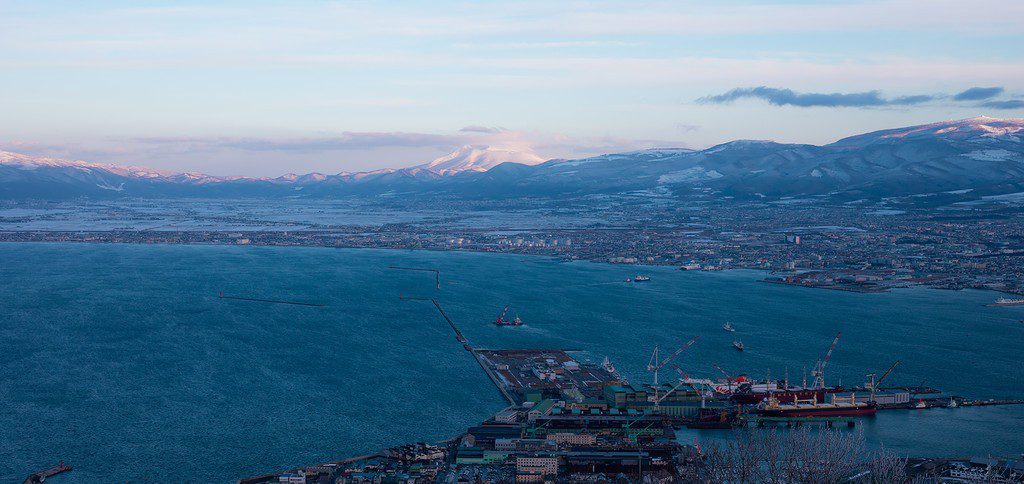

1. Port and Terminal Information
1.1 Hakodate Port operates 24/7, but specific terminals may have restricted hours. Confirm operational schedules with the Hakodate Port Authority in advance.
1.2 Container Terminal: Maximum draft of 12.5m, LOA limit of 250m. Ro-Ro berths have a 10.5m draft restriction.
1.3 Breakbulk terminals require pre-arrangement for heavy lifts exceeding 50 tons. Submit cargo manifests 72 hours prior.
1.4 All terminals use ISO standard mooring arrangements. Provide mooring plan during pre-arrival documentation.
1.5 Port limits: Defined within 41°42’N to 41°50’N and 140°40’E to 140°48’E (Japan Coast Guard Notice No. 12/2023).
1.6 Prohibited zones: 0.3nm exclusion radius around Hakodate Breakwater Light (Fl R 5s 18m 10M).
2. Navigation and Pilotage
2.1 Compulsory pilotage zone begins at 3nm from the port entrance (41°46’N, 140°43’E). Pilot boarding area subject to weather conditions.
2.2 Main channel depth maintained at 13m (datum: LWS). Under-keel clearance must exceed 10% of vessel draft.
2.3 Tide range: 1.2m (neap) to 1.8m (spring). Currents can reach 2.5 knots during ebb tide in the inner harbor.
2.4 VHF Channel 16/12 for pilot communication. Pilot ladder must comply with SOLAS requirements (newest amendment).
2.5 Radar coverage: VTS monitors vessels within 20nm radius (JCG Radar Station Hakodate).
2.6 Mandatory AIS transmission required within port limits (Japan Maritime Safety Law Article 56-2).
3. Anchorage Regulations
3.1 Designated anchorage areas (A-1 to A-3) with depths from 15-30m. Holding ground reported as good clay.
3.2 Anchoring prohibited within 0.5nm of submarine cables (chart markings: JP-147/2021).
3.3 Stand-by vessels must maintain engine readiness when anchored outside port limits.
3.4 Anchorage holding capacity: Maximum 10 vessels simultaneously (LOA <200m each).
3.5 Emergency anchorage (Area E) reserved for vessels in distress (contact JRCC Hakodate on VHF Ch16).
4. Cargo Operations
4.1 Hazardous materials: IMDG Class 1/2.1/2.3 require special permits (apply 10 working days in advance).
4.2 Grain loading: Maximum moisture content 14.5% for bulk carriers. Mandatory pre-loading inspection.
4.3 Refrigerated containers: Terminal power supply 440V/60Hz. Provide plug compatibility list before arrival.
4.4 Timber cargo: Anti-slip materials mandatory for deck loads exceeding 3m height.
4.5 Steel coils: Maximum single lift weight 30 tons at general cargo berths (Pier 2-3).
5. Safety and Emergency
5.1 Port emergency response team can handle Tier-1 oil spills (up to 10 tons). Larger incidents require external support.
5.2 Hospital with decompression chamber located 3km from port (Hakodate City Hospital).
5.3 Mandatory safety briefing for all crew going ashore during winter (November-March) due to icy conditions.
5.4 Firefighting capacity: 2 fireboats with 5,000m³/hr pumping capacity (JCG Standard).
5.5 Emergency muster stations clearly marked at 200m intervals along quays.
6. Environmental Compliance
6.1 Strict ballast water management: D-2 standard required since 2020. Port sampling conducted randomly.
6.2 Oily waste reception facilities available at all berths (advance notice required for quantities >10m³).
6.3 Noise restrictions (below 65dB) enforced 2200-0600 in residential proximity areas.
6.4 Prohibited discharges: Any garbage within 12nm (Japan’s Special Area designation under MARPOL).
6.5 Air emission control: Sulfur content in fuel ≤0.10% while at berth (MOE Ordinance No. 34).
7. Administrative Requirements
7.1 e-Declaration system mandatory for all vessels (Japan Customs electronic platform).
7.2 Crew changes permitted with 48-hour notice. Immigration procedures handled at the port administration building.
7.3 Port dues include basic harbor fee (¥0.35/GT) plus additional service charges. Electronic payment preferred.
7.4 Ship’s garbage must be logged in Japanese/English bilingual format (MLIT Form C-112).
7.5 Last port clearance certificate must be presented for vessels arriving from plague-infected areas.
8. Weather Considerations
8.1 Winter operations (December-February): Average temperature -3°C, frequent snow showers. Anti-icing measures required.
8.2 Typhoon season (July-October): Port may close when winds exceed 25m/s. Designated storm moorings available.
8.3 Fog occurs 15-20 days annually (April-June), reducing visibility below 500m. Radar-assisted navigation recommended.
8.4 Wave restrictions: Berthing prohibited when significant wave height exceeds 2.5m at breakwater.
8.5 Real-time weather updates available via JMA VHF Weather Broadcast (Ch21, hourly updates).
9. Special Notices
9.1 Annual sea festival (August) may affect port operations – check exact dates with agents.
9.2 Military exercise areas occasionally established near Tsugaru Strait – monitor NAVTEX warnings.
9.3 Underwater construction works planned near Pier 4 (2024 Q3) – updated charts will be issued via JHA Notice.
9.4 Temporary speed limit: 8 knots within 1nm of fishing zones (marked on NOAA Chart 971).
9.5 Night navigation restrictions: Vessels >10,000GT require extra tug escort 2000-0500 local time.
11. Vessel Traffic Services (VTS)
11.1 Mandatory VTS reporting points at:
– 41°45’N 140°42’E (Entrance Point Alpha)
– 41°48’N 140°45’E (Turning Point Bravo)
11.2 Reporting requirements include: vessel particulars, ETA, dangerous goods, and defects affecting navigation.
11.3 VTS operating frequency: VHF Channel 14 (156.700 MHz), continuous monitoring.
11.4 VTS service hours: 24/7 with English/Japanese bilingual operators.
12. Tug Services
12.1 Minimum tug requirements:
– Vessels 10,000-30,000 GT: 2 tugs
– Vessels >30,000 GT: 3 tugs (1 must be >4000 BHP)
12.2 Tug availability: 4 harbor tugs (2200-5000 BHP) on standby 24/7.
12.3 Tug connection: All vessels must have both fore and aft mooring lines ready for tug operations.
13. Port Security
13.1 ISPS Level 1 security measures enforced at all times.
13.2 Restricted areas clearly marked with red/yellow stripes – unauthorized access prohibited.
13.3 Mandatory gangway watch maintained when alongside (minimum 1 crew member).
13.4 Port security patrols conduct random inspections (Japan Coast Guard Regulation 15-3).
14. Bunkering Operations
14.1 Bunker suppliers must be approved by Hakodate Port Authority (current list available at port office).
14.2 Advance notice required: 24 hours for <500MT, 48 hours for >500MT.
14.3 Bunkering prohibited during cargo operations involving flammable materials.
14.4 Mandatory drip trays and spill containment equipment required during all bunkering operations.
15. Crew Welfare Facilities
15.1 Seafarers’ Center located at Pier 6 (open 0800-2200 daily).
15.2 Free shuttle service to city center (departs hourly from main gate).
15.3 Medical clinic at Terminal 2 (open 0900-1700, emergency contact VHF Ch12).
15.4 Fresh water supply available at all berths (advance notice required for quantities >100MT).
16. Dangerous Goods Handling
16.1 Class 1 explosives: Special berth at Pier 7 only (prior coordination with JCG required).
16.2 Gas carriers: Must use designated LNG terminal (prior 72-hour notice mandatory).
16.3 Toxic substances: Additional mooring lines required (minimum 8 lines for vessels >150m LOA).
16.4 Radioactive materials: Special permit from Japan Nuclear Regulation Authority required.
18. Ice Navigation (Winter Operations)
18.1 Ice concentration reports broadcast daily December-March (JMA Ice Bulletin).
18.2 Recommended hull coatings for winter: ISO 12944-C5-M certification required.
18.3 Minimum engine coolant temperature: -25°C rating mandatory November-April.
18.4 Deck equipment must be winterized (hydraulic systems with proper antifreeze).
19. Customs and Immigration
19.1 Advance crew list submission via e-Crew system 24 hours before arrival.
19.2 Prohibited items: Certain medications (check Japan Customs website for updated list).
19.3 Immigration clearance available 24/7 for vessels on scheduled routes.
19.4 Bonded stores declaration required before any stores delivery.
20. Port State Control
20.1 Tokyo MOU inspection rate: 18% for foreign vessels (2023 data).
20.2 Common deficiencies found: Fire doors, lifeboat equipment, and oil record book entries.
20.3 Priority inspection criteria: Vessels >15 years old or with previous detentions.
20.4 PSC inspection duration: Typically 4-6 hours for routine inspections.
22. Port Communication Protocols
22.1 Primary port control frequency: VHF Channel 12 (156.600 MHz) for all operational communications
22.2 Emergency/distress frequency: VHF Channel 16 (156.800 MHz) monitored 24/7
22.3 Digital communication: Mandatory use of ECDIS with ENC updates (latest edition: JP1Y112D)
22.4 Port email alerts: Subscribe to hakodateportnotices@mlit.go.jp for critical updates
23. Mooring and Berthing Requirements
23.1 Minimum mooring lines required:
– Vessels <150m LOA: 4 head lines + 4 stern lines + 2 spring lines
– Vessels >150m LOA: 6 head lines + 6 stern lines + 4 spring lines
23.2 Synthetic mooring ropes prohibited – only steel wire or certified synthetic/steel combination allowed
23.3 Tidal compensators mandatory for vessels with >2m draft variation during berthing
24. Cargo Handling Equipment
24.1 Port-owned cranes:
– 2 x 50-ton mobile harbor cranes (maximum outreach 40m)
– 4 x 30-ton gantry cranes (spreader systems for containers)
24.2 Maximum working load limits displayed at each crane – must not be exceeded
24.3 Specialized equipment available with 72-hour notice:
– Heavy lift rigging (up to 150 tons)
– Refrigerated container monitoring systems
25. Port Infrastructure Details
25.1 Berth specifications:
– Container Terminal: 450m total quay length, depth 12.5m
– General Cargo: 320m total quay length, depth 9.5m
– Ro-Ro Terminal: 280m ramp, depth 10.5m
25.2 Turning basin diameter: 350m (minimum) maintained at 13m depth
25.3 Air draft restrictions: 45m clearance under harbor bridge (Chart Datum)
26. Waste Management Procedures
26.1 Mandatory waste segregation:
– Type A: Oily waste (red containers)
– Type B: Food waste (green containers)
– Type C: Operational waste (blue containers)
26.2 Waste recording: MARPOL Annex V logbook entries verified during PSC inspections
26.3 Special waste (batteries, chemicals): Require separate handling request 48h prior
27. Vessel Repair Services
27.1 Approved repair contractors list available at Port Authority office
27.2 Hot work permits: Require safety inspection 2 hours prior to work commencement
27.3 Dry docking facilities:
– 1 x 30,000 DWT graving dock
– 2 x floating docks (15,000 DWT capacity each)
28. Local Maritime Regulations
28.1 Speed limits:
– Inner harbor: 6 knots
– Approach channel: 8 knots
28.2 Special areas:
– No-wake zones near passenger terminals
– No-anchoring zones marked by yellow buoys
28.3 Mandatory regulations:
– Japan Ship Safety Act Article 34 (mooring safety)
– Port Regulations Ordinance Chapter 5 (pollution control)
29. Emergency Contact Information
29.1 Port Authority Emergency: +81-138-27-8110 (24/7)
29.2 Japan Coast Guard Hakodate: VHF Ch16 or +81-138-52-0110
29.3 Medical Emergency: Dial 119 (English-speaking operators available)
29.4 Spill Response: Hakodate Marine Pollution Control Center +81-138-26-5100
31. Port Entry and Departure Procedures
31.1 Mandatory documents for port entry:
– e-Declaration (Japan Customs system)
– Crew list (approved by immigration)
– Maritime Declaration of Health
31.2 Pre-arrival notification timeline:
– 24 hours for general cargo vessels
– 48 hours for hazardous cargo vessels
31.3 Departure clearance:
– Obtain Port Clearance Certificate from Harbor Master’s office
– Final crew count verification required
32. Ship Chandler Services
32.1 Approved providers:
– Hakodate Marine Supplies Co. Ltd. (ISO 9001 certified)
– Nippon Ship Services (24/7 operation)
32.2 Delivery regulations:
– All deliveries must be pre-registered with port security
– Alcohol deliveries require special permit
32.3 Cashless transactions preferred – major credit cards accepted
33. Port Meteorological Services
33.1 Real-time weather station data available at:
– Berths 1-3: Display screens every 200m
– Port Control Office (updated hourly)
33.2 Storm warning signals:
– Stage 1 (caution): Yellow flag
– Stage 2 (warning): Red flag
– Stage 3 (emergency): Red flag with black cross
33.3 Free weather briefing service available from JMA Hakodate Office
34. Vessel Inspection Services
34.1 Classification society representatives available:
– NKK (Nippon Kaiji Kyokai)
– ABS (American Bureau of Shipping)
– LR (Lloyd’s Register)
34.2 Inspection scheduling:
– Minimum 24 hours notice required
– Priority given to vessels with expiring certificates
34.3 Common inspection items:
– Life-saving appliances
– Fire-fighting systems
– Navigation equipment
35. Port Tariffs and Fees
35.1 Standard charges (2024 rates):
– Port dues: ¥0.38 per GT (minimum ¥38,000)
– Pilotage: ¥25,000 per movement
– Berth hire: ¥12,000 per hour (vessels >10,000 GT)
35.2 Discounts available for:
– Environmentally friendly vessels (Green Award certified)
– Regular callers (5+ calls per year)
35.3 Payment methods:
– Electronic transfer (preferred)
– Cash (Japanese Yen only)
– Major credit cards
36. Port Security Levels
36.1 ISPS Level 1 (Normal):
– Single access point control
– Random baggage checks
36.2 ISPS Level 2 (Heightened):
– 100% ID verification
– Escorted visitors only
36.3 ISPS Level 3 (Exceptional):
– No vessel movements permitted
– Armed security patrols
37. Navigation Aids
37.1 Light characteristics:
– Hakodate Breakwater Light: Fl R 5s 18m 10M
– Channel Leading Lights: F G 15m 8M / F R 15m 8M
37.2 Buoyage system:
– IALA Region A (red to port)
– Special marks: yellow with X topmark
37.3 Radar reflectors:
– Mandatory for vessels <50m LOA
– Must be mounted minimum 4m above waterline
38. Crew Training Requirements
38.1 Mandatory certifications for shore access:
– Basic Safety Training (STCW)
– Port Security Awareness
38.2 Local regulations training:
– Waste management procedures
– Emergency response protocols
38.3 Available training facilities:
– Hakodate Maritime Training Center
– Japan Coast Guard Safety Courses
41. Dangerous Cargo Storage Regulations
41.1 IMDG Class 3-6 storage facilities:
– Temperature-controlled warehouse (15°C-25°C)
– Separate compartments for incompatible materials
41.2 Maximum storage periods:
– Explosives (Class 1): 72 hours maximum
– Flammable liquids (Class 3): 7 days maximum
41.3 Security requirements:
– 24/7 CCTV monitoring
– Double-lock system with port authority access control
42. Fresh Water Supply Specifications
42.1 Water quality standards:
– Meets WHO drinking water guidelines
– Monthly bacteriological testing conducted
42.2 Supply points:
– All berths equipped with ISO standard connections
– Maximum flow rate: 50m³/hour
42.3 Pre-order requirements:
– 12-hour notice for quantities >100m³
– Water analysis certificate available upon request
43. Port Lighting Requirements
43.1 Minimum illumination standards:
– Working areas: 200 lux minimum
– Walkways: 50 lux minimum
43.2 Vessel lighting during night operations:
– Deck lights must not interfere with port operations
– Navigation lights must remain visible at all times
43.3 Emergency lighting:
– Mandatory backup power for all critical areas
– Tested weekly during port stays
44. Vessel Maintenance Restrictions
44.1 Prohibited activities:
– Hull cleaning/painting without containment
– Major engine overhauls without permit
44.2 Permitted maintenance:
– Routine equipment checks
– Minor repairs with prior notification
44.3 Waste collection:
– All maintenance waste must be properly containerized
– Hazardous waste requires special disposal procedures
45. Passenger Vessel Requirements
45.1 Special provisions for cruise ships:
– Dedicated terminal with customs/immigration facilities
– Passenger gangways must meet ISO 5488 standards
45.2 Health protocols:
– Medical screening facilities available
– Quarantine area maintained at Terminal 3
45.3 Shore excursion management:
– Approved tour operators only
– Passenger counting system mandatory
46. Fishing Vessel Regulations
46.1 Designated fishing vessel areas:
– North Basin (Piers 9-11)
– Special ice supply facilities available
46.2 Catch handling requirements:
– Immediate cold storage mandatory
– Waste fish must be properly disposed
46.3 Seasonal restrictions:
– Increased surveillance during salmon season (May-September)
– Night operations limited to approved vessels
47. Port Cybersecurity Measures
47.1 Digital system protections:
– Mandatory antivirus software for all connected systems
– Two-factor authentication for port network access
47.2 Vessel system requirements:
– Regular penetration testing recommended
– Critical systems air-gapped from public networks
47.3 Incident reporting:
– Immediate notification for any cyber incidents
– Dedicated response team available 24/7
48. Icebreaking Services
48.1 Winter service availability:
– December 1 – March 31 annually
– 2 icebreakers on standby (3,000HP each)
48.2 Priority system:
1. Emergency vessels
2. Passenger ships
3. Cargo vessels
48.3 Service request procedure:
– Minimum 6-hour notice required
– Escort speed typically 8-10 knots
49. Port Sustainability Initiatives
49.1 Green port certifications:
– EcoPorts Standard (since 2022)
– ISO 14001 Environmental Management
49.2 Emission reduction programs:
– Shore power available at 3 berths
– Incentives for low-sulfur fuel use
49.3 Waste reduction targets:
– 50% reduction in port-generated waste by 2026
– 100% recycling of operational waste by 2028
51. Port Fuel Quality Standards
51.1 Bunker fuel specifications:
– Maximum sulfur content: 0.10% mass/mass
– Minimum flash point: 60°C (closed cup)
51.2 Fuel testing procedures:
– Sampling by independent surveyor mandatory
– Three sealed samples retained (vessel, supplier, port)
51.3 Alternative fuels available:
– LNG bunkering (pilot project at Berth 12)
– Biofuel blends (B20) by special arrangement
52. Vessel Sanitation Requirements
52.1 Mandatory inspections:
– Food storage areas
– Potable water systems
52.2 Pest control standards:
– No evidence of rodent activity
– Insect traps in food handling areas
52.3 Medical waste disposal:
– Special containers provided at health clinic
– Incineration service available
53. Port Workforce Regulations
53.1 Stevedore qualifications:
– Certified training program completion
– Annual safety refresher courses
53.2 Working hour limitations:
– Maximum 12 hours/day with 8 hours rest
– No consecutive night shifts permitted
53.3 Safety equipment requirements:
– High-visibility vests at all times
– Hard hats in operational areas
54. Navigation in Restricted Visibility
54.1 Procedures for fog conditions:
– Reduce speed to safe maneuvering speed
– Post additional lookouts
54.2 Radar-assisted berthing:
– Minimum 2 radar systems operational
– Continuous VTS communication required
54.3 Emergency anchoring provisions:
– Designated holding areas marked on charts
– Tug standby service available
55. Port Insurance Requirements
55.1 Minimum coverage limits:
– Third-party liability: ¥500 million
– Pollution liability: ¥1 billion
55.2 Mandatory insurance types:
– Protection & Indemnity (P&I)
– Hull & Machinery
55.3 Claims processing:
– Incident report within 24 hours
– Surveyor appointment within 48 hours
56. Special Cargo Handling
56.1 Oversized cargo procedures:
– Special transport route planning
– Night movement restrictions apply
56.2 Valuable cargo security:
– Armed guards available
– Secure storage areas
56.3 Live animal transport:
– Veterinary inspection on arrival
– Designated resting areas
57. Port Community System
57.1 Electronic data exchange:
– Single Window platform integration
– Real-time cargo tracking
57.2 Participating agencies:
– Customs
– Immigration
– Port Health
57.3 User requirements:
– Secure login credentials
– Data encryption standards
58. Winter Navigation Aids
58.1 Seasonal markings:
– Ice buoys (red and white stripes)
– Heated navigation lights
58.2 Special charts available:
– Winter edition harbor charts
– Ice concentration maps
58.3 Emergency equipment:
– Ice rescue sleds at key locations
– Cold water immersion suits
59. Port Performance Metrics
59.1 Key indicators:
– Average turnaround time: 18 hours
– Crane productivity: 25 moves/hour
59.2 Service level agreements:
– 95% on-time pilot service
– 99% power supply reliability
59.3 Customer feedback system:
– Digital rating platform
– Quarterly satisfaction surveys