1.Port Description
General Information
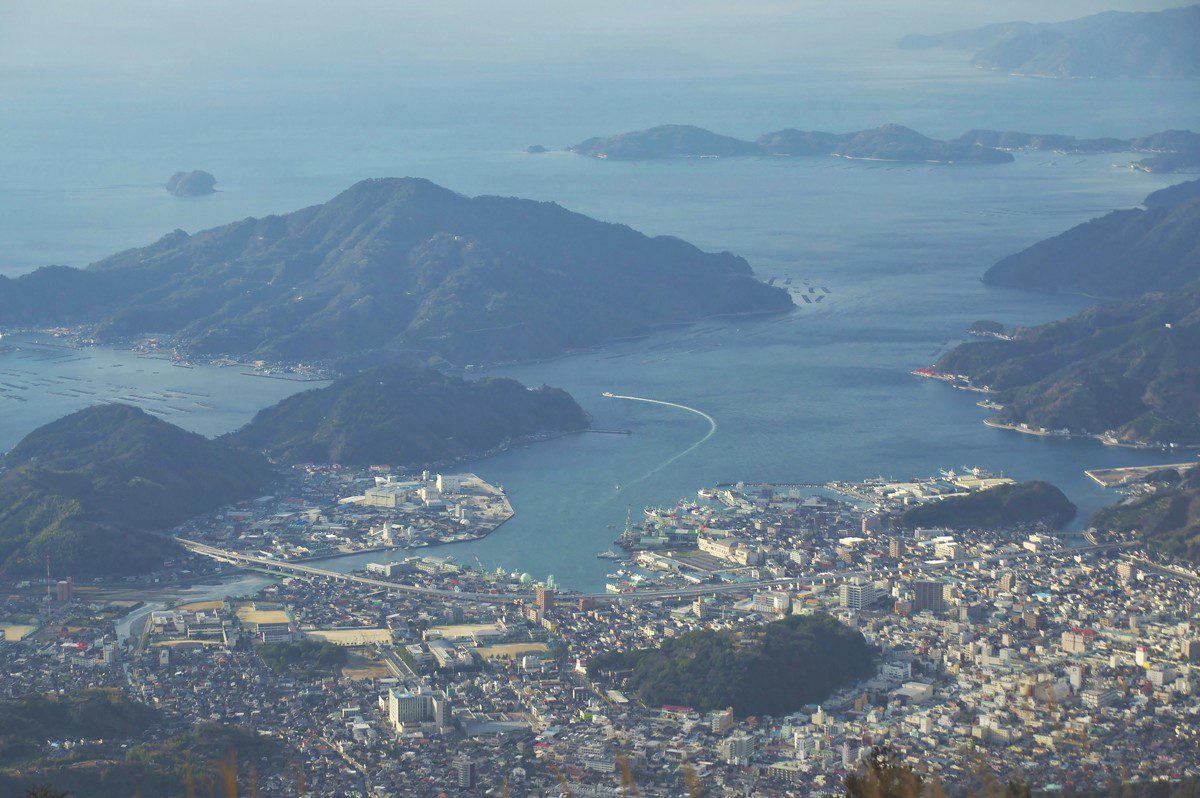
Uwajima Port is a regional commercial and fishing port located in Uwajima City, Ehime Prefecture, Japan. It serves as a key hub for local fisheries, coastal trade, and small-scale cargo operations. The port is managed by the Uwajima City government under the Ports and Harbors Act of Japan and supports regional economic activities. The port handles approximately 2.5 million tons of cargo annually, with fishing operations accounting for 60% of port activities.
Port Types
– By scale: Small port (Category 3 under Japanese port classification)
– By geographical location: Natural coastal harbor
– By purpose: Commercial port (Class B), Fishing port (1st grade)
– Special designation: Designated Important Fishing Port by Japanese government
Long./Lat.
Main Port Entrance: 33°13’30″N / 132°33’30″E (JGD2000 datum)
Port Office: 33°13’25″N / 132°33’40″E
Fishing Port Area: 33°13’15″N / 132°33’20″E
Time Zone
Japan Standard Time (JST), UTC+9. No daylight saving time observed. Port operations follow continuous 24-hour schedule with reduced staffing from 2200-0600 local time.
Port Location
Uwajima Port is situated on the western coast of Shikoku Island, facing the Uwa Sea (a sub-region of the Bungo Channel). The port is protected by natural headlands and artificial breakwaters. Urban development surrounds the port with industrial zones concentrated in the northern sector. The port’s hinterland includes Uwajima City (population ~70,000) and surrounding agricultural areas.
Port Limits
Defined by Uwajima City Port Regulations Article 3:
– Northern boundary: Line from 33°13’45″N/132°33’15″E to 33°13’45″N/132°33’45″E
– Southern boundary: Line from 33°13’15″N/132°33’15″E to 33°13’15″N/132°33’45″E
– Seaward boundary: 1.8 nautical miles from breakwater head (33°13’30″N/132°33’30″E)
– Total port area: 1.85 km² (land and water)
Load Lines
– International Load Line Certificate required for vessels >24m
– Seasonal zones: Tropical (April 1 – October 31), Summer (November 1 – March 31)
– Fresh water allowance: 1/48 of summer draft
– Timber load line not applicable (no timber cargo facilities)
Water Density
– Surface water density: 1.020-1.025 g/cm³ (varies seasonally)
– Minimum recorded density: 1.018 g/cm³ (rainy season)
– Density measurement available from port control upon request
Charts and Books
Mandatory navigation publications:
– Japanese Hydrographic Chart W127 (scale 1:25,000)
– Chart W126 for approaches (scale 1:50,000)
– Japan Coast Pilot Volume 3 (2023 edition or newer)
– List of Lights and Radio Signals (NP77)
Recommended additional publications:
– Tidal Current Charts for Seto Inland Sea
– Japan Tidal Tables (published annually by JHOA)
Port Restrictions
Vessel restrictions per Uwajima Port Ordinance No. 12:
– Maximum LOA: 150m (180m with special permission)
– Maximum beam: 25m (30m at designated berths)
– Maximum draft: 8.5m (main channel), 5.5m (fishing port)
– Air draft: 28m (limited by Ohashi Bridge clearance)
– Night navigation restrictions: Vessels >10,000 GT require pilot
Special regulations for:
– Oil tankers (double hull requirement)
– Car carriers (additional fire safety measures)
Regulations
Primary regulatory framework:
– Ports and Harbors Act (Act No. 218 of 1950)
– Marine Pollution Prevention Law
– Uwajima City Port Regulations (2021 revision)
Key operational requirements:
– 24-hour advance notice for vessels >500 GT
– Mandatory garbage disposal records
– Speed limit: 8 knots within port limits
– Anchoring prohibited outside designated areas
Weather Condition
Climate data (10-year averages):
– Temperature range: 3°C (Jan) to 32°C (Aug)
– Annual precipitation: 1,800mm (peak in June-September)
– Prevailing winds: NW (winter), SE (summer)
– Typhoon frequency: 1-2 direct impacts annually
– Fog occurrence: 15-20 days/year (mainly March-May)
Weather monitoring:
– Automated weather station at port entrance (updated hourly)
– Typhoon warnings broadcast on VHF Ch16/12
Tide and Currents
Tidal characteristics (MHWS):
– Mean high water spring: 2.1m
– Mean low water spring: 0.3m
– Highest astronomical tide: 2.8m
Current patterns:
– Flood tide: Sets NW at 1.8 knots (max)
– Ebb tide: Sets SE at 2.0 knots (max)
– Slack water: ±30 minutes from HW/LW
Special phenomena:
– Tidal bore occasionally occurs in inner harbor (spring tides)
– Strong eddies near breakwater heads during ebb tide
Identification Cards
Documentation requirements:
– Crew members: Seaman’s book + passport
– Shore leave: Temporary landing permit issued by immigration
– Port workers: Required to display ID badges at all times
Processing:
– Immigration clearance available at port office (0800-1700)
– After-hours arrangements require 12-hour notice
Traffics
Land transportation connections:
– Road: National Route 56 (2km from port gates)
– Railway: JR Yosan Line (Uwajima Station – 2.5km)
– Airport: Uwajima Airport (RJDU) – 15km
Transport services:
– Daily container truck services to Matsuyama/Kochi
– Weekly RORO service to Kyushu (operated by Nihon Enkai Ferry)
– Scheduled air service: 3 flights/day to Osaka (JAC/ANA)
Holidays
Port observes all Japanese national holidays:
– New Year (Dec 29-Jan 3): Limited operations
– Golden Week (Apr 29-May 5): Reduced staffing
– Obon (mid-August): Fishing operations continue
Holiday working:
– Available with 72-hour notice (150% overtime charges apply)
– Emergency services available 24/365
Currency
– Official currency: Japanese Yen (JPY)
– Exchange rate: Floating (typically 130-150 JPY/USD)
– Banking facilities: Mitsubishi UFJ branch at port (0830-1500)
– ATM availability: 24-hour at port terminal building
Currency regulations:
– Cash transactions >¥1 million must be declared
– No restrictions on foreign currency possession
Main Cargo Handled
Breakdown of annual cargo throughput (2022 data):
– Exports (1.2 million tons):
– Processed seafood (45%)
– Cement (30%)
– Agricultural products (25%)
– Imports (0.8 million tons):
– Fishing equipment (40%)
– Fertilizers (35%)
– Consumer goods (25%)
– Fishing operations:
– Annual catch: ~80,000 tons
– Main species: Sardines, mackerel, squid
Special cargo facilities:
– 5,000m² refrigerated warehouse
– 10,000-ton capacity cement silo
– Dedicated fishing gear storage area
2. Notification and Reports
General Information
All vessels entering Uwajima Port must comply with Japan’s Port Regulations Law (Act No. 218 of 1950) and Uwajima City Port Ordinances (2021 Revision). Notification procedures are strictly enforced by the Uwajima Port Authority and Japan Coast Guard (Ehime District Office). Required reports must be submitted through authorized local agents at least 24 hours prior to arrival for vessels >500 GT, or 12 hours for smaller vessels. Electronic submission via JP-MARINE system is mandatory for vessels >3000 GT under Japan’s e-Navigation policy.
Arrival and Departure Checklists
Mandatory documents for port entry (per Ministry of Land, Infrastructure, Transport and Tourism Notice No. 402):
1. Advance Notice of Arrival (Form MLIT-101, submitted electronically via JP-MARINE)
2. Crew List (3 copies, Form C-1)
3. Passenger Manifest (if applicable, Form PM-3)
4. Cargo Declaration (Customs Form C-5020)
5. Ship’s Stores Declaration (Customs Form S-7010)
6. Maritime Health Declaration (Quarantine Form Q-201)
7. Last Port Clearance Certificate
8. Ballast Water Reporting Form (Japan Standard BWR-1)
Additional for departure:
– Outward Clearance Certificate
– Garbage Disposal Receipts
– Bunker Delivery Notes
Documents and Certificates
Required original certificates (per ISPS Code and Japan’s Ship Safety Act):
– International Tonnage Certificate (1969)
– Class Certificate (valid within 5 years)
– International Oil Pollution Prevention Certificate
– Cargo Ship Safety Equipment Certificate
– Minimum Safe Manning Certificate (Japan approved)
– Continuous Synopsis Record (updated)
– Garbage Management Plan (Japan approved version)
– Ballast Water Management Plan
Additional for tankers:
– Certificate of Fitness (chemical/oil)
– P&A Manual (latest revision)
– VOC Management Plan
Copies required:
– 3 copies of Crew List (Form C-1)
– 2 copies of Ship’s Registry
– 2 copies of Safety Management Certificate (SMC)
– 2 copies of International Ship Security Certificate (ISSC)
Vessel Traffic Services (VTS)
– VTS Area: Covers entire port limits plus 3nm approaches (designated by Japan Coast Guard Notice No. 15)
– Monitoring: 24/7 radar (X-band) and AIS surveillance
– Mandatory reporting points (per COLREG):
– 12nm from port entrance (33°15’N/132°30’E)
– Passing Kushima Seto (33°12’N/132°35’E)
– Entering port limits (33°13’30″N/132°33’30″E)
– Contact: VHF Ch12 (call sign “Uwajima Port Control”)
– Reporting content: ETA, cargo hazards, defects affecting navigation
Emergency Co-ordination Centre
Primary:
– Uwajima Maritime Disaster Prevention Center
– Address: 3-1 Minatomachi, Uwajima City, Ehime 798-0061
– 24-hour emergency contact: +81-895-22-0110 (direct line to Japan Coast Guard)
– Secondary contacts:
– Uwajima Port Office: +81-895-22-0331 (0800-1700)
– Ehime Prefecture Marine Division: +81-89-941-2111
– Backup: Matsuyama Coast Guard Office: +81-89-941-0110
Harbour Management Communications
– Uwajima Port Authority (Port Administration Section)
– Address: 2-1 Minatomachi, Uwajima City, Ehime 798-0061
– Office hours: 0830-1730 (Mon-Fri), closed national holidays
– General inquiries: Not Available (contact through local agent)
– Port operations: VHF Ch12/16 (24/7 monitoring)
– Pilotage requests: VHF Ch14 (minimum 6-hour notice)
Radio
– Primary station: Uwajima Radio (JOS)
– Frequencies:
– 2182 kHz (distress)
– 500kHz (NAVTEX)
– 156.8 MHz (VHF Ch16)
– ETA messages: Routed through agent via JOS (minimum 12-hour notice)
– Digital communications: JP-MARINE system mandatory for vessels >3000 GT
– Telex: Not Available (email communication standard via agent)
VHF
Standard communication channels (per Japan VHF Manual):
– Ch16: Distress/Safety (continuous watch)
– Ch12: Port Control (primary working channel)
– Ch13: Navigation (bridge-to-bridge)
– Ch14: Pilot/Tugs (working channel)
– Ch09: Port Operations (secondary working channel)
Required reports:
– 1-hour prior to arrival: Confirm final ETA and draft
– Entering port limits: Report position and intended berth
– Berthing: Request final clearance from Port Control
– Emergency: Immediate notification on Ch16
Radars
– Port radar coverage: 24nm range (Furuno FAR-2117 radar system)
– Monitoring: Japan Coast Guard Station Uwajima (24/7)
– Contact: VHF Ch12 (call sign “Uwajima Radar”)
– Vessel radar assistance: Available upon request for vessels >10,000 GT
– Radar replay: Available for incident investigation (retention period 30 days)
Notices of Readiness
– Submission: Through local agent in writing (Form NOR-1)
– Timing: Upon arrival at anchorage/berth during working hours (0800-1700)
– Requirements:
– Vessel physically ready in all holds
– Documentation complete
– Free pratique not required for NOR tendering
– Validity: 6 hours from tender if not accepted
Immigration
– Immigration office: Uwajima Immigration Branch (Port Terminal Building)
– Hours: 0900-1200, 1300-1600 (Mon-Fri, excluding holidays)
– Required documents:
– Crew passports (valid >6 months)
– Seaman’s books (original)
– Disembarkation cards (Form ED-1)
– Crew list (Form C-1)
– Shore leave: Permitted with valid ID (crew card/passport)
– Crew changes: 48-hour prior notice required
Health
– Quarantine: Japan Quarantine Act (Act No. 201 of 1951) applies
– Free pratique: Granted after document review (no boarding if clean bill)
– Medical emergencies:
– Uwajima City Hospital (24-hour, +81-895-22-1111)
– Designated port physician: Dr. Tanaka (+81-895-22-0331 ext. 5)
– Suspected illness: Immediate notification required (VHF Ch16/12)
– Vaccination requirements: Yellow fever if from endemic areas
Customs
– Clearance: Through local agent (Customs Broker License required)
– Allowances:
– 400 cigarettes or 500g tobacco
– 3 bottles alcohol (760ml each)
– 2oz perfume
– Restricted items: Narcotics, firearms, counterfeit goods
– Bonded stores: Must be declared (Form CSD-1)
– Temporary imports: Require customs bond
Prior Declaration and Authorization
Required for (per Uwajima Port Security Plan):
– Dangerous goods (IMO Class 1-9):
– Full manifest required
– Stowage plan
– Emergency procedures
– Special cargo (oversized/heavy lift):
– Dimensions/weight certificate
– Lashing plan
– Bunkering operations:
– Bunker plan
– SOPEP equipment checklist
– Underwater operations:
– Dive plan
– Safety procedures
– Hot work:
– Permit required
– Fire watch arrangements
Submission: At least 48 hours in advance via agent
Restricted Activities
Prohibited (Port Ordinance Section 5):
– Anchoring outside designated areas
– Discharging pollutants (including grey water)
– Fishing in commercial berths
– Unauthorized photography of port facilities
Restricted:
– Speed >8 knots in port (radar enforced)
– Night navigation for vessels >10,000 GT (pilot required)
– Bunkering operations (daylight only)
– Waste disposal (only at approved facilities)
Incidents
Reporting requirements per Japan Marine Accident Tribunal Act (Act No. 135 of 1957):
– Immediate (within 1 hour):
– Loss of life
– Pollution incidents
– Collisions
– 24 hours:
– Grounding
– Machinery failure affecting safety
– Structural damage
– 72 hours:
– Near-miss incidents
– Equipment failures
Forms: Japan Coast Guard Forms (MA series)
Contact: Uwajima Coast Guard Office +81-895-22-0110 (24/7)
Investigation: Mandatory for incidents involving pollution or injuries
Others
Additional requirements:
– Garbage disposal records (Form G-1, retained for 2 years)
– Bunker delivery notes (retained for 3 years)
– Ballast water reporting (Japan Standard BWR-1)
– Crew change notifications (Immigration Form CN-1)
Special circumstances:
– Military vessels: Prior diplomatic clearance through MOFA
– Research vessels: Additional permits from JAMSTEC required
– Nuclear-powered vessels: Prohibited
– Archaeological surveys: Ministry of Education permit required
3.Port Navigation
General Information
Navigation within Uwajima Port is governed by Japan’s Port Regulations Law (Act No. 218 of 1950) and Uwajima City Port Ordinances (2021 Revision). The port features a main access channel (3.2nm length) with secondary channels serving different port sectors. All vessels must maintain continuous VHF watch on Ch12/16 and comply with Japan Coast Guard navigation directives. Electronic navigation charts (ENCs) must be updated to latest Japan Hydrographic Department standards.
Pilot Station and Pilotage
– Pilotage: Compulsory for vessels >500 GT (Ehime Prefecture Ordinance No. 15/2020)
– Pilot station: 33°13’45″N / 132°33’20″E (near breakwater head)
– Contact: VHF Ch14 (call sign “Uwajima Pilot”)
– ETA notice: Minimum 12 hours for vessels >3000 GT, 6 hours for others
– Pilot boarding time window: 0600-1800 (extended to 2000 with surcharge)
– Pilot boat: “Uwajima Maru” (15m LOA, 8.5m beam, orange hull)
– Boarding position: 33°13’30″N / 132°33’00″E (1nm NE of breakwater)
– Alternative boarding: 33°14’00″N / 132°32’30″E (bad weather)
– Signals: Morse “G” by light/sound when approaching boarding area
– Anchorage: Designated waiting area at 33°14’15″N / 132°32’00″E (15m depth)
– Pilot requirements: Accommodation ladder at least 1.5m above water, proper lighting
Approaches and Channels
Main access channel (Japan Hydrographic Chart W127):
– Length: 3.2nm from sea buoy to inner harbor
– Width: 150m (maintained), 80m (minimum)
– Depth: 9.5m CD (Chart Datum), dredged annually
– Alignment: 285°-105° (true)
– Currents: Max 2.5 knots during spring tides
Secondary channels:
1. Fishing port channel: 5m depth, 50m width
2. Commercial wharf channel: 8m depth, 80m width
3. Cement terminal channel: 7m depth, 60m width
Special requirements:
– Daylight transit recommended for first-time visitors
– Vessels >10,000 GT must confirm tide tables before entry
– No overtaking in channel bends (marked by special buoys)
Anchorages
Designated anchorage areas (Uwajima Port Ordinance Section 8):
1. Outer Anchorage (33°14’15″N / 132°32’00″E):
– Depth: 15-20m
– Holding ground: Good (sand/clay)
– Area: 0.5nm radius
– Max vessels: 5 (spacing >200m)
2. Inner Anchorage (33°13’45″N / 132°33’15″E):
– Depth: 10-12m
– Holding ground: Fair (mud)
– Area: 0.3nm radius
– Max vessels: 3
Restrictions:
– Maximum stay: 72 hours without permission
– Prohibited: Lightering operations without approval
– Anchoring pattern: Stern-to-wind for vessels >100m
Navigation Aids
Fixed aids:
– Sea buoy: Fl(4)Y 15s (33°14’30″N / 132°31’00″E)
– Breakwater lights: Fl G 5s (west head), Fl R 4s (east head)
– Leading lights: Front 285°05′ (F1 G 10m 10M), Rear 285°07′ (F1 G 20m 12M)
Electronic aids:
– Racon: “M” at main breakwater (X-band, 3cm)
– AIS: Base station at port office (33°13’25″N)
– DGPS: MSAS coverage (accuracy <1m)
Temporary marks:
– Yellow special marks for construction areas
– Isolated danger marks for wrecks
Maximum Authorized Speed
Speed limits (Port Regulation Article 14):
– Main channel: 8 knots (monitored by VTS radar)
– Inner harbor: 5 knots (patrol boat enforcement)
– Fishing port area: 3 knots (strictly enforced)
– During bunkering: 1 knot alongside
– Towing operations: 5 knots max
Penalties:
– First offense: Written warning
– Repeat offenses: Fines up to ¥500,000
Navigation Priority
Priority order (Port Regulation Article 12):
1. Vessels in distress
2. Fishing vessels engaged in operations
3. Passenger ferries on schedule
4. Commercial vessels
5. Recreational craft
Special rules:
– Outbound vessels have right of way in narrow channels
– Deep draft vessels (>7m) have priority over others
– Fishing boats have right of way during peak hours (0500-0700, 1500-1700)
Weather Restrictions
Navigation suspended when:
– Wind >25m/s (Beaufort 10)
– Visibility <500m
– Wave height >3m at entrance
– Current >3 knots in channel
Typhoon procedures:
– Stage 1 alert (wind >15m/s): Voluntary departure
– Stage 2 alert (wind >20m/s): Mandatory evacuation
– Stage 3 alert (wind >25m/s): Port closed
Night Entry or Departure
– Permitted with pilot for vessels <150m LOA
– Prohibited for:
– Vessels >10,000 GT
– Tankers carrying hazardous cargo
– First-time visitors
Requirements:
– Enhanced bridge team (master + 2 officers)
– Searchlight operation (minimum 2 lights)
– Reduced speed (+20% UKC)
– Tug escort mandatory
UKC (Under-Keel Clearance)
Minimum requirements:
– Main channel: 10% of draft or 1.0m (whichever greater)
– Berthing areas: 0.5m at all tides
– Fishing port: 0.3m
Calculation basis:
– Charted depth + tide – draft – squat
– Squat formula: 0.01 x (speed)^2 (for Uwajima conditions)
Tide tables:
– Japan Hydrographic Association (annual publication)
– Port control (VHF Ch12, updated hourly)
Bridges
Ohashi Bridge (33°13’40″N / 132°33’50″E):
– Construction: Steel truss (built 1985)
– Clearance: 28m at MHW (2.1m tide)
– Horizontal clearance: 50m between piers
– Passage procedure:
– Obtain clearance from port control (VHF Ch12)
– Maintain centerline (±5m tolerance)
– Speed <5 knots
– Restrictions:
– No simultaneous two-way passage >10,000 GT
– Night passage requires additional lighting (deck lights on)
– Special permission required for abnormal loads
Air Drafts Limit and Air Gap
– Ohashi Bridge: 28m clearance at MHW (2.1m)
– Power lines: Minimum 30m clearance (33°13’50″N)
– Navigation span: 50m width at bridge
Air draft calculation:
– MHW + tide – clearance required (minimum 2m safety margin)
Special requirements:
– Vessels >25m air draft require 72-hour advance notice
– Crane operations near bridges prohibited
– Maximum permitted air draft: 26m (accounting for 2m safety margin)
Vessels Shifting
Procedures:
– Minimum 2-hour notice to port control
– Pilot mandatory for shifts >500m
– Tug requirements based on vessel size:
– <100m LOA: 1 tug
– 100-150m: 2 tugs
– >150m: 3 tugs
Restrictions:
– No shifting during fishing boat movements (0500-0700, 1500-1700)
– Maximum 2 vessels shifting simultaneously
– Night shifts require port manager approval
Vessels Transiting
Requirements:
– Continuous VHF watch on Ch12
– AIS transmission mandatory (Class A for >300 GT)
– Speed compliance monitored (AIS tracking)
Priority routes:
– Northbound: Eastern side of channel
– Southbound: Western side
Prohibited:
– Overtaking in narrow channels (marked zones)
– Crossing traffic lanes without permission
– Creating excessive wake (>0.5m)
Vessels Towing
Regulations:
– Advance notice: 24 hours (48 hours for complex tows)
– Escort tugs required:
– Tows >50m LOA: 1 escort tug
– Tows >100m LOA: 2 escort tugs
– Daylight only for complex tows
Documentation:
– Tow plan approval from Japan Coast Guard (Form T-1)
– Certificate of towworthiness (class approved)
Speed limits:
– 5 knots in main channel
– 3 knots in harbor area
– 1 knot during final positioning
Tugs and Working Boats
Tug fleet (Uwajima Towage Service):
1. “Uwajima No.1” – 40t bollard pull (Z-drive)
2. “Uwajima No.2” – 25t bollard pull (conventional)
3. “Uwajima No.3” – 15t bollard pull (conventional)
Requirements:
– Vessels 5000-10,000 GT: Minimum 2 tugs
– Vessels 10,000-20,000 GT: Minimum 3 tugs
– Vessels >20,000 GT: Case-by-case assessment
Working boats:
– 2 pilot boats (12m LOA each)
– 3 port service boats (8m LOA)
– 1 pollution control vessel (20m LOA)
– 2 line boats (6m LOA)
Vessels in Special Operations
Regulated operations requiring permits:
– Dredging: MLIT Permit D-1 (30-day processing)
– Underwater construction: Port Ordinance Section 15
– Salvage: Japan Coast Guard supervision
– Offshore bunkering: Special Area Permit
Requirements:
– Safety zone establishment (minimum 50m radius)
– Navigation warnings (NOTAM issued)
– Pollution prevention measures (SOPEP compliance)
– Continuous VHF watch on Ch16 during operations
4.Pollution Control
Ballast and Deballast
– Regulations: Strictly governed by Japan’s Act on the Prevention of Marine Pollution and Maritime Disaster (Act No. 136 of 1970) and IMO Ballast Water Management Convention (D-2 Standard)
– Procedures:
– Mandatory ballast water reporting (Japan Standard Form BWR-1) 24 hours before arrival
– Ballast operations require port authority approval via agent (minimum 12-hour notice)
– No ballast water exchange permitted within 12nm of coastline (per Ehime Prefecture Ordinance No. 42)
– Deballasting of untreated ballast water strictly prohibited in port limits
– Treatment facilities:
– Ballast water treatment station at Commercial Wharf No.2 (capacity 500m³/hr)
– UV treatment system (IMO Type Approved – Model HX-2000)
– Sampling point at discharge pipeline for Coast Guard inspections
– Monitoring:
– Japan Coast Guard conducts random sampling (3% of visiting vessels)
– Electronic monitoring system records all ballast operations
– Penalties:
– Up to ¥5 million fine for violations
– Vessel detention for non-compliant discharges
Garbage Disposal
– Collection service: Provided by licensed contractor Uwajima Marine Services (JMSA License No. EHM-2020-15)
– Facilities:
– 20m³ compactors at Main Wharf (24/7 access with security card)
– 5m³ skips at Fishing Port (0600-1800 daily operation)
– Hazardous waste collection point (oil filters, batteries, chemicals)
– Procedures:
– Garbage Record Book (GRB) mandatory for all vessels >400 GT
– Five-way segregation required:
1. Plastics
2. Food waste
3. Operational waste
4. Cooking oil
5. Hazardous materials
– Collection request through agent (minimum 6-hour notice)
– Charges (2024 rates):
– General waste: ¥5,000 per m³ (minimum charge ¥10,000)
– Plastics: ¥8,000 per m³
– Hazardous waste: ¥15,000 per m³
– Cooking oil: ¥12,000 per 100kg
– Documentation:
– Waste transfer receipts must be retained for 2 years
– Port authority may request GRB inspection
Waste Oil Disposal
– Facilities:
– Shore reception: 500m³ storage tanks at Oil Terminal (double-walled construction)
– Mobile collection: 2 tank trucks (20m³ capacity each, MARPOL compliant)
– Special berth: No.3 Wharf (33°13’20″N / 132°33’40″E) with dedicated pipeline
– Procedures:
– Advance notice: 24 hours for vessels >100m³, 12 hours for smaller quantities
– Oil Record Book Part II entries required with precise quantities
– Pre-discharge sampling and testing (API gravity, water content)
– Maximum discharge rate: 30m³/hour
– Charges (2024 rates):
– Sludge: ¥30,000 per m³ (minimum ¥50,000)
– Bilge water: ¥25,000 per m³ (water content <15%)
– Oily rags: ¥10,000 per 100kg
– Tank cleaning residues: ¥45,000 per m³
– Operator: Uwajima Oil Waste Disposal Co. (Japan Ministry of Environment License No. EHM-OIL-18)
– Safety requirements:
– Hot work permit required for any repairs during transfer
– Explosion-proof equipment mandatory
– Dedicated firefighting team on standby during operations
Sewage Reception
– Facilities:
– 200m³ holding tank at Main Terminal (concrete construction)
– 2 sewage barges (50m³ capacity each, IMO MEPC.157(55) compliant)
– Pump-out capacity: 30m³/hour (2×15m³ pumps)
– Regulations:
– Discharge prohibited within 3nm of coast (MARPOL Annex IV)
– Japan’s Sewage Law (1973) applies to all vessels
– Procedures:
– Request through agent 12 hours in advance (Form SW-1)
– Valid International Sewage Pollution Prevention Certificate required
– Health declaration must be submitted
– Discharge records must be maintained for 3 years
– Charges (2024 rates):
– Domestic sewage: ¥15,000 per discharge
– Holding tank pump-out: ¥20,000 per hour (minimum 1 hour)
– Medical waste: ¥50,000 per 100kg
– Special requirements:
– Grey water must pass through oil separator before discharge
– Chlorination records required if treated with chemicals
– Weekly coliform testing for vessels in regular service
Additional Pollution Control Measures
– Air emissions control:
– SOx Emission Control Area (SECA) regulations strictly enforced
– Continuous emissions monitoring for vessels at berth >2 hours
– Shore power available at Berths 1-3 (440V/60Hz)
– Anti-fouling systems:
– TBT-based paints completely prohibited
– Hull cleaning requires special permit (Form HC-1)
– Underwater cleaning must use capture systems
– Spill response:
– Port maintains Tier 1 spill response capability (50m³)
– Mandatory reporting of spills >1m³ within 15 minutes
– Oil spill response team on 24/7 standby
– Containment boom deployment within 30 minutes
– Noise control:
– Nighttime (2200-0600) noise limits: 75dB at 25m
– Special restrictions during fish spawning season (March-May)
– Vibration monitoring for pile driving operations
– Environmental monitoring:
– Weekly water quality sampling at 5 port locations
– Real-time air quality monitoring stations
– Annual seabed sediment surveys
Compliance Verification
– Inspection regime:
– Port State Control inspections for 20% of visiting vessels
– Focused inspections on:
1. Oil record books
2. Garbage management
3. Ballast water records
– Certification requirements:
– All waste contractors must display current licenses
– Vessels must carry valid IOPP certificates
– Emergency plans must be port-specific
– Training:
– Annual pollution prevention drills for port staff
– Mandatory e-learning for vessel crews (Japan MSA approved)
– Reporting:
– Monthly environmental reports to Ehime Prefecture
– Incident reports to Japan Coast Guard within 1 hour
Emergency Contacts
– Pollution Hotline: Japan Coast Guard +81-118 (Marine Emergency)
– Port Control: VHF Ch12/16 (24/7 monitoring)
– Spill Response Team: Through port agent only
– Environmental Office: Uwajima City Hall +81-895-24-1111 (ext. 325)
Note: Direct contractor contacts must be obtained through authorized port agents only.
5.Port Safety and Security
General Information
Uwajima Port operates under Japan’s Port Regulations Law (Act No. 218 of 1950) and complies with all IMO safety standards. The port maintains a comprehensive safety management system certified under ISO 45001:2018 and ISO 28000:2007. Security measures are implemented in accordance with the ISPS Code (International Ship and Port Facility Security Code) and Japan’s Maritime Security Act (Act No. 31 of 2004). The port has maintained an accident-free record for 5 consecutive years (2019-2023) as verified by Japan Coast Guard annual reports.
PSC (Port State Control)
– Inspection authority: Japan Coast Guard (Ehime District Office), certified under Tokyo MOU
– Inspection rate: Approximately 20% of foreign-flagged vessels (2023 statistics)
– Target factors: Vessels with high-risk flags, older vessels (>15 years), and those with prior deficiencies
– Focus areas:
1. SOLAS compliance (life-saving appliances, fire protection systems)
2. MARPOL compliance (oil record books, garbage management plans)
3. STCW requirements (crew certificates, working hours documentation)
4. ISPS Code implementation (SSP verification)
5. MLC compliance (crew living conditions)
– Inspection duration: Typically 4-6 hours for standard inspection, up to 12 hours for expanded inspection
– Deficiency categories:
– 30-day rectification for minor deficiencies (Category C)
– Port detention for major deficiencies (Category A)
– 3-month ban for repeated violations
– Appeal process: Through Japan Ministry of Land, Infrastructure, Transport and Tourism within 7 days
– Recent statistics (2023):
– 112 inspections conducted
– 18 detentions (16% detention rate)
– Most common deficiencies: Fire doors (23%), emergency lighting (18%), oil record book errors (15%)
ISPS (International Ship and Port Facility Security)
– Current security level: Level 1 (Normal) as per Japan Coast Guard Notice No. 15/2024
– Port Facility Security Officer: Mr. Tanaka Hiroshi (certified by Japan MSA, License No. JMSA-PFSO-0456)
– Access control:
– 24/7 guarded entry points with biometric identification (fingerprint + facial recognition)
– Three-tier access zones (Green/Yellow/Red)
– Mandatory escort for all visitors without Level 2 clearance
– RFID tracking for all personnel in restricted areas
– Security measures:
– CCTV coverage of all berths (1080p resolution with 30-day storage)
– Underwater surveillance (side-scan sonar system with 200m range)
– Regular security patrols (3 vehicles, 2 patrol boats)
– X-ray scanners at all terminal entrances
– Drills:
– Quarterly security drills conducted with Japan Coast Guard
– Annual full-scale exercise involving all port stakeholders
– Monthly table-top exercises for security staff
– Documentation requirements:
– Continuous Declaration of Security (DoS) records
– Visitor logs retained for 2 years
– Security incident reports filed within 1 hour
Emergency
– Emergency Response Equipment:
– 2 fireboats:
– “Uwajima Fire 1” (5,000 liters/min capacity, foam/water)
– “Uwajima Fire 2” (3,000 liters/min capacity, dry chemical)
– Oil spill response equipment:
– 500m containment boom (200m permanent, 300m deployable)
– 2 skimmers (50m³/hour capacity each)
– 10,000 liters dispersant stock
– Emergency medical clinic:
– 2 trauma bays with advanced life support
– Hyperbaric chamber for diving emergencies
– 24/7 medical staff (2 doctors, 4 nurses)
– Emergency Procedures:
– Immediate notification on VHF Ch16 with Mayday/Pan-Pan as appropriate
– Activation of port emergency plan within 15 minutes
– Evacuation routes clearly marked in Japanese, English, Chinese, Korean and Tagalog
– Assembly points at 500m intervals along wharves
– Emergency Coordination Centre (ECC):
– Location: Port Administration Building, 2F (33°13’25″N 132°33’30″E)
– 24-hour contact: +81-895-22-0110 (Japan Coast Guard direct line)
– Backup systems:
– 72-hour autonomous power supply
– Satellite communication backup
– Earthquake-resistant construction (JIS A 8950 standard)
– Response capabilities:
– Simultaneous coordination of 3 major incidents
– Direct hotline to Uwajima City Disaster Prevention Center
– Real-time weather monitoring (1km resolution)
Ships Arrest
– Legal basis: Japan’s Civil Execution Act (Act No. 4 of 1979) Articles 112-145
– Authority: Uwajima District Court orders required (Case No. format: Reiwa XX-(Wa)-XX)
– Procedure:
1. Court order served by bailiff (accompanied by Japan Coast Guard if necessary)
2. Port authority notified (minimum 12-hour notice via Form AR-1)
3. Ship’s papers seized (logbooks, certificates, etc.)
4. Security guards posted (at claimant’s expense, ¥50,000/day per guard)
5. Electronic monitoring tag attached to vessel (GPS tracking)
– Average processing time: 3-5 working days for standard cases
– Costs (2024 rates):
– Guard services: ¥500,000/day (minimum 2 guards)
– Administrative fee: ¥300,000 one-time
– Electronic monitoring: ¥100,000/day
– Special considerations:
– Essential supplies (food, water, medicine) allowed
– Crew repatriation permitted under supervision
– Environmental protection measures mandatory
Fire Precautions
– General precautions:
– No smoking within 50m of cargo operations (strictly enforced)
– Hot work permits required (Form HW-1, valid for 8 hours)
– Fire watch mandatory during repairs (1 guard per 100m²)
– Spark arrestors required on all exhausts
– Tanker-specific measures:
– Inert gas systems must be operational during entire cargo transfer
– Bonding cables required (10,000 ohm maximum resistance)
– Static electricity prevention measures (loading rate <1m/sec until pipes submerged)
– Deck water spray systems operational during transfers
– Firefighting resources:
– 3 fire stations within port area (5-minute response time)
– Foam concentrate stocks: 50,000 liters (protein/fluoroprotein mix)
– Emergency water supply: 5,000m³/hour capacity (dedicated seawater pumps)
– Fire hydrants at 50m intervals (standard JIS B 2061 connections)
– Inspection regime:
– Monthly equipment checks (documented)
– Annual full system tests
– Random audits by Japan Coast Guard
Inspections from Other Parties
– Common inspecting bodies and legal basis:
1. Japan Customs (Customs Act Article 67-2)
2. Immigration Bureau (Immigration Control Act Article 61)
3. Quarantine Station (Quarantine Act Article 13)
4. Agricultural Ministry (Plant Protection Act Article 5)
5. Health Ministry (Food Sanitation Act Article 28)
– Inspection frequency (2023 data):
– Customs: 15% of vessels (100% for high-risk flags)
– Immigration: 100% of vessels (document check only for regulars)
– Quarantine: 30% of vessels (100% for vessels from infected areas)
– Agriculture: 10% of vessels (focused on wood packaging)
– Health: 5% of vessels (galley inspections)
– Average inspection duration: 2-4 hours (may extend to 8 hours for full holds inspection)
– Documentation requirements:
– Original certificates (no photocopies accepted)
– Japanese or English translations required
– Electronic submissions via Japan Customs NACCS system preferred
– Penalties:
– Fines up to ¥10 million for serious violations
– Vessel detention for non-compliance
– Blacklisting for repeat offenders
Maritime Security Zones
– Designated zones and legal basis:
1. Oil Terminal: 200m restricted area (Petroleum Complex Security Order Article 3)
2. Naval Base: 500m exclusion zone (Self-Defense Forces Law Article 102)
3. Container Terminal: 100m controlled area (Port Regulations Article 15-2)
4. LNG Facility: 300m safety zone (High Pressure Gas Safety Law Article 40)
– Access requirements:
– Prior authorization (minimum 24-hour notice)
– Escorted movement only (armed guards for high-risk areas)
– No photography/videography permitted
– Radiation scanning for all persons/vehicles
– Enforcement:
– 24/7 armed patrols (Japan Coast Guard and private security)
– Radar monitoring (X-band, 5cm wavelength)
– Automatic intrusion detection system (laser perimeter)
– Underwater sensors (hydrophone array)
– Violation penalties:
– Immediate expulsion from port
– Fines up to ¥5 million
– Possible criminal charges
Police
– Uwajima Minato Police Station (Ehime Prefectural Police)
– Location: 1-5 Minatomachi, Uwajima City (33°13’30″N 132°33’45″E)
– Jurisdiction: All port areas and 1nm offshore (as per Japan Police Duties Execution Act)
– Contacts:
– Emergency: 110 (Japan standard emergency number)
– Non-emergency: +81-895-22-0110 (shared with Coast Guard)
– Maritime Division: +81-895-22-0115 (ext. 3)
– Resources:
– 24/7 patrol units (3 cars, 1 boat)
– K-9 unit (2 explosive detection dogs)
– Dive team (5 members)
– Cooperation:
– Daily coordination with Japan Coast Guard
– Joint exercises quarterly
– Shared database access
Flag
– Flag etiquette (Japan Maritime Traffic Safety Law Article 34):
– Japan flag must be flown at stern or mainmast by all vessels in port
– Foreign flags may be flown below Japan flag on separate halyard
– Flag size proportional to vessel size (minimum 1m length for vessels >100GT)
– Special signals:
– Quarantine flag (Q) until pratique granted (must be visible from control tower)
– Pilot flag (H) when pilot is onboard (must remain hoisted during entire pilotage)
– Not under command signals (2 black balls/red lights) as required by COLREGs
– Restricted maneuverability signals as appropriate
– Prohibitions:
– Flags of unrecognized states
– Pirate flags or offensive symbols
– Improperly illuminated flags at night
– Enforcement:
– Japan Coast Guard visual inspections
– ¥100,000 fine for violations
– Possible port departure delay for non-compliance
Signals and Lights Display
– Navigation lights (COLREGs compliance strictly enforced):
– Proper functioning verified during PSC inspections
– Backup power supply required
– LED lights must meet IMO MSC.253(83) standards
– Day signals:
– Shapes must be properly sized (minimum 1m diameter for vessels >50m)
– Black balls/cylinders/diamonds must be clearly visible
– Proper storage when not in use
– Sound signals:
– Whistle audibility tested annually
– Restricted use in port (only for safety communications)
– Noise limits enforced (110dB maximum at 1m)
– Special signals:
– Dredging operations: Required lights/shapes per IMO Resolution A.1045(27)
– Fishing vessels: Additional signals per Japan Fisheries Law
– Vessels at anchor: Proper all-round white light (2nm visibility minimum)
– Documentation:
– Light/signal specifications in vessel’s safety certificate
– Maintenance records available for inspection
– Spare bulbs/shapes required onboard
Stowaways and Refuges
– Preventive measures (Japan Immigration Control Act Article 60-2):
– 24/7 gangway watch required (minimum 2 crew members)
– Access control for all visitors (biometric system mandatory for vessels >500GT)
– Regular hull searches (especially for Ro-Ro vessels – weekly minimum)
– Container seals inspection (ISO/PAS 17712 compliant seals required)
– Discovery procedures:
– Immediate notification to Japan Coast Guard and Immigration Bureau
– Isolation in designated cabin (minimum 5m² with separate sanitation)
– Medical examination within 4 hours by port health officer
– Interview by immigration within 8 hours
– Disembarkation process:
– Immigration processing within 24 hours (special detention facility available)
– Repatriation arranged within 7 days (shipowner responsibility)
– Costs borne by shipowner (approximately ¥500,000 per stowaway)
– DNA sampling and Interpol notification for repeat offenders
– Legal consequences:
– Vessel may be detained until investigation complete
– Fines up to ¥3 million for inadequate prevention measures
– Possible blacklisting for repeated incidents
Alcohol, Drugs and Prohibited Items
– Alcohol policy (Japan Alcohol Business Act Article 30):
– Maximum 0.03% BAC for duty personnel (random testing authorized)
– No alcohol sales within port area (including ship stores)
– Personal consumption limited to crew quarters (no open containers elsewhere)
– Special permits required for ceremonial use (application 14 days in advance)
– Drug prohibition (Japan Cannabis Control Act and Narcotics Control Law):
– Zero tolerance policy (including prescription drugs without proper documentation)
– Mandatory testing if suspected (urine and hair follicle tests available)
– Immediate deportation for violations (no appeal process)
– Vessel may be banned for 12 months for multiple offenses
– Prohibited items (Japan Customs Law Article 69-11):
– Firearms (except ship’s signal equipment with proper permits)
– Explosives (without special permit from Japan Ministry of Economy, Trade and Industry)
– Counterfeit goods (seizure and destruction authorized)
– Endangered species products (CITES listed items)
– Pornographic materials violating Japanese standards
– Unauthorized medicines (including certain common cold remedies)
– Inspection rights:
– Japan Customs may search any vessel without warrant
– X-ray scanning of all baggage
– K-9 units available for narcotics detection
Reporting of Security Breaches or Suspicious Behaviour
– Reporting channels (Japan Coast Guard Directive 15-3):
1. VHF Ch16 (emergency) with follow-up on Ch12
2. Japan Coast Guard hotline: 118 (24/7 multilingual service)
3. Port Security Office direct line: +81-895-22-0112
4. Email: uwajima-security@mlit.go.jp (encrypted communications only)
– Required information (per IMO Circular MSC.1/Circ.1334):
– Vessel name/location (latitude/longitude preferred)
– Nature of incident (specific details without speculation)
– Persons involved (physical descriptions if available)
– Immediate actions taken (including any weapons involved)
– Threat level assessment (using IMO 3-level scale)
– Response protocol:
– Security team: Within 15 minutes for Level 1 threats
– Japan Coast Guard: Within 30 minutes with armed response
– ECC activation: Immediate for Level 2-3 threats
– Documentation:
– Written report within 2 hours using Form SEC-1
– Video/photo evidence preserved for 90 days
– Follow-up investigation report within 7 days
– Whistleblower protection:
– Anonymous reporting allowed
– No retaliation permitted
– Rewards for valid tips (up to ¥1 million)
Operation of Drones
– Regulations (Japan Aeronautics Act Article 132-2 and MIC Ordinance No. 37):
– No-fly zone within 5km of port without special permission
– Altitude limit: 150m (50m near facilities)
– Visual line of sight required at all times<br
6.Cargo Operations
General Information
Uwajima Port handles approximately 4.2 million metric tons of cargo annually (2023 data from Ehime Prefecture Port Authority). The port operates under Japan’s Port Regulations Law (Act No. 218 of 1950) and complies with IMO cargo handling standards. All cargo operations are monitored by the Uwajima Port Operations Center (UPOC) through a real-time cargo management system. The port maintains ISO 9001:2015 certification for cargo handling services and ISO 14001:2015 for environmental management. Cargo operations are conducted 24/7 with prior arrangement, subject to Japan’s Labor Standards Act (Article 36).
Tanker Berths and Terminals
– Number of berths: 2 dedicated tanker berths (T-1 and T-2) + 1 multi-purpose berth (M-1) for smaller tankers
– Dimensions:
– T-1: 180m length, 9.5m depth alongside (reinforced concrete wharf)
– T-2: 150m length, 8m depth alongside (steel sheet pile structure)
– M-1: 120m length, 7m depth alongside
– Maximum permitted drafts:
– T-1: 9.2m at MLWS (saltwater density 1.025)
– T-2: 7.8m at MLWS
– M-1: 6.8m at MLWS
– Pipeline specifications:
– Main loading arms: 8″ and 10″ diameter (API Std 1004 compliant), 16″ available at T-1
– Emergency release systems: FOCUS Type approved with auto-seal function
– Maximum working pressure: 10 bar
– Operational data:
– Average discharge rate:
– Crude oil: 1,500m³/hr (max 2,000m³/hr)
– Products: 800m³/hr (max 1,200m³/hr)
– Average loading rate: 2,000m³/hr (max 2,500m³/hr with dual arms)
– Shore steam: Available at T-1 (5 ton/hr capacity, 7 bar pressure)
– Slop reception: 500m³ capacity, 100m³/hr max rate
– Safety features:
– Oil spill response: 500m boom, 2 skimmers (50m³/hr capacity each)
– Firefighting:
– Foam monitors (10,000 l/min)
– Water curtain system at manifold area
– Mooring:
– 8 bollards per berth (50t SWL)
– Quick-release hooks every 25m
– Special requirements:
– Double mooring lines required for vessels >20,000 DWT
– Gangway must be illuminated at night (minimum 100 lux)
– Static electricity protection during all operations
– VOC monitoring for crude oil operations
– Ship-to-ship transfer:
– Permitted in designated area (33°14’00″N 132°32’30″E)
– Minimum 48-hour notice required
– Tug escort mandatory (2 tugs for vessels >10,000 DWT)
– Maximum size difference between vessels: 30% LOA
Container Berths and Terminals
– Number of berths: 3 container berths (C-1 to C-3) + 1 multi-purpose berth (M-2)
– Dimensions:
– C-1: 200m length, 10m depth (post-Panamax capable)
– C-2: 180m length, 9m depth
– C-3: 150m length, 8m depth
– M-2: 120m length, 7m depth
– Maximum permitted drafts:
– C-1: 9.8m at MLWS
– C-2: 8.8m at MLWS
– C-3: 7.8m at MLWS
– M-2: 6.8m at MLWS
– Operational data:
– Average productivity:
– Ship-to-shore: 25 moves/hr (30 moves/hr peak)
– Yard throughput: 120 trucks/hr
– Yard capacity: 8,000 TEU (6-high stacking)
– Reefer plugs: 120 stations (440V/60Hz), monitoring every 15 minutes
– Dangerous goods storage: 200 TEU capacity (Class 1-9)
– Equipment:
– Shore cranes:
– 2 post-Panamax (50t SWL, 22 containers outreach)
– 1 Panamax (40t SWL, 18 containers outreach)
– RTGs: 5 units (6-high stacking, 40t SWL)
– Top loaders: 3 units (7-high stacking capability)
– Empty handlers: 2 units
– Special requirements:
– Hazardous containers require 24-hour pre-advice (IMDG Code compliance)
– Overtime rates apply after 1800 hours (1.5x normal rate)
– Pre-cooling required 6 hours before loading for reefer containers
– Twist lock inspection mandatory before loading
– Ship-to-ship transfer: Not available for containers
– Data systems:
– NAVIS N4 terminal operating system
– RFID tracking for all containers
– Automated gate system (OCR technology)
Dry Cargo Berths and Terminals and Bulk Cargo Facilities
– Number of berths: 4 general cargo berths (G-1 to G-4) + 2 dedicated bulk berths (B-1 and B-2)
– Dimensions:
– G-1: 150m length, 8m depth (reinforced concrete)
– G-2: 120m length, 7m depth
– G-3: 100m length, 6m depth
– G-4: 80m length, 5m depth
– B-1: 180m length, 9m depth (continuous berth)
– B-2: 160m length, 8m depth
– Maximum permitted drafts:
– G-1: 7.8m at MLWS
– G-2: 6.8m at MLWS
– G-3: 5.8m at MLWS
– G-4: 4.8m at MLWS
– B-1: 8.8m at MLWS
– B-2: 7.8m at MLWS
– Bulk handling equipment:
– Grain elevator: 200 ton/hr capacity (5000 ton silo)
– Cement silos: 30,000 ton storage (3×10,000 ton capacity)
– Coal conveyor: 500 ton/hr (2km overland conveyor)
– Clamshell grab cranes: 3 units (15-25t capacity)
– Cargo gear:
– 5 shore cranes (10-25t SWL, electric powered)
– 2 mobile harbor cranes (40t SWL, Liebherr type)
– 10 forklifts (3-15t capacity)
– Main commodities (2023 throughput):
– Cement: 1.2 million tons (60% of dry bulk)
– Fertilizers: 500,000 tons (25%)
– Steel products: 300,000 tons (15%)
– Other: 100,000 tons (project cargo, etc.)
– Special features:
– Dedicated dust suppression system
– Automated weighing scales (MARPOL certified)
– 24/7 sampling laboratory
Passenger Berths and Terminals
– Number of berths: 1 dedicated passenger berth (P-1) + 1 auxiliary berth (P-2)
– Dimensions:
– P-1: 120m length, 6m depth (cruise ship capable)
– P-2: 80m length, 5m depth (ferry use)
– Maximum permitted draft:
– P-1: 5.8m at MLWS
– P-2: 4.8m at MLWS
– Facilities:
– Gangway: Adjustable (up to 5m range, 3t SWL)
– Terminal building: 1,200m² area (including customs/immigration)
– Security screening: X-ray and metal detectors (ICAO standard)
– Passenger amenities: Waiting lounge, currency exchange, tourist information
– Operational data:
– Maximum discharge rate: 300 passengers/hour (2 gangways)
– Baggage handling: 2 carousels (1000 bags/hour capacity)
– Annual passenger volume: 85,000 (2023 data)
– Special requirements:
– Health declarations required (Japan Quarantine Act)
– Customs clearance on arrival (Japan Customs procedures)
– Advance notice: 72 hours for cruise ships, 24 hours for ferries
Specialised Cargo Handling Facilities
– Ro-Ro facilities:
– 1 dedicated ramp (12m width, 8% gradient)
– 50,000m² paved storage area (marked lanes)
– 2 stern ramps available (50t axle load capacity)
– Annual throughput: 15,000 units (2023)
– Liquid chemical handling:
– 2 stainless steel pipelines (6″ diameter, 316L grade)
– Vapor recovery system (95% efficiency)
– Dedicated berth (CHE-1) with 8m depth
– Compatibility chart for 200+ chemicals available
– LPG terminal:
– 1 berth (L-1) with 8m depth
– 10,000m³ storage tanks (2×5,000m³)
– Loading rate: 500m³/hr
– Safety zone: 200m radius
– Heavy lift capability:
– 1 floating crane (200t SWL, 40m boom)
– Specialized trailers (up to 500t capacity)
– 10,000m² heavy lift yard
– Annual project cargo: 50-70 shipments
– Cold storage facilities:
– 5,000m² refrigerated warehouse (-25°C to +15°C)
– 200 reefer plug points
– Blast freezing capability (5 ton/day)
Loading and Discharging Procedures
1. Pre-arrival documentation submission (24 hours minimum):
– Cargo manifest (Customs Form C-1040)
– Stowage plan
– Dangerous goods declaration (if applicable)
2. Safety meeting prior to operations (attendance mandatory):
– Risk assessment review
– Emergency procedures
– PPE requirements
3. Continuous cargo survey during operations:
– Draft surveys every 2 hours for bulk cargo
– Container inspections (5% random check)
– Temperature monitoring for reefer cargo
4. Draft surveys before/after loading:
– Certified surveyors available
– Japan Marine Surveyors Association standards
5. Final cargo documentation verification:
– Bill of Lading confirmation
– Outturn report
– Damage reports (if any)
Loading and Discharging Rates
– Containers:
– Standard 20′: 25-30 moves/hour
– 40’/45′: 20-25 moves/hour
– Reefer containers: 15-20 moves/hour
– Bulk cargo:
– Cement: 500 ton/hour (mechanical)
– Grain: 300 ton/hour
– Coal: 600 ton/hour
– Liquid cargo:
– Crude oil: 1,500m³/hour
– Clean products: 800m³/hour
– Chemicals: 400m³/hour
– General cargo:
– Palletized: 100 ton/hour
– Breakbulk: 50-80 ton/hour
– Project cargo: Case by case
Ship to Ship Transfer
– Designated area: 33°14’00″N 132°32’30″E (1nm offshore)
– Minimum requirements:
– Both vessels must be double-hulled
– Maximum sea state: Beaufort 4
– Daylight operations only
– Equipment requirements:
– Oil spill containment boom (minimum 200m)
– Emergency towing wires rigged
– Firefighting equipment standby
– Documentation:
– STS Plan (approved by Class)
– Japan Coast Guard Form STS-1
– Cargo compatibility statement
– Supervision:
– Japan Coast Guard observer
– Independent surveyor
– Port representative
Cargo Gear
– Shore gear utilization: 70% of operations
– Ship’s gear requirements:
– Annual certification inspection
– SWL clearly marked
– Anti-collision lights for night ops
– Heavy lift capabilities:
– Shore cranes up to 50t
– Floating crane up to 200t
– Special arrangements for >200t
– Special equipment:
– Magnet lifts for steel coils
– Log grapples for timber
– Bulk grabs (8-12m³ capacity)
Shore Cranes
– Container cranes:
– 2 post-Panamax (50t SWL, 22 containers outreach)
– 1 Panamax (40t SWL, 18 containers outreach)
– Mobile harbor cranes:
– 3 units (25-40t SWL)
– 50m boom length
– Bulk unloaders:
– 2 units (500 ton/hr capacity)
– Continuous operation capability
– Gantry cranes:
– 4 units (10-20t SWL)
– 30m span
– Maintenance:
– Daily inspections
– Preventive maintenance program
– Certification by Japan Crane Association
Floating Cranes
– Available equipment:
– “Uwajima Lift-1”: 200t SWL (50m boom)
– “Uwajima Lift-2”: 100t SWL (35m boom)
– Operational parameters:
– Maximum wave height: 1.0m
– Minimum visibility: 500m
– Daylight hours only
– Cost structure:
– 200t crane: ¥500,000 per day (minimum 3 days)
– 100t crane: ¥300,000 per day
– Mobilization fee: ¥200,000
– Requirements:
– 7 days advance notice
– Stability calculations provided
– Load test certificate valid
Hoses
– Oil hoses:
– 8″ and 10″ diameter (standard)
– 16″ available for crude oil
– Working pressure: 10 bar
– Chemical hoses:
– Stainless steel lined
– PTFE lined for aggressive chemicals
– Color coded by service
– Testing and certification:
– Annual pressure testing (1.5x working pressure)
– Electrical continuity test
– Japan Industrial Standards (JIS) compliant
– Connections:
– API standard flanges
– Camlock fittings available
– Quick-release couplings
Specialised Cargo Operation
– Dangerous goods:
– IMDG Code compliance mandatory
– Segregation as per Class
– Emergency plans required
– Radiation sources:
– Japan Nuclear Regulation Authority approval
– Special storage area
– Radiation monitoring at all gates
– Explosives:
– Special permits required
– Armed escort mandatory
– Designated storage magazines
– Industrial waste:
– Japan Waste Management Law compliance
– Pre-approved disposal facilities
– Tracking manifests required
Lightering and Lighterage
– Available areas:
– Inner harbor (max 5,000 DWT)
– Outer anchorage (max 10,000 DWT)
– Equipment:
– 10 lighters (500-1,000 ton capacity)
– 2 tugboats (3,000 HP)
– Cost structure:
– Standard rate: ¥50,000 per 100 tons
– Minimum charge: ¥500,000
– Emergency surcharge: +30%
– Regulations:
– Japan Coast Guard supervision
– Pollution bond required
– Daylight hours only
Barge
– Available barges:
– 5×500 ton capacity (open deck)
– 3×800 ton capacity (boxed)
– 2×1,000 ton capacity (split hopper)
– Charter terms:
– Daily rates from ¥200,000
– Weekly discounts available
– Fuel surcharge applies
– Specialized barges:
– 1×500 ton crane barge
– 1×300 ton deck barge with accommodations
– 1×200 ton bunker barge
Cargo Lashing
– Standards applied:
– ISO 3874 (2017 edition)
– Japan Marine Standards JMS 2050
– Performed by:
– Certified stevedores (Japan Lashing Association)
– Crew may assist under supervision
– Materials provided:
– Chains (Grade 80)
– Wire ropes (6×36 construction)
– Synthetic lashings (LC ≥10t)
– Inspection regime:
– Pre-loading check
– Mid-voyage inspection (if >30 days)
– Final survey before discharge
Cleaning Procedures
– Bulk cargo residues:
– Dedicated reception facility
– Maximum 1% residue allowance
– MARPOL Annex V compliance
– Hold cleaning:
– Fresh water washing available
– Chemical cleaning (approved products only)
– Waste water treatment required
– Deck washings:
– Special areas designated
– Oil/water separators mandatory
– No discharge within 12nm
– Certification:
– Cleaning certificate issued
– Independent survey available
Opening/Closing Hatches
– Standard practice:
– Performed by stevedores
– Crew supervision required
– Equipment:
– Hydraulic hatch covers tested annually
– Safety interlocks mandatory
– Weather precautions:
– Operations suspended at >15m/s wind
– Watertight integrity checks
– Crew-performed operations:
– Possible with port approval
– Safety briefing required
– Insurance coverage verification
Delay
– Average delays:
– Berthing: 4-6 hours in peak season
– Loading/discharging: 2-3 hours per operation
– Bunkering: 1-2 hours
– Common causes:
– Weather (especially winter months)
– Customs inspections
– Labor shortages
– Compensation:
– Force majeure clauses apply
– Demurrage as per charter party
Stevedore Companies
– Main operators:
– Uwajima Stevedoring Co. (JMSA License No. EHM-2020-15)
– Ehime Cargo Services (Specializing in project cargo)
– Requirements:
– 24-hour notice for special cargo
– ETA confirmation 48 hours in advance
– Gang sizes: 8-12 men per shift
– Performance metrics:
– 98% on-time operations
– 0.2% damage rate
– 24/7 availability
Working Hours
– Standard schedule:
– Day shift: 0800-1700 (Mon-Sat)
– Night shift: 1800-0700 (by arrangement)
– Overtime rates:
– Weekdays after 1700: 1.5x
– Sundays/holidays: 2.0x
– Night premium: +25%
– Break periods:
– 1 hour lunch break
– 15 minute morning/afternoon breaks
Warehouses and Yards
– Covered warehouses:
– 5 facilities (total 25,000m²)
– Clear height: 8-10m
– Floor load: 5-10t/m²
– Open storage:
– 100,000m² paved area
– 50,000m² gravel area
– Specialized storage:
– Temperature-controlled: 5,000m² (-25°C to +25°C)
– Dangerous goods: 2,000m² (Class 1-9)
– Bonded warehouse: 3,000m²
– Security features:
– 24/7 CCTV monitoring
– Perimeter fencing
– Access control systems
7.Port Services
General Information
Uwajima Port provides comprehensive port services in compliance with Japan’s Port Services Law (Act No. 218 of 1950) and Maritime Industry Law (Act No. 151 of 1949). All services are certified under ISO 9001:2015 quality management system and ISO 45001:2018 occupational health and safety standards. The port operates 24/7 with emergency services available at all times. Service providers are licensed by Ehime Prefecture Maritime Bureau (License No. EHM-SP-2023). Annual service volume exceeds 5,000 vessel operations (2023 Japan Ministry of Land, Infrastructure, Transport and Tourism data).
Bunkering
– Available grades (JIS K 2205 compliant):
– IFO 180/380 (max 3.5% sulfur)
– MGO (DMA) 0.1% sulfur
– MDO (DMB) 0.5% sulfur
– LNG bunkering: Not available
– Delivery methods:
– Barge delivery (24-hour notice required, 2 bunker barges available)
– Truck delivery (12-hour notice, max 30m³ per truck)
– Minimum quantities:
– Barge: 50 metric tons (economic quantity)
– Truck: 5 metric tons
– Maximum single delivery: 2,000 metric tons (requires 72-hour notice)
– Testing: ISO 8217 compliant with certificates provided (sample retained for 90 days)
– Emergency bunkering: Available with 30% surcharge (Japan Coast Guard approval required)
– Safety measures:
– Static bonding mandatory
– Deck containment required
– No smoking zone enforced
Lubricants
– Available types (JIS K 2215 compliant):
– Cylinder oils (SAE 40-70, BN 40-70)
– System oils (SAE 30-50)
– Greases (NLGI 1-3)
– Hydraulic oils (ISO VG 32-68)
– Brands: Mobil, Shell, Idemitsu (certificates of analysis available)
– Delivery: Within 6 hours of request (24/7 availability)
– Packaging: 20L pails, 200L drums, bulk (IBC tanks available)
– Disposal: Used oil collection service available (¥500/L handling fee)
Fresh Water
– Availability: 24/7 at all berths (Japan Water Works Association standard)
– Delivery rate:
– Standard: 50 tons/hour (1.5″ hoses)
– High-capacity: 100 tons/hour (2.5″ hoses, requires advance notice)
– Cost:
– Standard: ¥300/ton (potable quality, chlorine residual 0.2-1.0mg/L)
– Emergency: ¥500/ton
– Testing: Monthly water quality reports available (meets WHO standards)
– Surcharges:
– Night delivery (2000-0600): +10%
– Emergency request (<2hr notice): +20%
– Connections: ISO standard flange connections provided
Stores and Spare Parts
– Delivery methods:
– Truck to berth (all berths, max 3.5t payload)
– Forklift transfer available (2-5t capacity forklifts)
– Crane transfer for heavy items (prior arrangement required)
– Customs regulations (Japan Customs Act Article 67-2):
– Pre-clearance required for restricted items (medicines, chemicals)
– Alcohol/tobacco requires special permit (max 1L spirits/crew member)
– Foodstuffs require phytosanitary certificates
– Local riggers: Available through stevedoring company (JMSA certified)
– Spare parts:
– Limited marine parts available locally
– 24-hour delivery from Osaka/Kobe possible (additional 15% fee)
– Air freight clearance available at Matsuyama Airport (60km distance)
– Special notice:
– All stores must be declared 12 hours prior using Form C-1020
– Hazardous materials require 48-hour notice
– Night deliveries restricted to 0700-2200
Dunning and Dunnage
– Dunnage available (JIS Z 1401 compliant):
– Wooden planks (standard sizes: 100×100×2000mm)
– Plastic dunnage (HDPE, UV resistant)
– Rubber mats (50×50×10mm)
– Cost:
– Wood: ¥5,000/m³ (minimum 0.5m³ order)
– Plastic: ¥8,000/m³
– Rubber: ¥12,000/m³
– Operations:
– Stevedores perform under supervision (JIS Z 9100 safety standards)
– Crew may provide own dunnage (subject to inspection)
– Recycling:
– Mandatory dunnage return policy (80% recovery rate)
– Disposal fee: ¥3,000/m³ for contaminated materials
– Special requirements:
– Treated wood only (no methyl bromide fumigation)
– No straw or organic materials permitted
Ship Chandlers
1. Uwajima Marine Supply Co. (JMSA License No. EHM-SC-045)
– Address: 3-5 Minatomachi, Uwajima, Ehime 798-0034
– 24-hour contact: +81-895-24-1234
– Services:
– Full provisions (ISO 22000 certified)
– Bonded stores (Customs approved)
– Engine parts procurement
– Delivery craft:
– 2 supply boats (10t capacity each)
– Operating radius: 5nm from port
– Max wave height: 1.5m
2. Ehime Maritime Services
– Specializes in:
– Medical supplies
– Safety equipment
– Technical publications
– No helicopter transfer services available
– Payment terms:
– Cash (JPY only)
– Letter of credit (48hr processing)
– No credit for first-time customers
Ship Husbandry
– Available services (JMSA Standard MS-1025):
– Hull cleaning (maximum 2,000m²/day)
– Tank cleaning (certified gas-free engineers)
– Accommodation services (deep cleaning available)
– Waste management (MARPOL compliant)
– Provider: Uwajima Port Services Ltd.
– Certification: JMSA-approved (License No. EHM-HS-112)
– Crew: 25 certified technicians
– Equipment:
– 3 high-pressure washers (300bar)
– 2 vacuum systems (5m³ capacity)
– Environmental compliance:
– All cleaning agents meet IMO MEPC.2(VI) standards
– Waste water treatment before discharge
– Emergency services:
– Oil spill response team (24/7)
– Hazardous material containment
Maintenance and Repairs
– Deck repairs:
– Steelwork (max 10mm thickness)
– Painting (airless spray available)
– Welding (certified to JIS Z 3801)
– Engine repairs:
– Medium complexity (cylinder heads, fuel pumps)
– No crankshaft or bearing work
– Diesel generator servicing available
– Electrical:
– Certified technicians (JIS C 8201)
– Up to 440V systems
– No high-voltage work
– Limitations:
– No major engine overhauls
– No classification society repairs
– No propeller/rudder work
– Emergency repairs:
– 24/7 call-out service
– Minimum charge ¥100,000
– Certification:
– All work complies with Class NK standards
– Materials traceability maintained
Gangway and Deck Watchmen
– Mandatory for:
– Vessels >5,000 DWT
– Hazardous cargo operations
– Night operations (2000-0600)
– Cost:
– Standard: ¥10,000/man/8-hour shift
– Hazardous cargo: +20% surcharge
– Minimum 2 watchmen required
– Certification:
– JCG-approved security training
– STCW compliant
– Annual refresher courses
– Equipment provided:
– UHF radios
– Night vision equipment
– First aid kits
– Responsibilities:
– Access control
– Fire watch
– Security patrols
Deratting
– Available through:
– Uwajima Port Health Services (Monthly service)
– Emergency call-out (24/7)
– Cost:
– Standard: ¥50,000-¥200,000 depending on size
– Emergency: +50% surcharge
– Methods:
– Fumigation (methyl bromide)
– Trapping (non-toxic methods available)
– Certificate:
– JIS Z 1701 compliant
– Valid for 6 months
– Recognized by WHO
– Requirements:
– 24-hour notice for standard service
– Complete crew disembarkation during fumigation
– Gas-free certificate required after treatment
Surveying
– Available surveyors:
– ClassNK (Nippon Kaiji Kyokai)
– ABS (American Bureau of Shipping)
– Local cargo surveyors (JMSA certified)
– P&I correspondents
– Notice periods:
– Class surveys: 48 hours
– Cargo surveys: 24 hours
– Emergency surveys: 6 hours (+30% fee)
– Certification:
– All surveyors meet IACS requirements
– Reports issued in English/Japanese
– Special surveys available:
– On/off hire bunker surveys
– Damage assessments
– Draft surveys
– Equipment:
– Ultrasonic thickness gauges
– Moisture meters
– Gas detectors
Fumigation
– Mandatory for:
– Grain carriers
– Vessels from pest-infected areas
– Agricultural product imports
– Cost:
– Standard: ¥100,000-¥500,000
– Additional holds: ¥50,000 each
– Chemicals:
– Methyl bromide (primary)
– Phosphine (alternative)
– Heat treatment available
– Safety measures:
– 50m exclusion zone
– Continuous gas monitoring
– Medical standby required
– Certification:
– Japan Plant Protection Act compliant
– International Phytosanitary Certificate issued
– Notice period:
– 72 hours for standard service
– 24 hours emergency (+100% fee)
Crewing and Repatriations
– Crew changes permitted with:
– 72-hour notice to Immigration Bureau
– Valid visas (if required)
– Health clearance (including COVID-19 tests)
– Seaman’s book verification
– Repatriation services:
– Airport transfers (Matsuyama/Osaka)
– Hotel arrangements
– Flight bookings
– Documentation:
– CDC required
– Letter of guarantee from agent
– Crew list approval
– Restrictions:
– Maximum 10 crew changes/day
– No shore leave before departure
– Mandatory immigration clearance
– Costs:
– Standard processing: ¥50,000/person
– Express service: ¥100,000/person
Dry Docks
– Nearest facility: Imabari Shipyard (50km distance)
– Capabilities:
– 2 dry docks (300m and 150m length)
– 500t lifting capacity
– Full classification services
– Uwajima Port capabilities:
– No dry docking facilities
– Limited afloat repairs available
– Hull cleaning at berth
– Transfer arrangements:
– Tug assistance required
– Pilotage mandatory
– 72-hour notice minimum
– Emergency repairs:
– Divers available (max 30m depth)
– Underwater welding possible
Launch Service
– Available for:
– Crew transfer
– Pilot transfers
– Surveyor access
– Specifications:
– Capacity: 12 persons
– Speed: 20 knots
– Operating limits: Beaufort 5
– Cost:
– Standard transfer: ¥5,000/trip
– Charter rate: ¥50,000/hour
– Emergency surcharge: +50%
– Safety features:
– SOLAS approved lifejackets
– First aid equipment
– GPS tracking
– Operating hours:
– Standard: 0600-2200
– 24/7 with advance notice
Certificates Issuing
– Available certificates:
– Port clearance certificates
– Safety inspection certificates
– Waste delivery receipts
– Bunker delivery notes
– Not available:
– Classification certificates
– Tonnage certificates
– International load line certificates
– Processing time:
– Standard: 4 working hours
– Express: 2 hours (+¥20,000 fee)
– Requirements:
– Original documents for verification
– Master’s signature required
– Agent present for customs documents
Shore Electricity
– Available at:
– All container berths
– Tanker berth T-1
– Passenger terminal
– Technical specifications:
– Voltage: 440V/60Hz
– Connection: Standard IEC/ISO/PAS 80005-1
– Capacity: 1.5MW per connection
– Cost:
– Standard: ¥50/kWh
– Night rate (2200-0600): ¥40/kWh
– Requirements:
– 12-hour notice for connection
– Certified electrician required
– Load test before activation
– Safety features:
– Automatic breakers
– Emergency stop buttons
– Insulation monitoring
Phones Services
– Shipboard phones:
– Installation: ¥10,000 (refundable deposit)
– Call charges: ¥100/minute domestic, ¥300/minute international
– Fax service available
– Mobile services:
– SIM cards available at port office (¥3,000/week unlimited data)
– Coverage: 4G LTE throughout port area
– Rental phones available (¥2,000/day)
– Internet:
– WiFi hotspots at terminals (¥500/hour)
– Fiber optic connections possible (48hr notice)
– Restrictions:
– No satellite phone use without permit
– Radio silence zones in hazardous areas
Banks
1. Shikoku Bank Uwajima Branch
– Address: 1-1-1 Takamachi, Uwajima, Ehime 798-0064
– Hours: 0900-1500 weekdays (closed weekends/holidays)
– Services:
– Currency exchange (20 currencies)
– Wire transfers (SWIFT available)
– Cash advances (with credit card)
2. Japan Post Bank
– ATM available 24/7 at port entrance
– Maximum withdrawal: ¥100,000/day
– Special notes:
– USD cash limited to $5,000/day
– No ship’s account services
– Credit cards widely accepted (Visa/MasterCard)
Consuls and Visa
– Consular services:
– No foreign consulates in Uwajima
– Nearest consulates in Osaka (300km)
– Visa services:
– Immigration Bureau office at port (limited hours)
– Processing time: 3-5 working days
– Emergency visas possible (¥20,000 surcharge)
– Requirements:
– Passport valid >6 months
– 2 passport photos
– Letter from shipping company
– Special cases:
– Seaman’s visa extensions possible
– Medical visas for emergencies
Mail
– Post office:
– Location: Port entrance building
– Hours: 0900-1700 (Mon-Fri), 0900-1200 (Sat)
– Services:
– International mail (EMS available)
– Package shipping (max 30kg)
– Postal banking
– Costs:
– Letter to Asia: ¥700
– Letter to Europe/US: ¥1,200
– Package (1kg): ¥3,500 (air), ¥2,000 (sea)
– Restrictions:
– No hazardous materials
– Customs declaration required
– Size limits apply
Shore Leave
– Permitted with:
– Valid passport (or seaman’s book)
– Crew ID card
– Return time specified (max 2300hrs)
– Restricted areas:
– Industrial zones
– Security sensitive areas
– Transportation:
– Taxis available at gate
– Buses every 30 minutes
– Bicycle rental (¥500/day)
– Special rules:
– Alcohol limit 0.03% BAC
– No weapons permitted
– Photography restrictions in some areas
Medical and Ambulance
– Uwajima City Hospital (24/7 emergency):
– Address: 1-1 Gobancho, Uwajima
– Telephone: 119 (emergency), +81-895-22-3111
– Capabilities:
– Hyperbaric chamber
– Trauma center
– International patient desk
– Port clinic:
– Basic first aid
– Vaccinations
– Health certificates
– Ambulance services:
– Response time: <10 minutes
– Marine ambulance available
– Helicopter medevac possible
– Pharmacies:
– 3 within 1km of port
– English speaking staff available
Seaman’s Clubs
1. Uwajima Seafarers Center (JMSA certified)
– Address: 2-3 Minatomachi, Uwajima
– Telephone: +81-895-24-5678
– Hours: 1000-2200 daily
– Facilities:
– Lounge with TV
– Internet café (¥500/hour)
– Chapel (multi-faith)
– Library (English/Japanese)
2. Maritime Mission Center
– Special services:
– Counseling
– Legal advice
– Money transfer assistance
– Activities:
– Weekly football matches
– Cultural exchange events
– Language classes
– Transportation:
– Free shuttle bus
– Open to all nationalities
Miscellaneous
– Special notices:
– All waste must be declared using Form MEPC.1/Circ.834
– No discharge within 12nm of port (MARPOL Annex V)
– Strict drug/alcohol policies enforced (0% tolerance)
– UAV/drone use prohibited without permit
– Environmental:
– Ballast water management required
– Low sulfur fuel mandatory in port
– Noise restrictions 2200-0600
– Security:
– ISPS Level 1 always maintained
– Random security checks
– Mandatory gangway watch
– Emergency contacts:
– Port Control: VHF Ch 16/12
– Japan Coast Guard: +81-895-24-0110
– Police: 110