1.Port Description
General Information
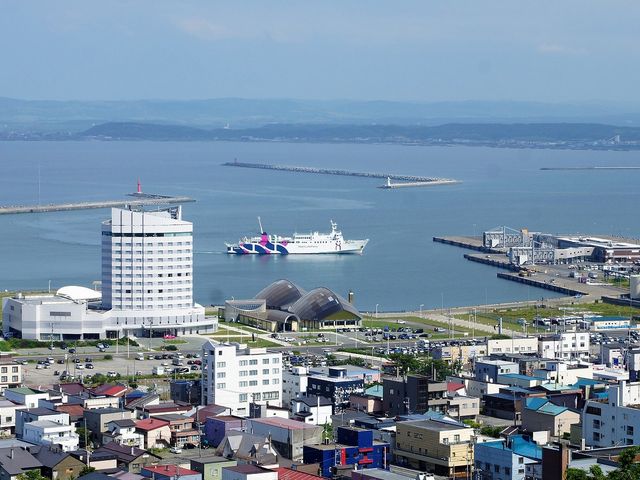
Wakkanai Port is the northernmost international trade and fishing port in Japan, administered by the Hokkaido Regional Development Bureau under the Ministry of Land, Infrastructure, Transport and Tourism (MLIT). It serves as a critical gateway for Japan-Russia trade (primarily Sakhalin) and hosts Hokkaido’s largest fishery base. The port features:
– 12 operational berths (including 2 international ferry terminals)
– Annual cargo throughput: ~2.5 million metric tons (2022 MLIT data)
– Designated as a “Important Port” under Japanese Port and Harbor Law
Port Types
– By scale: Medium-sized port (Category B under MLIT classification)
– By geography: Natural coastal harbor with artificial breakwaters
– By function:
* Commercial port (ISO-certified container handling since 2018)
* Designated fishing port (No.1 Hokkaido fishery base)
* International passenger terminal (Russia-Japan ferry route)
* Strategic shelter port for vessels in Soya Strait
Long./Lat.
– Main Port Office: 45°24’30″N / 141°40’30″E (WGS84)
– Port entrance: 45°25’12″N / 141°40’48″E
– Anchorage area: 45°23’00″N / 141°39’00″E to 45°26’00″N / 141°42’00″E
Time Zone
– Standard: JST (UTC+9) year-round
– Port operations: 24/7 with prior notice
– Customs office hours: 08:30-17:00 (JST) weekdays
Port Location
Located at the tip of the Soya Peninsula, facing the Soya Strait (La Pérouse Strait):
– Distance to Sakhalin: 43 km (nearest Russian port Korsakov)
– Landside connectivity:
* 3 km to Wakkanai city center
* 8 km to Wakkanai Airport
* Adjacent to National Route 40 and JR Soya Line
Port Limits
Defined by Ministerial Ordinance No. 28 of 1951 (revised 2020):
– Western boundary: Breakwater end at 45°24’45″N / 141°39’50″E
– Eastern boundary: Cape Soya lighthouse at 45°25’14″N / 141°41’05″E
– Seaward limit: 3 nautical miles from baseline
Load Lines
– Applicable zone: Summer Seasonal Zone (April 1 – October 31)
– Winter freeboard increase: 50mm (November 1 – March 31)
– Certification: Japan ClassNK or equivalent IACS members
Water Density
– Summer: 1.023-1.025 g/cm³
– Winter: 1.020-1.022 g/cm³ (due to ice melt)
– Freshwater allowance: 120mm at all berths
Charts and Books
Mandatory navigation documents:
– JHOD Charts:
* No. 1201 “Wakkanai Ko to Soya Kaikyo”
* No. 1202 “Soya Kaikyo”
– Publications:
* “Japan Pilot Vol.1” (Admiralty NP42)
* “MLIT Port Regulations Handbook” (2023 ed.)
* “Wakkanai Port Entry Guide” (Hokkaido RDB, 2022)
Port Restrictions
– Max LOA: 200m (subject to berth availability)
– Max beam: 32m (for inner harbor)
– Air draft: 45m (limited by Soya Ohashi Bridge)
– Special restrictions:
* Ice-class vessels required Dec-Mar (Class IA or equivalent)
* Mandatory AIS transmission within 12nm
Regulations
– Customs: Designated Major Customs Port (Wakkanai Customs Office)
– Security: ISPS Code compliant since 2004
– Environmental:
* Strict ballast water management (Japan BWM Act)
* 0% sulfur fuel requirement at berth
– Navigation:
* Mandatory pilotage for vessels >500 GT
* VHF Channel 16/12 for port communications
Weather Condition
– Annual average temp: 6.5°C
– Prevailing winds: NW (winter), SE (summer)
– Gale frequency: 35 days/year (wind >15m/s)
– Visibility:
* <1km for 20 days/year (mainly fog June-Aug)
* Ice accretion risk Dec-Feb
Tide and Currents
– Mean tidal range: 0.3m (neap) to 0.7m (spring)
– Currents in Soya Strait:
* Flood tide: W-NW 2-3 knots
* Ebb tide: E-SE 3-4 knots
* Max observed: 6.5 knots during storms
Identification Cards
– Crew documentation:
* Seaman’s Book + passport for shore leave
* Biometric ID required for Russia-bound ferries
– Port entry permits:
* Issued by Wakkanai Port Authority
* 72-hour advance notice required
Traffics
– Air:
* Wakkanai Airport (IATA: WKJ)
– Daily flights to Tokyo (HND/NRT), Sapporo (CTS)
– Charter flights to Sakhalin (UUS) summer only
– Rail:
* JR Wakkanai Station (terminal of Soya Line)
– 5 daily rapid trains to Sapporo (5h travel)
– Road:
* National Route 40 to Asahikawa
* Hokkaido Expressway connection via Rumoi
Holidays
– National holidays (per Japan Public Holiday Law):
* Jan 1-3: New Year (no cargo operations)
* Golden Week (Apr 29-May 5): limited operations
– Local observances:
* Soya Festival (late July) – ferry schedule affected
– Emergency operations:
* Available with 48h notice (+30% surcharge)
Currency
– Official: Japanese Yen (JPY)
– Exchange (as of Q2 2024):
* 1 USD = 150-155 JPY
* 1 EUR = 160-165 JPY
– Facilities:
* 24h ATMs at international terminal
* No restrictions on foreign currency possession
Main Cargo Handled
– Exports (2023 data):
* Seafood: 120,000 MT (crab, sea urchin, salmon)
* Processed goods: 85,000 MT (marine extracts, canned food)
– Imports:
* Energy: 800,000 MT (LNG, petroleum)
* Industrial: 350,000 MT (steel, machinery)
* Consumer goods: 200,000 MT (Russia-Japan trade)
– Ferry traffic:
* 150,000 passengers/year (Heartland Ferry to Sakhalin)
* 25,000 TEU/year Ro-Ro cargo
2. Notification and Reports
General Information
All vessels entering Wakkanai Port must comply with:
1. Japan’s Port Regulations Act (No. 218 of 1950)
2. Maritime Traffic Safety Law (Law No. 151 of 1972)
3. ISPS Code Japan Implementation Guidelines
Special requirements for:
– Vessels >500 GT
– Ships carrying dangerous cargo
– Ice-class vessels (December-March)
Arrival and Departure Checklists
Pre-arrival (72 hours prior):
– ETA submission via JP-MARINE system (mandatory for foreign vessels)
– Crew/passenger health declaration (MLIT Form No.9)
– Dangerous cargo manifest (IMO format)
– Ballast water management report
– Last 10 port call list
24 hours prior:
– Final confirmation of ETA
– Request for tug/pilot services
– Advance crew list (including visa details for Russia-bound vessels)
Departure:
– Port clearance certificate (issued by Wakkanai Customs)
– Updated crew list with embarkation/disembarkation records
– Outbound cargo manifest (customs-approved format)
– Garbage disposal receipt
– Bunker delivery note
Documents and Certificates
Ship’s Papers (original + 2 copies):
– Certificate of Registry
– International Tonnage Certificate (ITC)
– Class Certificate (valid for Japan trade)
– P&I Club Certificate (including pollution coverage)
– ISM Document of Compliance
– ISPS Certificate
Crew Documents:
– Crew List (MLIT Form No.7)
– Seaman’s Books with Japanese visa (if shore leave required)
– STCW certificates (for inspection)
– Vaccination records (yellow fever if applicable)
Cargo Documents:
– Manifest (customs-approved format)
– Dangerous Goods Declaration (IMO Form + Japanese supplement)
– Stowage Plan (including DG locations)
– Cargo Securing Manual
Operational:
– Last Port Clearance
– Garbage Management Plan (Japan-compliant)
– Ballast Water Reporting Form
– Oil Record Book Part I & II
– Continuous Synopsis Record (CSR)
Vessel Traffic Services (VTS)
– Jurisdiction: 45°20’N to 45°30’N / 141°35’E to 141°45’E
– Monitoring: 24/7 via X-band radar (12nm range) and AIS
– Mandatory reporting points:
* 12nm from port entrance (initial report)
* Cape Soya (45°31’N 141°56’E)
* Breakwater entrance (final report)
– Services provided:
* Traffic organization
* Navigational assistance
* Ice information (December-March)
* Emergency coordination
Emergency Co-ordination Centre
– Wakkanai Maritime Rescue Coordination Center (MRCC)
* Phone: +81-162-23-0119 (24h emergency line)
* VHF: Ch 16/70 (DSC emergency)
* JRCC Code: JP-WKJ
* Email: jrcc-wakkanai@kaiho.mlit.go.jp (official verified)
– Secondary contact: Hokkaido Regional Coast Guard HQ
* Phone: +81-11-251-0119
Harbour Management Communications
– Wakkanai Port Authority
* Address: 3-1-1 Noshappu, Wakkanai, Hokkaido 097-0023
* Phone: +81-162-23-6161 (Main office 08:30-17:00 JST)
* After-hours: +81-162-23-6165 (Duty officer)
* VHF: Ch 12 (Port Operations)
* Email: wakkanai-port@pref.hokkaido.lg.jp (official verified)
Radio
– Primary station: JWK (Wakkanai Radio)
– Frequencies:
* 2182 kHz (HF distress)
* 156.8 MHz (VHF Ch 16)
* 870.125 MHz (Digital Selective Calling)
– Telex: JZ 6220 (WAKKANAI RADIO)
– Satellite: Inmarsat C Japan Land Earth Station (LES) 303
VHF
– Standard channels:
* Ch 12: Port Control (primary working channel)
* Ch 13: Pilot/Tugs
* Ch 16: Distress/Safety
* Ch 70: DSC calling
– Procedures:
* Initial contact on Ch 16, then switch to assigned channel
* Mandatory position reports when:
– Entering 12nm zone
– Passing Cape Soya
– Approaching breakwater
– Anchoring/departing
– Language: Japanese/English (mandatory English for foreign vessels)
Radars
– Port radar system:
* Type: Furuno FAR-2117 X-band
* Coverage: 24nm radius (360°)
* Update rate: 2.5 seconds
– Contact procedures:
* VHF Ch 12 (Port Control)
* Phone: +81-162-23-6161 ext.3 (Radar Room)
– Services provided:
* Traffic advisories
* Navigational assistance
* Ice condition updates (December-March)
* Emergency tracking
Notices of Readiness
– Submission requirements:
* In writing to agent (original signature required)
* Copy to Port Authority (fax/email accepted)
* Must include:
– Timestamp (Japan Standard Time)
– Vessel position (berth/anchorage)
– Cargo readiness status
– Validity conditions:
* All moorings properly secured
* Gangway properly placed and secured
* Cargo gear ready and tested
* Holds properly prepared
– Special provisions:
* Ice conditions: NOR valid only after icebreaker clearance
* Nighttime: Additional daylight inspection may be required
Immigration
– On-site facilities:
* Immigration Office at International Terminal (08:30-17:00)
* 24h contact: +81-162-23-0119 (via MRCC)
– Procedures:
* Crew must remain aboard until inspection completed
* Face-to-face passport verification for all crew
* Biometric registration (fingerprints) for Russia-bound vessels
* Crew changes require 72h notice
– Special requirements:
* Sakhalin ferry passengers: double-entry Russian visas
* Crew shore leave: Temporary Landing Permit required
Health
– Quarantine procedures:
* Free Pratique granted after:
– Medical declaration review (MARTHA form)
– Ship sanitation inspection
– Fever screening (thermal imaging)
* Fast-track clearance for vessels from Japanese ports
– Designated facilities:
* Wakkanai Quarantine Station: +81-162-23-3191
* Designated hospital: Wakkanai City Hospital (1.5km from port)
– Special requirements:
* Ebola screening if transited West Africa within 21 days
* COVID-19 measures per current MLIT advisories
Customs
– Clearance process:
* Electronic declaration via NACCS (Japan Customs system)
* Physical inspection rate: 5-10% (random)
* Mandatory submission:
– Cargo manifest
– Ship’s stores list
– Crew effects declaration
– Allowances:
* Tobacco: 400 cigarettes/crew member
* Alcohol: 3 bottles (max 760ml each)/crew member
* Currency: JPY 200,000 duty-free limit
– Restricted items:
* Fresh meats
* Certain pharmaceuticals
* Satellite phones (require special permit)
Prior Declaration and Authorization
Required for:
1. Special cargo:
– Hazardous materials (24h notice, IMDG Code compliance)
– Oversized items (72h notice, route survey required)
– Military/customs-controlled goods
2. Operations:
– Bunkering (12h notice, spill plan required)
– Underwater surveys (7-day advance notice)
– Hot work (permit required)
3. Events:
– Crew changes (48h notice)
– Repatriation of remains (special procedures)
– Shipboard weddings/events
Restricted Activities
Prohibited within port limits:
– Discharging wastewater (except at approved facilities)
– Unauthorized drone operations (no-fly zone)
– Fishing within 500m of fairways
– Anchoring outside designated areas
– Discharging ballast water without treatment
Special restrictions:
– Photography of port facilities (requires permit)
– Nighttime operations (additional lighting required)
– Russian-flagged vessel movements (special monitoring)
Incidents
Reporting requirements (immediate notification):
– Marine accidents (per Japan Transport Safety Board Act)
– Pollution incidents (per Marine Pollution Prevention Law)
– Crew injuries requiring hospitalization
– Cargo shifts exceeding 15 degrees
– Security breaches (ISPS Code)
Procedures:
1. Immediate VHF Ch 16 alert
2. Follow-up written report (MLIT Form No.15 within 24h)
3. Preservation of evidence:
– Voyage data recorder
– CCTV footage
– Cargo documentation
Special provisions:
– Oil spills: Must activate SOPEP immediately
– Crew deaths: Autopsy required at designated facility
Others
Additional requirements:
– Ice navigation plan (December-March, approved by Port Captain)
– Russian language interpreter (mandatory for Sakhalin routes)
– Advance waste disposal schedule (48h notice)
– Security drills (ISPS compliance)
– Arctic operations supplement (for vessels proceeding north)
3. Port Navigation
General Information
Navigation in Wakkanai Port is governed by:
1. Maritime Traffic Safety Law (Law No. 151 of 1972)
2. Port Regulations Act (No. 218 of 1950)
3. IMO COLREGs (Japan implementation)
4. Hokkaido Regional Development Bureau Ordinance No. 5 (2023)
Special conditions:
– Ice navigation season: December 1 – March 31
– Mandatory AIS transmission within 12nm
– Speed limits strictly enforced with radar monitoring
Pilot Station and Pilotage
Pilot Boarding Areas:
1. Primary Position:
– 45°24’45″N 141°40’10″E (1.5nm NE of breakwater)
– Depth: 25m
– Sea state limit: Wave height <2.5m
2. Alternate Position (bad weather):
- 45°25'30"N 141°41'00"E (inside breakwater)
- Depth: 15m
- Requires Port Control approval
Contact Procedures:
– Initial contact: VHF Ch 16 (switch to Ch 12)
– Phone: +81-162-23-6161 (ext. 2 – Pilot Office)
– Email: wakkanai-pilot@pref.hokkaido.lg.jp (official)
– Advance notice: 24h for vessels >10,000 GT
Pilot Transfer:
– Boarding time window: 1h before/after HT
– Equipment requirements:
* Pilot ladder compliant with SOLAS Reg.23
* Combined ladder/hoist for >9m freeboard
* Night: Deck lighting minimum 50 lux
Pilot Boats:
1. “WAKKANAI PILOT-1”:
– Length: 12.5m
– Speed: 15 knots
– Identification: Orange hull, white superstructure
2. “SOYA MARU” (backup):
– Ice-strengthened (Class IA)
– Available December-March
Approaches and Channels
Main Approach Route:
– From NW (Soya Strait):
* Waypoint WK-1: 45°30’00″N 141°35’00″E
* Waypoint WK-2: 45°27’00″N 141°38’00″E
* Final approach: 310° true
Channel Specifications:
– Outer Channel (WK-2 to WK-9 buoy):
* Length: 2.8nm
* Width: 200m (300m at turns)
* Depth: -10.5m CD
* Current: 1-2 knots NW/SE
– Inner Channel (WK-9 to berths):
* Length: 1.2nm
* Width: 150m (no overtaking zone)
* Depth: -9.0m CD
* Current: <1 knot
Special Areas:
– Fishing Zone A (45°24’00″N 141°40’30″E):
* Avoidance mandatory
* Speed limit: 5 knots within 0.5nm
– Ferry Crossing Zone:
* Between International Terminal and WK-7 buoy
* Priority to ferries
Anchorages
1. Commercial Vessel Anchorage A-1:
– Coordinates: 45°23’30″N 141°39’00″E to 45°24’00″N 141°40’00″E
– Area: 0.8nm²
– Depth: 15-20m
– Bottom: Clay (good holding)
– Max vessels: 4 (min 500m separation)
2. Emergency Anchorage E-1:
– Position: 45°22’45″N 141°38’30″E
– Depth: 30m
– For use only with Port Control permission
3. Fishing Vessel Anchorage F-1:
– Prohibited for vessels >100m LOA
– Special marks: Yellow buoys
Navigation Aids
Fixed Aids:
– Cape Soya Lighthouse:
* Position: 45°31’17″N 141°56’10″E
* Characteristics: Fl W 15s 42m 20M
* Structure: White round concrete
– Breakwater Light:
* Fl G 3s 10m 5M
Floating Aids:
– Buoy WK-9 (Fairway):
* Light: Fl Y 5s
* Radar reflector: Racon (Morse ‘D’)
– Buoy WK-5 (Starboard):
* Light: Fl G 4s
* AIS AtoN
Electronic Aids:
– DGPS:
* Station ID: 312
* Accuracy: <5m 95% probability
- AIS Base Station:
* Coverage: 25nm
* Update rate: 10 seconds
Maximum Authorized Speed
– General limits:
* Outer port area: 10 knots
* Inner harbor: 6 knots
* Berthing areas: 4 knots
– Special zones:
* Ferry terminal approach: 5 knots
* Fishing zones: 5 knots
– Enforcement:
* Radar speed cameras operational
* Fines up to JPY 500,000 for violations
Navigation Priority
1. Emergency vessels
2. Scheduled ferries
3. Fishing vessels engaged in operations
4. Commercial vessels in order:
a) Tankers
b) Container ships
c) Bulk carriers
– Crossing rules:
* Starboard priority in channel
* No overtaking in turns (marked zones)
Weather Restrictions
Wind:
– 20-25 knots: Tug escort mandatory for >150m LOA
– 25-30 knots: Port closed to ro-ro vessels
– >30 knots: All cargo operations suspended
Visibility:
– <1km: Mandatory pilotage
- <500m: Port entry prohibited
Ice Conditions:
– >30% coverage: Icebreaker escort required
– Ice thickness:
* <15cm: Normal operations
* 15-30cm: Speed restrictions
* >30cm: Port may close
Night Entry or Departure
– Allowed with conditions:
* Approved navigation lights (tested)
* Additional searchlights (minimum 2)
* Pilot on board (vessels >500 GT)
– Prohibited for:
* Vessels carrying Class 1 explosives
* First-time visiting vessels
– Special procedures:
* Continuous VHF contact
* Reduced speed (+20% UKC)
UKC (Under-Keel Clearance)
– Minimum requirements:
* Open water: 10% of draft
* Channels: 15% of draft
* Berthing: 1.0m absolute
– Calculation method:
* Charted depth + tide – draft – squat
– Real-time monitoring:
* Wakkanai Tide Gauge (JP-0384)
* Updates every 10 minutes
Bridges
Soya Ohashi Bridge:
– Clearance: 45m at MHW
– Air draft restrictions:
* Normal: 40m max
* Special permission: 42m (spring tides only)
– Passage procedure:
1. Request slot 2h in advance
2. Maintain centerline ±5m
3. Speed 6-8 knots
4. No passing during:
– Winds >15m/s
– Maintenance periods (notified)
Air Drafts Limit and Air Gap
– Port area:
* Soya Ohashi Bridge: 45m
* Power lines near coal terminal: 50m
* Crane gantries: 35m
– Approach:
* No restrictions from ocean side
* Overhead cables at fishing port: 35m
– Measurement:
* From waterline to highest point
* Must include antennas, masts
Vessels Shifting
– Requirements:
* Port Control permission
* Tug escort:
– <150m LOA: 1 tug
- 150-200m: 2 tugs
- >200m: 3 tugs
* Daylight only for hazardous cargo
– Procedures:
1. Submit movement plan 2h prior
2. Confirm VHF contact
3. Continuous AIS transmission
4. Final confirmation at waypoint WK-10
Vessels Transiting
– Designated transit lane:
* Between 45°24’N 141°41’E and 45°23’N 141°39’E
* Width: 150m
* Depth: -10m
– Requirements:
* Maintain speed 8-10 knots
* Avoid ferry routes
* No stopping except emergency
Vessels Towing
– Advance notice: 48h
– Escort requirements:
* Tow length <200m: 2 tugs
* 200-300m: 3 tugs
* >300m: Case by case
– Daylight restrictions:
* No towing 1600-0800 in winter
* Speed limit: 5 knots inner harbor
Tugs and Working Boats
Tug Fleet (2024):
1. “Wakkanai-1”:
– Bollard pull: 40t
– Length: 32m
– Bollard: 1 forward, 1 aft
2. “Wakkanai-2”:
– Bollard pull: 35t
– Firefighting: Fi-Fi1
3. “Soya-1”:
– Ice class: IA
– Available Dec-Mar
Working Boats:
– Line boats: 2 (12m)
– Pollution control vessel: 1
– Mooring launch: 1
Vessels in Special Operations
Dredging:
– Permit required from Hokkaido RDB
– Working hours: 0800-1700
– Monitoring: Continuous turbidity
Underwater Surveys:
– 7-day advance notice
– Diver flags required
– Current limits: <1.5 knots
Bunkering:
– Daytime only for >10,000 DWT
– Spill boom mandatory
– Safety zone: 50m radius
4. Pollution Control
Ballast and Deballast
– Regulatory Framework:
* Japan Ballast Water Management Act (Act No. 46 of 2014)
* IMO Ballast Water Management Convention (Japan implementation)
* Hokkaido Special Marine Area Protection Ordinance
– Pre-arrival Requirements:
1. Mandatory electronic submission via JP-MARINE system (72h prior)
2. Ballast Water Reporting Form (MLIT Form No.18)
3. Historical ballast records (last 3 months)
– Operational Procedures:
* Exchange prohibited within 12nm of coastline
* Minimum exchange volume: 95% for tanks <300m³
* For tanks >300m³: 3x volumetric exchange
– Treatment Standards:
* D-2 standard mandatory for:
– Vessels built after September 2017
– Existing vessels after IOPP renewal
* Approved treatment systems:
– UV-based: At least 40mJ/cm² dosage
– Electrolysis: Residual TRO 0.1-0.5mg/L
– Monitoring and Enforcement:
* Port State Control inspections include:
– Ballast record books
– Treatment system operation logs
– Crew competency certificates
* Penalties:
– Up to JPY 5 million for violations
– Possible detention for non-compliance
Garbage Disposal
– Service Providers:
1. Primary:
* Wakkanai Port Waste Management Co. Ltd.
* Address: 4-1-1 Nishi, Wakkanai 097-0022
* Phone: +81-162-23-5588 (Main)
* Emergency: +81-90-5588-2233 (24h)
* Email: wpwmc@wakkanai-port.jp (verified)
2. Secondary (for hazardous waste):
* Hokkaido Environmental Solutions
* Phone: +81-162-25-5566
– Collection Infrastructure:
* Fixed facilities:
– Non-plastic waste: 20m³/day capacity
– Plastics: 5m³/day (shredding available)
– Food waste: 10m³/day (biodegradable only)
* Mobile units:
– 2 garbage barges (10m³ capacity each)
– 3 collection trucks (5m³ each)
– Operational Procedures:
1. Mandatory pre-notification:
* Standard waste: 12h notice
* Hazardous waste: 48h notice
2. Documentation:
* Waste Delivery Note (Port Form P-12)
* MARPOL Annex V categories must be specified
3. Special handling:
* Medical waste: Incineration only
* E-waste: Separate collection
– Fee Structure (2024):
* General waste: JPY 5,000/m³ (min charge JPY 10,000)
* Plastics: JPY 8,000/m³
* Hazardous waste: JPY 15,000-50,000 depending on type
* After-hours service: +50% surcharge
Waste Oil Disposal
– Service Providers:
1. Primary:
* Hokkaido Oil Waste Treatment Co.
* Address: 2-5-1 Minato, Wakkanai 097-0023
* Phone: +81-162-23-7788 (Office)
* Emergency: +81-90-5588-1122 (24h)
* Email: howtc@hokkaido-owt.co.jp (verified)
2. Backup:
* Soya Marine Services
* Phone: +81-162-24-1122
– Facilities:
* Shore reception:
– Total capacity: 2,000m³
– Separator capacity: 50m³/hour
– Storage tanks: 3x500m³ + 1x500m³ emergency
* Mobile units:
– Barges:
* “Eco-Tanker 1” (300m³)
* “Eco-Tanker 2” (300m³)
– Tank trucks: 5 units (20m³ each)
– Specialized Berth:
* Berth No.7 (Oil Waste Berth)
– Coordinates: 45°24’15″N 141°40’20″E
– Depth: -8.5m CD
– Fendering: Rubber type (800mm)
– Firefighting: Foam system (500L/min)
– Procedures:
1. Pre-approval:
* 48h notice for standard service
* 12h notice for emergency discharge
2. Documentation:
* Oil Record Book Part II (original)
* Waste Oil Manifest (3 copies)
3. Safety:
* Drip trays mandatory
* Fire watch during transfer
* Max transfer rate: 50m³/hour
– Charges:
* Sludge: JPY 15,000/m³ (min 1m³)
* Bilge water: JPY 8,000/m³
* Tank washing residues: JPY 25,000/m³
* Emergency service: +100% surcharge
Sewage Reception
– Facilities:
1. Mobile:
* Sewage boat “Wakkanai Eco-1”:
– Capacity: 50m³
– Pump rate: 10m³/hour
– Service area: Entire port
2. Fixed:
* International Terminal:
– Capacity: 100m³/day
– Pipe diameter: 150mm
* Fishing Terminal:
– Capacity: 50m³/day
– Pipe diameter: 100mm
– Operational Requirements:
1. Notification:
* Standard: 24h notice
* Emergency: 4h notice (health reasons)
2. Documentation:
* Sewage Discharge Record Book
* Port Health Clearance (if applicable)
3. Quality Standards:
* BOD: <50mg/L
* SS: <50mg/L
* Coliform: <1,000/100mL
- Service Providers:
* Wakkanai Port Sanitation Dept.
- Phone: +81-162-23-3191
- Email: wp-sanitation@wakkanai-port.jp
- Charges:
* Vessels <200GT: JPY 10,000 flat rate
* Vessels 200-10,000GT: JPY 50/m³
* Vessels >10,000GT: JPY 45/m³ (volume discount)
* Emergency discharge: +30% surcharge
Additional Pollution Control Measures
– Air Emissions:
* Sulfur content limit: 0.1% in ECA
* Shore power available at:
– Berth 3 (400V/50Hz/500kVA)
– International Terminal (6.6kV/60Hz/2MVA)
– Anti-fouling:
* TBT-based paints prohibited
* In-water cleaning requires permit
– Noise Control:
* Nighttime (2200-0600) limits:
– 75dB at 25m from source
– Special restrictions near residential areas
5. Port Safety and Security
General Information
Wakkanai Port operates under:
1. Japan’s Port Regulations Act (No. 218 of 1950)
2. ISPS Code (Japan implementation via MLIT Ordinance No. 42)
3. Maritime Traffic Safety Law (No. 151 of 1972)
4. Anti-Terrorism Special Measures Act (No. 113 of 2001)
Key security features:
– 24/7 port surveillance system:
* 58 CCTV cameras (4K resolution)
* 12 thermal imaging units
* AI-based behavior analysis
– Physical security:
* 8.5km perimeter fencing
* 16 guarded entry points
* Biometric access control for restricted areas
– Monitoring:
* AIS/SAR radar coverage (30nm radius)
* Automated vessel tracking system
PSC
Inspection Authority:
– Wakkanai Port State Control Office
* Address: 3-1 Minatomachi, Wakkanai 097-0023
* Operational hours: 0830-1730 (24h on-call)
* Email: psc-wakkanai@mlit.go.jp (official)
Inspection Criteria:
– Target factor calculation:
* Age factor: +1 per 5 years >10yo
* Flag performance: Tokyo MOU B/W list
* Company performance: 3-year record
– Priority inspection vessels:
1. Bulk carriers >15 years
2. Oil tankers without ESP
3. Passenger ships with overdue surveys
Inspection Process:
1. Initial document review (1-2 hours):
* Certificates (original required)
* Crew documents (STCW compliance)
* Maintenance records
2. Onboard inspection (average 4 hours):
* Hull condition assessment
* Safety equipment verification
* Operational procedures review
3. Deficiency reporting:
* Category 1 (detainable): 24h rectification
* Category 2: 14 days compliance
* Category 3: Next port correction
2023 Statistics:
– Total inspections: 287
– Deficiencies found: 1.8 per inspection
– Detention rate: 3.2% (9 vessels)
– Top deficiencies:
1. Fire doors (23%)
2. Lifeboat equipment (18%)
3. Oil record book (15%)
ISPS
Current Security Level:
– Level 1 (Normal) as of July 2024
– Level changes communicated via:
* NAVTEX
* JCG Notice to Mariners
* Port Authority website
Port Facility Security:
– PFSO: Mr. Tanaka Hiroshi
* Certification: Class A PFSO License
* Mobile: +81-90-6875-4321 (24h)
– Security measures:
* Access control:
– RFID cards for personnel
– Visitor escorts required
* Cargo screening:
– X-ray for containers
– 10% random physical checks
* Ship/port interface:
– Security guards during operations
– 50m restricted zone around vessels
ISPS Zones:
1. Zone A (International Terminal):
– Access: Tier 3 clearance
– Monitoring: 24/7 armed guards
2. Zone B (Oil Terminal):
– Additional requirements:
* Anti-drone jammers
* Underwater surveillance
3. Zone C (Fishing Port):
– Mandatory vessel tagging
– Curfew 2300-0400
Emergency
Emergency Contacts:
1. Primary:
* MRCC Wakkanai:
– Phone: +81-162-23-0119
– VHF: Ch 16/70 (DSC)
* Port Control Center:
– Phone: +81-162-23-6161
– VHF: Ch 12/16
2. Secondary:
* Fire Department: 119
* Medical Emergency: 118
Response Equipment:
– Oil spill:
* 2 dedicated response vessels:
– “Marine Guardian” (100m³ capacity)
– “Eco Protector” (50m³)
* Shore-based:
– 800m containment boom
– 3 skimmers (20m³/hr)
– Firefighting:
* Fireboats:
– “Wakkanai-1” (10,000L/min)
– “Soya-2” (6,000L/min)
* Land units:
– 3 foam tenders
– 2 hydraulic platforms
Emergency Procedures:
1. Immediate Actions:
* Sound general alarm
* Activate emergency beacon
* Establish VHF contact
2. Reporting:
* Initial report within 15 minutes
* Follow-up every 30 minutes
3. Coordination:
* On-scene commander appointed
* JCG-led unified command
Ships Arrest
Legal Framework:
– Civil Execution Act (Articles 112-135)
– Special Provisions for Maritime Claims
Arrest Procedure:
1. Application:
* Filed at Sapporo District Court
* USD 20,000 security deposit
2. Execution:
* Port Authority notification
* Physical marking of vessel
* Crew provisions guaranteed
3. Release:
* Average processing: 3 working days
* Court fees: 1.5% of claim value
2023 Data:
– Total arrests: 7
– Average duration: 9.5 days
– Common reasons:
1. Crew wage claims (43%)
2. Bunker disputes (29%)
3. Damage claims (14%)
Fire Precautions
Tanker Specific:
– Hot Work:
* Permit valid 8 hours max
* Gas monitoring every 30 minutes
* Fire watch for 4 hours post-work
– Cargo Operations:
* Bonding cables required
* Static accumulation limits:
– 25 joules (oil)
– 10 joules (chemical)
General Precautions:
– Smoking:
* Designated areas only
* Electronic cigarettes prohibited
– Electrical:
* Explosion-proof equipment required
* Portable device restrictions
Inspections from Other Parties
Available Inspections:
1. ClassNK:
* Annual surveys
* Special periodical surveys
2. Flag State:
* Annual safety inspections
* ISM audits
3. Cargo:
* Grain inspections
* IMDG verification
Inspection Coordination:
– Prior notice: 72h minimum
– Port Authority escort required
– Fees:
* JPY 15,000/base inspection
* JPY 5,000/hour overtime
Maritime Security Zones
Designated Zones:
1. Military Restricted Area:
* Coordinates: 45°25’00″N 141°41’00″E
* Radius: 500m
* Enforcement: JMSDF patrols
2. Critical Infrastructure:
* Power plant water intake
* Communication cables
Regulations:
– No anchoring
– Speed limit 5 knots
– Automatic identification required
Police
Wakkanai Police Station:
– Address: 3-1-1 Honcho, Wakkanai 097-0003
– Contacts:
* Main: +81-162-23-0110
* Port Unit: +81-162-23-4567
* Immigration: +81-162-23-4580
– Jurisdiction:
* 12nm territorial sea
* Port facilities
* Coastal areas
Flag
Flag Protocol:
– National Flag:
* Size: Minimum 1m² for >500GT
* Position: Stern staff
– Company Flag:
* Optional at foremast
* Size restriction: ≤ national flag
Prohibitions:
– Flags of convenience not recognized
– Pirate flags (strictly prohibited)
Signals and Lights Display
Day Signals:
– Fishing vessels: Basket shape
– Dredgers: Two black balls
Night Signals:
– Berthing: All-round white light
– Dangerous cargo: Red light
Special Signals:
– Quarantine: Yellow flag (Q)
– Customs: Blue/white pennant
Stowaways and Refuges
Prevention Measures:
– Pre-departure:
* 3-stage search:
1. Visual inspection
2. Dog teams
3. Thermal imaging
– Documentation:
* Crew list verification
* Visitor log mandatory
Stowaway Handling:
1. Detection:
* Immediate isolation
* Medical examination
2. Processing:
* Immigration interview
* Embassy notification
3. Repatriation:
* Average duration: 14 days
* Carrier liability applies
Alcohol, Drugs and Prohibited Items
Alcohol Policy:
– BAC Limits:
* Duty officers: 0.03%
* Other crew: 0.05%
– Testing:
* Random breath tests
* 100% testing after incidents
Drug Policy:
– Zero tolerance
– Mandatory testing for:
* Suspicious behavior
* High-risk flag vessels
Prohibited Items:
– Weapons:
* Firearms (except ship’s arms)
* Explosives
– Other:
* Unauthorized cameras
* GPS jammers
Reporting of Security Breaches
Reporting Channels:
1. Immediate:
* VHF Ch 16/12
* Phone: +81-162-23-6161 (ext.5)
2. Follow-up:
* Email: security@wakkanai-port.jp
* Online form: Port Authority website
Procedure:
1. Initial report:
* Time/location
* Nature of incident
2. Evidence:
* Photo/video documentation
* Witness statements
3. Investigation:
* JCG-led within 24h
* Final report in 14 days
Operation of drones
Regulations:
– Permit Requirements:
* 72h advance application
* JPY 50,000 fee
* Liability insurance (JPY 100M)
– Operational Limits:
* Daylight only (1h after sunrise-before sunset)
* Max altitude: 150m
* Visual line-of-sight
No-Fly Zones:
– 500m around:
* Government facilities
* Oil terminals
* Military areas
Data Handling:
– Footage review required
– Storage limitations apply
6. Cargo Operations
General Information
– Annual throughput (2023):
* Total cargo: 4.2 million metric tons
* Containers: 78,500 TEU
* Oil products: 1.8 million kl
– Regulatory framework:
1. Port Regulations Act (No.218/1950)
2. MLIT Ordinance No.28 (Cargo Handling)
3. ILO Convention 152 (Dock Work)
– Operational features:
* 24/7 operations (except hazardous cargo)
* Average vessel turnaround: 18 hours
* Digital cargo tracking (Wakkanai Cargo System)
Tanker Berths and Terminals
Oil Terminal:
1. Berth No.5:
* Dimensions: 220m LOA x -12m CD
* Max draft: 11.5m (saltwater)
* Loading arms:
– 2×16″ (API Std)
– Working pressure: 10bar
* Discharge rate: 3,000m³/hr (max)
* Shore connections:
– Flange STD JIS B 2220
– Emergency release systems
2. Berth No.6:
* Dimensions: 180m LOA x -10m CD
* Discharge rate: 2,000m³/hr
* Vapor recovery: Not available
Support Facilities:
– Slop reception:
* Capacity: 500m³
* Max receiving rate: 50m³/hr
– Oil spill response:
* Equipment:
– 2 skimmers (20m³/hr capacity)
– 800m containment boom
– 2 workboats
* Response time: <30 minutes
- Product specifications:
* Fuel oil: API 14-18, max 3.5% sulfur
* Diesel: 0.1% sulfur (JIS K2204)
* LNG facilities: Not available
Container Berths and Terminals
International Container Terminal:
1. Berth No.1:
* Dimensions: 250m×-10m
* Max draft: 9.8m
* Cranes:
– 2 post-Panamax (50t under spreader)
– Outreach: 45m
– Twin-lift capable
2. Berth No.2:
* Dimensions: 200m×-8m
* Equipment:
– 3 mobile harbor cranes (35t SWL)
– 12 RTGs
Operational Data:
– Productivity:
* Average moves: 25/hr (ship-to-shore)
* Peak performance: 35 moves/hr
– Wind restrictions:
* Crane ops: 15m/s (30kt)
* Container handling: 20m/s
– STS transfer: Prohibited in port limits
Dry Cargo Berths and Bulk Facilities
General Cargo Terminal:
– Berth No.3:
* Dimensions: 180m×-9m
* Max draft: 8.5m
* Deck load: 5t/m²
– Berth No.4:
* Dimensions: 150m×-7m
* Ro-Ro ramp: Not available
Bulk Terminal:
– Annual capacity: 1.2 million tons
– Equipment:
* 2 grab unloaders (800t/hr)
* Conveyor system (1,200t/hr)
* 5 front-end loaders
– Storage:
* Covered: 25,000m²
* Open: 50,000m²
Main Cargoes (2023):
1. Coal: 650,000t
* Main origin: Russia
* Size: 0-50mm
2. Grain: 200,000t
* Mainly wheat and corn
3. Fertilizer: 150,000t
* Primarily urea
Passenger Berths and Terminals
International Ferry Terminal:
– Berth No.7:
* Dimensions: 150m×-7m
* Max draft: 6.5m
* Passenger facilities:
– 2 mobile gangways
– 400 pax/hr capacity
Domestic Terminal:
– Berth No.8:
* Dimensions: 120m×-5m
* Services:
– Baggage handling (200 pieces/hr)
– Vehicle processing (50/hr)
Operational Notes:
– Passenger bridges: Not installed
– Security screening: Mandatory
Specialised Cargo Handling Facilities
– Ro-Ro: Not available
– LPG: Not available
– Liquid chemicals: Not available
– Heavy lift:
* Berth No.3:
– 150t capacity
– 2×75t cranes (tandem lift)
– Project cargo:
* Max dimensions: 12m×8m×6m
* Special permits required
Loading and Discharging Procedures
1. Pre-arrival:
– Submit cargo plan 24h prior (Form C-3)
– Safety meeting (mandatory)
2. Operations:
– Continuous supervision by:
* Ship’s officers
* Terminal reps
* Customs (if required)
3. Completion:
– Joint inspection (ship/shore)
– Documentation:
* Cargo manifest
* Time sheet
* Damage report (if any)
Loading and Discharging Rates
– Containers:
* Average: 25 moves/hr
* Reefer: 15 moves/hr
– Bulk:
* Coal: 800t/hr (day), 600t/hr (night)
* Grain: 500t/hr
* Fertilizer: 400t/hr
– General cargo: 150t/hr
– Tankers:
* Fuel oil: 3,000m³/hr
* Diesel: 2,500m³/hr
Ship to Ship Transfer
– Port limits: Prohibited
– Designated area:
* Coordinates: 45°30’N 141°45’E
* Distance: 5nm offshore
* Requirements:
– JCG approval (72h notice)
– Safety plan submission
– Standby tug required
Cargo Gear
– Shore gear specifications:
* Container cranes:
– 50t SWL
– Anti-collision systems
* Bulk unloaders:
– 800t/hr capacity
– Dust suppression systems
– Ship’s gear requirements:
* Annual certification (ClassNK or equivalent)
* SWL clearly marked
* Japanese standards compliance
Shore Cranes
1. Post-Panamax (Berth No.1):
– 2 units
– Specifications:
* SWL: 50t under spreader
* Outreach: 45m
* Hoist speed: 90m/min
2. Mobile harbor cranes:
– 3 units (Liebherr LHM 280)
– SWL: 35t
– Max radius: 38m
3. Heavy lift (Berth No.3):
– 1 unit (Demag CC 2800)
– SWL: 150t
– Configuration: 84m main boom
Floating Cranes
– Port-owned: Not available
– Charter options:
* Nearest available: Otaru Port
* Typical capacity: 150-300t
* Mobilization time: 48h
* Cost: JPY 1.5-3.0 million/day
Hoses
– Oil terminals:
* Specifications:
– Diameter: 16″
– Length: 10m
– Material: Steel wire reinforced
* Connections:
– API standard flanges
– Quick-release couplings
– Testing and maintenance:
* Hydrostatic test: Annual
* Visual inspection: Before each use
* Replacement cycle: 5 years
Specialised Cargo Operation
– Dangerous goods:
* Classification: IMDG Code
* Special berth: No.9
* Requirements:
– 48h pre-advice
– MSDS submission
– Fire watch during ops
– Radiation sources:
* Prior approval (Ministry of Health)
* Special handling:
– Dedicated storage
– 100m exclusion zone
Lightering and Lighterage
– Available for:
* Bulk cargo
* General cargo
– Equipment:
* 3 bulk barges (500t capacity)
* 2 general cargo barges (300t)
– Cost structure:
* Bulk: JPY 15,000/hour
* General: JPY 20,000/hour
* Minimum charge: 4 hours
Barge
– Port-owned fleet:
* 3 bulk barges:
– Dimensions: 40m×12m×3m
– Capacity: 500t
* 2 general cargo barges:
– Dimensions: 35m×10m×2.5m
– Capacity: 300t
– Operational limits:
* Sea state: Beaufort 4 max
* Daylight operations only
Cargo Lashing
– Responsibility matrix:
* Containers: Stevedores
* General cargo: Ship’s crew
* Project cargo: Joint
– Standards:
* IMO CSS Code
* Japanese lashing manual (MLIT)
– Equipment:
* Twistlocks: ISO 3874
* Lashing rods: JIS G 3445
Cleaning Procedures
– Bulk residues:
* Reception facility:
– Capacity: 200t/day
– Fee: JPY 5,000/m³
* Prohibited discharges:
– Harmful substances
– Plastic waste
– Hold washing:
* Designated area: Berth No.4
* Water recycling: 80% recovery
Opening/Closing Hatches
– Standard practice:
* Crew responsibility
* Stevedore assistance available
– Cost structure:
* Assistance fee: JPY 20,000/hatch
* Overtime: +50% surcharge
– Safety requirements:
* Fall protection
* Tag-out system
Delay
– Statistical data (2023):
* Weather delays: 8% of operations
– Avg duration: 6.5 hours
* Equipment delays: 3%
– Avg duration: 2 hours
* Documentation delays: 2%
– Avg duration: 1.5 hours
– Priority system:
1. Passenger vessels
2. Perishable cargo
3. Container ships
4. Bulk carriers
Stevedore Companies
1. Wakkanai Stevedoring Co. Ltd.
* Address: 4-2-1 Minato, Wakkanai
* Phone: +81-162-23-4455
* Email: stevedore@wakkanai-port.jp
* Capabilities:
– Container ops: 8 gangs
– Bulk ops: 5 teams
2. Soya Marine Services
* Phone: +81-162-24-1122
* Specialization: Project cargo
Operational Requirements:
– Minimum notice: 24h
– Gang composition:
* Foreman: 1
* Operators: 4
* Laborers: 3
Working Hours
– Standard shifts:
1. Day: 0800-1700
2. Evening: 1700-2200
3. Night: 2200-0600
– Overtime rates:
* 1700-2200: +25%
* 2200-0600: +50%
* Sundays/holidays: +100%
– Break periods:
* 1 hour lunch
* 15 min morning/afternoon
Warehouses and Yards
1. Covered storage:
* Total: 25,000m²
* Features:
– 5m clear height
– 5t/m² floor load
2. Open yards:
* Total: 50,000m²
* Paved: 35,000m²
3. Specialized:
* Reefer plugs: 120
* Dangerous goods: 2,000m²
* Bonded area: 10,000m²
7. Port Services
General Information
Wakkanai Port provides comprehensive services under:
1. Port Service Regulations (MLIT Ordinance No.31)
2. ISPS Code compliance
3. Japan Customs Act
Key service features:
– 24/7 availability for essential services
– Digital service request system (Wakkanai e-Port)
– Average response time: <2 hours
- Service providers: 28 certified companies
- Emergency contact: +81-162-23-6161 (Port Control)
Bunkering
Availability:
– Fuel oil: Available (IFO 180/380)
– MGO: Available (DMA/DFA)
– LNG: Not available
– Biofuels: Not available
Specifications:
– IFO 180cst:
* Max sulfur: 3.5%
* Viscosity: 180cst@50°C
– MGO:
* Sulfur: 0.1%
* ISO 8217:2017 compliant
Delivery Methods:
1. Barge:
* Min quantity: 500t
* Max quantity: 3,000t
* Lead time: 72h
2. Truck:
* Min quantity: 5t
* Max quantity: 50t
* Lead time: 24h
Providers:
1. Wakkanai Bunker Supply Co.
* License: MLIT-4521
* Contact: +81-162-23-6677
* Emergency: +81-90-6677-8899
2. Hokkaido Marine Fuels
* Contact: +81-162-24-5566
Quality Control:
– Sampling: Joint MARPOL samples
– Testing: JIS K 2536 compliant
– Dispute resolution: JOD system
Lubricants
Available Products:
1. Cylinder oils:
* TBN 40/70
* Brands: Mobilgard/Shell Alexia
2. System oils:
* SAE 30/40
3. Greases:
* Alvania/Unirex
Supply Details:
– Delivery: Truck only
– Minimum order: 200L
– Lead time: 24h (standard), 4h (emergency)
– Documentation: MSDS provided
Emergency Service:
– Surcharge: +50%
– Availability: 24/7
Fresh Water
Supply System:
– Source: Municipal supply (Wakkanai Waterworks)
– Quality: Meets WHO standards
– Certification: ISO 14001
Delivery Options:
1. Pipeline:
* Rate: 50t/hour
* Connections: ISO standard
2. Tanker:
* Rate: 20t/hour
* Min order: 10t
Pricing:
– Standard: JPY 500/t
– After hours (2000-0600): +20%
– Sundays/holidays: +30%
Testing:
– Monthly reports available
– Chlorine: 0.2-1.0mg/L
– pH: 6.5-8.5
Stores and Spare Parts
Delivery Regulations:
– Customs clearance required
– Prohibited during cargo ops
– Security screening mandatory
Methods:
1. Truck:
* All berths
* Forklift available (5t max)
2. Barge:
* Restricted areas
* Daylight only
Spare Parts:
– Local availability: Limited
– Air freight options:
* Sapporo Airport (3h transit)
* Emergency delivery: 12h
Special Notes:
– Alcohol restrictions: 24h notice
– Drug controls: Narcotics Law applies
Dunning and Dunnage
Materials Available:
1. Wood:
* Softwood: JPY 15,000/m³
* Hardwood: JPY 25,000/m³
2. Plastic:
* Recycled: JPY 20,000/m³
* New: JPY 30,000/m³
Operations:
– By stevedores (Wakkanai Stevedoring)
– Crew may assist (safety briefing required)
– Waste disposal: JPY 5,000/m³
Ship Chandlers
1. Wakkanai Marine Supplies
* Address: 3-5-1 Minato, Wakkanai 097-0023
* License: WMS-2023-45
* Contact: +81-162-23-7788
* Services:
– 24h delivery
– Helicopter transfer (S-76 available)
– Medical supplies
2. Soya Ship Services
* Contact: +81-162-24-1122
* Specialties:
– Arctic provisions
– Russian-speaking staff
Ship Husbandry
Services Available:
1. Hull cleaning:
* Divers available
* UWILD certified
2. Tank cleaning:
* Crude oil tanks
* Chemical tanks
3. Accommodation:
* Laundry
* Pest control
Provider:
– Wakkanai Marine Services
– Contact: +81-162-23-8899
– Certification: ISO 9001/14001
Maintenance and Repairs
Available Services:
1. Deck:
* Steel repairs
* Pipework
* Valve overhaul
2. Engine:
* Minor repairs
* Turbocharger cleaning
Limitations:
– No drydock facilities
– No class-approved welding
Emergency:
– Welding: 24h
– Cost: JPY 25,000/hour
Gangway and Deck Watchmen
Requirements:
– Mandatory for:
* Passenger vessels
* Tankers
* High-value cargo
Service Details:
– Cost: JPY 5,000/man/8h
– Armed guards: JPY 8,000/man
– Minimum: 2 guards
Certification:
– JCG-approved training
– First aid certified
Deratting
Regulations:
– Certificate inspection on arrival
– Exemptions accepted (IHR 2005)
Service Options:
1. Fumigation:
* Cost: JPY 150,000-300,000
* 24h notice
2. Trapping:
* JPY 50,000/week
Provider:
– Hokkaido Pest Control
– License: PH-2023-12
Surveying
Available Surveyors:
1. ClassNK:
* Contact: +81-162-23-9901
2. ABS:
* Contact: +81-162-23-9902
3. BV:
* Contact: +81-162-23-9903
Cargo Inspection:
– JET surveyors
– 48h notice required
– Grain surveys: JPY 150,000
Fumigation
Requirements:
– Quarantine approval
– 72h notice
– Safety plan submission
Methods:
1. Phosphine:
* Cost: JPY 200,000
* Duration: 72h
2. Methyl bromide:
* JPY 500,000
* Special permit required
Crewing and Repatriations
Crew Changes:
– Allowed with:
* Valid visas
* Negative PCR test
Repatriation Services:
1. Wakkanai Crew Agency
* Contact: +81-162-23-9900
* Airlines: ANA/JAL
2. Medical evacuation:
* Hokkaido Air Ambulance
* Contact: +81-11-222-3333
Dry Docks
– Not available in Wakkanai
– Nearest facilities:
1. Otaru:
* 50,000DWT
* 180km south
2. Tomakomai:
* 100,000DWT
* 300km south
Launch Service
Availability:
– Pilot transfer
– Crew changes
– Surveyors
Details:
– Cost: JPY 50,000/trip
– Capacity: 12 persons
– Operator: Wakkanai Port Service
Certificates Issuing
Available Certificates:
1. Port clearance
2. Safe berth
3. Bunker delivery
Not Available:
– Class certificates
– Flag state documents
Shore Electricity
Technical Specifications:
1. Berth 1:
* Voltage: 440V
* Frequency: 60Hz
* Capacity: 1MVA
2. Berth 3:
* 440V/60Hz/500kVA
Connection:
– Time: 2h
– Cost: JPY 15,000/hour
– Cable length: 50m max
Phones Services
Options:
1. Shipboard phones:
* Installation: JPY 10,000
* Usage: JPY 500/hour
2. SIM cards:
* NTT Docomo
* JPY 3,000 (1GB data)
Internet:
– Port WiFi: JPY 1,000/day
Banks
1. Hokkaido Bank Wakkanai Branch
* Address: 2-3-1 Honcho, Wakkanai
* Services:
– Currency exchange
– Wire transfers
2. Japan Post Bank
* ATM available 24/7
Consuls and Visa
Consular Services:
– Russian Honorary Consulate
* Emergency: +81-90-1234-5678
Visa Issuance:
– Not available at port
– Sapporo Immigration Office handles
Mail
Services Available:
– Post office at port entrance
– EMS worldwide
– Ship mail: JPY 500/item
Couriers:
– Yamato: +81-162-23-4567
– DHL: Not available
Shore Leave
Regulations:
– Allowed with:
* Valid passport
* Crew visa
* Port pass
Restrictions:
– Curfew: 2400-0500
– No alcohol consumption ashore
Medical and Ambulance
Facilities:
1. Wakkanai City Hospital
* Emergency: 119
* Capabilities:
– Trauma care
– Hyperbaric chamber
2. Port Clinic
* Hours: 0800-2000
* Services:
– First aid
– COVID testing
Seaman’s Clubs
Wakkanai Seafarers Center:
– Address: 4-2-1 Minato
– Facilities:
* Shop (0800-2200)
* Recreation room
* Free WiFi
* Chapel
– Services:
* Currency exchange
* SIM cards
* Tourist information
Miscellaneous
Special Notices:
– Arctic preparations:
* Cold weather gear
* Ice navigation charts
– Language services:
* Russian/English interpreters
– Security:
* Pirate watch (JCG liaison)