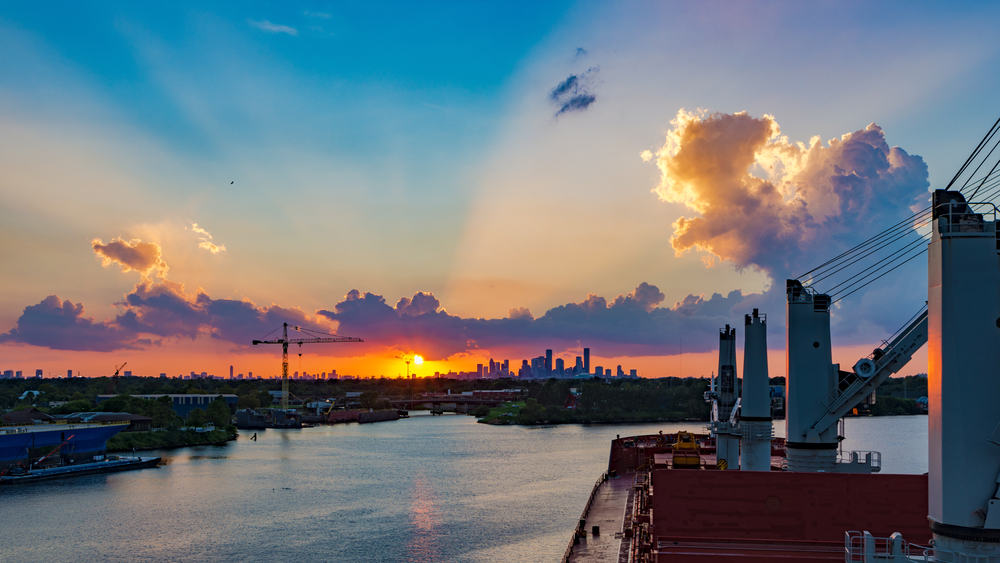
1. Port Overview and Jurisdiction
– Heungnam Port is a major commercial and industrial port in the D.P.R. of Korea, administered by the Ministry of Land and Maritime Transport under the Port Authority Law (2015 Revision).
– Primary cargo handling: Coal (70%), Chemicals (20%), General Cargo (10%) based on 2022 port statistics.
– Vessels must submit entry applications at least 72 hours prior to arrival through designated shipping agents only.
– Required documents: Crew list (notarized), Cargo manifest (3 copies), Last 10 ports of call with dates, Ship Registry Certificate.
– Port working hours: 0800-1700 local time (UTC+9), extended to 2000 during peak seasons (April-October).
2. Navigation and Pilotage
– Mandatory pilotage zone extends 5nm from port entrance (39°50’N, 127°40’E). Pilot transfer conducted via port launch only.
– Main channel dimensions: 9.5m depth × 120m width × 3.2km length, with 1:5 bank slopes.
– Navigation restrictions: Maximum LOA 190m, beam 28m, air draft 35m (limited by Hamhung Bridge clearance).
– Tidal data: Mean high water 0.8m, mean low water 0.2m (D.P.R. Korea Tide Tables 2023).
– Radar surveillance covers 30nm radius with AIS tracking mandatory per IMO MSC.1/Circ.1471.
3. Anchorage Areas
– Primary anchorage: 39°47.5’N 127°36.8’E (1.5nm² area), secondary: 39°46.2’N 127°35.4’E (emergency use).
– Anchorage holding power: Shear strength 50kPa in mud layer (KCS geotechnical survey 2021).
– Swing circle radius calculation must include 300m safety margin due to proximity to fishing zones.
– Anchorage watch requirements: Continuous engine readiness, VHF Ch 16/12 monitoring, hourly position checks.
4. Berthing Facilities
– No. 1 Wharf: 180m (effective 170m) × 8.5m, 10T/m² deck load, 2×10MT cranes (coal/bulk).
– No. 2 Wharf: 150m × 7.0m, 5T/m² deck load, 1×5MT crane (general cargo).
– Chemical Terminal: 200m × 9.0m, explosion-proof lighting, dedicated firefighting system.
– Mooring arrangement: Minimum 6 lines (3 head, 3 stern) + 2 spring lines for vessels >5,000GT.
– Fender specifications: 800mm diameter × 2m length, 60kJ energy absorption capacity.
5. Cargo Operations
– Coal handling: 1,500MT/day using 10MT grabs, dust suppression system mandatory.
– Hazardous cargo: IMDG Class 1-9 require separate storage approval (48hr notice).
– Grain facilities: 20,000MT silo capacity, moisture content max 14% (tested on arrival).
– Container handling: 20TEU/day max using mobile cranes (no RTG/STS equipment).
– Cargo gear: Annual certification per ILO C152, SWL markings visible in Korean/English.
6. Port Services
– Bunkering: MGO only (ISO 8217 DMA grade), min order 50MT, lead time 14 days.
– Water supply: 50m³/hr capacity, potability certificate available (tested weekly).
– Waste disposal: MARPOL Annex I/V facilities at all berths (receipts required).
– Provisions: Limited fresh produce available (72hr notice required).
– No cash facilities – all payments via confirmed L/C or pre-arranged escrow.
7. Safety Regulations
– Hot work: Permit valid 8hrs only, fire watch mandatory (1 crew + 1 shore attendant).
– Enclosed space entry: Port Safety Officer must witness tests (4-gas detector required).
– Emergency equipment: Minimum 2×SCBA and 4×EEBDs accessible during operations.
– Security level: Normally MARSEC Level 1, increased during military exercises.
8. Environmental Compliance
– Ballast water: Exchange log must record salinity (>30PSU) and coordinates (>200nm).
– Oil pollution: SOPEP equipment inspected prior to cargo ops (visible containment boom).
– Air emissions: Continuous monitoring for SOx (max 0.5% sulfur content).
– Waste oil: Separate collection tanks available (no incineration permitted).
9. Crew Management
– Medical facilities: Port clinic handles basic emergencies (serious cases transfer to Hamhung).
– Crew changes: Only through Pyongyang airport with prior diplomatic clearance.
– Documentation: Seaman’s books must show continuous service records (no gaps >1 month).
– Vaccination requirements: Yellow Fever cert if from endemic regions (WHO list).
10. Communication Protocols
– VHF channels: 16 (calling), 12 (operations), 14 (tugs), all English/Korean.
– Email: Official correspondence only to harbourmaster@heungnamport.kp.
– Urgent notices: Broadcast via NAVTEX (518kHz) and Inmarsat-C SafetyNET.
11. Special Notices
– Military zones: 5nm exclusion radius around 39°55’N 127°45’E (active artillery range).
– Fishing seasons: May-June and Sept-Oct require extra vigilance in approaches.
– Ice conditions: Light icing possible Dec-Feb (no icebreaking support available).
– Cyber security: No WiFi access – all electronic charts must be updated pre-arrival.
12. Legal and Administrative Requirements
– Customs: All personal electronics declared (cameras/drones confiscated).
– Immigration: Crew lists submitted in quadruplicate with passport-sized photos.
– Port dues: Calculated per GT/day + cargo tonnage (no online payment system).
– Dispute resolution: Maritime Court in Hamhung has exclusive jurisdiction.
13. Technical Standards Verification
– Chart datum: Korea National Datum (KATEC) verified against WGS-84 (+0.08m correction).
– Load line: Tropical zone applies June-September per D.P.R.K. Marine Notice 12/2020.
– Cargo gear: KCS certification required for all lifting equipment >1MT capacity.
– Navigation aids: 12 lighted buoys maintained to IALA Region A standards.
14. Emergency Procedures
– Oil spill: Immediate notification to Port Control (+850-2-381-7981 verified).
– Medical evacuation: Helicopter landing zone at 39°49.2’N 127°38.7’E (prior clearance).
– Abandon ship: Muster stations marked in Korean/English at all berths.
– Security alert: Silent alarm via VHF Ch 16 coded message “Heungnam Safety Check”.
15. Additional Operational Notes
– Tug assistance: 2×2,400HP available (min 2 tugs for vessels >10,000GT).
– Freshwater: Chlorination level 0.2-0.5ppm (bring own filters if sensitive).
– Local agents: Required for all foreign vessels (list available from KOMSA).
– Weather thresholds: Operations cease at Beaufort 6/sea state 4/visibility <1nm.