As the maritime sector grapples with ambitious net-zero targets, nuclear power is resurfacing as a viable and increasingly attractive solution for deep-sea decarbonization.
A wave of partnerships, regulatory initiatives, and technological advancements signal that momentum is building behind the use of next-generation reactors in commercial shipping. Though hurdles remain, from public perception to regulatory gaps, the tide may be turning in favor of nuclear-powered vessels.
On 6 March 2024, HD Hyundai Shipbuilding & Offshore Engineering (KSOE) announced the establishment of the Nuclear Energy Maritime Organization (NEMO) in partnership with leading international nuclear energy stakeholders.
NEMO aims to support national and international regulators in developing forward-looking standards for the deployment, operation and decommissioning of floating nuclear power. It also serves as a bridge between existing regulatory gaps in the nuclear and maritime sectors, providing expert guidance to bodies such as the International Maritime Organization (IMO) and the International Atomic Energy Agency (IAEA).
NEMO’s founding members include HD KSOE, Lloyd’s Register, BWXT Advanced Technologies, TerraPower, Onomichi Dockyard, Westinghouse Electric Company, CORE POWER (UK), VARD Group, Bureau Veritas, RINA, JEIL Partners and the Lloyd’s Register Maritime Decarbonisation Hub.
Nuclear power has been gaining traction, with technological advancements improving safety and environmental outcomes, however, despite these developments, adoption is still slow due to public perception issues and low investment readiness, driven by uncertainty around operational, financial and safety implications. As more data from testbed projects become available, these uncertainties are expected to diminish.
Small Modular Reactors (SMRs) have emerged as a potential game-changer. Lloyd’s Register notes that their compact, inherently safe design could enable viable maritime deployment, if regulatory hurdles are addressed.
In response, the European Maritime Safety Agency (EMSA) launched a study to explore nuclear-electric ships, prompted by growing interest from Member States and industry players.
Key findings from the study highlight:
At the international level, IMO Secretary-General Arsenio Dominguez confirmed that nuclear propulsion is under consideration by the Marine Environment Protection Committee (MEPC) as a future fuel solution.
Nuclear was also set to be among the key topics at the 110th session of the IMO’s Safety Committee (MSC 110), held from 18 to 27 June 2025, where Member States and NGOs proposed updating the Code of Safety for Nuclear Merchant Ships (IMO Resolution A.491(XII)). If approved, work on revisions could begin as early as next year.
In particular, MSC 110 agreed to commence the revision of outdated regulations for nuclear-powered ships. Notably, the current Code does not address emerging technologies such as Small Modular Reactors (SMRs) or the All-Electric Ship concept.
To address these gaps, the Sub-Committee on Ship Design and Construction (SDC) has been tasked with the following:
Concurrently, Lloyd’s Register and CORE POWER launched a joint regulatory feasibility study for a nuclear-powered container ship using a fourth-generation reactor, assessing safety and port operational readiness in Europe.
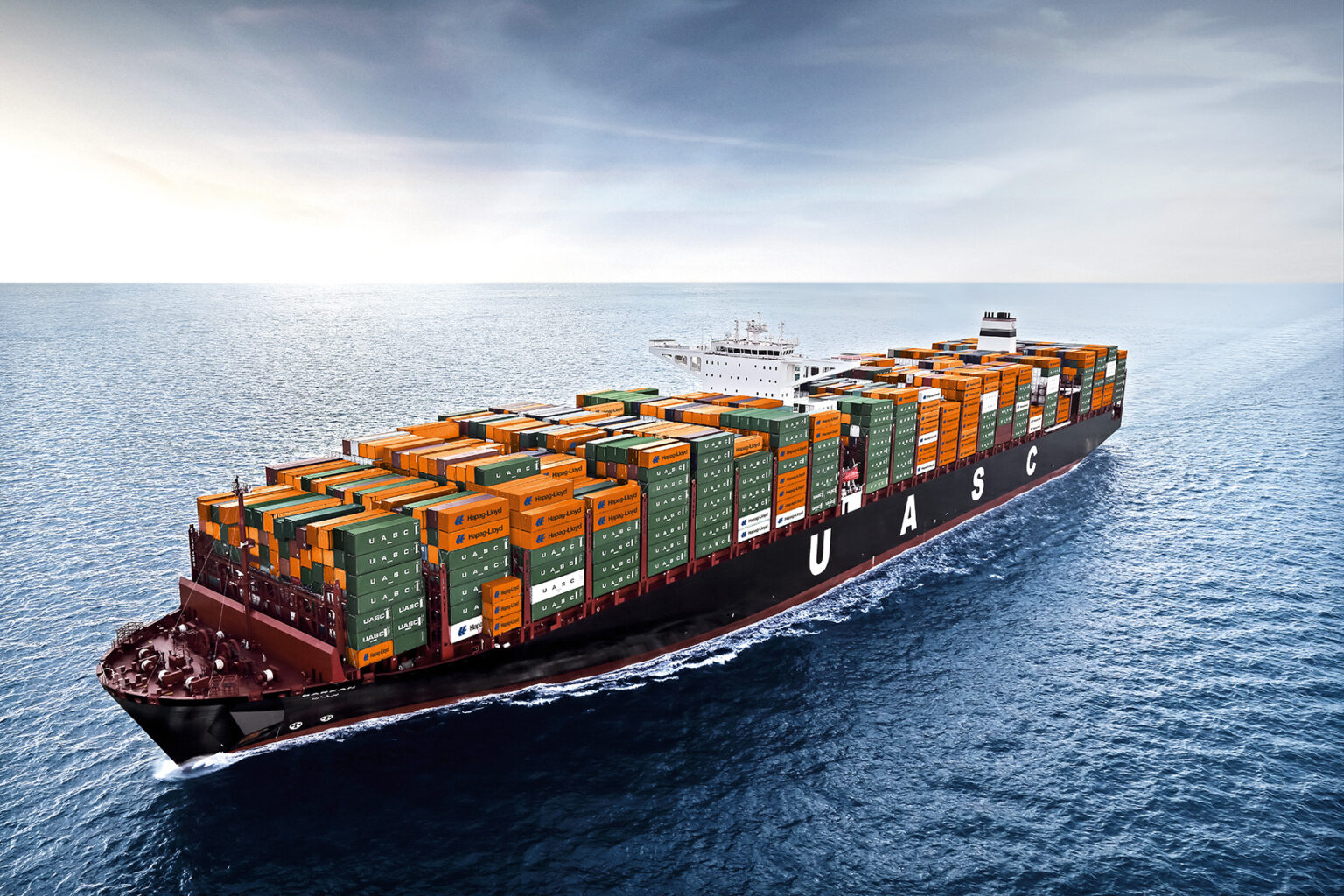
In early 2025, VARD introduced NuProShip, a project evaluating fourth-generation SMRs for commercial shipping. Shortly after, HD Korea Shipbuilding & Offshore Engineering unveiled a prototype of a 15,000 TEU container vessel powered by an SMR at the New Nuclear for Maritime Summit in Houston.
Meanwhile, CORE POWER announced Liberty, a U.S.-anchored maritime civil nuclear program aimed at deploying floating nuclear power plants (FNPPs) by the mid-2030s. The initiative includes modular reactor construction and the creation of supply chain and regulatory frameworks for global rollout.
In the UK, a new policy framework has been proposed to support the deployment of SMRs on commercial ships and FNPPs. Lloyd’s Register has also joined a coalition of major energy users, including Amazon, Google, Meta and Dow, pledging to triple global nuclear capacity by 2050.
Beyond shipping, Lloyd’s Register has collaborated with Seatransport and Deployable Energy to explore nuclear power for other applications, such as strategic response vessels in remote locations.
A comprehensive study titled The Role of Nuclear in Shipping Decarbonization, led by the New Energies Coalition and supported by Bureau Veritas, CMA CGM, PSA International and ONET, identifies several critical areas for further research:
Nuclear power has steadily been gaining ground as a decarbonization pathway for shipping. On 29 May 2025, IAEA Director General Rafael Mariano Grossi met with Greek shipowners and officials in Athens to discuss the future of nuclear-powered commercial shipping. Greece’s prominent maritime role positions it as a critical stakeholder in this emerging sector.
Recently, a report from the American Bureau of Shipping and Herbert Engineering proposed floating nuclear-powered facilities to meet growing energy demand from AI data centers, highlighting the intersection of maritime nuclear technology and artificial intelligence as a new frontier.
As nuclear technology sails closer to commercial reality, collaboration between regulators, industry leaders, and global organizations will be critical to ensuring that reactors at sea not only help decarbonize shipping but do so safely, responsibly, and efficiently.