The association calls on the EU Commission to reduce the current threshold of 65% of transhipment traffic
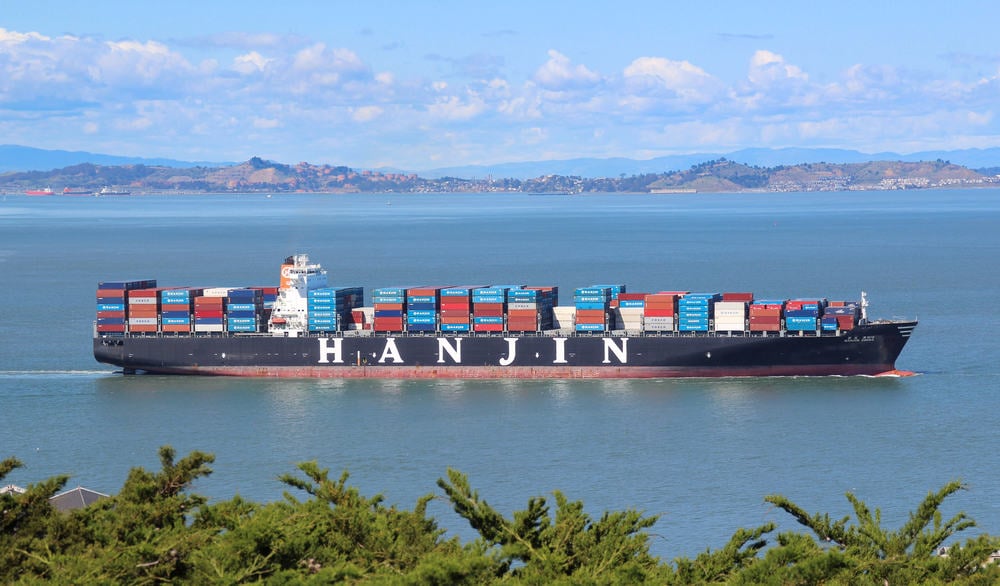
In view of the revision of the EU’s climate objectives for 2040, Transport & Environment (T&E), the association that promotes the reduction of the environmental impact of transport, has published a briefing in which it illustrates its main recommendations for strengthening the EU Emissions Trading System (ETS), in which, in addition to measures already requested, it proposes to the European Union Commission to assess the possibility of reducing the threshold of a share of more than 65% of transhipment traffic in the total container traffic handled by a non-EU port that is currently set to exclude the ports adjacent to EU territory from the definition of ‘port of call’ in the assessment of the sea route for the purposes of ETS calculation. This is in order to further safeguard the ETS from the risk of system avoidance practices by container shipping carriers.
In addition, according to T&E, the EU should introduce additional safeguards against carbon leakage by adopting a mechanism similar to the Carbon Border Adjustment Mechanism (CBAM) that has been implemented to prevent the risk of carbon emissions for goods containing greenhouse gases imported into the EU, taxing goods with high carbon intensity in imports. For the association, this goal, for example, could be achieved by transitioning to a container-based ETS application on a limited number of routes, theoretically those most sensitive to potential leakage. T&E explained that with this type of approach to maritime transport, similar to CBAM, the ETS price would apply to maritime emissions from imported/exported containerized freight from origin to destination—instead of on the last leg of sea voyages—if these containers are transshipped via extra-EEA transhipment hubs located in countries close to the EU. T&E specified that this would further reduce the incentive to replace transhipment activities carried out within the EU with non-EU vessels using feeder vessels.
Furthermore, T&E reiterated its proposal to extend the scope of ETS application to ships between 400 and 5,000 gross tonnage, which—the association recalled—are currently excluded despite their significant impact on emissions. T&E stressed that their inclusion in the ETS would generate an estimated revenue of €2.4 billion per year between 2028 and 2035 by introducing strong incentives for the decarbonization of the fleet.
For Transport & Environment, it is also necessary to eliminate exemptions that the association considers superfluous, particularly those relating to ferry routes which, in the opinion of the association, can already be managed with clean technologies. Many routes currently exempted until 2030—T&E explained—are well within the range of routes on which currently available clean technologies can be used.
Finally, according to T&E, the ETS should align with the standards of the European FuelEU Maritime Regulation by excluding biofuels derived from food and feed which—still considered to have zero greenhouse gas emissions under the ETS—the association highlighted, contribute to indirect land use change and higher emissions.