Xiamen, August 9 (Lin Yongchuan, Liu Yunjie) On August 9, with the efficient support of immigration management officers from the Dongdu Immigration Inspection Station of Xiamen Border Inspection Station, the Liberian-flagged vessel “MSC Orsola” successfully berthed at Haicang Songyu Terminal on its maiden voyage to Xiamen, marking the official launch of the new U.S. West Coast-Mediterranean route SENTOSA.
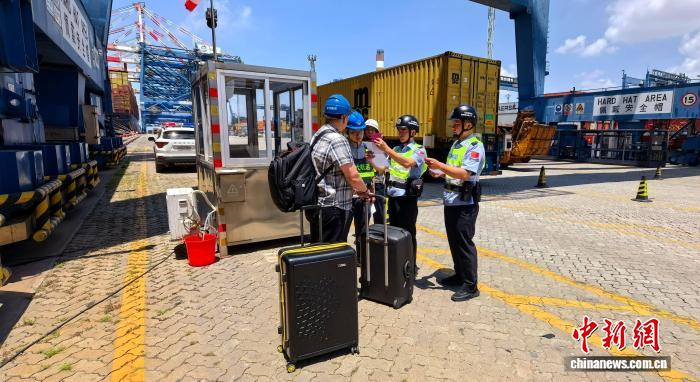
The photo shows immigration management officers from Xiamen Dongdu Border Inspection Station handling border inspection procedures at the terminal. Photo by Song Yuanwei.
The route deploys eight vessels with capacities ranging from 14,000 to 15,000 TEUs, calling at ports including Port Klang, Singapore, Laem Chabang, Vung Tau, Yantian, Xiamen, Long Beach, and Oakland. It connects Southeast Asia, South China, and the U.S. West Coast, forming an extensive trade network to meet cargo transportation demands across different regions.
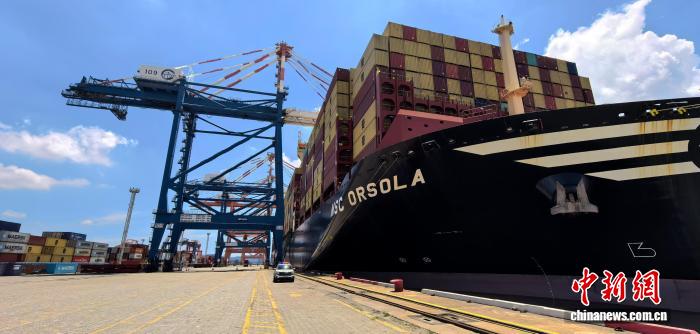
The photo shows Xiamen Port’s Songyu Terminal. Photo by Song Yuanwei.
The route primarily carries cross-border e-commerce goods, high-tech products, automobiles and parts, chemical products, and textiles. The addition of Xiamen Port to the route allows direct outbound shipments to Long Beach, U.S., after loading, saving transit time and strengthening the core link between South China and the U.S. West Coast while covering major Southeast Asian hub ports to meet diverse transshipment needs. The new route is expected to add 60,000 TEUs of annual throughput to Xiamen Port.
To ensure efficient and orderly berthing operations for the maiden voyage, officers from the Fourth Duty Team of Xiamen Dongdu Border Inspection Station provided proactive services, coordinating with port inspection units and relevant shipping companies. They monitored vessel movements in real time and implemented measures such as online processing via the “Single Window” system and pre-inspection to meet the “fast in, fast out” clearance needs of express container vessels. This achieved “zero delay” in vessel arrival and cargo handling, accelerating the global journey of “Made in China.” (End)