The weeks-long lockdown of Shanghai has first and foremost had an impact in Asia, though it is increasingly felt on a global scale as well, says analyst.
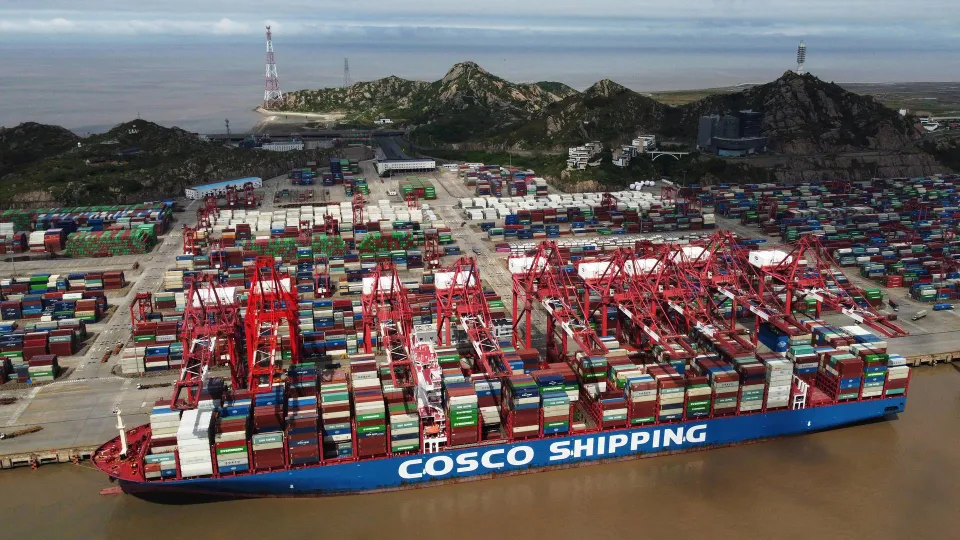
Major Chinese city Shanghai has now been locked down for five weeks due to outbreaks of Covid-19. And it may be long before containers are loaded onto ships at the same pace as previously.
”At best, it’ll be a month or two before things are back to normal,” predicts Peter Sand, chief analyst at Xeneta.
In a Chinese context, normality means a gradual softening of restrictions – not a complete reopening. But as the situation becomes increasingly normal, it doesn’t necessarily carry with it an immediate, massive pressure on container routes, according to Sand, since there is no ”large, built-up need.”
”We can’t just say that a lot of boxes are going to come out. The question is whether they have been produced,” states the analysts.
So far, the Shanghai lockdown has primarily affected regional production and trade in Asia, where intermediate goods normally flow between ports in large amounts. This has come to a partial halt as a consequence of restrictions and the limited mobility they cause.
”It is not only the port that has come to a halt, it is the entire regional supply chain,” Sand points out.
The effect is increasingly felt on routes in Europe. Carriers sometimes have to cancel, and delays have increased. Before the lockdown, already, carriers operated with ten-day delays, and now, it’s close to a month.
In relation to freight prices, spot rates have declined further since the lockdown. A reopening doesn’t entail that the spot market will ”soar vigorously,” Sand forecasts.
Among other factors, this is due to a large number of long-term contracts preventing the bottom from falling out of the market, he says.