Xiamen, Sept. 9 (Zhongxin Net) (Reporter Yan Xu) At the 7th “Maritime Silk Road” International Cooperation Forum held in Xiamen on the 8th, Liu Shengli, Vice President of the Transport Planning and Research Institute (TPRI) of the Ministry of Transport, released the “2024 Fujian Province Coastal Port Economic Development Report” (hereinafter referred to as the Report).
The Report was jointly compiled by the Transport Planning and Research Institute of the Ministry of Transport and the Fujian Provincial Port and Shipping Development Center. It centrally reflects the economic contribution of Fujian’s coastal ports, highlights the characteristics of Fujian’s economic development, showcases the features of port cities, and provides a scientific reference for port cities to carry out precise benchmarking, optimize industrial layout, and further enhance the quality of port economic development.
The Report shows that in 2024, the economic added value of Fujian’s coastal ports was 756.8 billion yuan, ranking 4th among coastal provinces in China, accounting for 15.3% of the GDP of the province’s coastal areas. It is in the first echelon and has maintained a rapid growth trend for a long time.
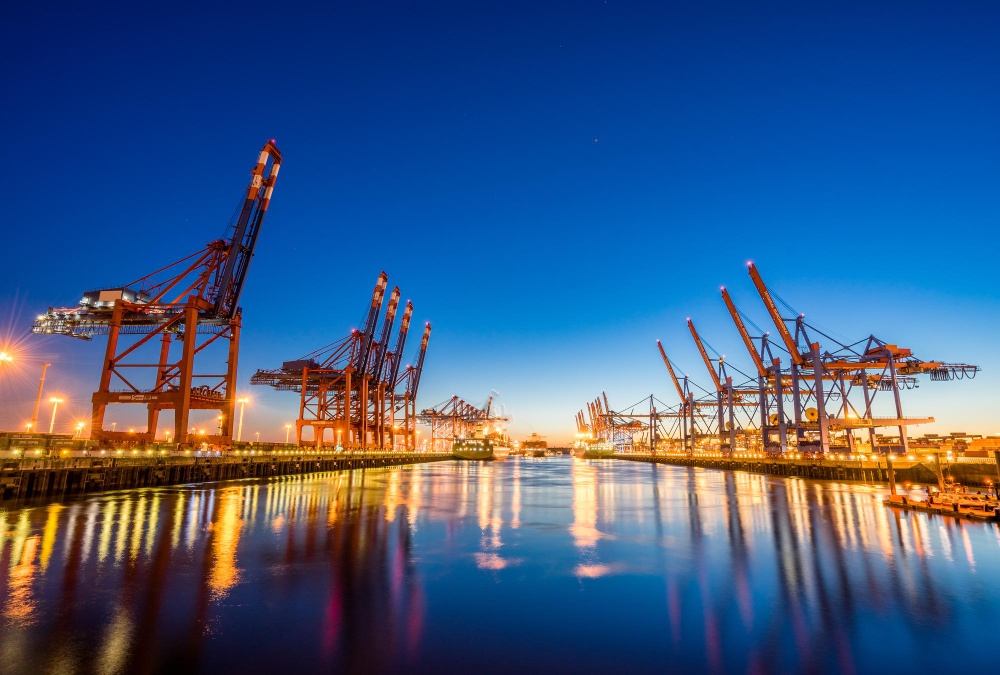
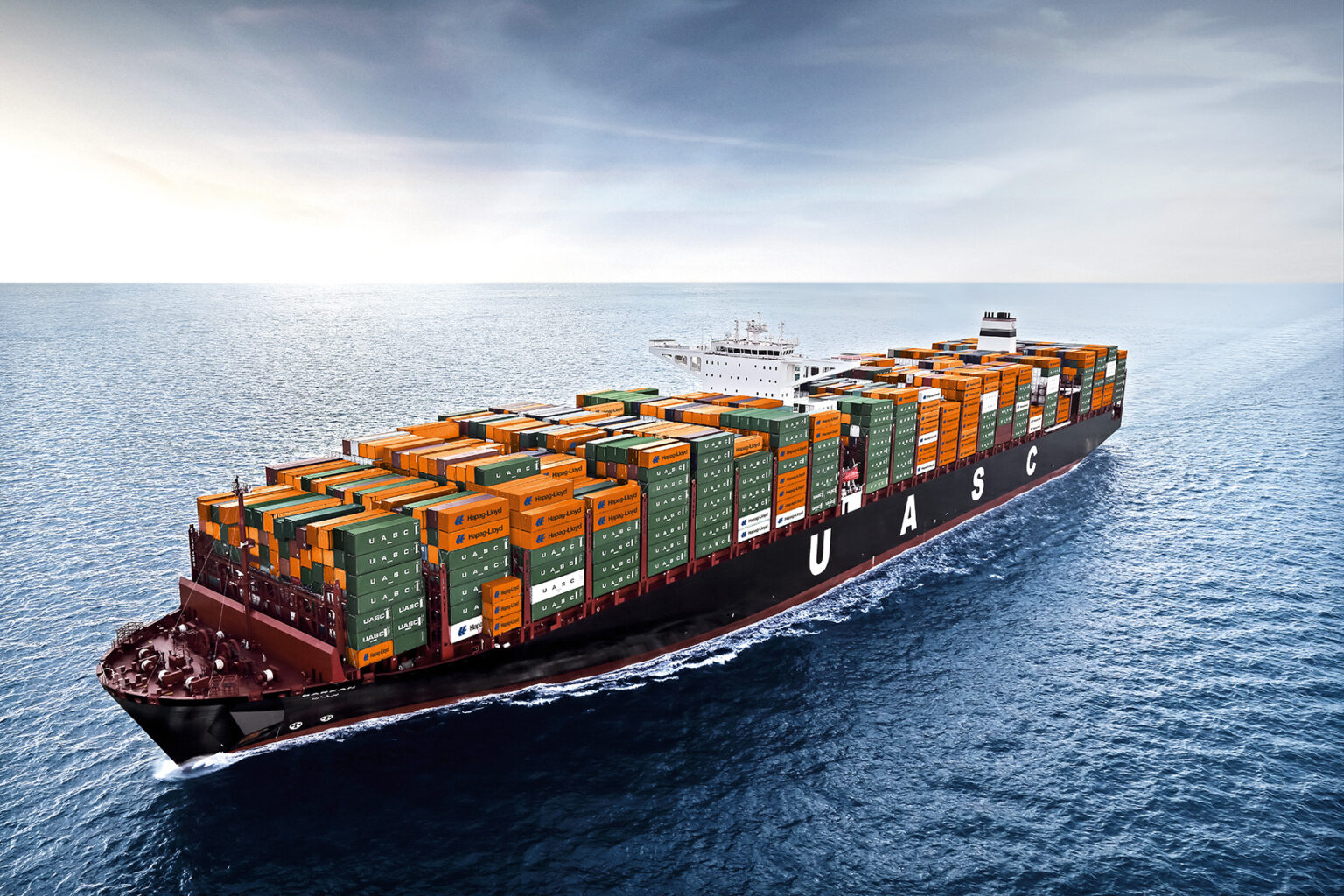
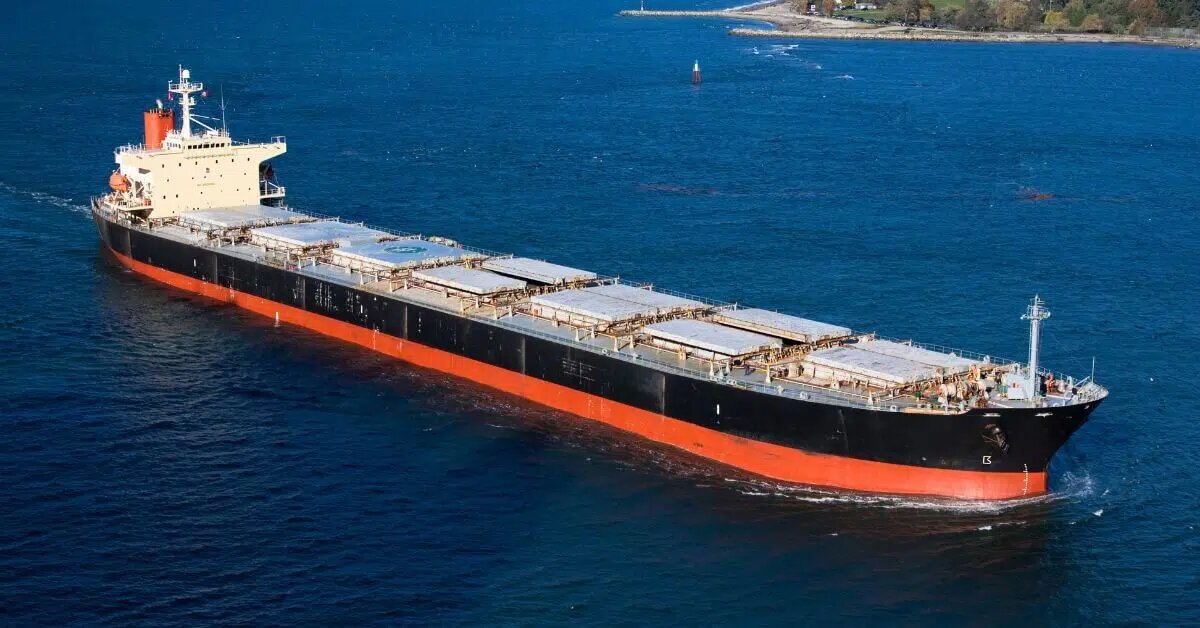
Fujian’s coast has built a number of large-scale port areas, including Jiangyin, Luoyuan Bay, and Sandu’ao in Fuzhou Port; Haicang, Dongdu, and Gulei in Xiamen Port; as well as Dongwu and Douwei in Meizhou Bay Port, and Quanzhou Bay in Quanzhou Port. These ports can routinely accommodate the world’s largest main ship types, such as container ships, oil tankers, and bulk carriers. In 2024, the cargo throughput of the province’s coastal ports was 740 million tons, including 18.12 million TEUs of containers. Relying on the ports, six key port economic industrial clusters have been formed: metallurgy, computer communication and other electronic equipment manufacturing, electrical machinery and equipment, construction, textiles, footwear, and apparel, and petroleum and chemicals. This demonstrates a multi-dimensional driving force from traditional advantageous industries, pillar industries, and emerging industries.
In terms of the scale of port economic development, the proportion of port economic added value in the GDP of each coastal city in Fujian is higher than the average level of national seaport cities. Among them, Quanzhou’s port economic added value was 212.1 billion yuan, accounting for 16.2% of its GDP; Fuzhou’s was 199.6 billion yuan, accounting for 14.0% of its GDP; and Xiamen’s was 130.4 billion yuan, accounting for 15.2% of its GDP. Their port economic added values rank 9th, 10th, and 18th among national seaport cities, respectively, collectively accounting for 71.6% of the province’s total.
The port economic added values of Zhangzhou, Ningde, and Putian were 83.9 billion yuan, 79.2 billion yuan, and 51.6 billion yuan, respectively. The proportion of port economic added value in their GDP reached 13.8%, 20.3%, and 14.7%, respectively. Leading industries such as petrochemicals, new energy, and textiles, footwear, and apparel have a prominent radiating and driving effect, forming a development model dominated by basic industries with innovative development of characteristic industries. (End)