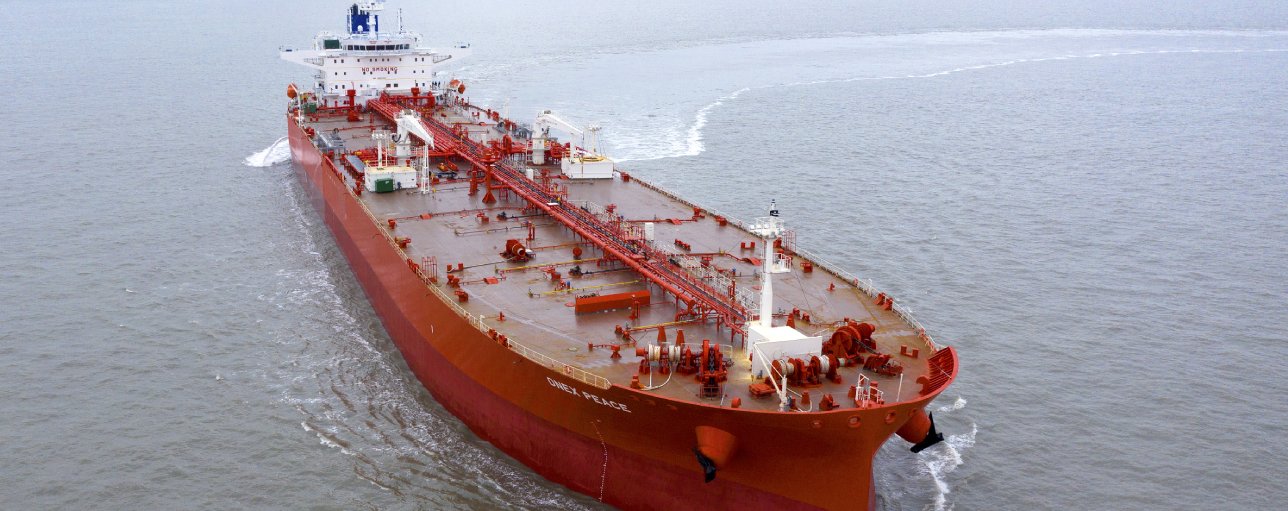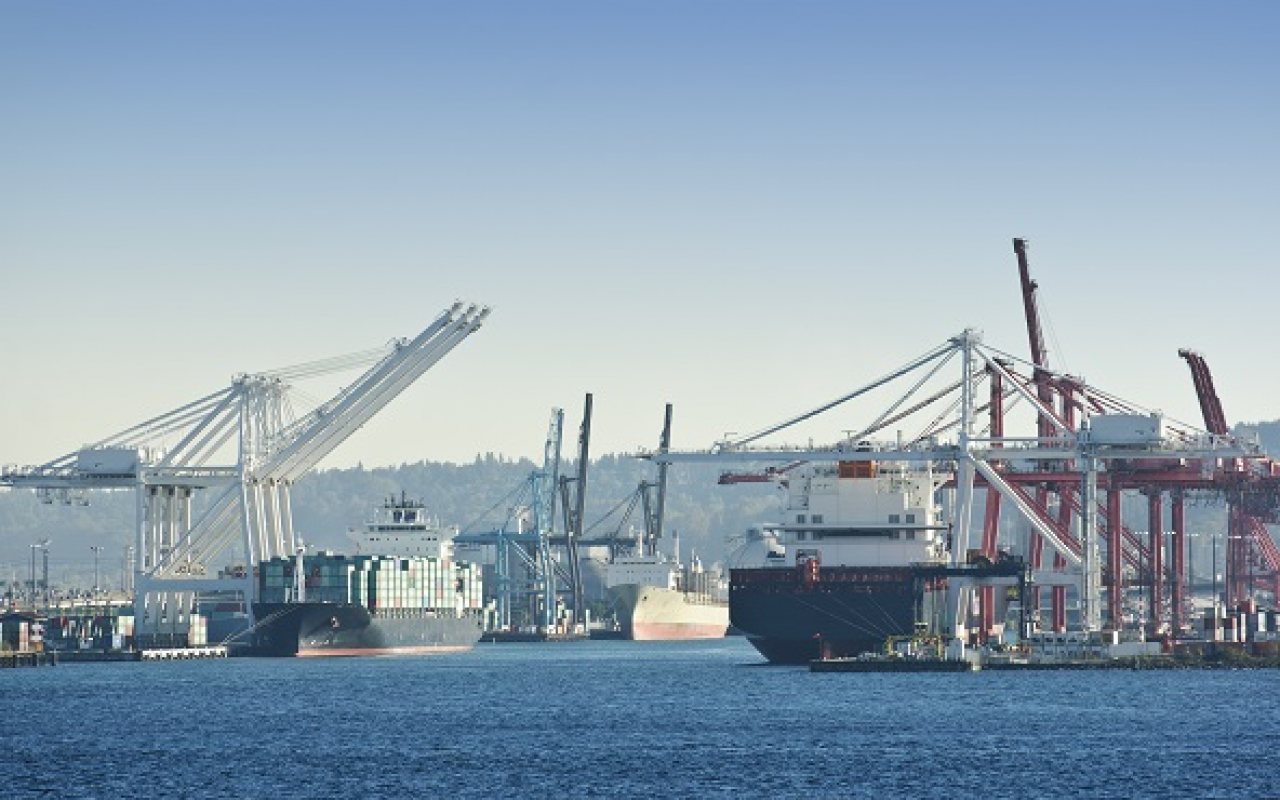
In August 2023, the Containerized Freight Index (European Route) futures were listed and began trading on the Shanghai Futures Exchange.
What are Containerized Freight Index (European Route) futures? It’s necessary to explain this first.
The Containerized Freight Index (European Route) futures are China’s first shipping futures product and a new risk management tool serving the shipping industry, primarily aimed at helping shipping companies and foreign trade enterprises cope with market fluctuations and enhance their overall competitiveness.
Two years on, how effective has the operation of the Containerized Freight Index (European Route) futures been? What help has it provided to enterprises? What new changes has it brought to the industry?
Foreign Trade Enterprises: “It lets us operate and produce with confidence”
In the past, Shandong Laiwu Taifeng Food Co., Ltd. often worried about shipping costs—the company primarily deals in grain and agricultural products, mainly for export, with sea transport being its most important shipping method.
However, in recent years, influenced by multiple domestic and international factors, container freight price fluctuations have increased, making shipping costs an “uncontrollable” expense for Taifeng Food. “As an agricultural product enterprise, the value of our goods is inherently low. When freight rates are high, the cost to ship a container of ginger or garlic can be higher than the value of the goods themselves,” explained a relevant负责人 from Taifeng Food.
Foreign trade enterprises have a need for stable freight rates and cost control, which is precisely the original intention of the Containerized Freight Index (European Route) futures in serving the real economy. After learning about the function of these futures, Taifeng Food decided to give them a try.
In October 2024, Taifeng Food received an order for ginger and garlic from Europe, scheduled for shipment from Qingdao in November.
“Traditionally, November and December are the period when container freight rates on the Asia-Europe route rise,” said Wang Pei, head of the Qingdao branch of Hongyuan Futures Co., Ltd.
How to mitigate the risk of price increases? With help from the SHFE and Hongyuan Futures, in October of that year, Taifeng Food purchased Containerized Freight Index (European Route) futures. By the end of November, the shipping price had indeed risen from $3,/FEU (Note: FEU is an international unit of container measurement) to $4,/FEU. However, because the company had purchased futures, where the freight rate in the futures market increased from $3,/FEU to $3,/FEU, the company gained RMB 32,000 in the futures market, offsetting the RMB 40,000 increase in procurement costs in the spot market. “With one profit in the futures market and one loss in the spot market, the company ultimately only had to pay an extra RMB 8,000 in freight, rather than accepting a RMB 40,000 increase in the freight rate,” said Wang Pei.
This is exactly the value of the Containerized Freight Index (European Route) futures. “In the past, without this product, we could only passively accept the fluctuations in shipping prices, with profits and losses largely depending on luck. With this futures product, shipping price fluctuations are contained within a certain range. We can produce with peace of mind and confidently accept orders from overseas,” said the relevant负责人 from Taifeng Food.
Freight Forwarding Enterprises: “Enhanced our competitiveness in the market”
In the import-export shipping chain, multiple parties are often involved—shipping companies responsible for pricing, and cargo owners responsible for production and shipment. Due to the complexity of import-export transportation links, cargo owners often hand over all transportation matters to freight forwarding companies. In this process, the party most affected by freight rate fluctuations is the freight forwarder.
Qingdao Taize International Logistics Co., Ltd. is one such freight forwarding company deeply rooted in the local area. “In Shandong, there are many manufacturing and agricultural enterprises, import-export demand is very strong, and there are also many international logistics companies,” said Lu Yong, the company’s general manager, candidly. “However, the numerous international logistics companies have also led to internal competition within the industry. The phase of competing on price is over. How to provide better service to cargo owners? The Containerized Freight Index (European Route) futures正好 provide us with a new opportunity.”
“In the past, we bore the risk ourselves. Now, with the Containerized Freight Index (European Route) futures, we hedge the risk out through the futures market. Having what others don’t also enhances our core competitiveness in the freight forwarding market,” said Lu Yong.
“In July last year, when freight rates rose, we conducted hedging transactions for the freight rates of 29 containers with our partners, not only effectively avoiding price fluctuations but also gaining some profit,” Lu Yong said with some pride.
The practice of Taize Logistics is exactly the new opportunity that the Containerized Freight Index (European Route) futures bring to the freight forwarding industry. Watching the market to accept orders and locking in prices upon accepting orders is becoming a new尝试 for freight forwarders.
Stabilizing the International Logistics Market, Industry Participation Awareness Needs Further Improvement
For实体 enterprises with export needs, the Containerized Freight Index (European Route) futures bring stable freight rates, allowing them to operate and produce with peace of mind; for freight forwarding enterprises, these futures help them resist risk fluctuations and increase their core competitiveness in the market.
During its two-year listing anniversary, the Containerized Freight Index (European Route) futures have较好地 played their role as financial derivatives, providing a new financial tool to助力 the development of the real economy.
Some data is most直观. As of the close on August 15, 2025, in the two years since its listing, the Containerized Freight Index (European Route) futures have累计 operated for 483 trading days, with a cumulative trading volume of 61.0491 million lots, a cumulative trading value of RMB 5.28 trillion, a daily average trading volume of 126,400 lots, a daily average trading value of RMB 10.942 billion, an end-of-period open interest of 79,500 lots, and a daily average open interest of 84,300 lots. During this period, it withstood the test of rapid and剧烈 increases in spot freight rates during the Red Sea crisis at the end of 2023, continuous price hikes from March to July 2024,以及 the significant price fluctuations following the China-U.S. economic and trade frictions since April this year.
Application scenarios are also continuously expanding. Lu Yong found that many enterprises, from initially not understanding or accepting it, are now increasingly主动尝试参与 futures hedging to mitigate risks, including upstream, midstream, and downstream companies in the shipping industry.
However, it must also be seen that due to the high threshold of the futures market, as a new product, the Containerized Freight Index (European Route) futures still have significant room for market promotion.
“Many willing to try are those who have had prior experience with futures products,” Lu Yong admitted candidly. During promotion, some enterprises still “suspect we are scammers” or ask “is it really as good as they say?”—questions his team often hears during promotions.
Import and export are barometers of the economy. Smoothing domestic and international markets requires more stable supply chains and the assistance of financial tools. How to let more enterprises understand, recognize, and be willing to use the Containerized Freight Index (European Route) futures remains a long and challenging task.
During the reporter’s investigation, a training session was being held locally in Qingdao. It is hoped that in the future, this good product can be understood, used, and benefited from by more and more people.
(Source: People’s Daily Central Kitchen – Great River Studio)