Nigeria could become a pioneer in low-carbon port logistics in West Africa and, with this, lead sustainable container transport on the continent, according to the World Economic Forum (WEF).
This is according to what was presented in a new technical report prepared by the Nigerian government and APM Terminals, with the support of the consultancy Systemiq and international organizations such as the African Development Bank and the European Bank for Reconstruction and Development.
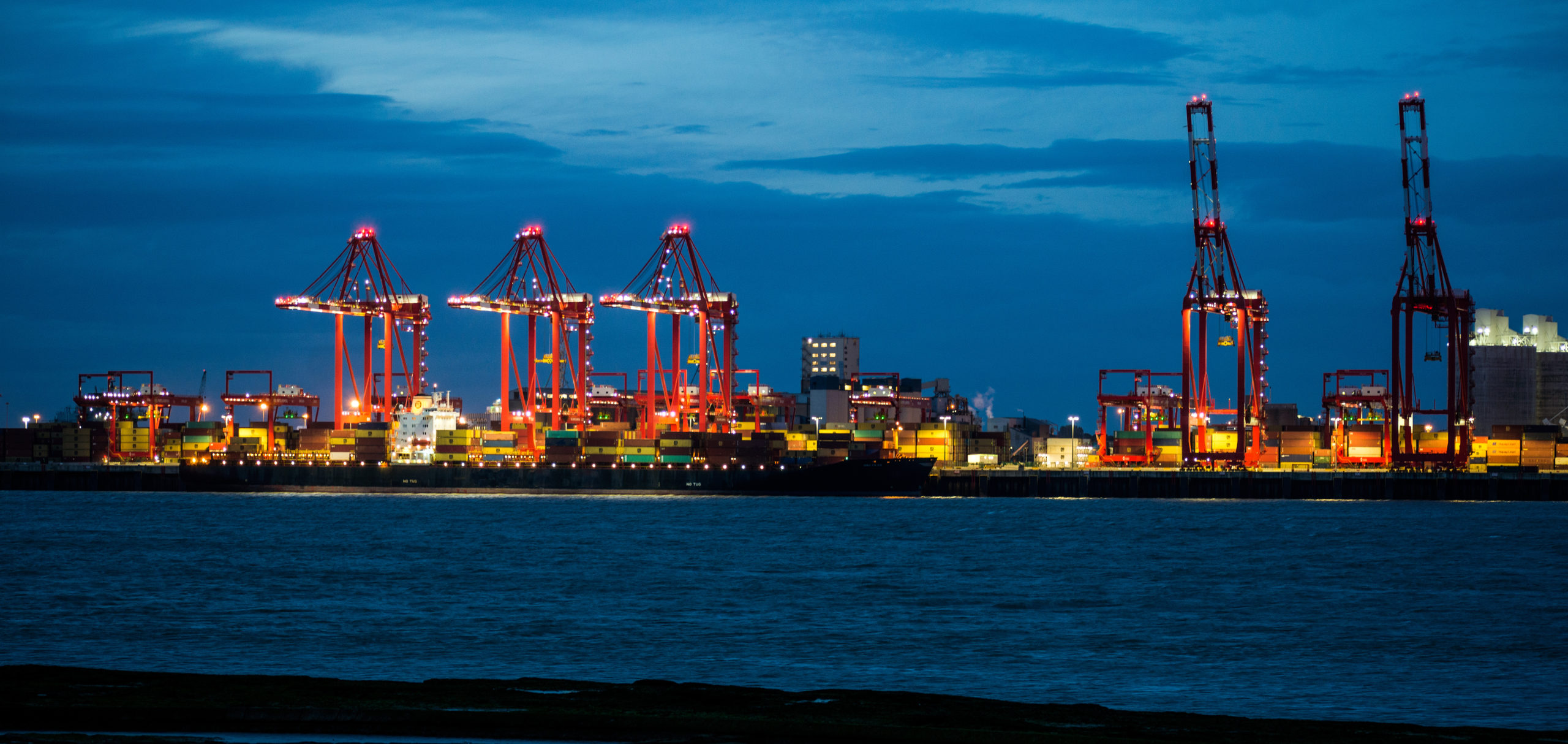
The document proposes a profound transformation of the country’s logistics sector, starting with the electrification of its main ports –Apapa, Tin Can Island and Onne– and the launch of electric corridors for road freight transport.
The strategy aims to reduce up to 80,000 tons of carbon dioxide emissions per year. In addition, “electrification can mobilize up to 830 million dollars in investments by 2030, create more skilled local jobs, reduce air pollution and improve public health,” emphasized the WEF.
Currently, 70% of West and Central Africa’s container trade passes through Nigerian ports, positioning the country as a strategic actor to lead the transition towards cleaner logistics.
Container volume is estimated to grow by 30% by 2030, which opens a window of opportunity for the public and private sectors to jointly invest in electrical infrastructure, renewable energy, and labor training.
The roadmap presented in the report is divided into two phases. Between 2025 and 2027, the foundations will be laid with the electrification of key terminals, installation of solar panels, and electric transport pilots, while from 2028 to 2032 the model will be scaled nationally, integrating zero-emission standards and strengthening the electrical grid through public-private partnerships.
“Our findings clearly show that the time to act is now. Electrification aligns with upcoming investment cycles and can drive progress on key national priorities,” emphasized Eveline Speelman, a partner at Systemiq.
The report also highlights that clean technology costs have decreased dramatically in the last decade, noting that battery prices have fallen 80% since 2013 and solar power is now 75% cheaper. This would make electrification increasingly competitive against diesel, with estimated savings of up to 40% in energy and maintenance.
However, the challenge is still considered considerable, as modernizing the entire logistics infrastructure would require coordinated planning, affordable financing, development of charging infrastructure, and a reliable electrical grid. In addition, training the workforce to adapt to new technologies is pointed out as key.
In this way, Nigeria would not only seek to transform its logistics sector, but also become a model for other emerging economies. If it can be demonstrated that large-scale electrification is viable and profitable, it could inspire similar transitions in other regions of the Global South.