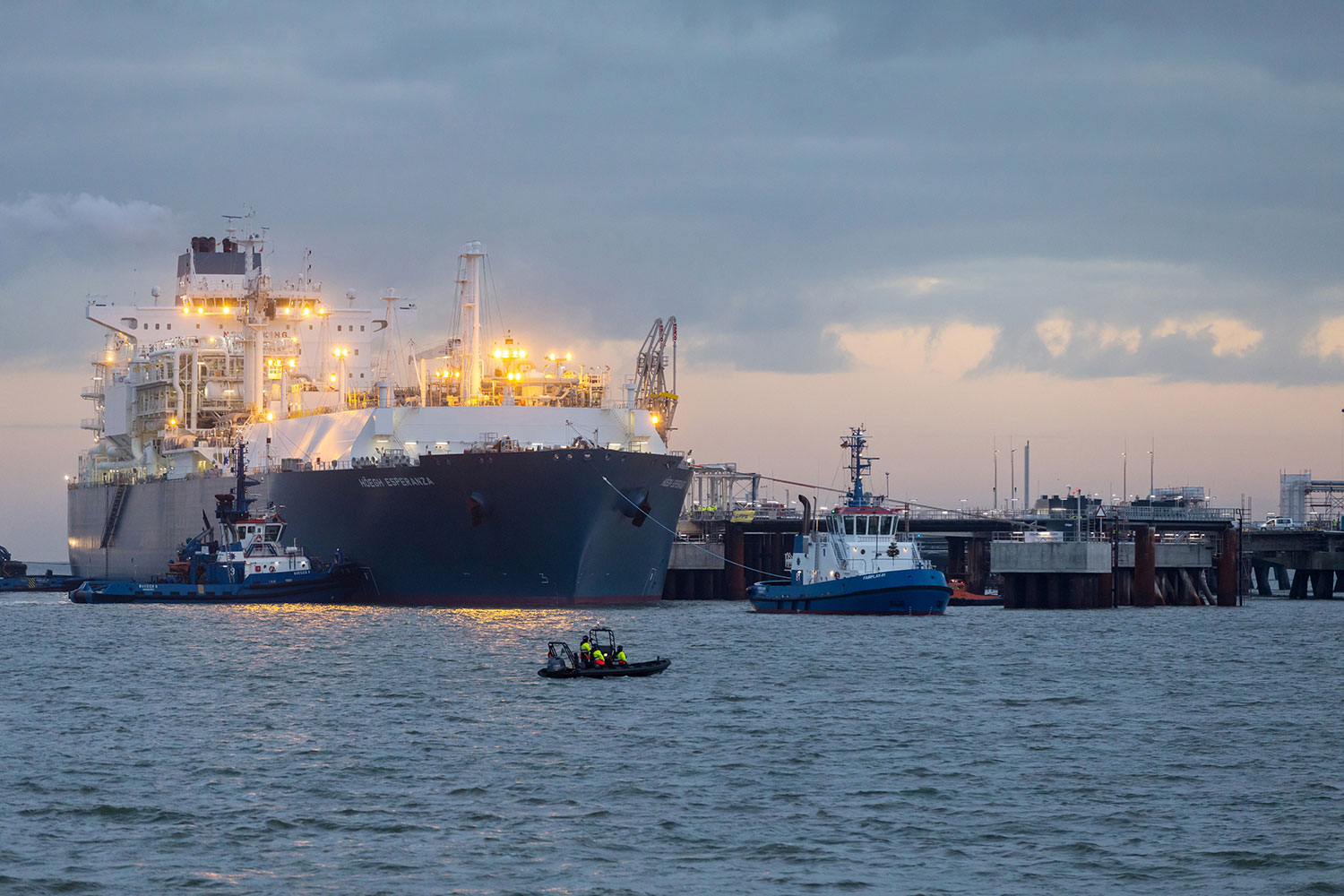
29 hours lasted the ordeal of the LNG ship’s crew by the activists in Belgium, when Greenpeace blocked the Zeebrugge terminal.
29 full hours the crew of an LNG transport ship was tormented as it tried to depart from the Liquefied Natural Gas terminal at Zeebrugge, Belgium, which was blockaded by Greenpeace activists, while several other ships changed their schedule due to this blockade.
Belgian police ends the blockade of the Liquefied Natural Gas terminal at Zeebrugge by Greenpeace protesters.
The blockade was terminated by the Belgian police with the activist organization confirming that its activists were removed and arrested after 29 hours, while its sailboat was towed to a dock in the port and the smooth operation of the terminal and the LNG transport ships was restored.
Approximately 70 Greenpeace activists descended on the port on Wednesday, October 1, with a flotilla of small boats, kayaks, and inflatables, supporting the 22.5-meter Greenpeace sailboat, “Witness”.
Reports mentioned they had organized the protest and had hidden in various locations around the port, so that it would start immediately after the departure of an LNG ship from the terminal operated by Fluxys.
The group had a large inflatable with the figures of Vladimir Putin and Donald Trump and a large banner that read “They love natural gas, you pay the price”.
It was timed to coincide with the ongoing talks regarding the EU’s 19th sanctions package against Russia, which demands the termination of Russian natural gas imports.
Greenpeace, however, is also demanding the termination of LNG imports from the USA, saying that Europe must stop all fossil natural gas supply contracts with a phase-out by 2035.
“By ending this action, the law enforcement authorities are allowing big polluting industries to continue their business as usual. It is the fossil fuel companies and their enablers who must be held accountable. But we will not give up on them,” said Lisa Göldner, Campaign Manager for Fossil Fuels, of Greenpeace Germany.
A police vessel was near the protest on Wednesday, but did not initially take any action.
After about 24 hours, Greenpeace stated that more than 40 protesters were still blocking the terminal with their kayaks and inflatable boats. They were determined to remain, despite the low temperatures, humidity, and lack of sleep.
The Witness had moored inside the port, blocking the entrance to the terminal.
The liquefied natural gas carrier Arctic Voyager (75,485 dwt) managed by K Line was coming from Norway but delayed its arrival until Friday, October 3.
The ship Rias Baixas Knutsen (96,354 dwt) of Knutsen OAS Shipping also reported it had stopped off the coast of Spain.
Reuters, also citing LSEG data, reported that the Megara (95,452 dwt), coming from the US and managed by Shell’s STASCO, and the MOL LNG carrier Phecada (91,712 dwt) coming from Russia, have also delayed their journey.
The MOL vessel is expected to arrive in Zeebrugge on October 5, while the latest AIS signal from the STASCO vessel showed it in the mid-Atlantic awaiting instructions.
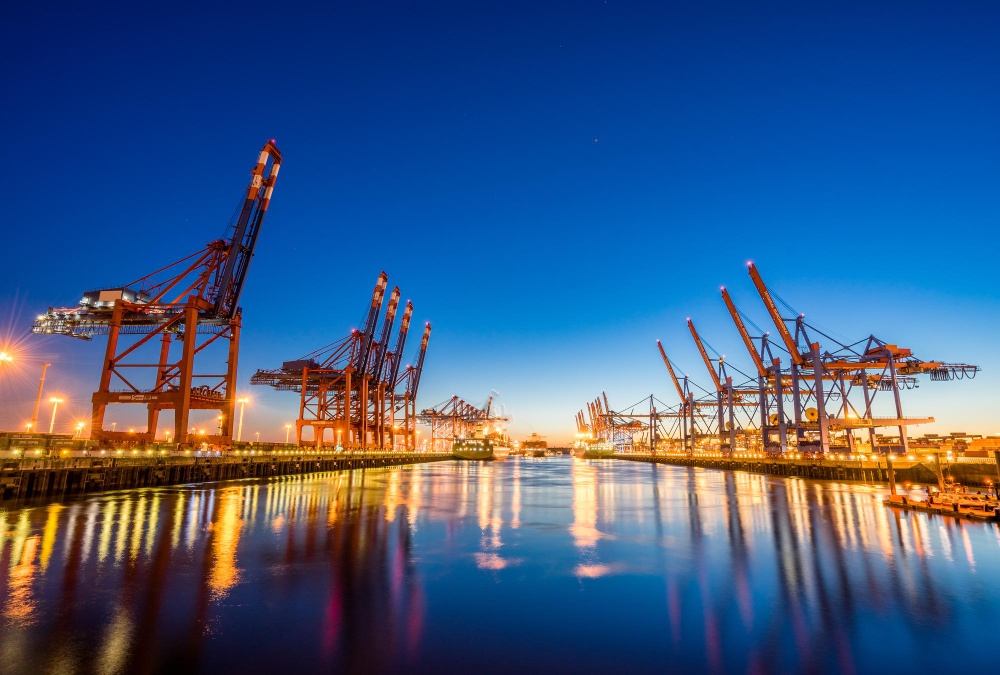
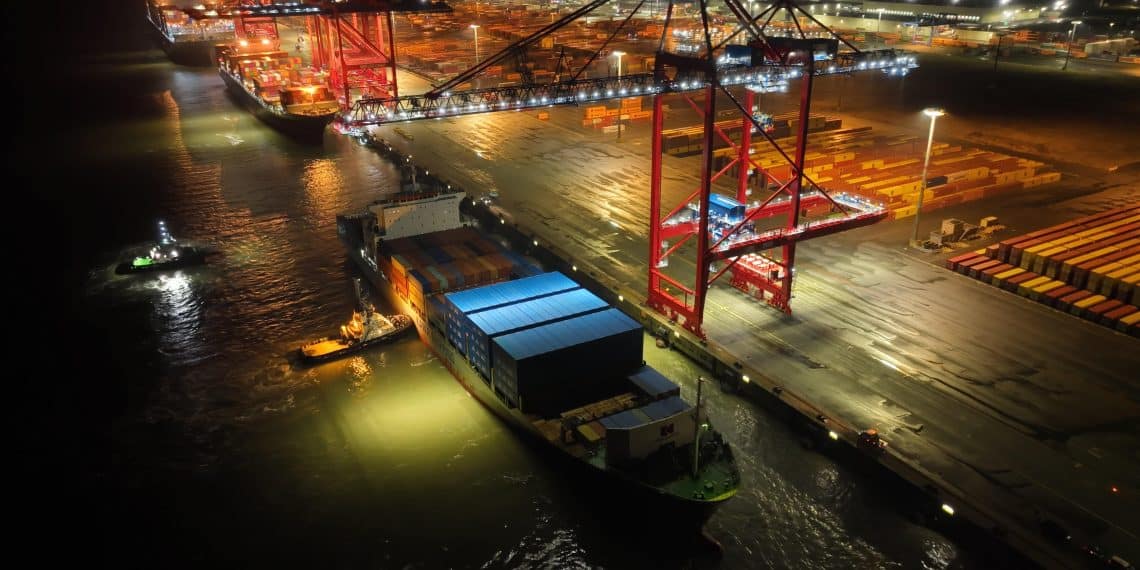
The Fluxys terminal is one of the largest in Europe and serves both LNG imports and transshipment.
The company told Reuters it is operating normally, although ship traffic has been interrupted. They expect the blockade will likely last until Sunday, October 5.
Police and the military undertook the effort to stop the blockade. Greenpeace stated that it took several hours for the blockade to stop and that the protesters were ultimately arrested.