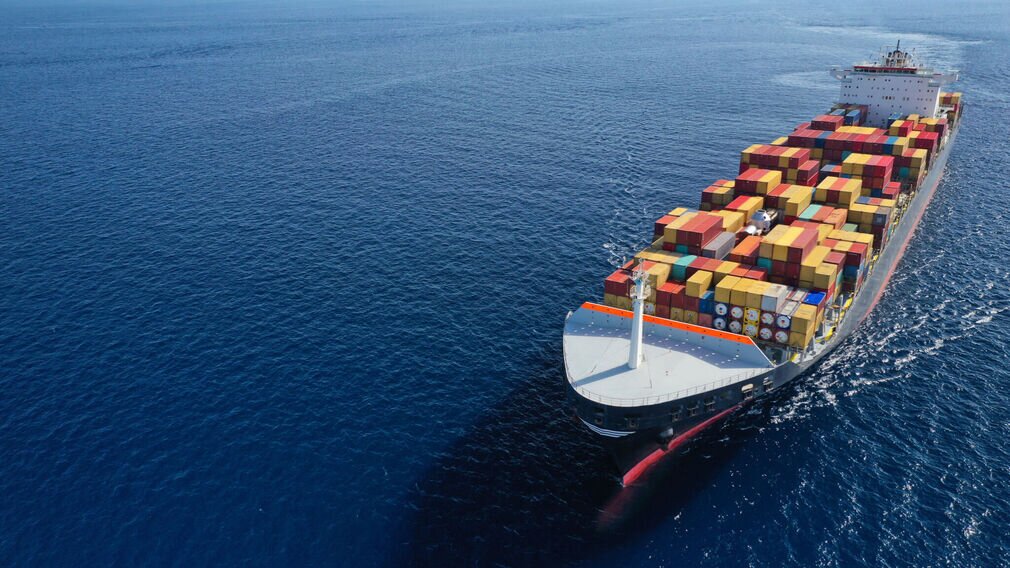
A P Moller – Maersk (Maersk) is retrofitting around 200 vessels in its time-chartered fleet in close collaboration with the owners.
The main aim of the programme, which involves 50 different shipowners, is to reduce the slot cost by improving fuel efficiency and cargo-carrying capacity, leading to a decrease in both cost and greenhouse gas emissions.
Maersk head of asset strategy and strategic partnership, Ahmed Hassan, said the company’s medium- and long-term chartered fleet made up a significant proportion of operations and total fuel consumption.
“By working closely with our partners, we aim to implement solutions that not only reduce emissions but also enhance the overall competitiveness of our fleet,” Hassain said.
Maersk has set the target of a 35% absolute reduction in its scope 1 greenhouse gas emissions by 2030 compared to the 2022 baseline year.
“While fuel transition is needed to reach our long-term goal of net-zero emissions by 2040, investments in existing fleet efficiency enhancement technologies are a powerful tool to gain significant emissions reductions in the short term,” Hassain said.
“Consequently, this strong emphasis on efficiency measures can deliver tangible progress towards our 2030 goal. That goes for owned as well as chartered vessels,” he said.
In total, Maersk and time-charter partners have executed more than 1 500 individual projects across 200 vessels with 50 shipowners, and an additional 1 000 projects are in the process of execution, scheduled to be finalised by 2027. The investment cost for these solutions is split between Maersk and the vessel owners.
“We have, from experience, found that this model is a win-win. At Maersk, we can reduce both emissions and fuel costs, while the owners get the long-term value of a modernised vessel,” Hassan said.
“Fleet renewal is often seen as new vessels replacing the old, but it is also about ensuring your existing vessels keep their competitive edge,” he said.
Given the scale of the project, it spans very different vessels in terms of size and configurations, also meaning that the retrofit tools being used vary.
Of the around 200 vessels being retrofitted, a significant change to configuration is the replacement of the propeller or bulbous bow. The integration of an optimally designed bulbous bow reshapes water flow around the hull to reduce drag and enhance hydrodynamic efficiency – ultimately lowering fuel consumption. Alongside this, the replacement of propellers combined with pre-swirl devices plays a role in maximising thrust while minimising energy loss.
Maersk head of chartering and newbuilding, Anda Cristescu, said many of these ships were constructed at a time when container vessels in general were sailing at faster speeds.
“To bring down fuel consumption, we have, over the years, introduced less compressed vessel schedules, but the propellers and bulbs optimised for faster speeds have been kept.
There lies a big efficiency potential in replacing them,” she said.
Other retrofit solutions, such as auxiliary engine waste heat recovery systems, allow steam production from auxiliary engine heat, reducing the reliance on fuel-oil-fired boilers.
Similarly, the installation of shaft generator systems cuts down auxiliary engine usage, contributing to significant fuel savings.
Cargo-carrying capacity is also being enhanced through a range of structural and technical improvements: elevating the wheelhouse to improve line of sight and increase intake, raising the lashing bridges, strengthening the vessel’s deadweight capacity for deeper drafts, and upgrading both lashing systems and loading computer functionalities.
View the discussion thread.
International Trade Centre data shows exports by Agoa countries will rapidly decline by 2029 if the programme is not renewed.
Deputy Minister of Transport, Mkhuleko Hlengwa, will attend the event along with operators and environmental representatives.
The vehicle was travelling on the N1 near the Huguenot tunnel when police conducted a stop-and-search operation.
“Ships may be built of steel, but seafaring is built on people.” – Bjorn Hojgaard.
Harbour operations reveal that more than 300 vessels are currently moored across 12 harbours.
It will provide support for trainers in developing countries to produce locally relevant courses.
Its plan proposes a ‘Secure Saldanha Prosperity Corridor’ focused on the Port of Saldanha Bay.
The AHTSV Umkhuseli also plays a critical role in maritime skills development.
A London Court has ruled in favour of the terminal operator, which has filed $1bn in claims.
Three undocumented foreign drivers have been arrested after 260 trucks were stopped on the road.
Rennies Consolidated believes it will help build a more competitive, efficient logistics sector in the region.
Network Aviation Group has a fleet of freighters serving it.
Israel’s interception of the vessel off the coast of Gaza reinforces the country’s violation of international law says the President.