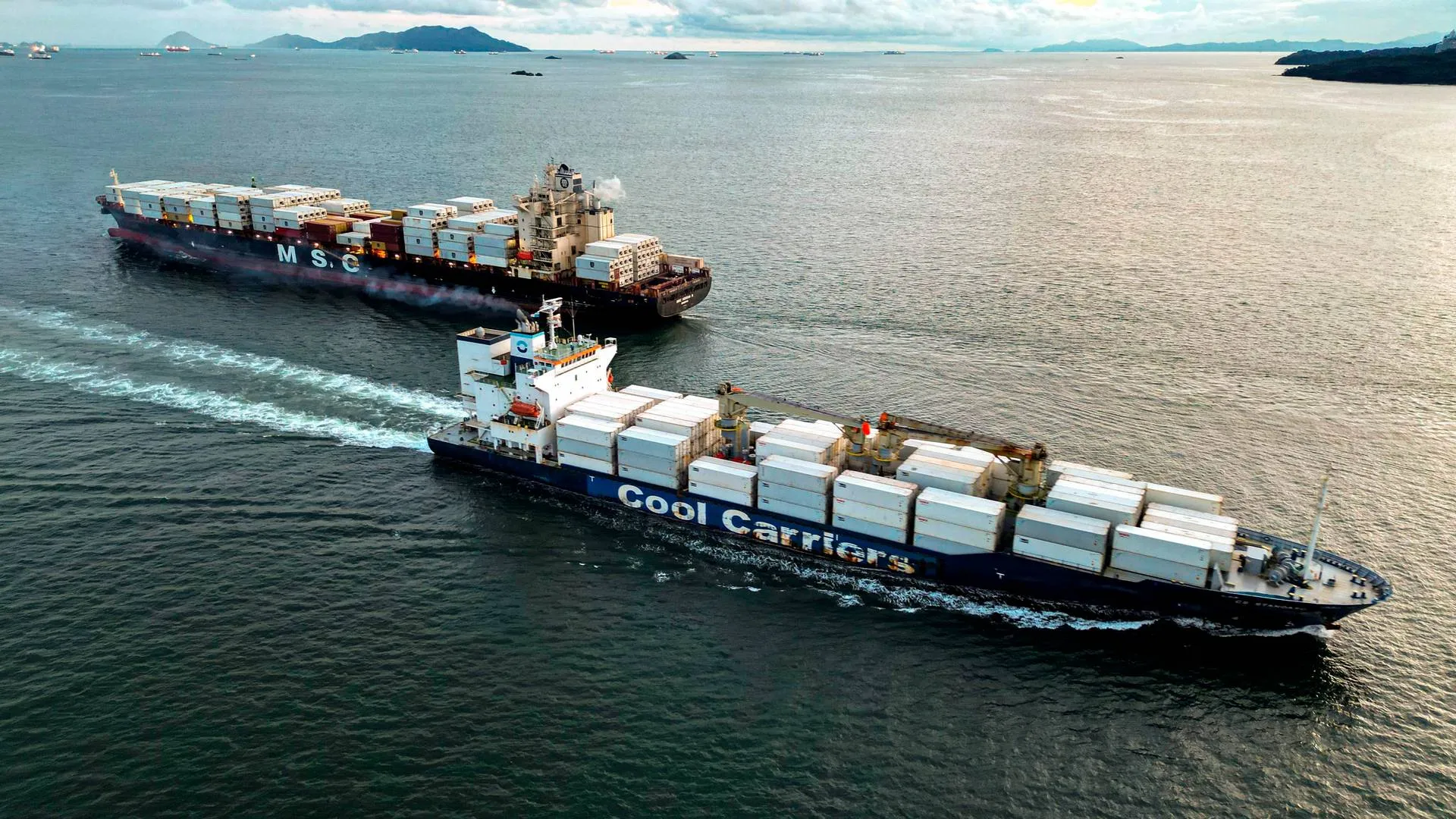
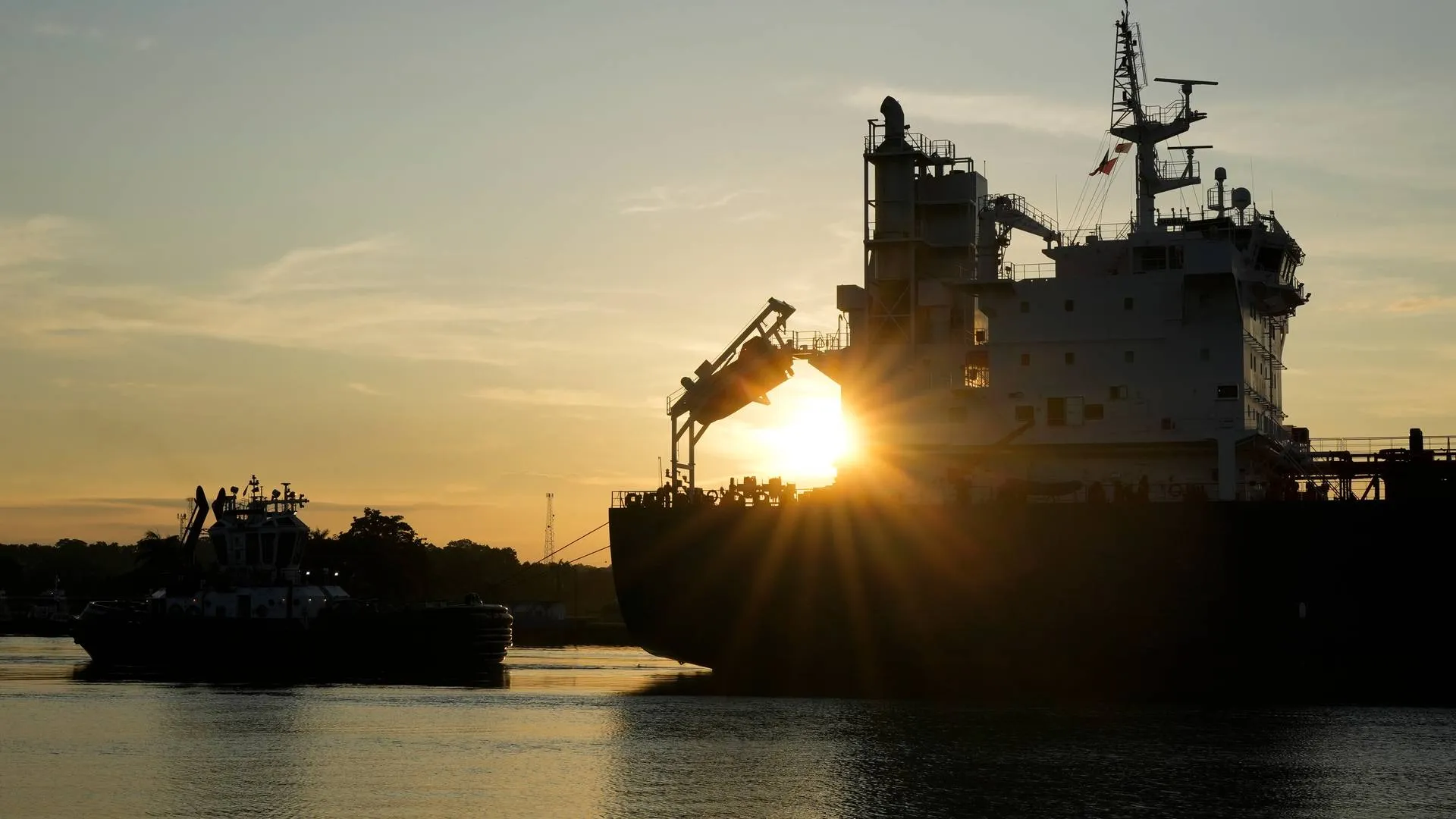
Specifically, Castor Maritime has returned to profitability, Toro is strengthening its cash reserves and Robin Energy is making an impressive debut with new purchases and investments
in crypto.
Castor Maritime Inc. (CTRM) operates in the dry bulk and containerships sector,
with a diversified presence and through the asset management platform MPC Capital. Its fleet includes eight bulk carriers and one containership, with a total capacity of 684,883 dwt.
In the second quarter of 2025, revenues were $10.2 million, down from $16.3 million a year earlier (-37.4%), while net profits amounted to $6.3 million. EBITDA reached $10.7 million.
On a half-year basis, total vessel revenues were $21.5 million (-41.4%), the company
posted a net loss of $17 million and cash at the end of June was $44.8 million dollars.
During the quarter, Castor completed two vessel sales (four in the first half), while it incorporated $7.8 million in service revenues from the acquired MPC Capital.
Crucial on the financing side was the full prepayment of the loan from Toro (series of prepayments March-May totaling $100 million), which
led to substantial deleveraging (loan balance of $5.3 million in the asset management sector).
Furthermore, on September 29 the listed company agreed to issue 60,000 Series E preferred shares to Toro, with a nominal value of $1,000 each ($60 million), with a coupon of 8.75%.
Petros Panagiotidis, CEO of Castor, commented that despite the headwinds
in the dry bulk market, the company proceeded with fleet renewal moves and capital repositioning.
“The strong balance sheet structure and flexible business model allow us to target more predictable flows and value creation,” he added.
Toro Corp. (TORO) specializes in energy sea transport, with a fleet of two MR tankers and two LPG carriers (total capacity 110,000 dwt), which serve international charterers in the petroleum products and LPG market.
With a strong cash base and liquidity exceeding $100 million, the company is proceeding with new purchases of medium-range tankers, strengthening its position in the energy market.
During the second quarter, Toro’s revenues from continuing operations were
$4.1 million (-24.1%), but net profits increased to $1.4 million (27.3%).
Regarding the half-year picture, revenues were $9.6 million, while net profits were $2.9 million.
Key was the rise in liquidity to $114.7 million (from $37.2 million at the end of
2024), mainly due to the full repayment by Castor of the $100 million loan and positive investment flows.
At the fleet level, Toro strengthened its presence in the MR2 segment, purchasing the M/T Wonder
Altair (2021) for $36.25 million (delivery /2025), while subsequently it also acquired the
M/T Wonder Maia (2014) for a price of $30.3 million (delivery /2025).
Concurrently, it completed the sale of two LPG carriers (Dream Syrax, Dream Terrax) to Robin.
Commenting on the company’s course, CEO P.
Panagiotidis noted: “We are delivering consistent operational performance, with a clean balance sheet and strong liquidity that give us
the flexibility to optimize our fleet and enhance value for shareholders.”
Finally, Robin Energy (RBNE), the group’s newest listed company, has a presence in the LPG carriers and small-to-medium scale tanker market, targeting high value-added energy transportation.
Its fleet, which started with one vessel from Toro, has already tripled with the acquisition of two additional LPG carriers within a few months.
Following its spin-off (/2025) and the start of trading on Nasdaq on April 15, the Toro spin-off recorded in the second quarter revenues of $2.0 million (+33%), net profits
of $0.5 million, and EBITDA of $0.7 million.
For the first half, revenues were $3.6 million, net profits were $0.4 million, and available cash amounted to $39.4 million.
The listed shipping company also confirmed the completion of the distribution of $5 million in bitcoin through Anchorage Digital Bank N.A., as part of the new strategic framework
it has adopted.
“The second quarter was our first full one as an independent listed company. We strengthened liquidity, expanded our fleet, and adopted a flexible capital strategy for sustainable growth,” Mr. Panagiotidis emphasized.