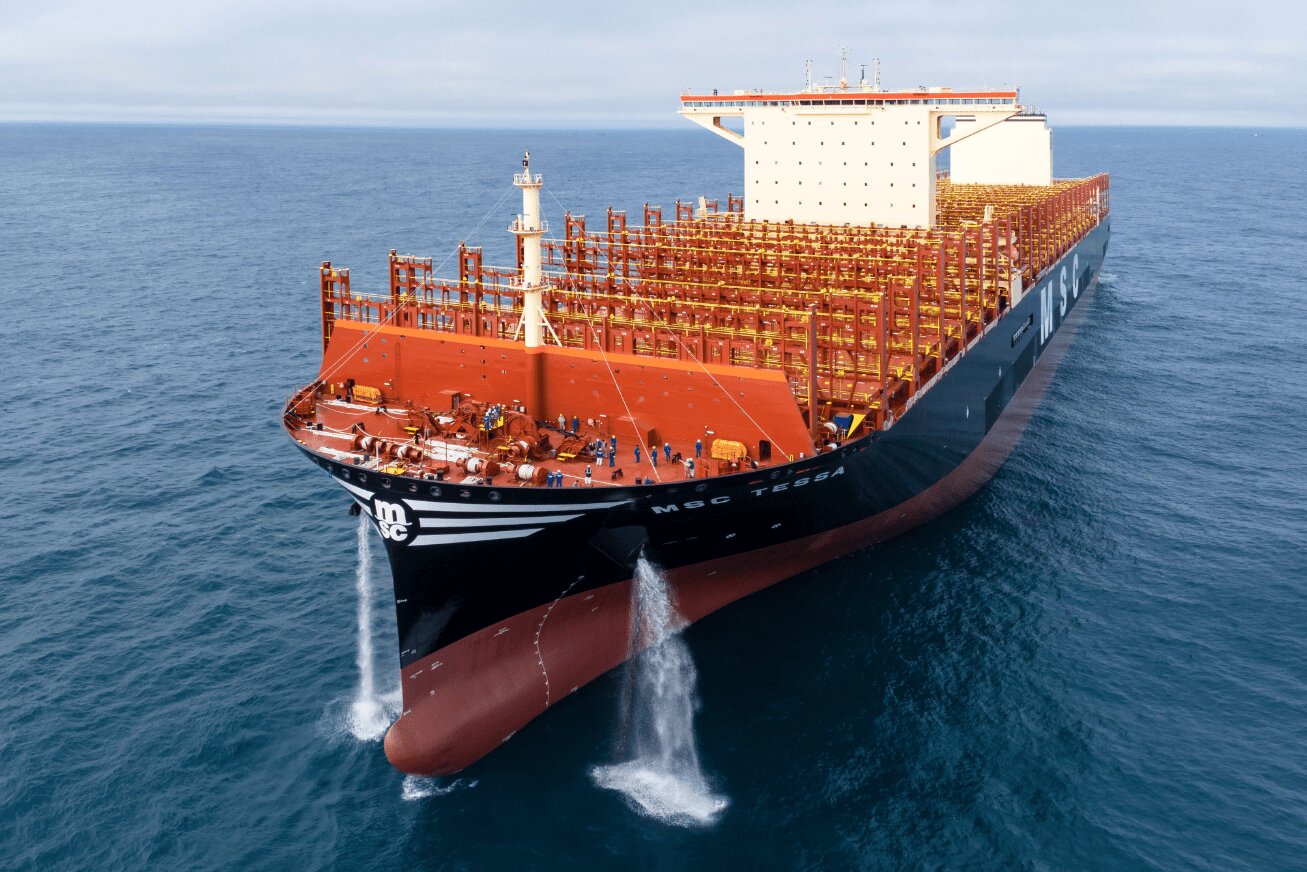
The world’s largest liner company, Mediterranean Shipping Company (MSC), has recently made another major move in the secondhand ship market.
According to industry sources, MSC has purchased seven container ships from European and Chinese shipowners for a total amount of approximately $175 million, bringing its total acquisitions of secondhand vessels this year close to 50, further consolidating its dominant position in global shipping capacity.
In this round of transactions, the most notable is MSC’s acquisition of the “Atlantica Pioneer” (3,635 TEU, built in 2012) from Norwegian shipowner Atlantica Shipping for approximately $31.25 million. This deal brought substantial profits for the seller – Atlantica had purchased the vessel only about a year ago for around $25 million and has now sold it at a higher price. The vessel also comes with the remaining period of its charter with Spanish liner company Marguisa.
Beyond the European market, MSC is also actively expanding in Asia. According to shipbroker channels, MSC has purchased two feeder container ships from a Chinese shipowner – the “Newnew Star” (3,534 TEU, built in 2007) and the “Xin Xin Tian 2” (2,553 TEU, built in 2007). The two ships were sold as a package deal for a total price of about $55 million.
Simultaneously, MSC has also made moves in the Greek market. It is reported that the company has acquired two ships from Greek shipowners: the “Navios Magnolia” (4,730 TEU, built in 2008) sold by Navios Maritime Partners, and the “Charm C” (2,546 TEU, built in 2009) controlled by Cosmoship.
According to Alphaliner data, the “Navios Magnolia” is currently on charter until the second half of 2026, with an estimated transaction price between $30 million and $35 million; while the “Charm C” was sold for about $25 million. Its seller had purchased it in 2023 for only $13 million. The vessel is currently chartered to Maersk until the first quarter of 2026.
Furthermore, in early September, MSC also purchased two smaller container ships: the “Contship Oak” (1,118 TEU, built in 2007, approx. $11.5 million) and the “Cape Franklin” (1,440 TEU, built in 2006, transaction price approx. $17.5 million).
Combining data from Alphaliner and VesselsValue, MSC has cumulatively purchased over 45 secondhand container ships since the beginning of this year. Industry insiders point out that against the backdrop of a persistently tight charter market and scarce immediately available vessels, MSC’s actions aim to maintain route coverage, strengthen regional capacity, and solidify market share.
Shipbroker Braemar analyzed that facing high secondhand ship prices and limited chartering resources, major liner companies must remain active in the sale and purchase market to ensure service continuity and responsiveness to customer demand. Traditional tonnage suppliers are generally cautious in making moves due to the high prices, which further expands the bargaining power of liner giants like MSC in the secondhand market.
Market observers point out that the global container shipping industry is facing a “structural shortage” of capacity in feeder and regional vessel types. As the fleet ages accelerates and newbuilding orders concentrate on large vessels, the supply gap in the feeder market is widening. MSC’s continuous acquisition actions are both a short-term strategic choice to cope with the tight charter market and a long-term layout to ensure the future stability of its regional route network.
It is widely believed within the industry that as geopolitical and climatic factors such as the Red Sea crisis and Panama Canal draft restrictions continue to disrupt shipping patterns, companies with flexible, owned tonnage will possess greater resilience in service adjustments and route scheduling. MSC’s latest acquisition spree is precisely a crucial step in consolidating its position as the global liner leader and building a safety buffer for its capacity.