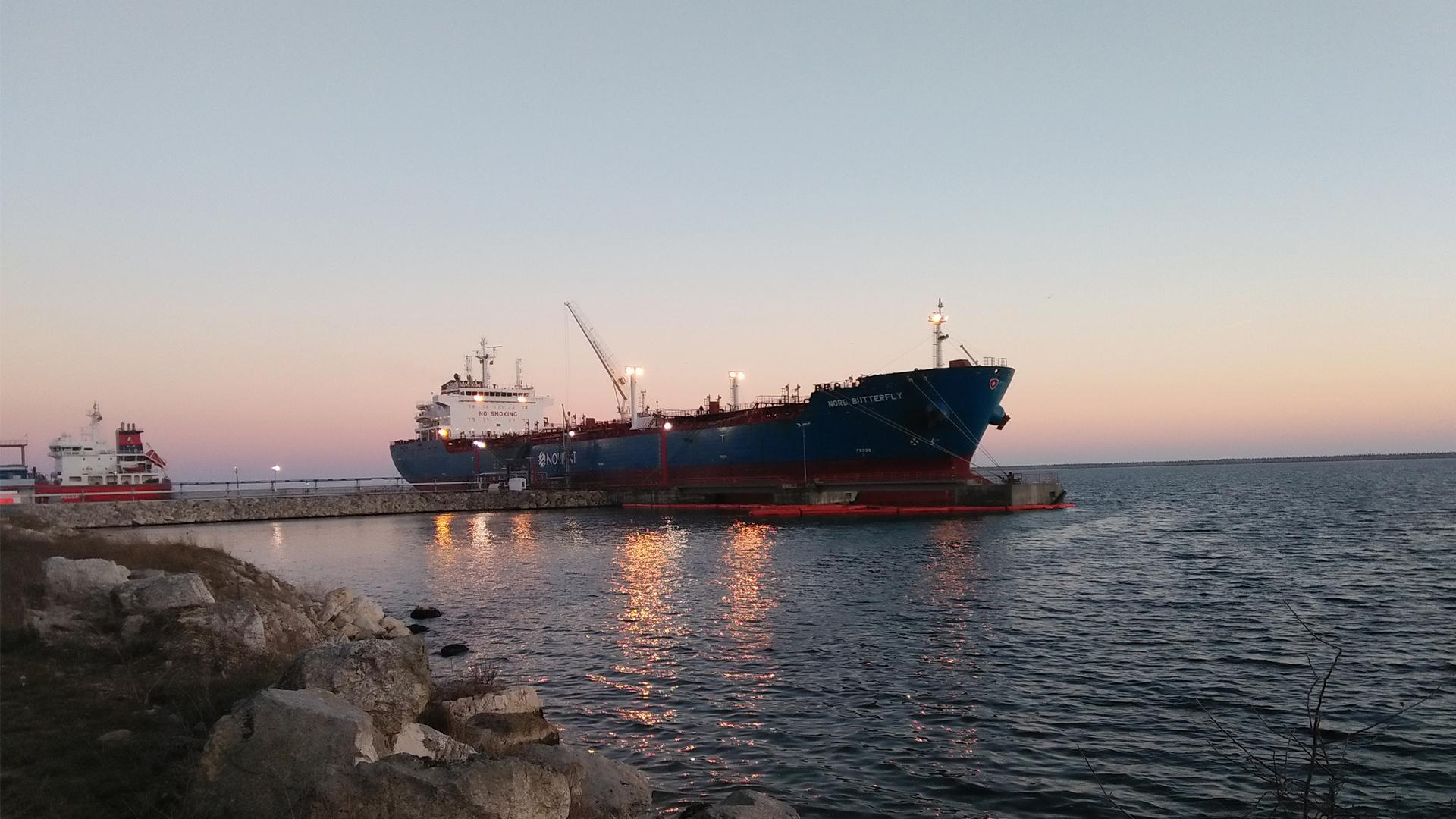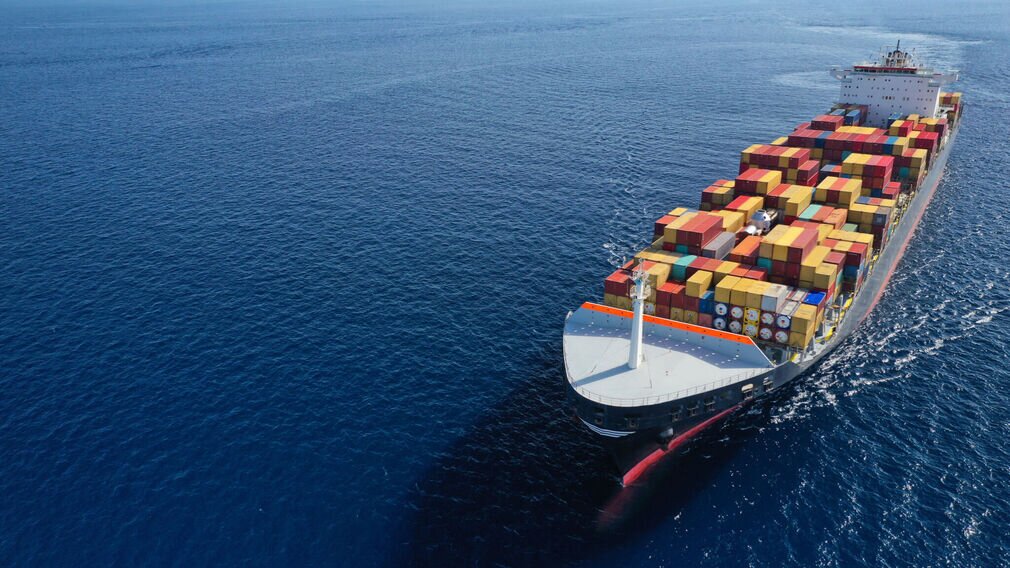
“Our current order backlog extends until 2029. Orders primarily come from Asia and Europe, with zero orders from the United States.” A representative from Shanghai Waigaoqiao Shipbuilding stated that the US itself is not a country with a high concentration of shipowners. However, recent US measures not only target ships built in China but also prioritize ships owned or operated by China. “The main restrictions are on ships operating on US routes; it’s not related to the nationality of the shipowner. This involves the deployment of shipowner routes and other factors, making the issue quite complex and sensitive.”
Recently, US Customs and Border Protection (CBP) officially issued the “Section 301 Vessel Fees” announcement, declaring that starting October 14th, new port service fees will be levied on ships owned, operated, or built by China, as well as foreign-built car carriers, when they enter US ports.
Luo Wen (a pseudonym), an insider in China’s shipbuilding supply chain, stated that this will first affect the operating costs of Chinese shipping companies and shipowners, followed by shipyards, and then the ship-related equipment and components supply chain. However, “we will counter measure for measure,” and the actual situation may not be worse than imagined.
The State Council implemented the newly revised “International Maritime Regulations” on September 29th, which added countermeasure clauses, explicitly stating that reciprocal fees, port restrictions, and other countermeasures can be implemented against countries that adopt discriminatory measures.
“China’s response is one of strategic reciprocity, with specific asymmetric tactics,” said a lawyer with extensive experience in international trade disputes. On one hand, China maintains its usual approach of “striking only after the enemy has struck,” with the newly revised “International Maritime Regulations” explicitly allowing for legal countermeasures against discriminatory actions. On the other hand, while the strategy is reciprocal, the specific tactics are not necessarily reciprocal. “It’s not necessarily that you charge fees and I charge fees too; it could also involve restricting the provision of corresponding data and information, etc.”
The revised version of the “International Maritime Regulations,” issued and officially implemented on September 29th, changed Article 46 to Article 48, revising it to state: If a country or region that has concluded or jointly participates in international maritime-related treaties or agreements with the People’s Republic of China violates the provisions of the treaty or agreement, causing the People’s Republic of China to lose or suffer impairment of benefits entitled under that treaty or agreement, or hinders the achievement of the treaty’s or agreement’s objectives, the government of the People’s Republic of China has the right to demand that the government of the relevant country or region cease the aforementioned actions, take appropriate remedial measures, and may, in accordance with the relevant treaty or agreement, suspend or terminate the fulfillment of relevant obligations.
Simultaneously, necessary countermeasures shall be taken based on the actual situation, including but not limited to charging special fees to vessels from that country or region calling at Chinese ports, prohibiting or restricting vessels from that country or region from entering or leaving Chinese ports, and prohibiting or restricting organizations and individuals from that country or region from obtaining data and information related to China’s international maritime transport, as well as from operating international maritime transport services to and from Chinese ports and their auxiliary businesses.
The Ministry of Commerce stated that it will jointly initiate compliance litigation within the WTO framework with shipping stakeholders such as the EU, Japan, and South Korea, challenging the discriminatory nature of the US measures. The China Shipowners’ Association is promoting the establishment of an “International Shipping Fairness Alliance,” uniting over 20 major shipowners globally to jointly resist unilateral trade restrictions.
According to observations from the aforementioned lawyer, both the investigations previously initiated by the US and the measures announced now possess both political and economic dimensions, with the political aspect even outweighing the economic one. From the initial proposals to the final implementation, it is not difficult to see the changes that have occurred on the US side. Excessive political considerations do not fully align with the US’s own economic objectives. Therefore, the final measures had to take its own economic interests more into account, such as explicitly exempting liquefied natural gas (LNG) carriers and implementing the fees progressively, to avoid backlash against its political actions.
This also means that the sustainability, implementation, and enforcement of the relevant measures still contain variables or uncertainties.
Strategically, against the backdrop and confidence of “growing stronger through fighting,” the impact of uncertainty and actual losses on enterprises are inevitable, and individual experiences vary. What can be done is to accelerate capacity adjustments to mitigate the effects of rising costs.
According to public reports, companies like COSCO Shipping have initiated “fleet optimization plans.” Twenty large container ships built in China will be transferred to Asia-Europe routes, while simultaneously chartering additional ships built in South Korea to operate on the US West Coast routes. Financially, several shipping companies plan to partially offset costs through General Rate Increases (GRI). Currently, a GRI increase of $1000 per container has appeared on the Shanghai to Los Angeles route.
Industrially, the China Association of the National Shipbuilding Industry has proposed a “dual-track development strategy,” accelerating the research and development of green ship technology while expanding markets along the “Belt and Road” routes. Similar to the impact of the tariff war, China’s exports to the US have significantly decreased, but the gap has been relatively quickly filled by growth in non-US markets.
Disclaimer: This article is reprinted for the purpose of conveying more information. If there are any source attribution errors or infringements of your legitimate rights and interests, please contact us with proof of ownership, and we will promptly correct or delete the content. Thank you.