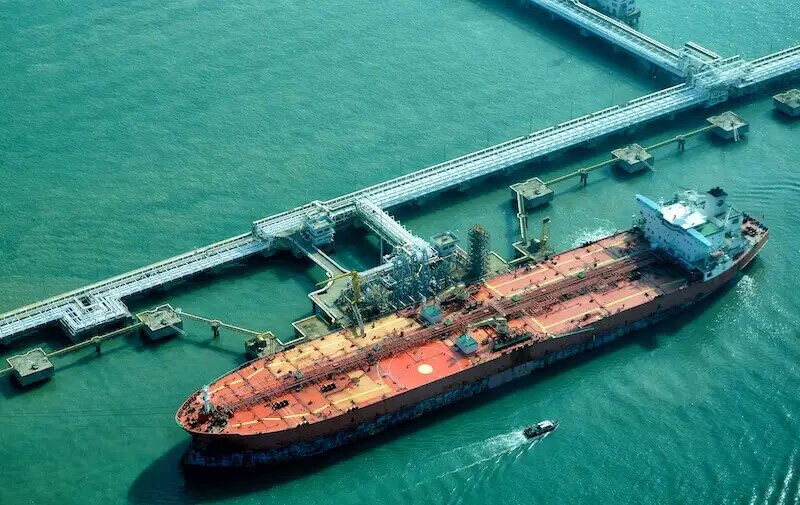
/Reuters Agency
The International Maritime Organization (IMO) will meet this week to formally decide whether to impose a price on carbon emissions from global shipping, a measure supported by a bloc led by the European Union that includes the United Kingdom, China, and Japan, but strongly opposed by the United States.
The IMO reached a preliminary agreement in April to charge the global shipping industry for its emissions, after the United States withdrew from related negotiations, leading Washington to threaten “reciprocal measures” against any fee imposed on US vessels.
The agreement reached in April is now on the table for adoption at a meeting of the IMO’s environmental committee, scheduled for October 14-17, where US participation is expected.
Washington has maintained its efforts to block the measure since April, threatening to impose port fees and visa restrictions on countries that support it.
“The United States will proceed to apply these measures against nations that promote this neocolonial export led by Europe of global climate regulations,” the State Department said in a statement issued on October 11.
For their part, European Union member states have urged the adoption of the IMO measure, according to a European Commission statement on October 12.
The proposed IMO rule on marine fuel emissions would impose a fee on ships over 5,000 tons that exceed an emissions threshold. Furthermore, it would reward vessels that use cleaner fuels.
Ships that exceed the limit will have to purchase offset units or pay a penalty. Those that emit below a separate threshold will receive surplus units.
The revenue generated by this measure would be collected by an IMO Net-Zero Fund, which would be created by the organization’s Secretariat, according to the preliminary rules. Details on the distribution of this revenue have not yet been defined.
According to research from University College London, the IMO fuel rule could generate between $11 billion and $12 billion annually between 2028 and 2030, as the majority of ships are expected to pay the penalty in the initial years of implementation.