By PortalPortuario Editorial Staff
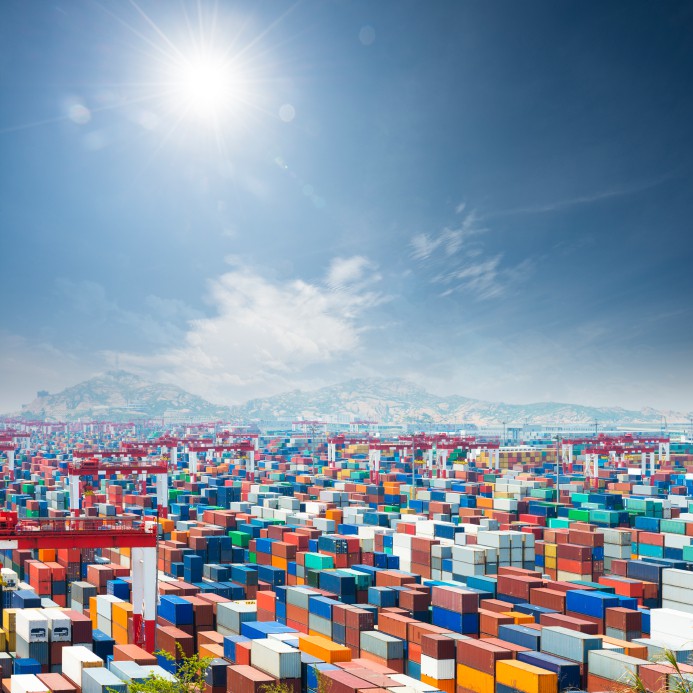
The port movement in the Southeast Region reached 19.7 million tons in October 2025, representing a growth of 7.05% compared to the same period the previous year, according to data from the National Waterway Transportation Agency (Antaq). The increase was mainly driven by the good performance of general cargo, with a 22.77% increase, and containerized cargo, which advanced 18.75%, reflecting the recovery of economic activity and the increase in exports of manufactured products.
Solid bulk, accounting for more than half of the regional movement, totaled 11.6 million tons, while liquid bulk, composed of fuels and derivatives, reached 1.8 million tons, a growth of 10.63% in the period. Among the main goods moved, containers led the ranking, with 5.5 million tons, followed by iron ore (4.5 million t), corn (2.5 million t), sugar (1.8 million t), and oil and derivatives, excluding crude oil (1.2 million t).
“We are reaping the rewards of management focused on efficiency and logistical integration. The modernization of terminals and the digitalization of port processes have placed Brazil at a new level of competitiveness,” highlighted the Minister of Ports and Airports, Silvio Costa Filho.
With emphasis on the ports of Santos (SP), Vitória (ES), and Itaguaí (RJ), the Southeast is the main logistics corridor in the country, concentrating the largest volume of cargo moved and being responsible for a significant portion of Brazilian exports of commodities, fuels, and manufactured products. The region has a strategic port infrastructure, interconnected with industrial, agricultural, and refining hubs, which guarantees efficiency and competitiveness for the flow of national production.
The Port of Santos, the largest in Latin America, is the main exit point for Brazilian exports of sugar, soy, corn, and meat, in addition to recording strong growth in container movement. The Port of Vitória, in Espírito Santo, is consolidating itself as a hub for solid and liquid bulks, with emphasis on iron ore and cellulose, while the Port of Itaguaí, in Rio de Janeiro, plays an essential role in the logistics chain of the steel and oil sectors.
In recent months, the Ministry of Ports and Airports has intensified investments in the Southeast region, focusing on the modernization of terminals, expansion of infrastructure, and encouragement of intermodal integration. In 2025 alone, over R$ 1.5 billion in private investments were authorized for ports in São Paulo and Rio de Janeiro.
Among the projects, the investment of R$ 275 million in the Tecma marine fuels terminal in São João da Barra (RJ) and R$ 1.24 billion in the modernization of the Port of Santos stand out. Furthermore, the Southeast leads national investments in the shipbuilding industry, with R$ 1.54 billion approved via the Merchant Marine Fund (FMM), destined for the construction and modernization of vessels.
A significant portion of the resources was directed to Rio de Janeiro, which concentrates a large part of the shipyards and offshore activities. The investments aim to expand the operational capacity of the ports, attract new cargoes, and strengthen intermodal logistics in the Southeast region.