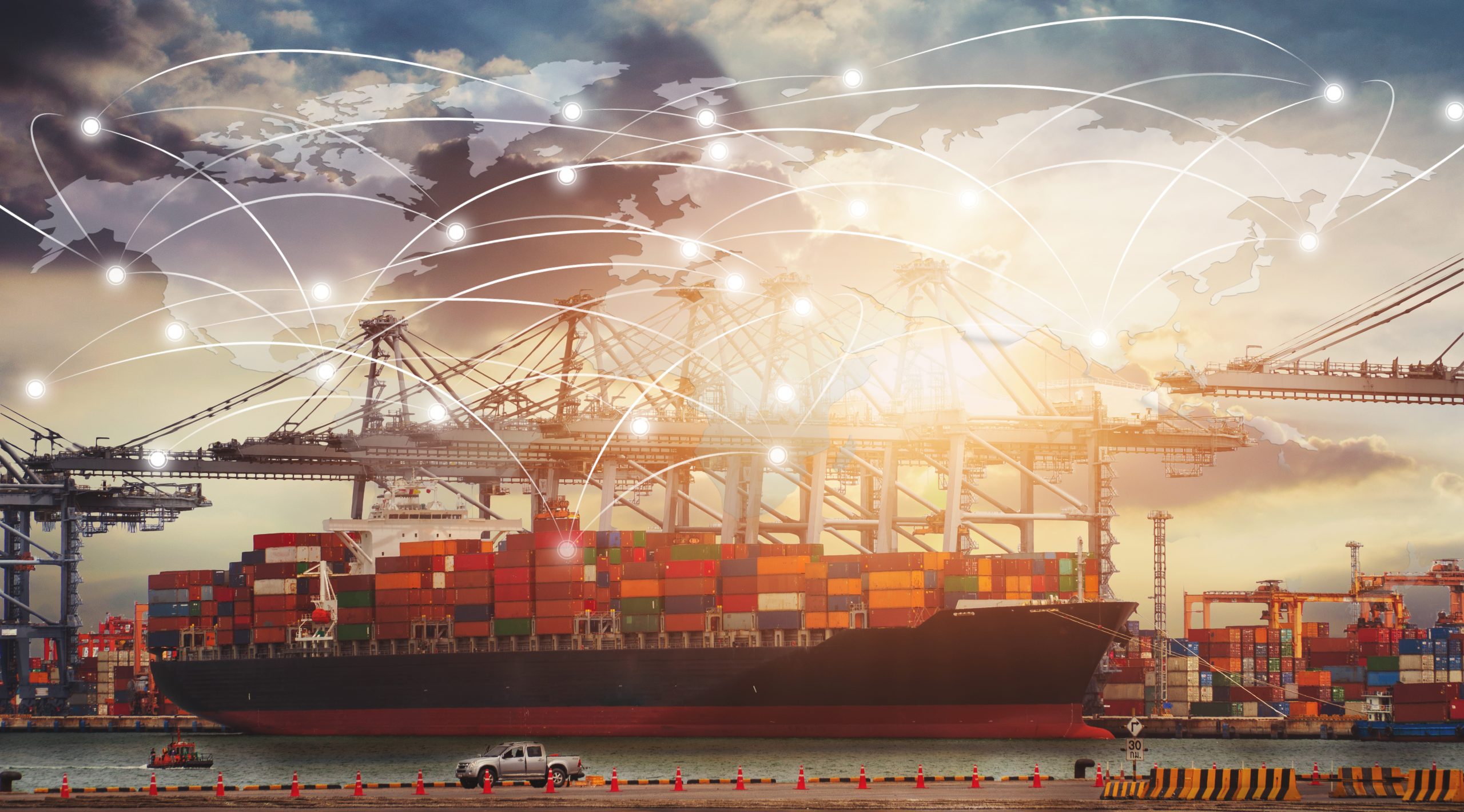
China has disclosed technical details of the world’s largest nuclear-powered cargo ship, which is under development. According to the details, the ship will be equipped with a revolutionary thorium-based molten salt reactor (TMSR) producing 200 megawatts of thermal power and will have a capacity to carry 14,000 standard containers.
It will have high efficiency
This 200 MW thermal power is at the same level as the S6W reactors used in the US Navy’s advanced Seawolf-class nuclear submarines. The heat generated by the reactor will not be used for direct propulsion but to power a Brayton generator using a supercritical carbon dioxide (sCO₂) cycle. This system will produce enough electrical power, 50 MW, to propel the ship for years without refueling. It is stated that this advanced sCO₂ cycle has a heat-to-electricity conversion efficiency of 45-50%. This rate represents a significant leap compared to the approximately 33% efficiency of traditional steam cycle reactors.
One of the most important advantages of the new design is the inherent safety features resulting from the use of thorium instead of traditional uranium. Thorium is more abundant, and since the reactor does not require water cooling, the system becomes both smaller and quieter and safer.
Because the reactor operates at atmospheric pressure, there is no risk of explosive pressure buildup. Furthermore, since the reactor has a strong negative temperature coefficient, the nuclear reaction naturally slows down as temperatures increase, eliminating the risk of a runaway reaction.
The design includes two passive residual heat removal systems. In the worst-case scenario, the molten salt fuel flows into a safety chamber and solidifies, thus trapping radioactive materials. The reactor, designed in a modular and fully sealed structure, is reported to have modules with a 10-year lifespan. At the end of this period, the reactor is replaced entirely instead of being refueled on-site, which significantly reduces the risk of leakage and human error. Additionally, a 10 MW diesel generator will be integrated into the ship for emergencies.
China’s nuclear energy breakthrough
This container ship is part of China’s broader strategy for advanced nuclear energy technologies. The country had already reached a significant milestone by commissioning the world’s first thorium reactor in the Gobi Desert in 2025, which achieved long-term stable operation. The US had terminated its own thorium reactor program in the 1960s.
China plans to leverage its rich thorium reserves, particularly those in Inner Mongolia, to fuel this new generation of reactors. The country is also working on a Suezmax-type oil tanker powered by a lead-bismuth cooled fast reactor and on floating nuclear power stations.
China recently achieved another new success in thorium technology and announced that it has successfully achieved, for the first time, the conversion of thorium into uranium fuel within the Thorium Molten Salt Reactor (TMSR) system. This development represents the first concrete evidence technically proving the feasibility of using thorium as fuel in molten salt reactors. This paves the way for China to utilize its vast thorium resources.