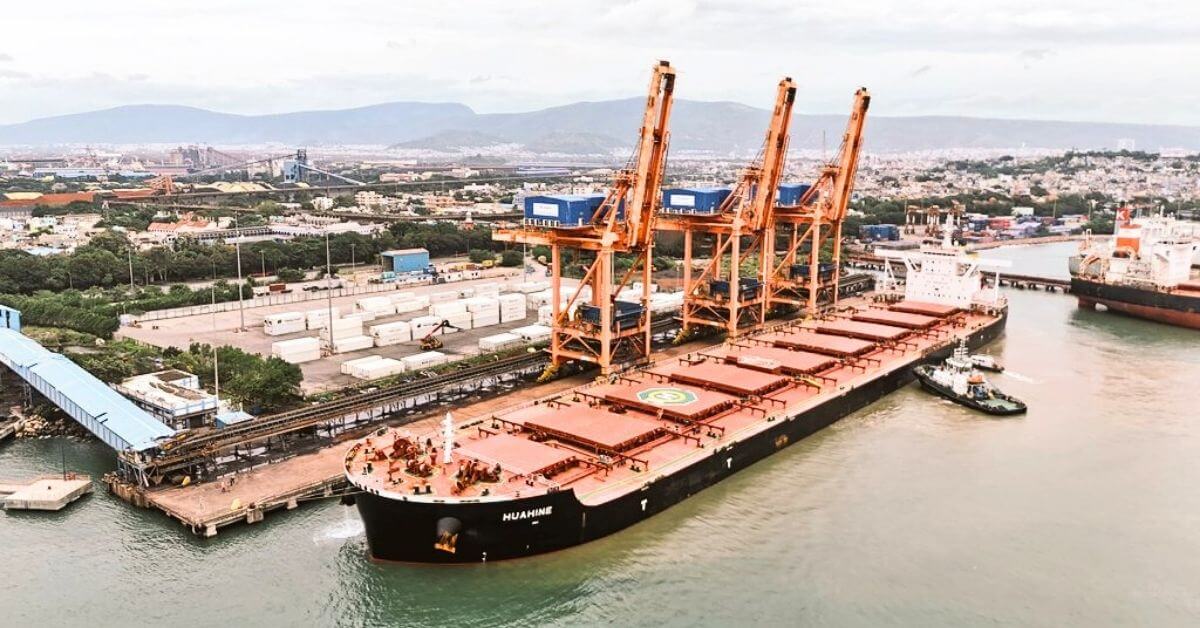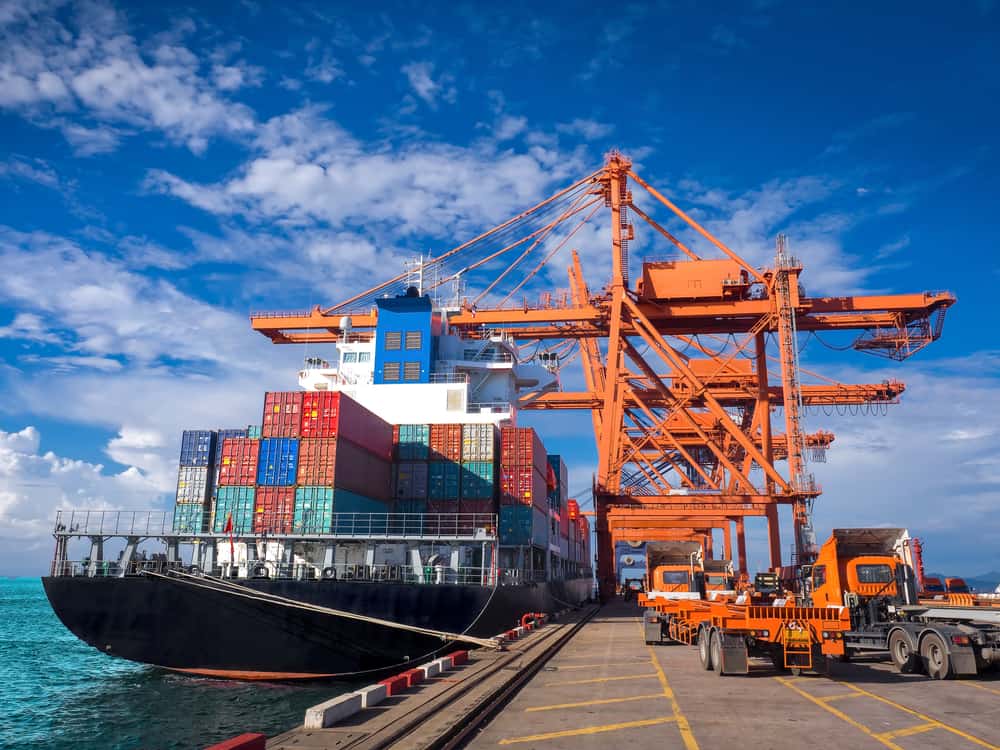
ZHOUSHAN, Nov. 12 (Lan Yini) A press conference marking the one-year anniversary of the construction of the bulk commodity resource allocation hub in the China (Zhejiang) Pilot Free Trade Zone (referred to as “Zhejiang FTZ”) was held in Zhoushan, Zhejiang on the 12th. It was announced that by the end of the third quarter of this year, the hub had secured investment for major projects exceeding 43 billion yuan in core areas such as storage and transportation, processing, and infrastructure, surpassing its annual target ahead of schedule.
Building a bulk commodity resource allocation hub is a key pathway to advancing high-level opening up and constructing a high-energy open province. Chen Zhicheng, Deputy Director of the Zhejiang Provincial Department of Commerce, stated at the conference that over the past year, significant results have been achieved in the hub’s construction, including the sequential advancement of major projects, steady improvement in the level of openness, quality and efficiency enhancement across the entire industrial chain ecosystem, and continuous strengthening of innovation capabilities.
Major Projects Anchor Development, Full Industrial Chain Upgrades
The intensive landing and commissioning of major projects is the most direct manifestation of the bulk commodity resource allocation hub’s construction.
It is reported that a series of projects have already delivered tangible results: Major storage projects like ENN LNG Phase III and Sinograin Phase III have been completed and operational, boosting oil product storage capacity to 59.265 million cubic meters and increasing LNG receiving capacity to 17.5 million tons. Simultaneously, processing and logistics projects covering multiple fields, such as Daxie Petrochemical’s Fractionated Oil Phase V, Huakang’s Corn Deep Processing, and the Meishan International Cold Chain Supply Chain, have been successively completed, adding 20 million tons of iron ore blending capacity and 6 million tons of oil refining capacity. An international base for the storage, transportation, and processing of bulk commodities is taking shape.
Taking the Ningbo Area of the Zhejiang FTZ as an example, Xu Xiaochang, Deputy Secretary-General of the Ningbo Municipal Government, introduced that over the past year, the Ningbo Area has focused on key links in the industrial chain like bulk commodity storage, transportation, trade, and processing, consolidating the foundation of storage and transportation, deepening industry-trade collaboration, and optimizing professional services, fully promoting the integrated and innovative development of the entire industrial chain.
Currently, Ningbo has completed and put into operation Asia’s largest 2 million cubic meter underground propane cavern, is smoothly progressing the CNOOC 5 million cubic meter underground crude oil cavern project, has built the Meishan International Cold Chain Supply Chain project—the largest and most modern in East China—and has opened green shipping routes for “bagged bulk shipment” of new energy materials like nickel hydroxide, significantly enhancing resource allocation efficiency.
Breakthroughs in Open Platforms, Enhanced International Benchmarking
To advance the construction of the bulk commodity resource allocation hub, Zhejiang has established a number of open platforms, with its capacity for international benchmarking continuously strengthening.
It is understood that the application to establish the country’s first comprehensive bonded zone characterized by bulk commodities has received support from seven national ministries and commissions and entered the pre-review process, laying the foundation for deeper opening up in areas such as processing, finance, and customs clearance in the future.
Meanwhile, the newly integrated Zhejiang International Bulk Commodity Exchange, in collaboration with the Shanghai Futures Exchange, has jointly released 15 “Zhoushan Price” indices, continuously enriching the “Chinese voice” in the bulk commodity pricing system.
Liang Xuedong, Deputy Secretary of the Zhoushan Municipal Party Committee and Deputy Director of the Zhoushan Administrative Committee of the Zhejiang FTZ, revealed that the exchange has expanded its trading categories from a single focus on oil and gas to 44 categories including iron ore, electrolytic copper, and thermal coal, cumulatively attracting over 3,700 member enterprises. As of October, its online transaction value reached a high of 145 billion yuan, successfully ranking it among the top domestic spot trading platforms.
Zhejiang is also accelerating the construction of a global bunkering fuel refueling center. In the first nine months of this year, bunkering fuel sales at Ningbo-Zhoushan Port reached 6.621 million tons, a year-on-year increase of 10.7%; bonded LNG bunkering volume surged to 175,000 cubic meters, six times the total for the previous year. The Ningbo-Zhoushan International Shipping Center rose one spot to rank 7th globally.
Furthermore, the Zhoushan Area of the Zhejiang FTZ innovatively created a digital platform for shipping trade, while the Ningbo Area took the lead in establishing a comprehensive offshore trade service platform; over ten trade digitalization platforms have been established in total.
Institutional Innovation Leads, Financial Support Precisely Empowers
Over the past year, focusing on the entire bulk commodity chain, Zhejiang has cumulatively formed 59 distinctive institutional innovation cases, with pioneering and integrated characteristics becoming more apparent.
For instance, to enhance trade facilitation, leveraging digital supervision of oil products, Zhejiang completed the nation’s first business involving the streamlined adjustment of attributes for bonded warehouses, export supervision warehouses, and domestic trade warehouses (“three warehouses”), reducing the approval timeline to within 10 working days.
In the maritime services sector, Zhejiang took the national lead in implementing the reform of the “supply first, declare later” model for bonded lubricants, reducing overall business processing time by over 30%, and issued the nation’s first professional maritime “mediation + arbitration”对接 guidance document, etc.
In financial services, the nation’s first credit insurance policy in the bulk commodities sector was issued in Zhoushan, and the nation’s first digital RMB settlement for green power certificates was successfully completed, forming “Zhejiang experience” that can be referenced and promoted.
Qian Binda, Full-time Deputy Secretary of the Zhejiang Provincial Party Committee’s Financial Work Committee, explained that since the beginning of this year, Zhejiang has strengthened financial element support for hub construction, continuously improved the convenience of cross-border settlement, and supported the expansion and strengthening of bulk commodity trading platforms.
Data shows that in the first three quarters, Ningbo and Zhoushan saw new loans exceeding 300 billion yuan; the cross-border RMB settlement amount for bulk commodities like oil and gas in Zhejiang Province reached 114.9 billion yuan, a year-on-year increase of 17.7%.
Looking ahead to the “16th Five-Year Plan” period, Chen Zhicheng stated that Zhejiang will continue to advance the construction of the bulk commodity resource allocation hub by strengthening the entire industrial chain, enhancing trade and transaction capabilities, and creating a first-class business environment, continuously making the “ballast stone” more stable, the “growth axis” stronger, and the “ecosystem” more prosperous. (End)