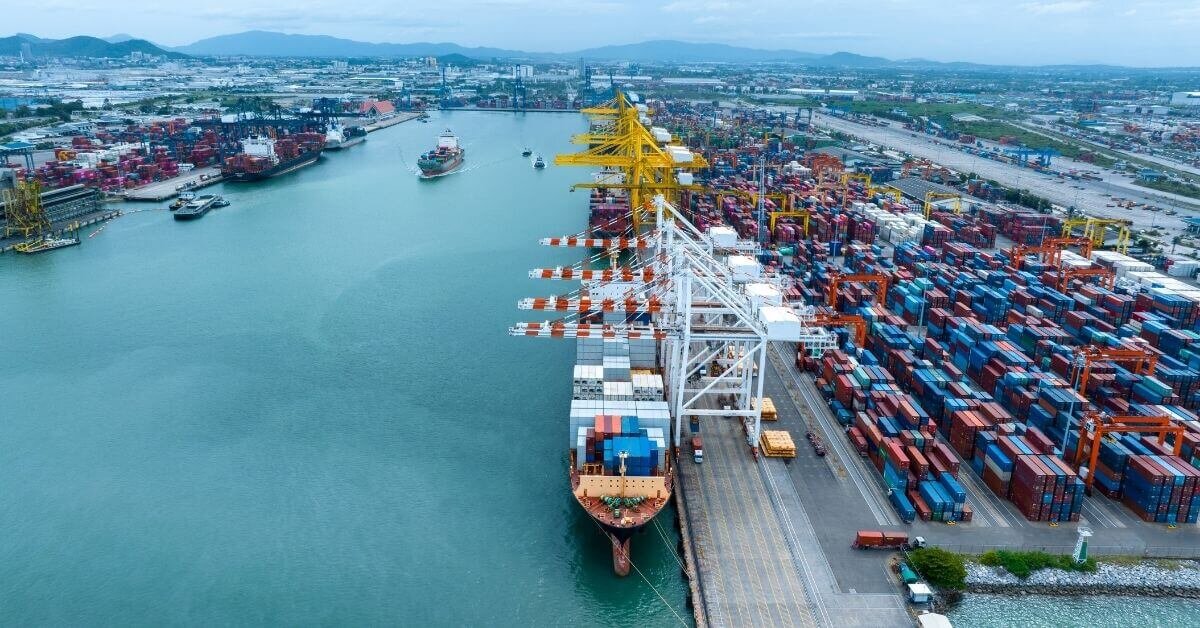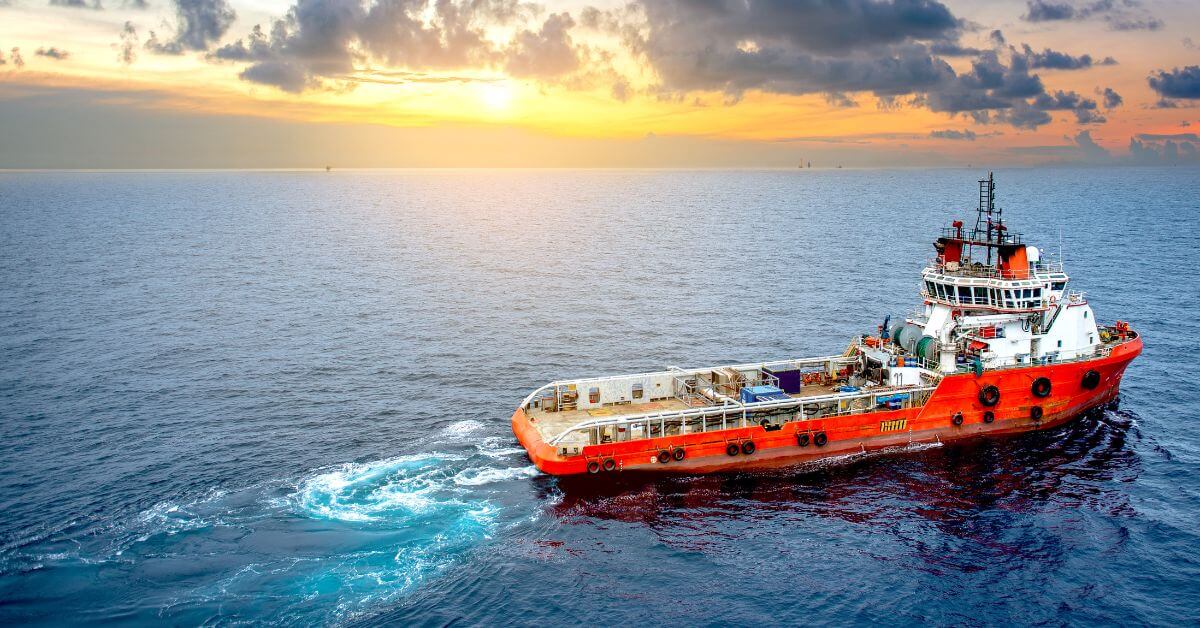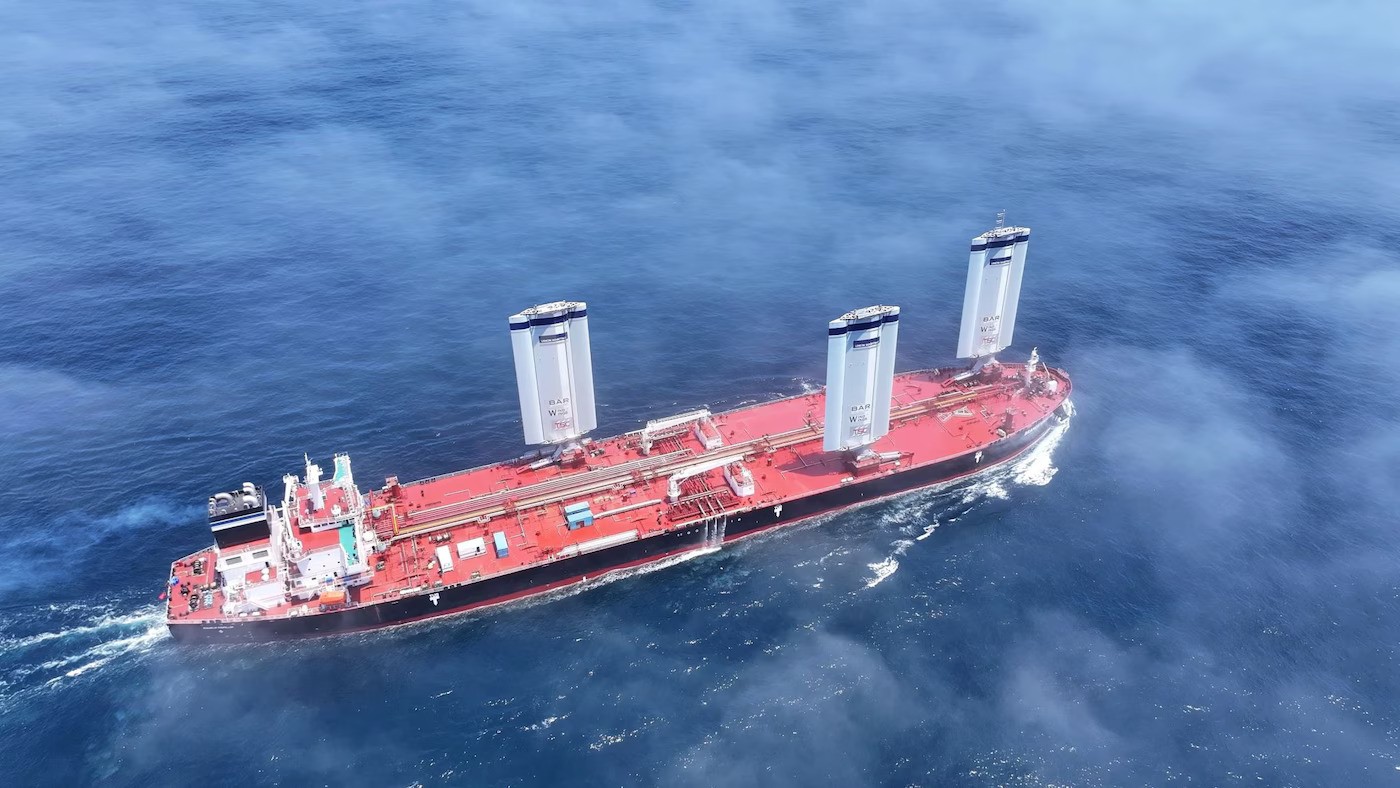
Water transport is a highly cost-effective mode within the modern logistics system, playing an irreplaceable role in the long-distance transportation of bulk cargo such as automobiles, grain, and coal. It is also a crucial support for regional economies “thriving towards the sea.”
In the process of Anhui accelerating the construction of a strong transportation province and integrating into the Yangtze River Delta’s coordinated development, inland waterways form the skeleton of the “golden waterway,” and ports and terminals link key logistics nodes. The cargo ships shuttling on the Yangtze River and Huai River are the “vital cells” maintaining the efficient operation of water transport.
Who safeguards the safety and health of these “cells”? The answer lies in the daily perseverance and professionalism of the surveyors within Anhui’s ship inspection system.
Entering November, the autumn winds on both banks of the Huai River bring a chill. One morning, Xiao Huashan, a surveyor from the Anhui Province Huai River Ship Inspection (Crew Management) Service Center (hereinafter referred to as the Huai River Ship Inspection Center), and his colleagues arrived early at a shipyard in Bengbu City to conduct an inspection on a ship at a critical stage of construction.
From the thickness of the deck steel plates to the rigidity and strength of the plates, from the compliance of the ship’s structure to the safety of the loading conditions, Xiao Huashan meticulously checked item by item against the drawings, leaving no detail unchecked. “Ship quality is the first line of defense for safety. Strictly controlling quality from the shipbuilding phase is not only responsible to the shipyard and shipowner but, more importantly, responsible for the crew’s lives and water transport safety.”
As a veteran of the ship inspection system, Xiao Huashan has been rooted in the front lines for over twenty years. The Huai River Ship Inspection Center where he works is one of the three major直属 (directly affiliated) ship inspection branches under the Anhui Provincial Local Maritime (Port and Shipping) Management Service Center (hereinafter referred to as the “Provincial Maritime Center”). It undertakes important responsibilities such as ship plan approval, construction inspection, and operational inspection of seagoing vessels for six cities in Northern Anhui.
In recent years, Xiao Huashan has participated in several major projects of the Anhui Provincial Department of Transport, the Provincial Maritime Center, and the Huai River region. The ships he has inspected range from traditional dry bulk carriers, oil tankers, and hazardous chemical liquid cargo ships to the gradually promoted LNG new energy-powered vessels, cumulatively totaling over 1,000 ships with a gross tonnage of nearly 1 million. He has witnessed the iterative upgrading of Anhui’s shipbuilding industry and water transport sector.
“Although the number of inspections has decreased, the tonnage of ships is getting larger, their cargo capacity is increasing, and inspection standards are stricter. More importantly, ship types are becoming more diverse and their technological content is higher.” In Xiao Huashan’s view, the changes in ship inspection work are closely related to the accelerated upgrading of Anhui’s leading industries.
Today, with the successive “debut” of new types of ships such as LNG new energy vessels and ro-ro ships capable of loading 330 commercial vehicles, new challenges have been brought to the province’s ship inspection work. This also drives the shift in the focus of ship inspection work from “routine inspection” to “serving the overall development situation”: from inspecting 3,000-tonne inland small and medium-sized cargo ships to undertaking inspections of 40,000-tonne coastal bulk carriers; from inspecting sand, gravel, and coal carriers to overcoming the inspection technology for new energy vehicle ro-ro ships—the “capability boundary” of Anhui ship inspection is continuously expanding along with the province’s development needs.
In 2024, the export volume of complete vehicles from Anhui’s automobile industry jumped to first place in the country. In the first nine months of this year, it maintained the top national position. “Anhui-made vehicles going global” has become an important engine driving the province’s economic growth and has also presented new topics for Anhui ship inspection.
However, two years ago, Hefei, as an important national base for new energy vehicle manufacturing, faced the dilemma of “having vehicles but no ships”: there was not a single automotive ro-ro ship that could navigate rivers and reach the sea. This included the dual challenges of the significant technical difficulty in building ro-ro ships and the lack of relevant inspection experience by local Anhui ship inspection institutions.
Anhui-made vehicles going global cannot be achieved without the assistance of Anhui-made ships; and the construction of Anhui ships also relies on local ship inspection capabilities.
To open up the water transport channel for “Anhui-made vehicles going global,” the Provincial Maritime Center quickly assembled a special project team by抽调 (/detaching) backbone surveyors from across the province. Led by the Wanjiang Ship Inspection Center, they focused on tackling the technical regulations and inspection standards for ro-ro ships,梳理 (sorting out) the technical difficulties in core areas such as loading, securing, firefighting, and stability item by item, and finally formulated a complete inspection plan.
Through the joint efforts of multiple parties, in November 2024, the first 330-carrier inland waterway commercial vehicle ro-ro ship independently inspected by the Anhui Province Wanjiang Ship Inspection Center was successfully launched in Wuhu and put into operation.
“As of now, five ro-ro ships of the same type have been put into use in the province. Now, new energy vehicles made in Anhui can be loaded onto ships in Hefei, go directly to Shanghai Port, and be seamlessly transferred to 7,000-carrier ocean-going ro-ro ships for export to Europe, America, the Middle East, and other regions,” introduced Zhou Jiansong, Head of the Ship Inspection Department of the Provincial Maritime Center. The implementation of “Anhui ships, Anhui inspection” has not only effectively alleviated the shortage of water transport capacity for Anhui’s automobile exports and provided stable and reliable transport capacity guarantee for the province’s automobile industry exports but has also played a key role in serving the development of the province’s leading industry and promoting cost reduction, quality improvement, and efficiency enhancement in transportation and logistics.
While serving the province’s leading industries, Anhui ship inspection also actively integrates into national strategies and proactively “goes out” to deepen regional coordination. By对接 (/coordinating) with ship inspection institutions in neighboring provinces such as Jiangsu, Zhejiang, and Shanghai, they jointly promote the construction of a national “mutual recognition of inspections” mechanism for ships and participate in creating a demonstration zone for “mutual recognition of inspections” in the Yangtze River Delta region. Currently, this work has been fully rolled out in all 16 prefecture-level cities in Anhui, effectively breaking down regional ship inspection barriers and providing an “Anhui Solution” for the integrated development of shipping in the Yangtze River Delta.
Ships passing orderly through the Yuxi Lock. Photo by People’s Daily Online reporter Wang Rui.
With the full opening of the Jianghuai Canal, Anhui’s water transport advantage of “connecting rivers to the sea and trunk-tributary linkage” is becoming increasingly prominent. Looking ahead, relevant responsible persons from the Provincial Maritime Center stated that they will always focus on the goal of high-quality development in ship inspection, closely follow the two key words “integration” and “high quality,” continuously strengthen the construction of the ship inspection team, improve the inspection technical system, and enhance service supply capacity. They aim to inject more solid and powerful Anhui strength into the construction of “Water Transport Anhui,” the coordinated development of shipping in the Yangtze River Delta, and the progress of the national ship inspection cause.