US final investment decisions (FIDs) make up half of the 300 billion cubic metres (bcm) in LNG supply that is due to flood markets in 2030, increasing global annual LNG export capacity by 50%, according to the IEA’s latestWorld Energy Outlook report
The International Energy Agency (IEA)’s latest World Energy Outlook report points to a potentially significant supply-demand imbalance on the five-year horizon for liquefied natural gas (LNG) markets.
The report said “questions still linger about where all the new LNG will go” from an avalanche of new LNG export projects approved in 2025.
“There is now an unprecedented 300 billion cubic metres (bcm) of new annual LNG export capacity scheduled to start operation by 2030, a 50% increase in available global LNG supply,” the report said.
Europe and China, which have been on the receiving end of most of the new LNG supply over the past decade, will only take on a portion of the newly agreed volumes of LNG from projects that have received financial backing. According to the IEA, the “upside potential is limited” even when including stated, and not necessarily approved, energy import policy goals for the countries in the EU and Asia.
Cutting into the market share in these regions for the rapidly expanding LNG volumes, renewables and nuclear energy are sizeable and growing energy alternatives in some countries, and efficiency policies are driving down energy use in others.
With the EU and many major Asian markets only able to absorb some of the uptick in LNG, the IEA said India and other countries in south and southeast Asia will absorb some of the overflow, but not all. Pricing is a key factor in these countries, where affordability takes precedence.
What results from the growth in volumes and the uncertainty of landing points for the newly exported LNG is, IEA said, an overhang scenario.
“The response in these price-sensitive markets is significant but not enough to use all of the available LNG supply… resulting in a 65-bcm overhang in 2030,” the World Energy Outlook report said.
The IEA makes forecasts through three scenarios for its World Energy Outlook reports, one using policy that has already been agreed, one using policy goals that have been stated but are not final and the third using a net-zero emissions scenario.
Notably, the World Energy Outlook report said the major downside risk to LNG market growth in all three scenarios remains a failure by the industry to reduce methane leaks. This is due to the intense short-term climate warming of methane, which makes up most of LNG fuel and has 80-100 times the warming effect on the atmosphere of carbon dioxide over a 20-year timespan.
US leads the FID charge for LNG export projects
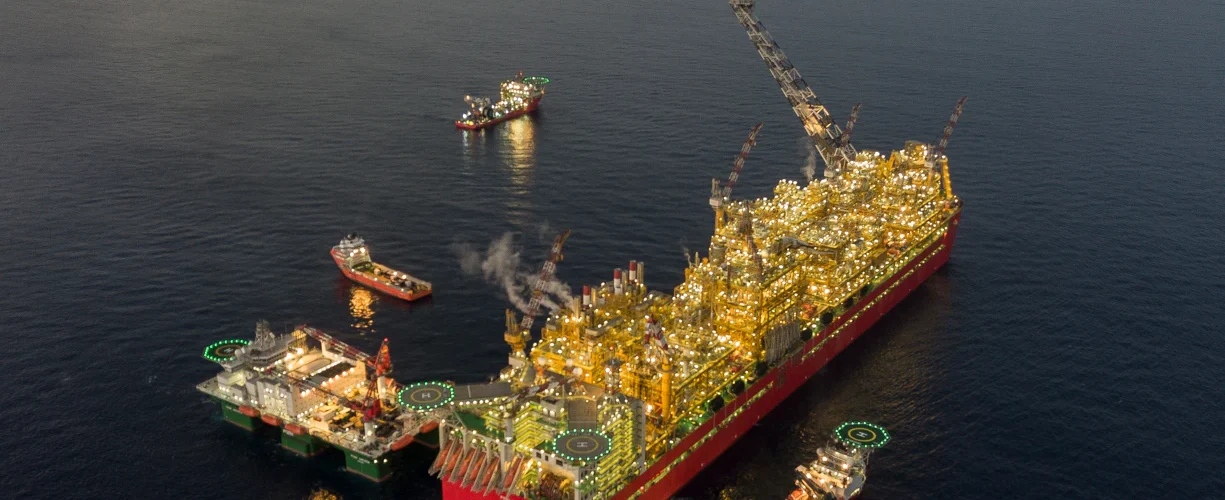
According to the IEA, around half of the newly approved LNG export project capacity is being built in the United States and a further 20% in Qatar, with Canada and others making up the remainder.
According to the US government’s own Energy Information Administration, 2025, alone, is set to see an increase in LNG exports of 25%.
“Plaquemines LNG in Louisiana has ramped up exports more quickly than we expected, leading us to raise our forecast of LNG exports in Q4 2025 by 3% compared with last month’s outlook. We expect US LNG exports will increase by an additional 10% in 2026,” the EIA said.