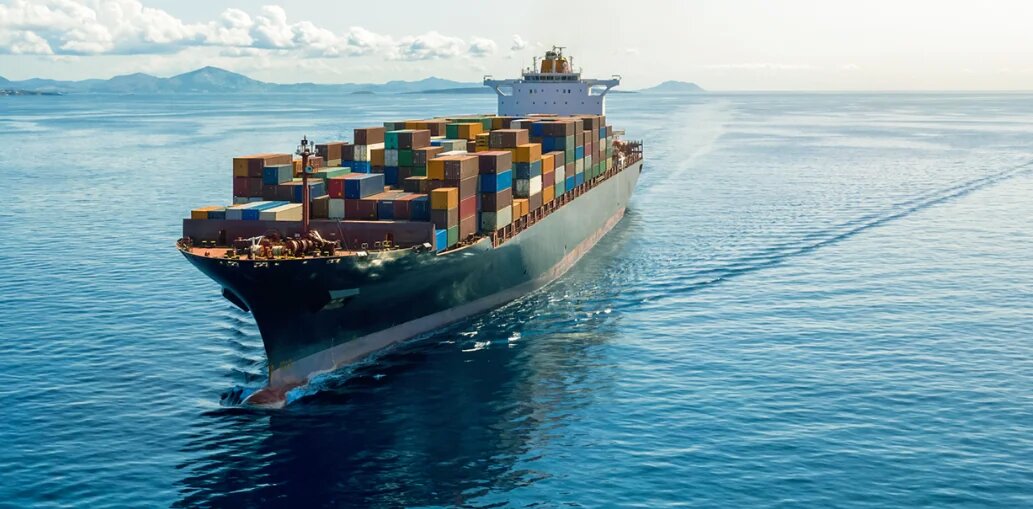
China’s coastal waters have dense concentrations of fishing vessels and heavy merchant ship traffic. Combined with the influence of complex meteorological conditions, the risk of collision accidents between merchant ships and fishing vessels has significantly increased recently, leading to a severe safety situation. To resolutely curb the occurrence of such collisions, ensure the safety of crew lives and ship navigation, it is imperative to comprehensively strengthen accident prevention and pre-control work. The key points for collision avoidance between merchant ships and fishing vessels are outlined below for strict compliance by all shipping companies, ship crews, to effectively consolidate safety responsibilities and uphold the bottom line of maritime safety.
I
Enhance Safety Awareness for Coastal Navigation, Maintain
a State of Vigilance at All Times
Navigation Safety Tips
1
Shipping companies must establish a specialized early warning mechanism for navigation in coastal fishing zones, using the ship dynamic monitoring system to push real-time alerts on fishing ground distribution, peak fishing vessel periods, and collision risk warnings.
2
Companies should verify the implementation of onboard training during daily supervision, boarding inspections, remote monitoring, or internal ship system audits, checking the effectiveness of training for captains and officers and their familiarity with and execution of relevant requirements.
3
Captains and officers should be thoroughly familiar with the content and requirements of the “Safety Guidelines for Preventing Collisions between Merchant Ships and Fishing Vessels in China’s Coastal Waters” and strictly adhere to them.
4
The captain must supervise bridge watch personnel to strictly comply with safe navigation regulations and standardize officer behavior; especially during night navigation, the captain should personally command and maneuver the vessel when necessary.
5
The company and the captain shall arrange sufficient personnel for the navigation watch, provide training and guidance to officers on collision avoidance operational skills for merchant ships and fishing vessels, and supervise bridge watch personnel to strictly abide by safe navigation regulations. In the waters of the Laotieshan Waterway, Chengshantou TSS, Yangtze River Estuary, Zhoushan Islands, Pearl River Estuary, and Qiongzhou Strait, the captain should be on the bridge to reinforce the watch and personally command and maneuver the vessel when necessary.
6
Officers must maintain a proper lookout and refrain from activities unrelated to the navigation watch. Eliminate fatigue driving and drunk driving. Call the captain to the bridge for command early when necessary, avoiding complacency and negligence. Calling the captain should be done with sufficient lead time, especially during night navigation, fully considering the impact of night vision.
II
Fully Assess Voyage Risks, Conduct Thorough
Navigation Safety Education
Maritime Safety Reminder
1
Captains and officers should always remember: Safety first, prefer detouring over taking risks, and avoid entering densely populated fishing vessel operating areas whenever possible.
2
Before departure, the captain must strictly review the planned route, paying close attention to the distribution of coastal fishing grounds, and conduct a full assessment of the risks present in the voyage plan. Use recommended routes to plan the course reasonably. When necessary, make reasonable detours to avoid waters with concentrated fishing vessel operations as much as possible, minimizing encounters with fishing vessels.
3
Before entering a dense fishing vessel area, the captain should hold a navigation safety meeting to assess navigation risks and conduct safety education and briefing.
4
Considering safety needs, it is recommended that in waters around Taiwan, southbound vessels use the inner side of the strait, and northbound vessels use the outer side of the strait.
5
When taking over the watch, officers should comprehensively inspect and test navigation and communication equipment such as radar, AIS, VHF, navigation lights, sound signals, and the “four machines and one boiler” to ensure they are normally operational.
III
When Passing Through or Near Dense Fishing Vessel Waters, Strengthen
Bridge Watch Arrangements
1
The captain should arrange watch personnel appropriately and increase necessary navigation watch personnel based on the density of surrounding fishing vessels and the intensity of the navigation watch.
2
The captain should maintain a high state of alert for navigation in fishing zones, specify concrete requirements, and issue night orders addressing the special vigilance required for night navigation in fishing areas.
3
Navigation watch personnel should strengthen the lookout, activate two radars, and enhance long and short-range scanning observations. Do not over-rely on a single navigational aid. As some fishing gear has AIS net buoy markers, merchant ships are strictly prohibited from relying solely on AIS information for collision avoidance.
4
In conditions of restricted visibility, sound fog signals as required by regulations even if no fishing vessels are detected on radar. Reduce speed when necessary and post additional lookouts forward.
5
Bridge navigation watch personnel must use sight, hearing, and all available means appropriate to the prevailing circumstances and conditions to maintain a proper lookout, fully grasp the navigation situation of other vessels in the surrounding waters, and must not engage in activities unrelated to lookout duties, in order to make a full appraisal of the situation and risk of collision.
6
When navigating in dense fishing vessel areas, switch from automatic pilot to manual steering. If circumstances permit, try to pass other vessels at a distance of more than 1 nautical mile and maintain vigilance to prevent urgent situations arising from fishing vessels suddenly accelerating, stopping, or turning, for example, to protect their nets.
IV
Adhere to the Principles of Early, Large, Wide, and Clear Avoidance Actions,
Avoid Developing an Urgent Situation
Maritime Safety Reminder
1
Adhere to “Early, Large, Wide, and Clear” actions; keep the minimum passing distance as much as possible above 1 nautical mile.
2
If the minimum passing distance is less than 1 nautical mile, call the fishing vessel early on VHF Channel 16 to coordinate avoidance. The officer on watch should carefully verify the effectiveness of both parties’ avoidance actions to ensure safe passing. If there is no response after several calls, take proactive avoidance action while also using other audio-visual means such as whistles and lights to warn.
3
If a fishing vessel requiring emergency avoidance is detected, use a daylight signal lamp to flash at least 5 times, /or sound a continuous signal of at least 5 short blasts to attract the fishing vessel’s attention. During emergency avoidance, coordinate engine and rudder actions according to the situation, reducing speed or stopping if necessary, until clear of the vessel.
4
If effective communication cannot be established with the other vessel and a safe passing distance cannot be ensured, decisively take measures such as standby engine and reducing speed, while navigating with extreme caution, alert to the possibility of fishing vessels suddenly turning at close range.
5
While avoiding fishing vessels, the officer on watch should also focus on identifying and monitoring the movements of other vessels to avoid creating a collision risk, especially with merchant ships amidst numerous fishing vessels.
6
In heavy weather conditions, reduce speed and strengthen the lookout, strictly guarding against fishing vessels being difficult to detect in visual or radar blind spots.
7
Special attention should be paid to the fact that when two vessels are within 0.5 nautical miles, fishing vessel crews may often make blind turns due to misjudgment.
V
Strengthen Emergency Drills Routinely, Properly Handle
Collision Accidents
Maritime Safety Reminder
1
When a collision is unavoidable, reduce speed as quickly as possible to avoid the ship’s bow striking the side of the fishing vessel. Even for minor scrapes, check the condition of the fishing vessel.
2
Stop the ship immediately after the accident, prioritize rescuing persons in distress, and do not leave the scene without authorization.
3
Call for assistance from surrounding vessels via VHF, etc., and report to the nearest search and rescue center and maritime authority.
4
Preserve evidence of the accident and cooperate with the investigation by the competent authority.
Maritime Safety Reminder
Merchant ship crews must pay special attention to the characteristics and limitations of fishing vessel operations, and fishing vessel crews should also understand the maneuvering characteristics and navigation restrictions of merchant ships. Both parties should strictly comply with collision regulations, maintain a proper lookout, use a safe speed, and coordinate early to take effective avoidance actions.
“Ten Do’s and Ten Don’ts” Safety Guidelines:
Do perform standardized handovers, Don’t be careless and perfunctory;
Do maintain a proper lookout, Don’t be distracted or slack;
Do integrate the use of equipment, Don’t rely on a single means;
Do use a safe speed, Don’t proceed blindly and recklessly;
Do avoid early, largely, widely, and clearly, Don’t hesitate or be complacent;
Do make good use of sound and light signals, Don’t remain silent;
Do communicate and coordinate effectively, Don’t act independently;
Do correctly assess the situation, Don’t act blindly;
Do understand fishing vessel operations, Don’t force your way through;
Do revere life as fundamental, Don’t violate rules and act recklessly.
Maritime Safety is No Trivial Matter
Every cautious avoidance is a respect for life
Let us jointly safeguard maritime traffic safety
And build a safe ocean together!
Statement: This article is reprinted for the purpose of conveying more information. If there is any source labeling error or infringement of your legitimate rights and interests, please contact us with proof of ownership, and we will correct or delete it promptly. Thank you.