During the pandemic, major global container shipping companies competed to order ultra-large container vessels. In recent years, however, due to supply chain shifts triggered by US tariff policies and regional economic integration, coupled with the demand for feeder vessels following the restructuring of shipping alliances, new shipbuilding orders have clearly shifted towards small and medium-sized container ships. For instance, the industry leader Mediterranean Shipping Company (MSC) has accumulated purchases of approximately 461 second-hand ships since the pandemic, all of which are small and medium-sized vessels.
In the past month alone, multiple orders have been placed consecutively, pushing the container ship orderbook to a new high since 2008. It currently accounts for 34% of the active fleet capacity.
Last month, CMA CGM and India’s Cochin Shipyard confirmed the signing of a Letter of Intent for the construction of six 1700TEU LNG dual-fuel vessels, with the first ships scheduled for delivery starting in 2029. According to Alphaliner data, CMA CGM’s orderbook has reached 142 vessels, with a capacity of 1.82 million TEU, second only to MSC.
Ramon Fernandez, Chief Financial Officer of CMA CGM, stated that the company plans to own more than 160 dual-fuel vessels by 2029. Including chartered vessels, its dual-fuel fleet size will exceed 200 ships. “It’s not just about market share. The new ships we are ordering are all dual-fuel vessels. The shipping industry needs to collectively advance the decarbonization process, and green ships are key to achieving this goal.”
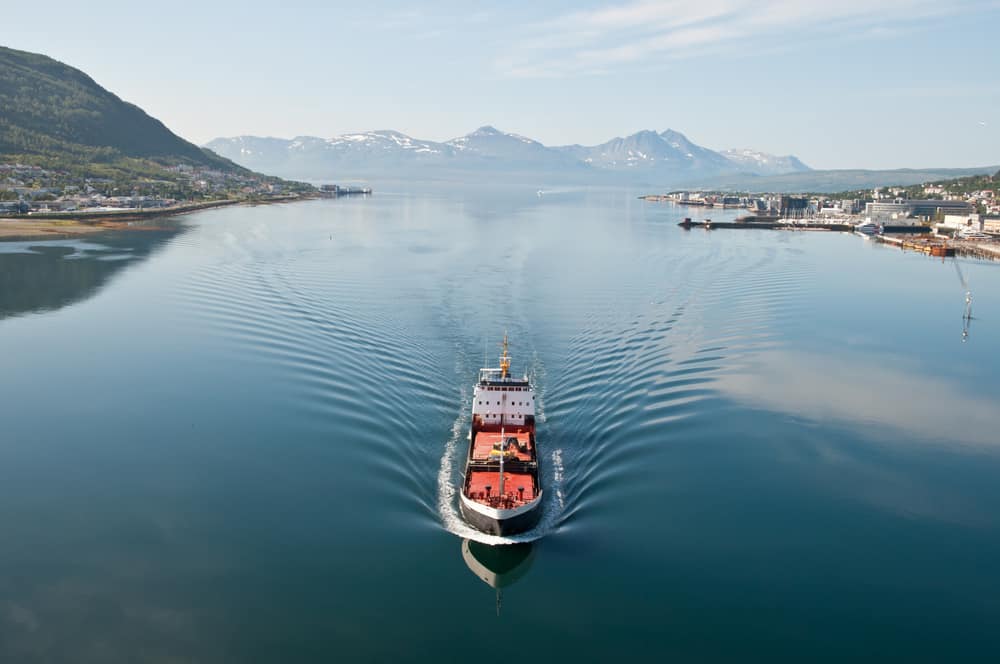
Meanwhile, Hapag-Lloyd has also shifted its development focus to feeder container ships. Earlier this month, it announced plans to order up to 14 to 24 3500-4500TEU feeder container ships from two Chinese shipyards, expected for delivery in 2028. Subsequently, the company disclosed in its financial report a plan to build up to 22 new container ships under 5000 TEU.
Separate reports indicate that Hapag-Lloyd will also be the lessee for four 4500TEU container ships ordered by MPC at Jiangsu Hantong Ship Heavy Industry Co., Ltd. These newbuilds are also scheduled for delivery in 2028.
Greek shipowner Conbulk Shipmanagement, which has focused on the tanker business in recent years, entered the container segment for the first time this month, ordering two 5000TEU container ships from Yangzhou Guoyu Shipbuilding. At the same time, another Greek owner, Cape Shipping, is re-establishing its container business, ordering two 3100TEU container ships from New Dayang Shipbuilding, with deliveries expected starting from the second quarter of 2028.
On the 19th, TS Lines, which focuses on the Asian market, continued to expand its owned fleet by ordering 2+2 2900TEU container ships from Mawei Shipbuilding, expected for delivery in 2028.
Greek owner Danaos and Vietnamese operator Hai An Transport and Stevedoring JSC (HAH) each ordered two 7100TEU container ships from Dalian Shipbuilding Industry Group. Hai An is actively expanding its fleet, and this new order was placed through “Hai An Green Shipping,” a joint venture established with port operator Viconship. This move marks a significant leap for the company from its previous focus on feeder vessels to larger-scale operations.
Shipbroker MB Shipbrokers noted that the market this week showed a “significant recovery in newbuilding activity,” particularly in the larger vessel segments. The firm emphasized robust demand for feeder and medium-sized vessel tonnage and added: “We expect the shipping market to remain busy until the end of the year.”
According to senior industry analysis, in Asia, supply chain shifts triggered by the Sino-US trade war have spurred the rise of manufacturing in Southeast Asia, leading to significant growth in short-sea shipping demand between China and Southeast Asian countries. Concurrently, the shipping alliances restructured earlier this year prompted member carriers to begin reorganizing their fleets since last year: MSC, having shifted to independent operations, requires a large number of small and medium-sized vessels as /cargo collection ships to maintain its original liner network services. Meanwhile, the newly formed “Gemini Cooperation” alliance between Maersk and Hapag-Lloyd employs a hub-and-spoke strategy, where mainline mother vessels only call at international hub ports, and cargo to/from secondary ports relies entirely on feeder vessels for transshipment.
On another front, the aging trend of the small and medium-sized container ship fleet is becoming increasingly prominent. Data from Clarksons Research shows that as of mid-year, there were 3,910 feeder-type container ships under 3000 TEU globally, of which 26% were over 20 years old. The renowned UK shipping consultancy MSI further pointed out that currently up to 60% of the feeder fleet is over 20 years old. This situation, combined with strong market demand, forms the crucial backdrop for the current surge in new ship orders, particularly for small and medium-sized vessels.