Coal deliveries to advanced economies will decline by 2% year on year in 2025 to the lowest level in 23 years, according to a BIMCO forecast. This would mark a third consecutive annual decrease, although the pace of contraction is slowing. The reduction is driven primarily by weaker demand for coking coal amid lower steel production, analyst Filipe Gouveia of the shipping association said.
From January to October, global steel production fell 2.1% year on year, based on data from the World Steel Association. In developed economies that rely on imported coking coal, the drop was sharper: steel output in the EU fell 3.4%, in Japan 4.1%, and in South Korea 3.6%.
As a result, coking-coal shipments to these economies declined 10% year on year. Between 2022 and 2024, thermal-coal shipments to these countries fell 30%. In 2025 to date, however, deliveries rose 1% compared with the same period a year earlier due to higher volumes to the EU at the start of the year. Electricity demand increased in Germany and the Netherlands, while wind and hydropower generation decreased.
In Japan and South Korea, thermal-coal imports broadly matched last year’s levels: increased electricity consumption from data centers supporting artificial-intelligence systems and semiconductor production offset the rise in renewable generation.
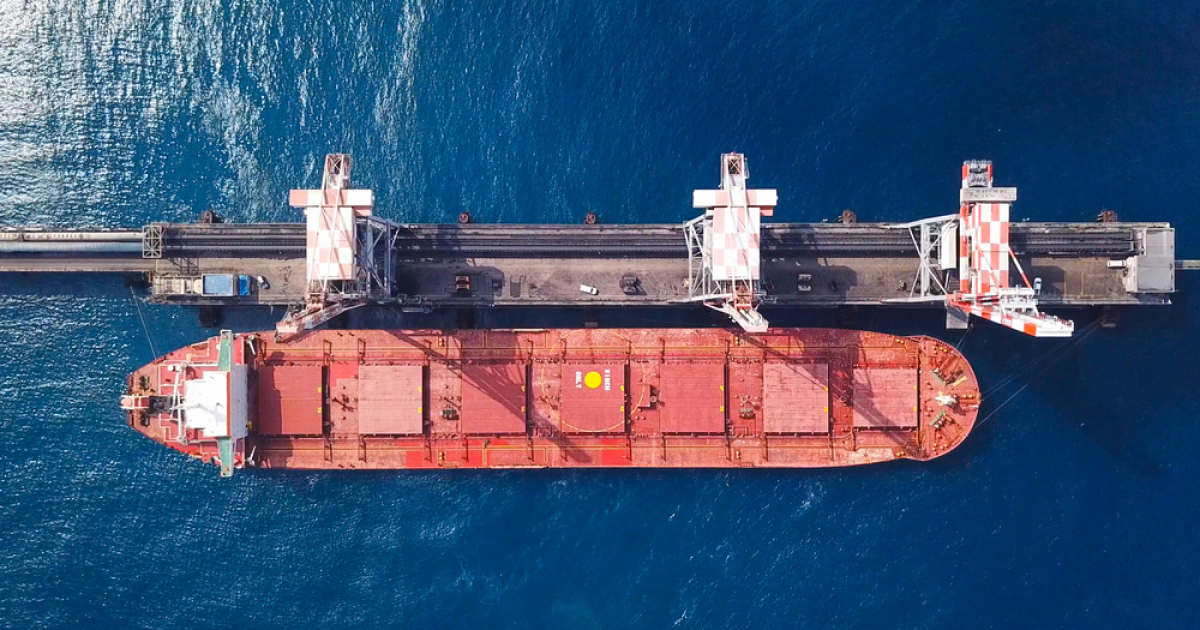
BIMCO estimates that developed economies will account for 29% of global seaborne coal deliveries in 2025, compared with 77% 23 years ago, while still generating around 7% of global dry-bulk volumes. Lower shipments have already pressured the market, especially the panamax and capesize vessel segments, Gouveia noted.
Since the start of 2025, 57% of such cargoes were carried by panamax vessels and 30% by capesize vessels. The panamax share increased by 3 percentage points from 2024 amid higher price competition in that segment. In 2026, demand from advanced economies for imported coking coal could partially recover, particularly in Europe.
The World Steel Association expects European steel demand to rise 3% thanks to higher infrastructure and defense investment, which could support steel production. Additional factors may include higher import duties on steel and reduced duty-free quotas in the EU. In the longer term, BIMCO expects coking-coal demand to grow more slowly than steel production as output from scrap metal — which does not require coking coal — expands.
Thermal-coal imports, by contrast, are projected by BIMCO to continue declining in the coming years, restraining demand for vessel freight.
According to the International Energy Agency, renewable-energy capacity in 2025–2030 could rise 64% in Europe, 30% in Japan, and 49% in South Korea.
BIMCO is an international shipping association that represents vessel owners, operators, brokers, and related maritime stakeholders. It provides market analysis, develops standard contracts for the maritime industry, and participates in regulatory discussions affecting global shipping. The organization also offers guidance on operational, legal, and technical matters for its members.