In 2025, against the backdrop of a global decline in new ship orders and tight domestic resources, the South Korean shipbuilding industry accelerated its global layout to expand development space. Simultaneously, it seized opportunities arising from the escalating US-China rivalry to capture orders for certain ship types, thereby narrowing the market share gap with China to some extent. Meanwhile, South Korean shipbuilders intensified efforts to promote AI-enabled and digital transformation, vigorously tackled key technologies for LNG carriers and liquid hydrogen carriers, strengthened independent and controllable innovation capabilities, and strategically positioned themselves in high-end and cutting-edge fields, aiming to forge new competitive advantages centered on technology.
01. Seizing Market Opportunities Amid US-China Rivalry, Order Outsourcing Enhances Delivery Advantages
South Korean shipbuilders advanced order outsourcing and, leveraging the “reflected benefits” of the US “Section 301 investigation,” reclaimed some market share. According to Clarksons Research statistics, from January to October 2025, measured by compensated gross tonnage (CGT), new ship orders received by South Korean shipbuilders accounted for approximately 21.3% of the global total. Although this still lags far behind the 59.1% share held by Chinese shipbuilders, the market share gap with China has narrowed from 51 percentage points in the same period last year to less than 38 percentage points. In recent years, South Korean shipbuilders have persistently adopted a “selective ordering” strategy, deliberately controlling order intake and focusing on high-value ship orders, which once led to a continuously widening global market share gap with China. However, to regain market share, South Korean shipbuilders have continuously improved production efficiency and adopted measures such as outsourcing part of their orders to domestic and overseas shipyards. This allows them to accept more orders while achieving cost reductions. Coupled with the impact of the US “Section 301 investigation,” this has partially narrowed the market share gap with China. Specifically, Samsung Heavy Industries entrusted the entire construction of some tankers to HSG Sungdong Shipbuilding & Marine Engineering and Vietnam Marine Machinery Company. HD Hyundai also outsourced some medium-sized crude oil carriers to HD Hyundai Heavy Industries Philippines Shipyard and invested in enhancing HD Hyundai Vietnam’s production capacity. South Korean shipbuilders can now offer shipowners more competitive delivery schedules, which is also favored by shipowners.
Figure 1. Market Share of New Ship Orders from January to October, 2016-2025 (CGT basis) Data source: Clarksons Research, China State Shipbuilding Corporation Economic Research Center.
02. Persistent Strategy Yields Substantial Returns, High-Value Orders Ensure Significant Profits
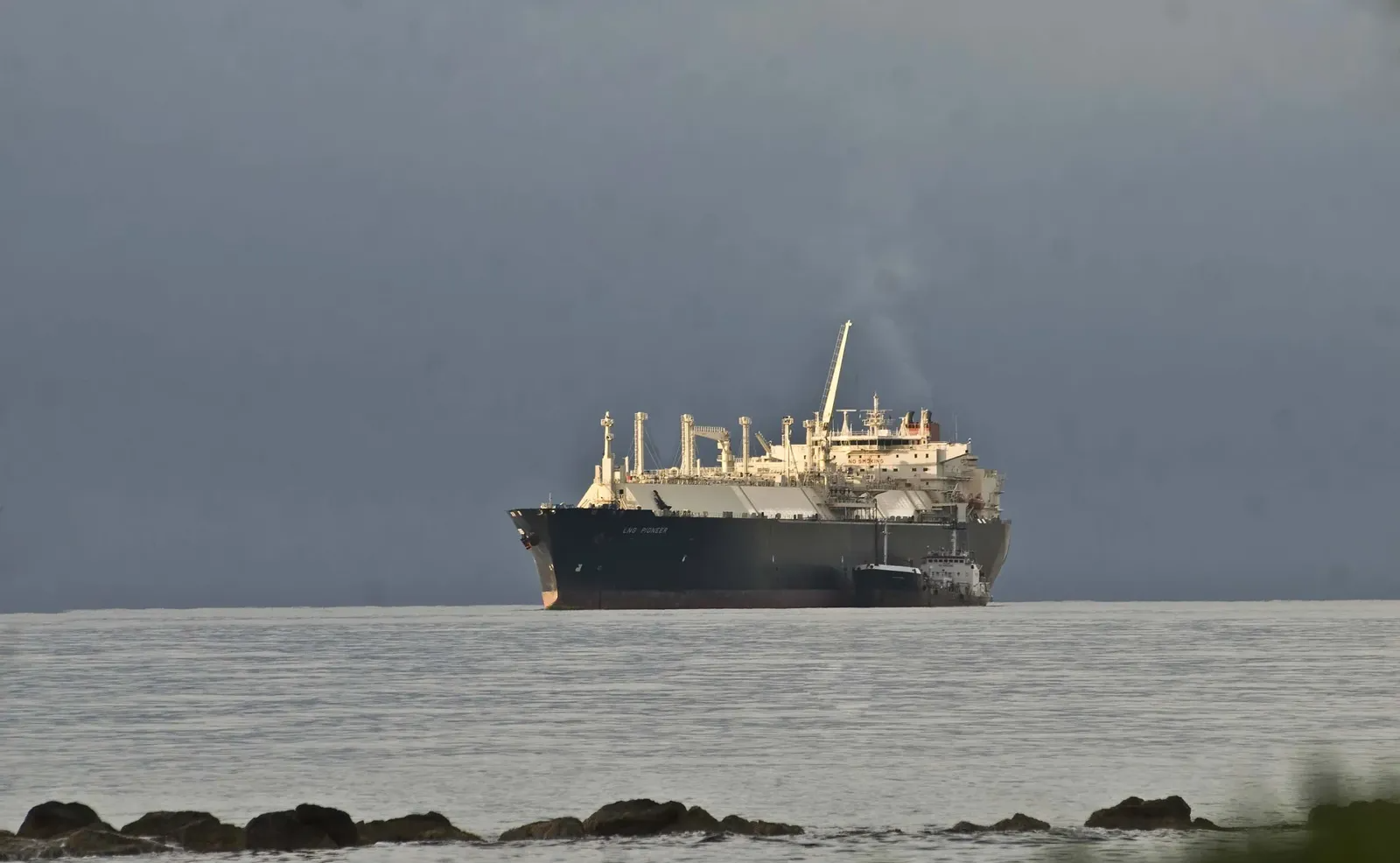
Facing a disadvantage in total order volume, South Korean shipbuilders achieved improved profits through high-value-added orders. In the third quarter of 2025, boosted by the significant reflection of high-value orders, such as those for LNG carriers, in their performance, the operating profits of South Korea’s three major shipbuilders—HD Korea Shipbuilding & Offshore Engineering, Hanwha Ocean, and Samsung Heavy Industries—increased by 164.5%, 1032.0%, and 98.6% year-on-year respectively. Their combined operating profit exceeded 1.5 trillion Korean won (approximately 8.11 billion RMB), a year-on-year increase of about three times. Concurrently, the growth in high-value-added orders directly drove the improvement in South Korea’s shipbuilding export performance. From January to October this year, South Korea’s ship exports reached $27 billion, a year-on-year increase of 32.9%. Currently, LNG carriers account for as much as 70% of HD Korea Shipbuilding & Offshore Engineering’s sales, and the proportion at Hanwha Ocean also reaches 60%. Meanwhile, orders for green environmentally friendly ships, such as LNG-powered and methanol-powered vessels, have increased significantly and have become an important source of new orders for South Korean shipbuilders. The industry widely believes that this shipbuilding boom cycle, driven by high-value-added ship types, is expected to continue, and the “selective ordering” strategy will be maintained in the future.
Table 1: Operating Performance of South Korea’s Three Major Shipbuilders in Q3 2025 (Unit: 100 million RMB) Data Source: Financial reports of South Korea’s three major shipbuilders, compiled by CSSC Economic Research Center.
03. Overseas Expansion Reshapes Industrial Landscape, Multi-point Layout Alleviates Resource Bottlenecks
South Korea’s three major shipbuilders are accelerating overseas expansion through diverse methods such as acquisitions, joint ventures, and leasing. They are strengthening their global industrial chain network layout in countries and regions including the United States, China, Southeast Asia (Vietnam, Philippines, Singapore), South Asia (India), Australia, South America (Brazil), and Africa (Morocco). This not only alleviates the bottlenecks of limited land and labor resources in South Korea but also enables them to be closer to overseas customer demand and diversify operational risks. Specifically:
HD Hyundai, through a multi-pronged approach, is exporting advanced shipbuilding technology overseas, achieving capacity expansion and win-win local cooperation. In the US, it cooperates with American shipowner Edison Chouest Offshore (ECO) to build LNG carriers and collaborates with Germany’s Siemens to assist in the modernization of the US shipbuilding industry; in Vietnam, it makes additional investments, upgrades shipbuilding bases, and acquires Doosan Energy’s Vietnamese subsidiary as an independent LNG cargo tank manufacturing base; in the Philippines, it leases the Subic shipyard to create an integrated marine industrial park; engages in technical cooperation with India’s Cochin Shipyard; and actively bids for the operational rights of the Casablanca shipyard in Morocco.
Hanwha Ocean is simultaneously advancing in the fields of military vessels and offshore equipment through a series of mergers and investments, possessing cross-regional, multi-base production capabilities. It formally acquired the Philadelphia Shipyard in the US, planning to increase its annual capacity to build 10 large LNG carriers and implant 3D printing technology at the shipyard; acquired the Singapore offshore company Dyna-Mac; is negotiating the acquisition of the Australian defense shipbuilder Austal; and is planning to establish a shipbuilding base in Brazil.
Samsung Heavy Industries combines its own technology with overseas resources to accelerate its entry into the North American and Southeast Asian markets. It partially outsources oil tanker construction tasks to countries like China and Vietnam and cooperates with local shipyards for construction to reduce costs and achieve rapid delivery; signed an MOU with the US Vigor Marine Group to cooperate in areas such as US vessel MRO, shipyard modernization, and joint shipbuilding; cooperates with Hanwha Ocean’s DSEC to promote the upgrade and transformation of US shipyards; collaborates with India’s largest shipbuilder, Swan Defence & Heavy Industries, hoping to establish a production base in the rapidly growing Indian market and expand business scope in phases.
04. Driven by ROK-US Cooperation Framework Projects, South Korea Comprehensively Boosts Presence in US Market
The South Korean government and companies are jointly promoting the implementation of the “Mutual Assistance in Shipbuilding and Governmental Agreement (MASGA)”. South Korea has elevated ROK-US shipbuilding cooperation to a national strategic level, forming synergy through top-level design and financial support. At the government level, a special fund of USD 150 billion was established through the ROK-US Trade Agreement, accounting for 43% of its total investment in the US, covering areas such as shipyard construction, talent cultivation, shipbuilding, and MRO (Maintenance, Repair, and Overhaul). In August 2025, during his visit to the US, South Korean President Lee Jae-myung stated that in manufacturing and shipbuilding, South Korea is the US’s best and only partner. At the ROK-US Business Roundtable held in Washington D.C., companies from both countries signed 11 MOUs and cooperation agreements covering strategic industries such as shipbuilding, nuclear energy, energy, and aviation. At the corporate level, MASGA has become a major driving force for the three major Korean shipbuilders’布局 in the US. HD Hyundai, Hanwha Ocean, and Samsung Heavy Industries have jointly established a “ROK-US Shipbuilding Cooperation Working Group.” Among them, Hanwha Ocean is the most active in cooperating with the US, including establishing subsidiaries in the US, acquiring US shipyards and LNG exporters, placing LNG carrier orders at US shipyards through its parent company, providing ship MRO services for the US Navy, and publicly supporting the US at the “Section 301 investigation” hearing; HD Hyundai is advancing cooperation with the US in technical assistance, shipyard modernization, strengthening the supporting supply chain, cooperative construction of LNG dual-fuel container ships, joint development of unmanned surface vessels, new ship construction, repair, operation, and talent cultivation; Samsung Heavy Industries signed a strategic partnership agreement with the US shipbuilder Vigor Marine Group to cooperate in areas such as US Navy MRO projects, shipyard modernization, and joint shipbuilding.
ROK-US cooperation is forming a deeply integrated pattern ranging from capital and technology to production capacity and talent, covering multiple areas for both military and civilian use. In terms of warship maintenance, both Hanwha Ocean and HD Hyundai have undertaken US Navy MRO projects, entering the core equipment maintenance and support领域 of the US military for the first time. In terms of industrial upgrading, Hanwha Ocean plans to increase the annual capacity of the Philadelphia shipyard to 10 large LNG carriers; HD Hyundai and ECO plan to build LNG dual-fuel container ships in the US by 2028, expanding cooperation in the merchant ship sector. In terms of technical cooperation, HD Hyundai cooperates with the US Huntington Ingalls Industries (HII) to promote digital shipyard technologies such as automation, robotics, and AI; signed an MOU for the joint development of unmanned surface vessels with the US company Anduril; and met with Bill Gates, founder and chairman of the US nuclear reactor design and development engineering company TerraPower, to discuss nuclear supply chain expansion and commercialization cooperation. In terms of talent cultivation, HD Hyundai cooperates with Seoul National University and the University of Michigan to train shipbuilding engineers for the US, providing talent support for the US shipbuilding industry.
05. Fully Embracing AI and Digitalization, Smart Manufacturing Enhances Production Efficiency
The central government’s strong promotion and consensus with industry have accelerated the implementation of South Korea’s digital shipbuilding transformation. Upon taking office, South Korean President Lee Jae-myung included shipbuilding digitalization in the national strategy. The South Korean government released the “Shipbuilding Industry Digital Transformation Roadmap,” proposing a phased realization of full-process intelligent shipbuilding based on AI engineering management, digital twin design, autonomous navigation systems, etc., and planning to promote smart shipyards, AI quality inspection, and production automation equipment in three phases during 2025-2026. Lee Jae-myung emphasized: “The digital transformation of the shipbuilding industry is not a choice, but a matter of survival,” requiring Korean shipbuilders to promote digitalization across the entire process from design, production, quality, to safety management, and pointing out that “AI-based competitiveness comes from algorithms, not steel plates.”
The three major shipbuilders are increasing investment in digital infrastructure and cutting-edge technologies, accelerating the upgrade of smart shipyard construction. HD Hyundai’s shipyards are accelerating the introduction of cutting-edge technologies such as AI engineering automation, AR (Augmented Reality) quality inspection, and digital twin design, and have commercialized autonomous logistics robots and real-time material tracking systems, achieving an intelligent closed loop in the production site. Samsung Heavy Industries released the industry’s first design-production integrated automation platform “S-EDP,” which significantly shortens the design cycle by centralizing the management of design data and automatically generating /documents, and plans to more than triple the design automation rate by 2030. Samsung Heavy Industries also activated an integrated control center at its Geoje shipyard, integrating AI visual recognition, drone inspection, smart helmets, and other technologies to achieve panoramic real-time monitoring of shipyard safety and operations, injecting technology-intensive genes into the traditional labor-intensive shipbuilding industry. Hanwha Ocean is building a hybrid smart shipyard, integrating high-precision measurement and debugging technology with merchant ship construction, and establishing an integrated digital production control system at its Geoje shipyard to achieve real-time production data analysis and design linkage, resulting in efficient and green shipbuilding processes. These measures are shifting the production model of Korean shipbuilders to data-driven, providing revolutionary means for efficiency improvement and intelligent transformation.
Major shipbuilders are comprehensively deploying shipbuilding robots and automation equipment to further reduce dependence on manpower and improve production continuity. Samsung Heavy Industries cooperated with the top Korean robot company Rainbow Robotics to develop AI welding robots based on collaborative robots, and expanded to “shipbuilding-specific robots” such as dual-arm robots and quadruped robots. It has currently developed and applied over 90 types of automated equipment and robots covering block welding, spraying, LNG tank welding, pipeline inspection, etc. Samsung Heavy Industries also built an unmanned steel plate cutting workshop and achieved 24/7 uninterrupted production operations since September 2023. HD Hyundai Mipo successfully achieved round-the-clock unmanned autonomous manufacturing of lug plates using AI technology with 8 industrial robots and 2 Autonomous Mobile Robots (AMRs), marking the first time the Korean shipbuilding industry reached an unmanned level in the production of key components. Furthermore, HD Hyundai Samho is leading the “Development of AI Autonomous Manufacturing System for High-Difficulty Ship Block Production Process” project under the Ministry of Trade, Industry and Energy, jointly developing a series of shipbuilding-specific robots such as 5-axis lightweight welding robots and quadruped automatic walking robots with the local collaborative robot company Neuromeka, and introducing an AI vision optimization system to automatically detect defects and predict welding quality.
06. Accelerating Technological Breakthroughs, Strengthening Independent and Controllable Innovation Capabilities
Focusing on overcoming the low-temperature LNG cargo tank system, aiming to break the long-standing technological bottleneck monopolized by Europe. For a long time, the technology for cargo containment systems of large LNG carriers worldwide has been dominated by France’s GTT. To reverse this situation, the “Five-Year Economic Growth Strategy” released by the South Korean government in August this year listed the development of domestic LNG cargo tank technology as one of the fifteen “super innovation” leading projects, planning to build 2 LNG carriers equipped with domestic cargo tanks by 2028. At the corporate level, Samsung Heavy Industries took the lead this year by successfully applying its self-developed Korean-type LNG cargo tank system “KC-2” to commercial large LNG carriers, ushering in the “era of Korean-type cargo tanks.” If LNG carriers equipped with “KC-2” technology can operate stably, Korean shipbuilders are expected to save most of the royalty fees paid to GTT. This means South Korea is expected to摆脱 dependence on foreign technology and break the technological subordinate status, thereby further reducing construction costs and improving order profit margins. Meanwhile, HD Hyundai Heavy Industries is relying on the Ultra-low Temperature System Research Center of Mokpo University to conduct empirical tests on the second-generation domestic cargo tank “KC-2,” with the latest tests indicating it is already applicable to very large vessels. Additionally, HD Hyundai began building a brand for its autonomous low-temperature cargo tank technology, applying to register the “iZ” trademark in May this year, covering 30 products and services including fuel tanks, storage tank construction, and maintenance, branding the ultra-low temperature cargo tank related technology. The “i” in “iZ” represents intelligent, integrated, IoT, while “Z” signifies “taking responsibility from A to Z,” reflecting its ambition to provide a full lifecycle integrated solution from cargo tank design and construction to operation and maintenance.
Not limited to the LNG field, South Korea is striving to seize the initiative in next-generation clean energy ship technology. In May this year, the South Korean government led the establishment of the “Public-Private Joint Promotion Group for Liquid Hydrogen Carriers,” bringing together 101 industry-academia-research institutions to simultaneously tackle 43 topics, with the goal of building the world’s largest liquid hydrogen carrier demonstration ship by 2027, and investing 55.5 billion KRW (approximately USD 39.5 million) in special funds for R&D in 2025. Liquid hydrogen carriers are regarded as a future high-difficulty frontier field. South Korea hopes to achieve technological autonomy through concentrated efforts, laying the groundwork for future markets. Thus, from LNG to hydrogen energy, the South Korean shipbuilding industry is making comprehensive breakthroughs in key technology monopolies, solidifying the foundation for further enhancing competitive advantages and achieving long-term development.
Authors: Wang Chu, Chen Baiquan, Tu Jiaying