On January 20, 2024, after a ship had finished discharging benzene and was underway, a crew member entered a cargo oil tank before the enclosed space entry procedure was approved and without confirming the atmospheric safety inside the tank.
The crew member was subsequently found collapsed at the bottom of the tank. Despite rescue efforts, they did not survive.
The investigation report concluded that the residual benzene vapor and an oxygen-deficient atmosphere inside the tank were the primary causes leading to their rapid incapacitation and eventual death.
Vessel and Voyage Background
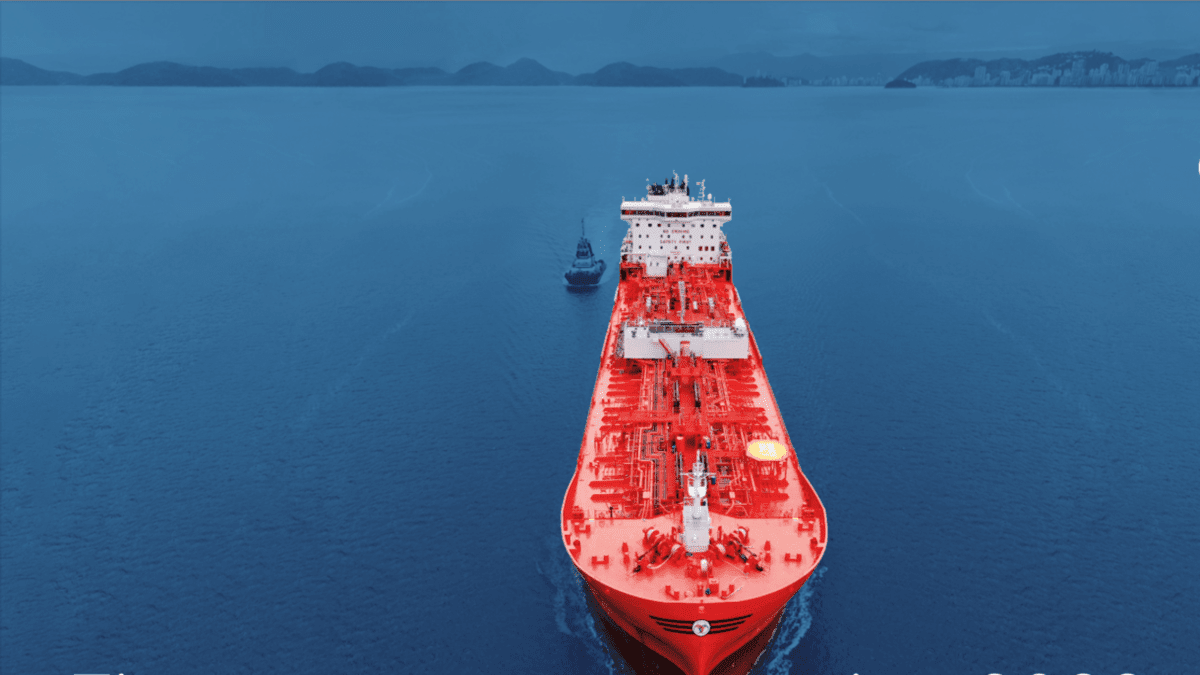
The vessel involved was an /chemical tanker with a gross tonnage of 8270. After completing the discharge of benzene on its previous voyage, it was proceeding in ballast to South Korea to load the next designated cargo.
The ship departed from Jiangyin, China, after discharge and was en route to Yeosu, South Korea.
The planned process during the inter-voyage period included complete gas freeing and cleaning of the cargo oil tanks in preparation for loading the next chemical cargo.
The final step of the cleaning process required personnel to enter the tanks to manually wipe or “swab” the residual wash water.
According to standard practice, entry into a cargo oil tank requires an Enclosed Space Entry Permit issued by the Master.
The company’s policy required marking the hatch of an enclosed space to indicate that a permit had been issued and the space was now safe for entry.
Some of the cargo oil tanks had previously carried benzene.
Although the tanks had been washed and ventilated for gas freeing, residual benzene vapor still posed a significant safety hazard.
Benzene is highly volatile and toxic. Inhalation of benzene vapor in confined or poorly ventilated spaces can rapidly cause dizziness, incapacitation, unconsciousness, respiratory failure, and even fatal consequences.
The vessel had a multinational crew from South Korea, Indonesia, and Myanmar.
Accident Sequence
On the morning of the accident, the ship had been sailing for several hours, and the crew was preparing for the “swabbing” phase of the cargo tank cleaning.
This phase should normally only be conducted after adequate gas freeing operations and confirmation of a safe atmosphere inside the tank via gas testing.
At approximately 10:10, the Chief Officer instructed four deck ratings (Bosun, Able Seaman, and two Ordinary Seamen) to bring mops and rags to the main deck in preparation for the planned swabbing work inside the washed cargo oil tanks.
At this time, the application process for the “Enclosed Space Entry Permit” had not been initiated, and the tank atmosphere had not been confirmed as safe.
It is understood that the Chief Officer, at the deck level, had detected a strong odor of cargo residue emanating from the cargo oil tanks and therefore believed gas testing was unnecessary as the tanks were clearly still unsafe.
Shortly afterwards, one Ordinary Seaman (OS) appeared to have taken premature action.
They entered the cargo tank through an open hatch before air testing and safety confirmation were conducted.
It was later found that they were not carrying a portable multi-gas detector but were wearing a filter mask, possibly for “protection.”
In an oxygen-deficient space, the worn filter mask could not provide protection, nor could it prevent exposure to residual benzene or other toxic vapors that might remain in the tank.
At approximately 10:35, while the Bosun was walking on the deck, he looked into the portside No. 10 cargo oil tank and discovered the Ordinary Seaman collapsed at the bottom of the tank. He immediately raised the alarm.
After the bridge notified the Master, the vessel initiated emergency response procedures.
The Chief Officer and Second Officer, wearing Self-Contained Breathing Apparatus (SCBA), entered the cargo tank to rescue the crew member. They fitted him with an Emergency Escape Breathing Device (EEBD), but the crew member remained unresponsive.
After the crew member was brought to the deck on a stretcher, Cardiopulmonary Resuscitation (CPR) was immediately administered on site, while medical support was requested from shore-based rescue agencies.
Despite prolonged resuscitation efforts, the Ordinary Seaman did not regain consciousness and was later pronounced dead after being transferred ashore.
Subsequent autopsy revealed that the crew member had injuries consistent with falling onto a hard surface, including a cervical spine fracture, indicating they had likely been incapacitated by the tank’s atmospheric conditions before reaching the tank bottom.
Benzene was detected in their cardiovascular system.
Based on this, and considering that the tank bottom was only accessible by ladder, the investigation concluded that the crew member had voluntarily entered the cargo tank, lost consciousness due to inhaling residual benzene vapor, fell, and ultimately died from their injuries.
Furthermore, they had not conducted a safety test of the tank atmosphere before entry, and the filter mask they wore was not appropriate certified protective equipment for guarding against benzene vapor or an oxygen-deficient environment.
This accident occurred very suddenly, and at the time, the cargo tank had not been formally approved for entry.
Before an Enclosed Space Entry Permit is issued, regardless of whether the hatch is open, ventilation fans are running, or the tank has just been washed, it must be treated as a hazardous area.
The purpose of the permit approval process is to confirm, through measured data and documented gas testing, that work can be conducted safely.
Viewed from above, a cargo tank might appear harmless, but a hazardous atmosphere capable of causing instant incapacitation or death could still be present.
Therefore, the condition inside a tank cannot be judged by visual observation from the deck level alone; even if the interior appears calm, its atmosphere may still be in a dangerous state.
Statement: This article is reprinted for the purpose of conveying more information. If there are any source attribution errors or infringements of your legitimate rights and interests, please contact us with proof of ownership, and we will promptly correct or delete it. Thank you.