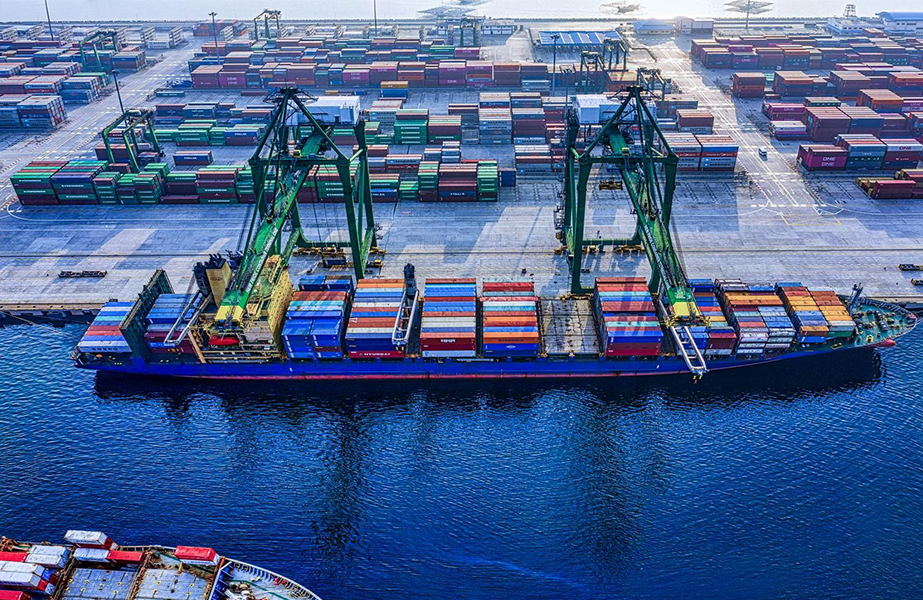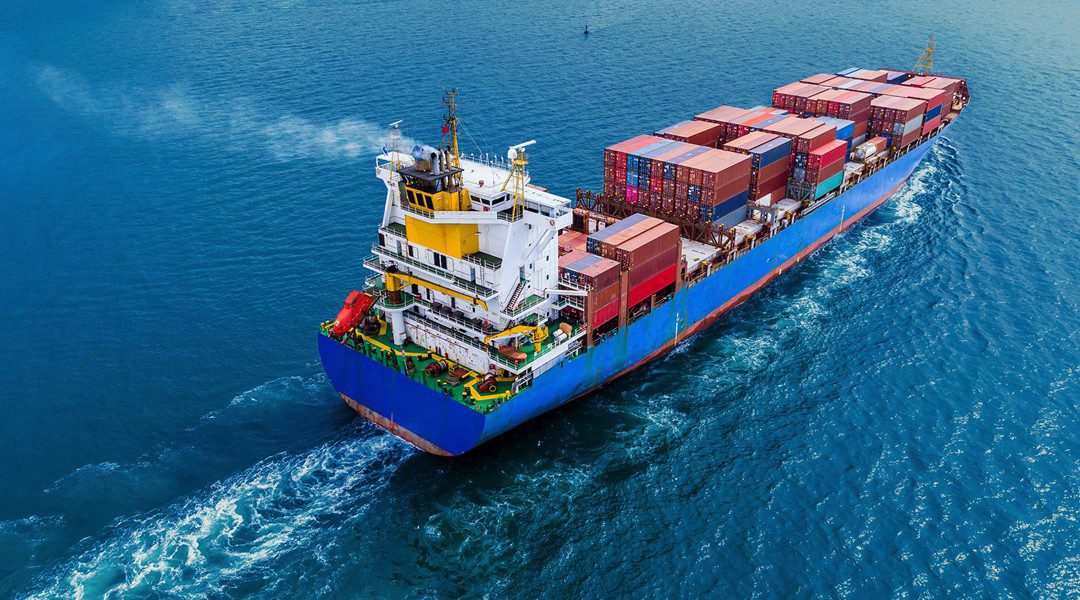
On November 26, the 50 millionth twenty-foot equivalent unit (TEU) for Shanghai Port’s 2025 target was precisely handled, a full 26 days earlier than when this record was first achieved in 2024. This marks that the annual container throughput for this year will once again reach a new historical high, while also presenting an outstanding achievement in celebration of the 20th anniversary of the opening of the Yangshan Port area.
Not only is Shanghai Port poised to continue its streak of ranking first globally in container throughput for the 16th consecutive year, writing a vivid footnote in the construction of a world-class shipping hub, but it is also setting a new benchmark for high-quality development of global ports through its innovative practices of “Reconstructing Efficiency with Intelligence, Defining the Future with Green.” It has engraved the “Three Goods” exhortation in its heart, transforming it into a journey of pursuing dreams through quality improvement and efficiency enhancement.
The attainment of this achievement stems from a strategic upgrade from “scale expansion” to “ecological reconstruction.” Shanghai Port has abandoned the traditional development model of simply adding terminal hardware, instead building a broad-area collaborative ecosystem with systematic thinking. Internally, the matrix of automated terminals is deeply integrated with the intelligent transformation of traditional port areas, creating an operational network characterized by “broad-area intelligent connectivity and efficient linkage,” thereby improving efficiency across all operational segments. Externally, it breaks the physical boundaries of the port, extending service reach to core hinterland nodes, implementing the “Port-Industry-City” coordinated development strategy, strengthening cargo aggregation resilience and logistics flow, laying a solid foundation for the early achievement of the “50 million TEU” target.
Intelligent empowerment is the core driving force and a vivid epitome of China’s independent innovation. Shanghai Port has progressed from single-equipment automation to a new stage of full-process intelligent collaboration. The independently developed port intelligent management and control system is continuously iterated and upgraded, acting like an evolving “intelligent brain” that precisely dispatches resources across the entire chain of terminals, yards, shipping, and logistics. The deep application of cutting-edge technologies such as F5G, digital twins, and high-precision positioning has made remote control, unmanned transfer, and intelligent dispatch the norm, achieving a fundamental shift from “human control” to “intelligent control.” This intelligent transformation centered on proprietary technology not only supports breakthroughs in terminal efficiency but also demonstrates to the world the comprehensive, domain-wide, independent and controllable capability of Chinese port technology. Green transformation injects the底色 of sustainable development, highlighting the synergistic共生 of “hardcore strength” and “ecological responsibility.” Shanghai Port has always placed green development at its core, abandoning the traditional path of “develop first, clean up later,” and exploring a new path that achieves both ecological and economic benefits. From the recycling of resources in the renovation of old terminals to the clean energy supply system covering the entire port; from the global co-construction of green shipping corridors to the normalized application of new environmentally friendly fuels, every measure practices the development concept that “lucid waters and lush mountains are invaluable assets.” Behind the “50 million TEUs” are lower carbon emissions and a cleaner shoreline environment, demonstrating Shanghai Port’s responsibility and commitment to green and low-carbon development.
The pattern of open linkage makes Shanghai Port a “stabilizer” and “accelerator” of the global supply chain. Based on its position as a strategic node in the dual-circulation strategy, Shanghai Port deepens cooperation with global shipping partners, opening up the “main arteries” of international trade with a denser route network, more convenient customs clearance services, and more efficient transshipment connections. Simultaneously, it deeply integrates into regional coordinated development, building an interconnected logistics network through resource sharing and complementary advantages with ports along the routes, promoting the extension of the port hub’s value from a single /unloading function to an important platform for global resource allocation, providing lasting momentum for the steady recovery of the world economy. Standing at the new starting point of consecutively breaking the “50 million TEU” mark, Shanghai Port will bear in mind the “major national priorities,” use technological innovation as its wings, green development as its foundation, and open collaboration as its bridge, forging ahead courageously on the path of building a Chinese-style modernized port. It will create more “Chinese miracles” that amaze the world and contribute Shanghai Port’s strength to serving the nation’s high-level opening up and creating a new situation of win-win cooperation.