By Redação PortalPortuario
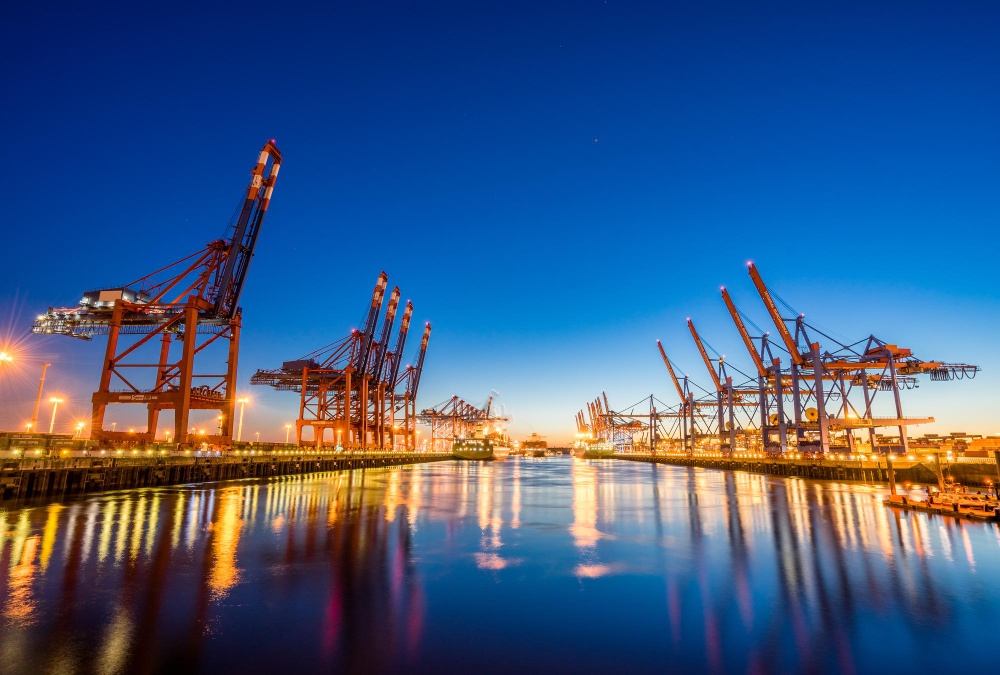
Two portainers (quay cranes) and eight electric RGTs (yard cranes) acquired by Santos Brasil have left China, bound for Tecon Santos, on board the ship Zhen Hua 28. The equipment from the Chinese company ZPMC is part of the terminal’s expansion, modernization, and decarbonization project and involve investments of around R$ 300 million.
The new portainers feature TPS (Truck Position System) technology, a truck positioning system that precisely defines the stopping location of the vehicles for loading and unloading operations – already present in the last four units received by the terminal – but with a difference: they can also be operated remotely, meaning the operators will leave the top of the equipment’s cabin to work remotely in the operations center of the administrative building, just as already happens with the RTGs.
Each portainer is 50 meters high, from the quay to the boom, and has a 70-meter boom length, plus the capacity to handle up to two full 20-foot containers at the same time, with up to 100 tons of cargo.
The new RTGs will join the eight existing electric units. They are state-of-the-art models that allow remote operation, which was pioneered at the terminal at the end of 2024. Another 30 electric RTGs will be acquired in the coming years, replacing the diesel models. This initiative, which guarantees more safety and ergonomics for the operators, allows for a reduction in emissions of about 20 tons of CO2 per month per equipment. The complete fleet change will prevent 713 tons of CO2 per month from being released into the atmosphere, resulting in a 97% reduction in emissions from these equipment at the terminal.
The Tecon Santos expansion and modernization project began in 2019 and, by 2031, approximately R$ 3 billion (updated values) will be invested, of which R$ 2 billion have already been spent. It is aligned with the Company’s Climate Transition Plan, which aims to become net zero by 2040.
For Bruno Stupello, Director of Container Port Terminal Operations at Santos Brasil, the company continues with the purpose of creating solutions that guarantee a differentiated competitiveness for Brazilian foreign trade and its customers. “While we are making investments in technology and increasing productivity, we are investing in a better quality of work life for our employees, who undergo rigorous training to operate these new machines,” he says.
The electric RTGs, for example, have 23 cameras, laser scanners, and sensors to perform the movements, all controlled by joysticks on a desk with three large screens and even the possibility of working while standing. “Furthermore, this equipment is already operated with some level of automation, always in an assisted manner by the professional, with more precision and safety,” adds Stupello.
The ship Zhen Hua 28 is expected to arrive at the Port of Santos in the first half of January. The equipment is transported assembled on the ship’s deck. At the terminal, they will be unloaded via rails that connect the vessel to the quay.
Standard operation is expected to begin in February. Remote operation, however, will only start months later, as it depends on sensor tests, desk configuration, and employee training, which can take up to a year.