The advancing multipolarism is foreign to Western logic, which struggles to understand or accept a reality that is not motivated by a will against something or against someone.
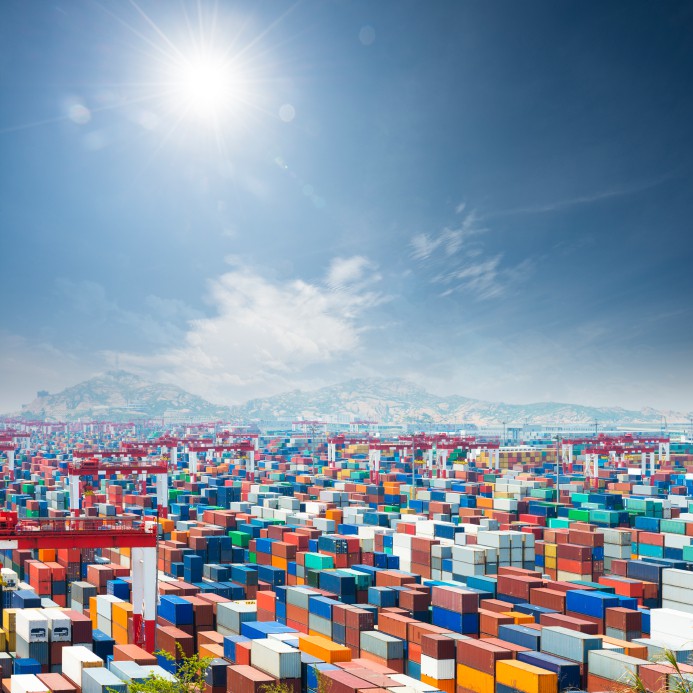
Starting from the fact that globalization is a complex form of interdependence, in the sense of an expanded organization of industrial production, the assertion that it has ended or is dying and similar claims sound forced. What we are witnessing instead is its evolutionary reorganization: if before it was based on a dual relationship between production countries and consumption countries, now this clear geographical separation no longer exists. With the formation of the so-called middle class, that is, segments of the population whose income allows for a certain level of autonomy in the purchase of goods and products, in Asian regions productive interdependence and consumption are increasingly coexisting, pushing Western investments to open new production plants in closer free zone areas.
Countries experiencing growth, both demographic and in social segments with greater purchasing power, are consolidating new forms of cooperation, transforming long-unheard demands from the West, pertaining to non-exclusion and political consideration, into concrete actions, which today find expression and strength in forums like the BRICS. In other words, the advancing multipolarism is foreign to Western logic, which struggles to understand or accept a reality that is not motivated by a will against something or against someone. Thus it stubbornly perseveres in the will to apply positivist ideological schemes of cause and effect to world affairs, creating confusion and leading to serious errors of judgment, which lead towards its own marginalization.
There is a serious oversight on the part of the West, blinded by opinions passed off as truths, which is this: often events happen not because someone wanted them to be that way or organized them in advance. Reality is most of the time unpredictably autonomous, in a becoming where coincidences and chance have a determining weight, as historical and philosophical reflection teaches, for that matter. In many non-Western peoples, a will for self-determination is clearly advancing, which, by rejecting corruption, puts external interference and land-grabbing out of play, putting the values and meaning of colonization in all its different declinations into crisis.
Every country in the Global South intends to do good business with other countries, because it knows that alone it gets nowhere, because it grasps how cooperation based on mutual satisfaction is necessary for the coexistence of diversities and the survival of the species. Good business established outside and inside the economic globalization structured in a few decades, creating countless supply chains, which today are discovering many alternative routes among themselves, but not different ones, involving many other countries.
Diving into factual reality, beyond numbers, formulas, and tables, the economic phenomenon of globalization is rooted in the will to increase the profitability of capital investments as much as possible, giving rise to its primordial form which, for this purpose, separates the places of production from those of consumption.
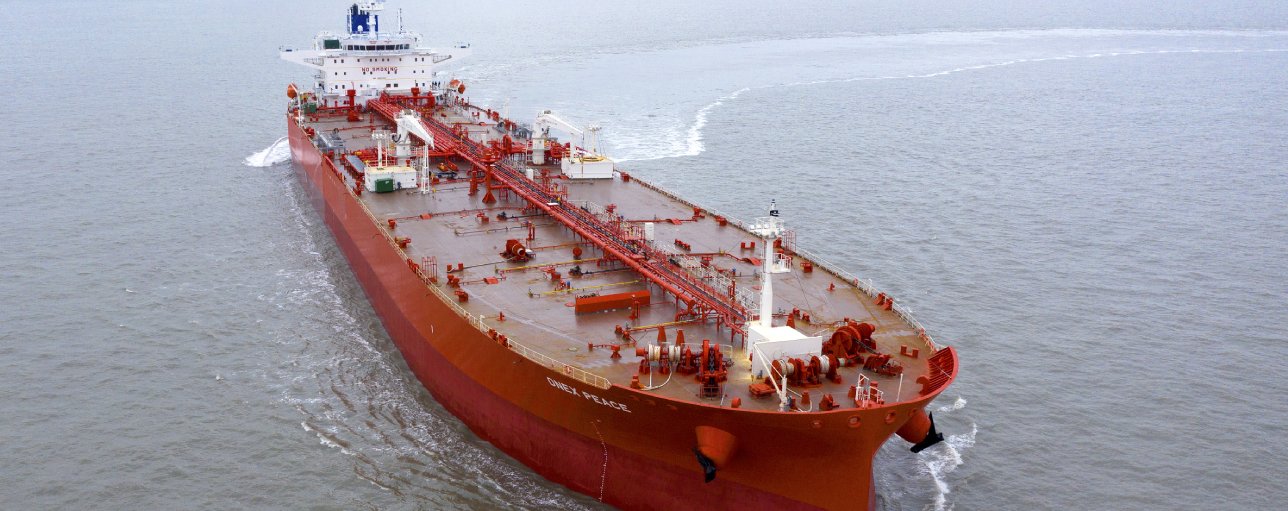
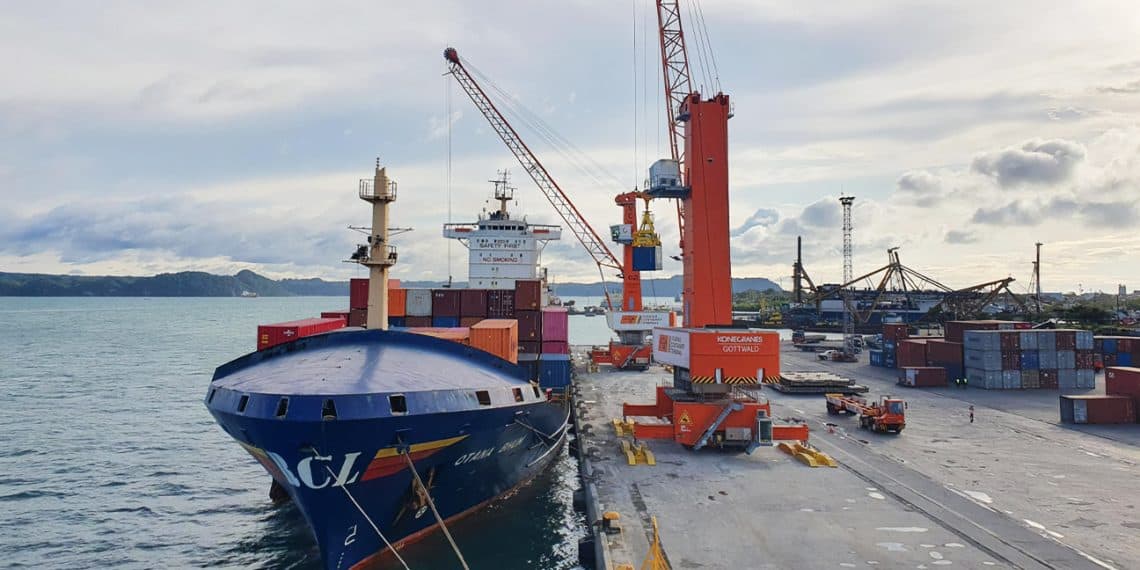
To produce goods, and also services, in places where production costs, especially labor costs, are infinitely lower (if not zero when considering safety and environmental impacts) than those in consumption areas, reached through supply chains; which have lengthened, intersected, and tangled around industrial productions, with an unprecedented level of internal and external emigration and the birth of enormous peripheral urban agglomerations.
China became the first and largest field of delocalized productive settlement, which produced mammoth volumes of exports primarily towards Europe and the United States. This led to transformations, growth, and demands: in China, but also in India, as orders and market prices increased, production costs also increased in parallel. Thus, delocalization created further delocalization of parts or entire production cycles, particularly in the areas of Southeast Asia, involving other countries in the supply chains.
In this system that seemed endowed with infinite stability, at a certain point, external geopolitical elements intervened, linked to the claims of countries to share and enjoy the wealth they were exporting, retaining a part of it internally. The ideology of the free market spread by organizations like the WTO and IMF clashed with the evidence of the facts: the supply chains did nothing but continuously export wealth subtracted from the places of production. While Asia bore the productive toil and enormous environmental costs for a recklessly unregulated industrialization, Africa and Central-South America instead supplied the industrial world and consumption centers with enormous quantities of raw materials, thus becoming recipients of investments fundamentally in agriculture, mining, and related infrastructure. A primary economy at very low costs, which continuously impoverished vast territories, with catastrophic environmental as well as social consequences.
Essentially, a divergence was generated in the Western capitalist exploitation of the rest of the world: while India, China, and Southeast Asia were the subject of significant industrial infrastructure development, for the remaining part of the world, Africa primarily, the same path did not materialize, but rather the focus was on large agricultural estates and mining exploitation sites. Recalling the beginning of this reflection, the recourse to the concept of regionalization, which insinuates the idea of a no-longer globalized world, is generating many misunderstandings, casting a thick veil over the reorganizing process of economic globalization, stemming from the strong and unprecedented interaction between the economy and States, which produces a very strong clash of interests.
This is because the economy can no longer govern the profound inequalities it produces. But not only that. Other economic interests have been added, having grown very rapidly: private armies and arms production. These two activities, with high capital intensity, subject to highly profitable investments by financial capital, primarily funds, operate directly and openly in the spheres of defense and aggression interests. Unlike the consumerist phenomenon, which generated globalization, the arms industry interfaces with individual States, supplying armies, provoking wars, and keeping conflicts of varying intensity active.
The consumption of weapons, therefore, in itself has completely different and independent channels from those of the supply of goods and products for civilian use, even if logistically they often overlap.
The chaotic and disordered reality we are experiencing at this historical moment has its roots in the breakdown of many schemes that were believed to be unshakable. The mechanical organization for its own use and consumption by industrial capitalism is breaking down, allowing irrepressible contradictions and also new models to emerge. Multipolarism is among the latter, the only concrete reference immediately available for peace and for peace reasoning, because otherwise there is only the muscular confrontation of sanctions, tariffs, militias and armies that sows death and poverty, as is already happening. The defense of the economy through weapons, the anticipation of weapons over the economy, the pushing forward of weapons to clear the field, is the logic that has uninterruptedly produced until today, from the slaughter of the Second World War shortly after that of the Great War, wars and exterminations of entire populations.
But it would be legitimate and wise to question the utility for humanity, for youth and for the planet of pursuing the interests of war.
*