In November of this year, Jiangsu Hantong Ship Heavy Industry secured new orders for 19 ships, fully demonstrating its strong competitiveness in the global shipbuilding market.
On November 29, Hantong Ship Heavy Industry announced that throughout November, it successively signed multiple new shipbuilding contracts with renowned shipowners from Japan, Germany, the UK, and other countries. The business scope covers the four main ship types, including 82,000 DWT bulk carriers, 211,000 DWT bulk carriers, 4500 TEU container ships, and a 319,000 DWT Very Large Crude Carrier (VLCC), totaling 19 vessels, showing a trend towards larger ship types in the orders. These newly signed orders are scheduled for delivery in 2028 and 2029.
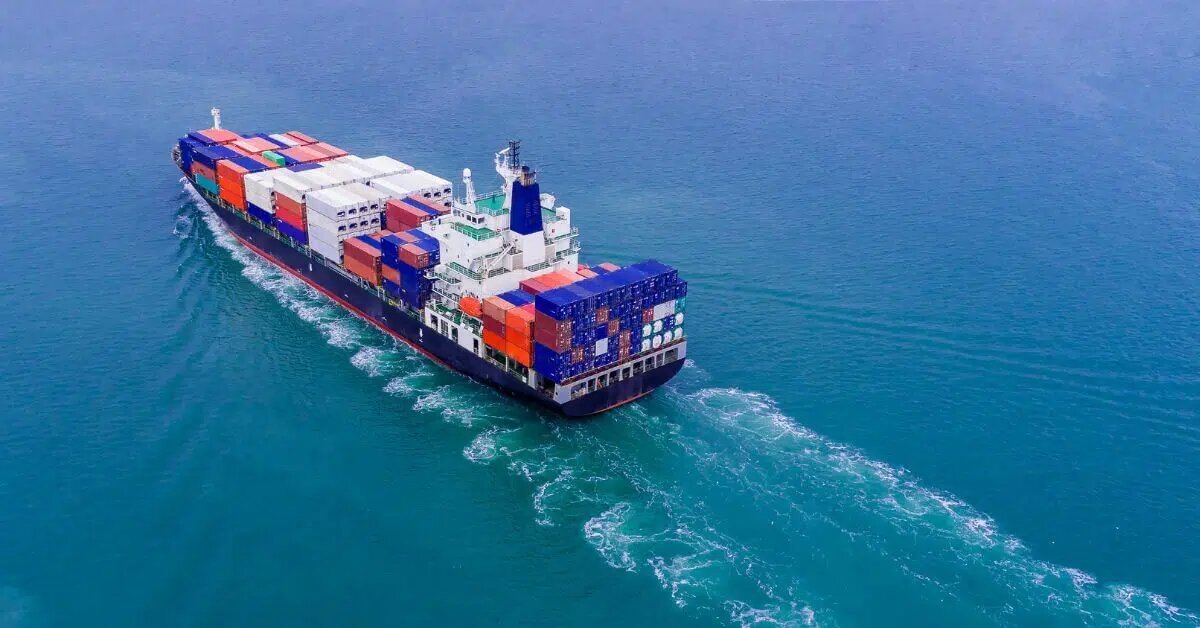
Hantong Ship Heavy Industry did not disclose specific details of these orders. It is understood that the 4500 TEU container ship orders came from the Norwegian shipowner MPC Container Ships (MPCC). Previously, in mid-November, MPCC disclosed that it had placed an order with Jiangsu Hantong Ship Heavy Industry for 4+2 4500 TEU container ships.
These new ships are planned for delivery starting in the first half of 2028 and will be chartered to a globally leading container shipping company for a lease term of at least 10 years. The price for each new ship is $58 million; if the optional orders are confirmed, the total value for the 6 ships will reach $348 million (approximately RMB 2.462 billion).
For reference, Clarksons’ data shows that the current newbuilding price for a 3700-4500 TEU conventional fuel container ship is about $60.5 million, a slight increase compared to $60 million during the same period last year.
For Hantong Ship Heavy Industry, the MPCC order marks its first venture into building medium-sized container ships. Last year, Hantong secured an order from Mediterranean Shipping Company (MSC) for 12 LNG dual-fuel 22,000 TEU container ships, officially entering the container ship construction market; earlier this year, MSC placed an additional order with Hantong for 3 ships of the same type.
Apart from the container ship orders, Hantong Ship Heavy Industry recently received an order for 2 VLCCs from the Swiss commodities trading company Trafigura. These two ships, with hull numbers HT-OT319-467 and HT-OT319-468, have expected delivery dates in September 2029 and March 2030, respectively. The ship price was not disclosed.
For reference, Clarksons’ data shows that the current newbuilding price for a 315,000-320,000 DWT VLCC is approximately $126 million (around RMB 897 million), slightly lower than the $129 million during the same period last year.
Including the latest orders, Trafigura has now ordered a total of 10 VLCCs from Hantong Ship Heavy Industry. It is understood that the company signed the first batch of 2 VLCC construction contracts with Hantong in early last year; these were Trafigura’s first owned VLCCs and also Hantong’s first VLCC order. Later that same year, Trafigura successively ordered 4 more ships of the same type. In July of this year, Hantong announced it had secured another order from Trafigura for two VLCCs.
This series of ships adopts an ammonia-ready design and is equipped with scrubbers. Among them, the first 2 VLCCs will be delivered in 2026, 4 in 2027, and the 7th and 8th ships ordered in July this year are scheduled for delivery in 2028.
Meanwhile, Japanese shipowner Fukujin Kisen, jointly with Itochu, placed an order with Hantong Ship Heavy Industry for 2 x 210,000 DWT Newcastlemax bulk carriers. This is Fukujin Kisen’s first construction contract with Hantong Ship Heavy Industry.
For reference, Clarksons’ data shows that the current newbuilding price for a 205,000-210,000 DWT Newcastlemax bulk carrier is about $77.5 million, slightly lower than the $79.75 million during the same period last year.
Fukujin Kisen is a long-established Japanese shipowner, founded in 1875. Its fleet is centered around bulk carriers but also includes container ships, product tankers, and other vessel types, providing time charter services to major Japanese shipping companies and renowned overseas shipping companies. According to Clarksons data, Fukujin Kisen currently operates 50 ships, including 39 bulk carriers, 7 /product tankers, and 4 container ships, with a total carrying capacity of approximately 4.1 million DWT. Additionally, the company has 2 x 181,000 DWT Capesize bulk carriers on order at Japan’s Namura Shipbuilding, scheduled for delivery in 2026.
Hantong Ship Heavy Industry pointed out that the company has intensively secured multiple large orders, including firm orders and option orders, covering main ship types such as large bulk carriers, container ships, and large crude oil carriers. This series of achievements not only reflects the continued heating up of global demand for new ships in the shipping market but also highlights that Hantong Ship Heavy Industry’s comprehensive strength in ship design, construction quality, and delivery schedules has gained widespread trust from mainstream international shipowners.
It is understood that Hantong Ship Heavy Industry was established in 2003. It possesses 1000 meters of natural deep-water coastline along the Yangtze River, covers an area of approximately 800,000 square meters, and has an annual steel processing capacity of 150,000 tons. Its main facilities include: 3 shipbuilding berths of 50,000-ton and 80,000-ton capacity; hull and pipe processing workshops covering 120,000 square meters; a 18,000 square meter painting center with capabilities for one-blast-two-coat and two-blast-four-coat processes; and supporting outfitting quays. Its main products are concentrated in the two major ship types of bulk carriers and tankers, as well as offshore products. The bulk carrier series ranges from 38,000 DWT to 208,000 DWT of various types, and the tanker series covers the full range from MR, LR1, LR2, Suezmax, to VLCC tankers.
According to Clarksons data, Hantong Ship Heavy Industry’s current orderbook totals 96 ships amounting to 11.921 million DWT, comprising 65 bulk carriers, 12 tankers, and 19 container ships, with delivery schedules extending until 2029.