On February 12, the Shanghai Municipal People’s Government issued a reply approving the “Investigation Report on the ‘September 4’ Major Poisoning and Asphyxiation Accident at Shanghai Chongming Jiangnan Shipbuilding (Group) Co., Ltd.”
After review, the municipal government approves the “Investigation Report on the ‘September 4’ Major Poisoning and Asphyxiation Accident at Shanghai Chongming Jiangnan Shipbuilding (Group) Co., Ltd.” Relevant units are requested to strictly supervise the implementation of the handling opinions for the responsible units and individuals, deeply learn lessons, implement relevant measures, and ensure that problems are rectified thoroughly. At the same time, in conjunction with relevant parties, use this case as a lesson to further strengthen the supervision of enterprise work safety, urge enterprises to implement their primary responsibility, and resolutely prevent and curb the occurrence of similar accidents.
The report shows that on September 4, 2025, a major poisoning and asphyxiation accident occurred at Jiangnan Shipbuilding (Group) Co., Ltd. in Chongming District, Shanghai, resulting in the deaths of three workers and direct economic losses of approximately 5.78 million yuan. The investigation concluded that this was a production safety liability accident caused by unauthorized entry into a confined space containing high concentrations of nitrogen.
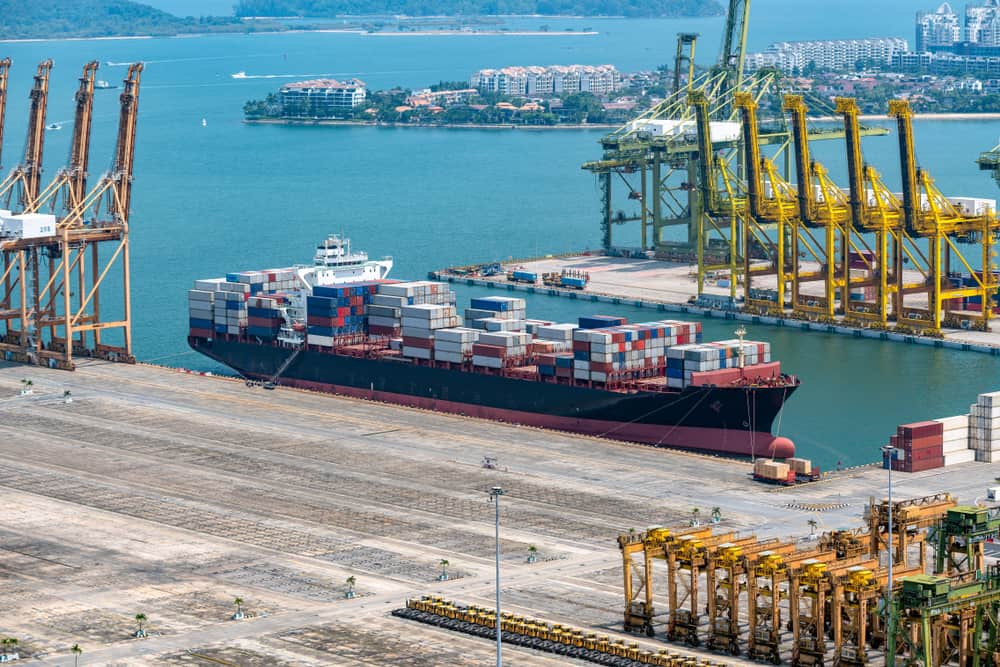
The accident occurred on the H2648, a 98,000 cubic meter very large ethane carrier (VLEC) under construction by Jiangnan Shipbuilding. The ship has an overall length of 230 meters, a molded breadth of 36.6 meters, and a molded depth of 22.5 meters. It features four independent Type B cargo tanks (numbered 1 to 4 from bow to stern) capable of carrying ethane, ethylene, LPG, etc., with a planned delivery date of September 18, 2025. The ship completed its sea trials on August 23, 2025. On August 25, Jiangnan Shipbuilding began inerting operations on the cargo tanks, with the planned work period lasting until September 16.
Tank inerting involves using a nitrogen generator (hereinafter referred to as PSA) to fill the cargo tanks with nitrogen gas (concentration 99.8%, outlet pressure 7 bar, pipeline pressure 3 bar) through pipelines. This gas displacement method reduces the oxygen content within the cargo system, preventing the formation of explosive gases from flammable cargo vapors and air. During the inerting of Tank No. 4, the V1/V2 valves leading to the tank should be opened, and the V6 valve leading to the cargo hold should be closed. Jiangnan Shipbuilding had formulated the “Cargo Tank Inerting Procedure,” which clearly specified safety measures to be implemented during the operation in its “Job Safety Instructions.”
On September 2, 2025, Zang Tianyu, a field engineer from the Painting Department, discovered leftover scaffold fittings in Cargo Hold No. 4 while preparing for cargo hold handover inspection. He informed Chen Donglin, the team leader of Scaffolding Group Three in the Support Operation Area One of the Hull Construction Department, via WeChat to arrange for their removal. Chen Donglin did not arrange for this work that day.
On September 3, 2025, due to the handover inspection of Cargo Hold No. 4, the tank inerting operation was stopped on-site at 08:46. The cargo hold ventilation fans were turned on to ventilate the hold. The inspection work was completed at 10:40. At 15:49, personnel from the Outfitting Department turned off the ventilation fans. Around 16:00, Shi Guangfei, the team leader of Copperwork Group One in the Deck Operation Area Two of the Module Department, successively closed the manhole and the V6 valve leading to Cargo Hold No. 4. At 16:30, the Cargo Supervisor from Production Operation Department Two notified via WeChat to close all cargo hold valves. After confirming the valve and pipeline status, the PSA unit was started. At 16:39, Wu Jixiang, the team leader of Outfitting Group One in the Cargo Operation Area of the Module Department, replied via WeChat that the tank and cargo hold valves were closed, there were no “Do Not Open” tags on-site, and none were posted. At 00:14 on the 4th, the inerting operation resumed gas supply, with the PSA system flow normal.
On September 4, 2025, at 06:45, Chen Donglin from the Hull Construction Department arranged for five team members to first dismantle scaffolding in the engine room, then instructed Yu Deze and Chang Zhichong to go to Cargo Hold No. 4 to clean up the leftover scaffold fittings. Around 08:00, Xu Wenbin, a member of the same team, went to check on Cargo Hold No. 4 because Yu Deze and Chang Zhichong had not returned. Around 08:30, Guo Jing, a fitter from Outfitting Group One in the Cargo Operation Area of the Module Department, discovered during a patrol that the V6 valve was not fully closed and tightened it (a total of four and a half turns). Around 08:38, Guo Jing found the manhole cover of Cargo Hold No. 4 in an open state. Upon approaching to investigate, he discovered one person lying on the first-level platform inside Cargo Hold No. 4.
The accident resulted in the deaths of three on-site workers, Yu Deze, Chang Zhichong, and Xu Wenbin, after failed medical抢救. Direct economic losses amounted to approximately 5.78 million yuan. The accident investigation team commissioned the Institute of Forensic Science to conduct external examinations on the three deceased. The appraisal opinions for all three were “consistent with death by environmental oxygen deficiency asphyxiation.”
Based on comprehensive investigation interviews, on-site inspections, and technical appraisals, the direct cause of the accident was determined to be the incomplete closure of the V6 valve for Cargo Hold No. 4 during the tank inerting operation, which allowed nitrogen to enter Cargo Hold No. 4, which did not require inerting. The team leader arranged for team members to enter Cargo Hold No. 4 for work without obtaining confined space work permit approval, violating regulations, leading to the oxygen-deficient asphyxiation accident.
The main problems identified in this accident are threefold: first, failure to implement the primary responsibility for work safety; second, inadequate safety management of the inerting process; third, insufficient identification of safety risks during the production operation process.
The report points out that Chen Donglin, team leader of Scaffolding Group Three in the Support Operation Area One of Jiangnan Shipbuilding’s Hull Construction Department, and Fan Yong, on-site management personnel of the Deck Operation Area Two of Jiangnan Shipbuilding’s Module Department, bear direct responsibility for the accident and are recommended to be transferred to judicial authorities for handling.
Furthermore, the report recommends disciplinary actions, including demerits, major demerits, and dismissal, for nine public officials from departments including Jiangnan Shipbuilding’s Hull Construction Department, Module Department, and Production Operation Department Two. It recommends a warning sanction for Jiangnan Shipbuilding General Manager Xiao Wenlin and dismissal for Jiangnan Shipbuilding Chairman Lin Ou.
Jiangnan Shipbuilding and its General Manager Xiao Wenlin bear responsibility for the accident. It is recommended that the Shanghai Emergency Management Bureau impose administrative penalties on Jiangnan Shipbuilding and General Manager Xiao Wenlin according to the law.