President José Raúl Mulino reaffirmed Panama’s unwavering commitment to the maritime and logistics sector during the inauguration of the Maritime Convention of the Americas 2026 last week.
Speaking at the event organised by the Panama Maritime Chamber, President Mulino emphasised that the National Government is actively driving forward a portfolio of transformative projects designed to elevate the nation’s maritime performance, generate thousands of high-quality jobs, strengthen Panama’s global standing, and inject new momentum into the economy.
Addressing an audience of international industry leaders, President Mulino underscored that amid growing geopolitical volatility and global uncertainty, Panama remains steadfast in its position that the neutrality of the interoceanic Canal is untouchable and non-negotiable.
He also delivered a strong defence of Panama’s ship registry regime, emphasising the nation’s commitment to protecting vessels sailing under its flag.
“Panama does not accept arbitrariness,” he said. “Behind every vessel bearing our flag stands a country that defends it. That is the great difference between us and many of our competitors. We are not a franchise — we are a nation standing firmly behind its registry.”
The President welcomed the easing of tensions surrounding the detention of Panamanian-flagged vessels in ports of the People’s Republic of China, describing the reopening of diplomatic dialogue as a significant and constructive step forward.
“We demand and uphold respect for international conventions. Panama not only manages the maritime route; today, it also contributes — even if modestly — to financing the fleet that transits it,” he stated.
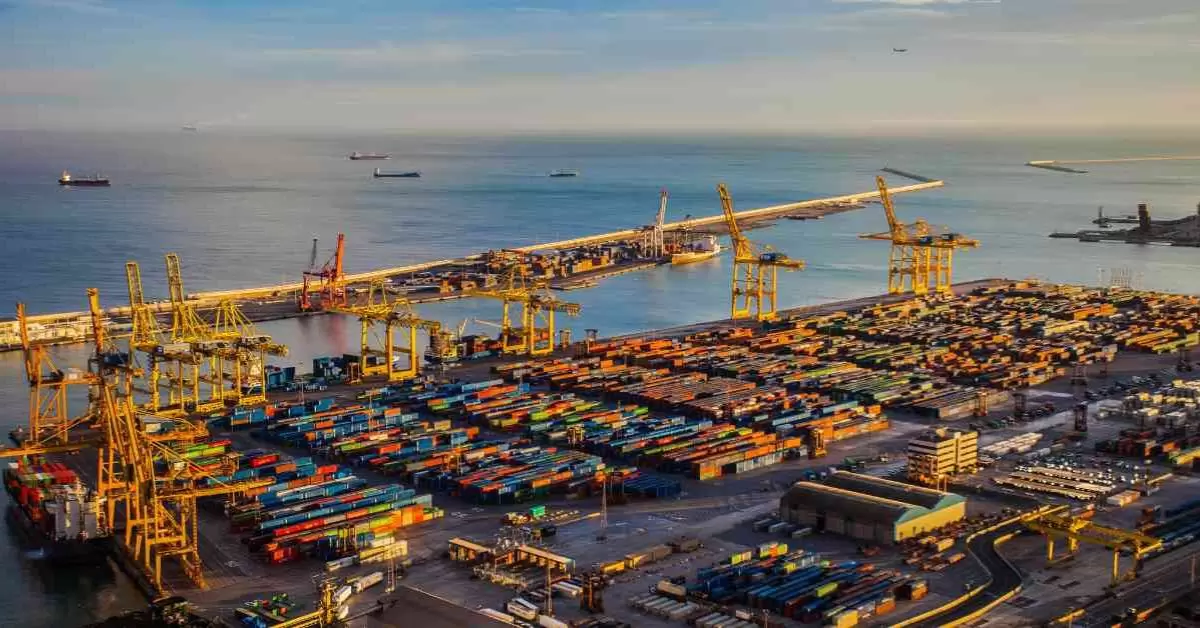
Referring to the upcoming concessions of the ports of Balboa and Cristóbal, Mulino assured the international community that Panama is implementing a strategic continuity plan to safeguard the uninterrupted operation of both terminals, whose importance to global commerce remains critical.
“Today they continue operating normally, and we guarantee that our country will keep serving world trade efficiently,” he affirmed. “Both ports will undergo separate concession processes designed to encourage investment, transparency, and logistical growth.”
Another major project highlighted by the President was the future concession of Margarita Island, expected to enter an international bidding process before the end of the year.
“My objective is to increase the competitiveness of our port system, deliver world-class services, and coordinate these initiatives through the Logistics Cabinet,” Mulino explained.
In this context, the President also celebrated Panama’s recent improvement in international financial risk rankings, noting that the country now holds the fourth-lowest country risk position in Latin America according to the Emerging Markets Bond Index prepared by JP Morgan Chase & Co.
“These are the benchmark indicators every investor evaluates when deciding where to place their capital,” he noted.
Beyond port concessions, the National Government is also backing strategic initiatives led by the Panama Canal Authority, including the Río Indio multipurpose reservoir project, aimed at guaranteeing water availability for Canal operations as well as for residents of Panama and Colón.
Additionally, Mulino announced that the Canal will soon tender the construction of a gas pipeline that will optimize vessel transit capacity by freeing critical operational space.
He further revealed that two additional projects — the ports of Corozal and Telfers — remain part of the Canal Authority’s long-term development portfolio.
“These two new terminals will add seven million TEUs to the current capacity,” he emphasised.
The President also highlighted his administration’s commitment to reducing the carbon footprint of global supply chains by supporting the Canal’s pioneering Net Zero Slot initiative, which rewards low- and zero-emission vessels with expedited transit in under 24 hours.
Turning to the modernisation of Panama’s Merchant Marine sector, Mulino announced that a new legislative proposal will be submitted to the National Assembly this July to restructure the institution with a forward-looking vision, making it more competitive, agile, and less constrained by bureaucracy.
“We need more logistics engineers, maritime cybersecurity experts, hybrid engine maintenance technicians, and data management specialists. And we will achieve this together with the country’s educational, research, and training institutions,” he stated.
For his part, IMO Secretary-General Arsenio Domínguez acknowledged that President Mulino’s presence at an event of this magnitude sends a powerful signal of Panama’s determination to continue advancing its maritime and logistics leadership.
Meanwhile, René Gómez emphasized that Panama connects more than 140 maritime routes, links 160 countries, and generates nearly 25% of the nation’s GDP through maritime and logistics services.
“This convention is a showcase for the world to witness the strength of Panama’s maritime platform,” Gómez concluded.
Diptesh Chohan