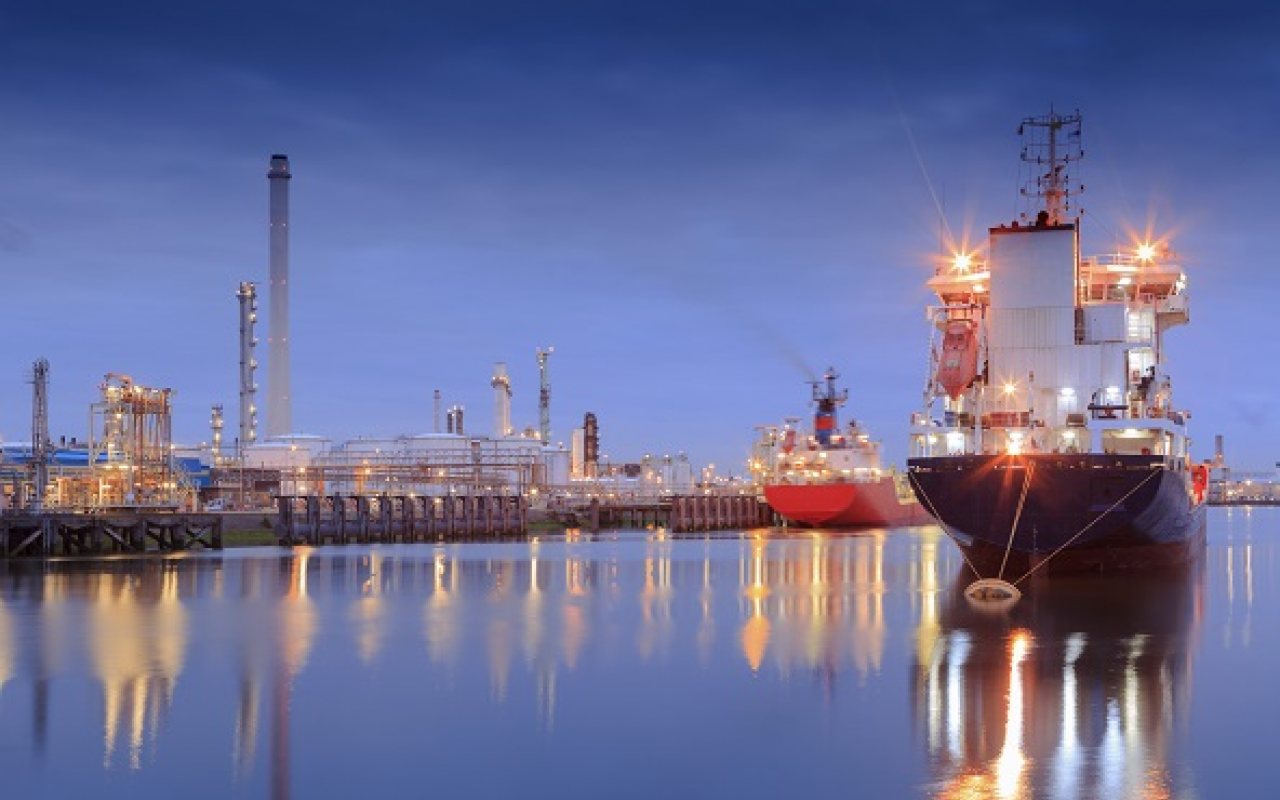
Crude oil tanker owners continue to profit under the “new normal”. Very Large Crude Carrier (VLCC) and Suezmax spot freight rates have stabilized at extremely high levels, while Aframax rates remain firm.
On the issue of the Strait of Hormuz, the United States and Iran are at odds.
The Persian Gulf Strait Authority announced that the Strait of Hormuz is “closed until further notice.” The U.S. Central Command (CENTCOM) responded on Thursday, stating that the strait remains “navigable” and “safe” because “U.S. forces are deployed and can defend against Iranian aggression.”
From the perspective of the freight market, the situation remains unchanged: traffic through the strait is still very limited, and inbound voyages are only attractive to operators willing to chase a risk premium.
As described by Sparta Commodities, the strait is “severely restricted… but not completely shut.”
Most tanker operators continue to choose loading ports that do not require U.S. “Apache” attack helicopters to escort and protect assets and crew safety. U.S. President Donald Trump stated that a U.S. “Apache” helicopter was shot down by Iran on Monday while “patrolling over the Strait of Hormuz.”
However, high freight rates in the Atlantic Basin make the U.S. Central Command’s call to “urge shipowners to return to Hormuz” unattractive.
VLCC spot freight rates in the Atlantic region have more than doubled the seasonal average, indicating that shipowners still have plenty of lucrative business in the U.S. Gulf, Brazil, Guyana, and West Africa, making it unnecessary to risk transiting the Strait of Hormuz.
Trump’s statement on tankers leaving the strait
The message from the U.S. side is that an increasing number of vessels are exiting the Middle East Gulf via the Strait of Hormuz through the Oman route.
Trump, prone to exaggeration, said on Wednesday that since May, tankers carrying over 100 million barrels of oil have passed through the strait under U.S. protection.
This claim has been questioned, as 100 million barrels is equivalent to the cargo volume of more than 50 fully loaded VLCCs.
According to Lloyd’s List analysis of vessel positioning data, as of June 9, 55 VLCCs remained inside the strait, while 19 had exited. For Suezmax tankers, 18 remained inside the strait, and 8 had left.
Clarksons Securities noted that if calculated from the beginning of May, the 100 million barrels cited by Trump equates to an outflow of 2.5 to 3 million barrels per day.
Clarksons stated: “It is unlikely that all these volumes originated from within the Arabian Gulf; they likely also include volumes near the Strait of Hormuz but outside it, such as approximately 1.5 million bpd from Fujairah Port in the UAE and about 800,000 bpd from Oman.”
The gradual departure of previously stranded tankers from the strait will indeed replenish market capacity and exert some pressure on freight rates. However, the slow pace of vessels returning to the market, coupled with potential maintenance issues for some vessels (e.g., due to barnacle fouling), limits the actual impact.
Only when hostilities cease, tankers can safely and normally enter and exit the Strait of Hormuz, and Middle Eastern oil fields resume production, can the tanker market truly return to normal.
The current base case scenario may lie somewhere between the two extremes.
Sparta stated: “Since the start of the war, Kuwait has supplied crude to Asian refineries for the first time, and ADNOC has launched new tenders. But offers do not equal actual cargoes, and actual cargoes do not necessarily mean vessels will transit the strait.”
Clarksons, citing market sources, said: “Traders and tanker owners are positioning vessels in anticipation of a potential phased reopening of the Strait of Hormuz or the near-term return of some Arabian Gulf cargoes, including ship-to-ship transfers near Omani ports. However, whether these expectations materialize remains to be seen.”
May seaborne crude imports down 17% from February
As the Hormuz crisis persists, global crude flows remain below normal levels, but the decline is not as severe as initially feared.
Clarksons stated: “If we factor in Saudi Arabia diverting some volumes to Yanbu and the UAE diverting some volumes to Fujairah, total Middle Eastern crude exports have decreased by 10 million barrels per day since the crisis began.”
“Meanwhile, U.S. exports are 2 to 3 million barrels per day higher than pre-crisis levels, so the net reduction in global crude availability is 7 to 8 million barrels per day.”
According to Vortexa data, total global seaborne crude and condensate imports in May were 36.94 million barrels per day, a decrease of 7.65 million barrels per day, or 17%, compared to February.
Among this, China’s imports in May decreased by 5.07 million barrels per day, or 43%, compared to February. This means that, excluding China, the seaborne crude shortfall in the rest of the world was 2.55 million barrels per day, a drop of only 8% from February, thus mitigating the overall impact.
Although the actual shortfall is lower than expected, oil company executives have publicly warned that crude prices could spike sharply if the strait is not reopened before inventories fall too low.
A sharp rise in oil prices causing significant demand destruction could lead to a decline in crude tanker demand and trigger restrictions on refined product exports.
Crude tanker index trends
But so far, everything remains fine. Fearnley Securities said on Thursday: “The strength in the tanker market continues.”
The firm stated: “Despite the blockade of the Strait of Hormuz, VLCC spot freight rates in the Atlantic Basin remain at around $100,000 per day. From a seasonal perspective, this is an exceptionally strong level.” It noted that since 2005, the average VLCC rate in June has been $40,000 per day.
The Baltic Exchange’s VLCC equivalent time charter rate for the US Gulf-China route was reported at $96,826 per day on Thursday, up 278% year-on-year. Over the past two months, the index has hovered near six figures.
The West Africa-China VLCC index was reported at $89,358 per day on Thursday, up 219% year-on-year. Over the past two months, the index has been in the range of $85,000 to $120,000 per day.
Atlantic Basin crude tanker freight rates
These freight rate levels are substantial. For reference, Frontline’s VLCC breakeven rate is $24,300 per day, and its VLCC operating cost in the most recent quarter was $11,300 per day.
Suezmax tanker rates have also stabilized at highly profitable levels.
The Baltic Exchange Suezmax index, an average of the Black Sea-Mediterranean and West Africa-North Europe routes, was reported at $91,950 per day on Thursday, up 195% year-on-year. Over the past two months, the index has been in the range of $90,000 to $115,000 per day.
Like VLCCs, Suezmax rates are well above breakeven levels. Frontline’s Suezmax breakeven rate is $24,300 per day, and its operating cost in the most recent quarter was $9,100 per day.
The Baltic Exchange Cross-Mediterranean Aframax index was reported at $55,050 per day on Thursday, up 96% year-on-year. The Caribbean-US Gulf Aframax index was reported at $46,505 per day, up 50% year-on-year.
The US Gulf-Europe Aframax index was relatively lower at $39,178 per day, down 24% from Wednesday, but still up 14% year-on-year.