The United States and Iran have reached a phased agreement, planning to resume navigation through the Strait of Hormuz this Friday, causing a sharp short-term decline in the international crude oil market. However, global oil tanker owners and energy traders are not rushing to resume routes: many past reconciliation plans were abandoned halfway, and the complete implementation details of the agreement are entirely missing. Coupled with risks from sea mines, electronic interference, channel congestion, and covert navigation in the strait, nearly a thousand oil tankers are still awaiting passage in the Persian Gulf and the Gulf of Oman, and it will take time for the industry to resume normal transportation.
As a vital chokepoint carrying about one-fifth of the world’s seaborne crude oil and liquefied natural gas, shipping order in the Strait of Hormuz has been nearly paralyzed since the outbreak of the US-Israel military conflict at the end of February. Months of intermittent negotiations have consistently revolved around the core demand of “restoring navigation through the Strait,” but the channel disruption has completely reshaped the global oil and gas flow pattern. Export routes for major Middle Eastern oil producers have been nearly cut off, and a large number of operators have no choice but to turn off AIS signals and risk transit through covert navigation.
Strong cautious sentiment in the shipping sector
Early Monday morning, news that the US and Iran might lift the two-way blockade emerged, causing Brent crude oil futures to rapidly drop nearly 5% intraday, temporarily easing market panic over tightening energy supplies. However, uncertainties at the operational shipping level have completely打消ed shipowners’ willingness to resume sailing immediately. The Trump administration publicly stated that the strait would fully open this Friday, but the timeline for the phased implementation of the agreement, the rights and responsibilities of all parties, and conflict fallback clauses have not been disclosed.
Kpler analysis points out that the entire agreement execution chain lacks standardized sequencing arrangements, leaving extremely low room for geopolitical error. Any action by the US or Israel deemed by Iran as a breach of the agreement would immediately trigger the reinstatement of strait blockade measures. During the suspension window, any sudden military or political incident could overturn the existing consensus.
On the day the news was released, there was almost no significant increase in shipping activity in the strait’s waters. Only the LNG carrier “Disha” tentatively sailed into the eastern section of the strait heading towards the Gulf of Oman, while other vessels remained anchored on standby.
Nearly a thousand oil tankers stranded by region
Before the conflict erupted, the average daily number of vessel transits through the Strait of Hormuz was about 135. Current transit volume is only a fraction of pre-war levels. Even though some oil-producing countries have opened a few alternative routes through bilateral negotiations and US coordination, the overall transport volume remains persistently low, with a large number of tankers forced into regional idleness:
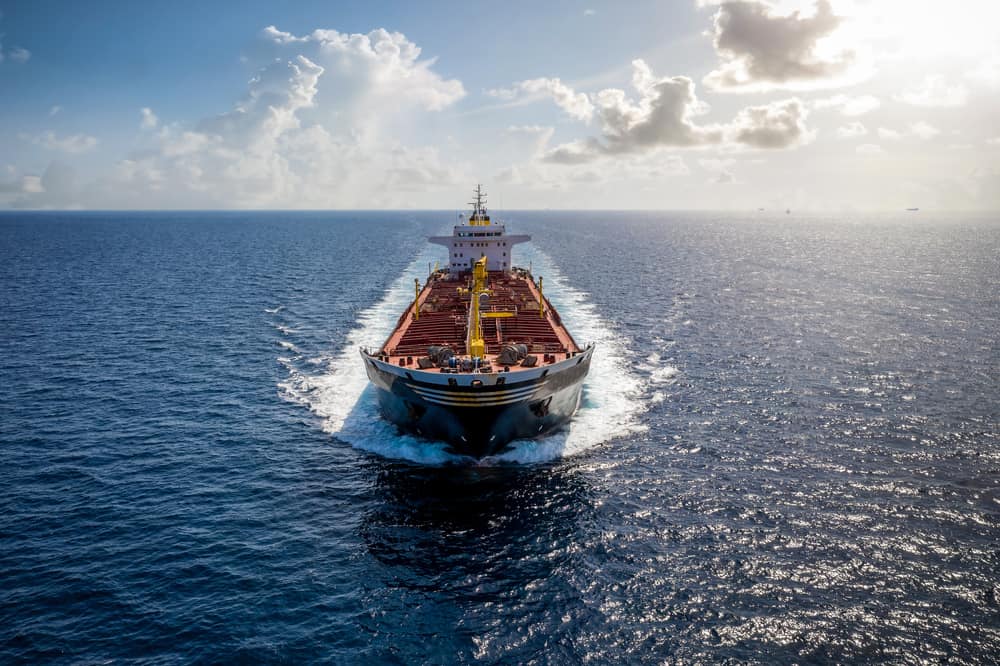
Nearly 300 fully loaded oil tankers are inside the Persian Gulf, cargo loaded and ready to apply for transit; about 300 empty tankers are on the Gulf of Oman side, waiting to enter Persian Gulf ports for loading; another 250 vessels in ballast are inside the Persian Gulf, on standby to take on export cargo orders.
Industry bodies caution that current vessel statistics have lagging biases: electronic signals across the strait have been continuously disrupted over the past month, with a large number of tankers keeping their AIS transponders off for extended periods. If vessels uniformly resume signal transmission in the future, the monitored scale of the stranded fleet could further expand.
Theoretically, once the temporary navigation agreement is implemented, millions of barrels of crude oil backlogged in the Persian Gulf will be quickly released, alleviating global supply pressure. However, multiple practical operational challenges in the shipping sector are unavoidable: prolonged anchoring leads to hull fouling by barnacles and other marine organisms, requiring advance hull cleaning operations; crew members have been on long-term standby, creating manpower allocation gaps; and without stable electronic navigation signals, emergency navigation plans for vessels remain unstandardized. Among all operational obstacles, safety risk remains the industry’s biggest concern.
Multiple navigation safety hazards remain unresolved
Previous rounds of ceasefire intentions ultimately escalated into Iranian military attacks on and seizures of vessels, resulting in extremely low market trust in verbal agreements. Additionally, sea mines left in the strait’s waters have not been cleared, and there are no official clear plans for safe navigation route demarcation or war risk insurance underwriting rules for shipping. These factors directly constrain the resumption decisions of mainstream shipowners. Any geopolitical miscalculation, sudden military action, or policy shift could once again plunge crew safety into crisis.
Sharp increase in congestion and collision risks
Even if geopolitical safety risks temporarily subside, large-scale concentrated navigation will create a new channel management crisis. The narrowest navigable section of the Strait of Hormuz is only 39 kilometers wide, with each lane of the two-way shipping channel being just 3.2 kilometers wide. If hundreds of oil tankers attempt to transit simultaneously, channel density will exceed safety thresholds, significantly increasing the probability of vessel collisions and groundings.
Compounded by long-term electronic interference in the region and the habitual shutdown of AIS signals by many vessels, maritime regulators and ships cannot accurately obtain the positions of nearby vessels, further amplifying operational navigation risks.
In response to this hazard, three major international maritime organizations—BIMCO, INTERTANKO, and ICS—jointly issued navigation guidelines last month, specifying two hard requirements:
First, before transit, vessel traffic density must be coordinated and planned to match the physical width of the channel, strictly controlling risks during congestion periods. Second, during navigation, reliance solely on the AIS system is prohibited; multiple means such as radar and manual lookouts must be used simultaneously to monitor the movements of nearby vessels.
The short-term crude oil market has already priced in the positive news of the strait’s reopening, but multiple barriers remain for the shipping industry to resume normal transportation. Until the US and Iran finalize implementation details, sea mines are cleared, insurance clauses are updated, and channel management plans are introduced, the massive fleet of waiting oil tankers will remain trapped in the waters of the Persian Gulf and the Gulf of Oman. The recovery speed of Middle Eastern oil and gas export flows may be far slower than market expectations.