Italy’s exports to the United States are growing overall, but tariffs are hitting the food sector (-33% for oils and fats) and automotive (-21.8%). Collapse of transits through the Strait of Hormuz (-83%)
International conflicts and United States tariff policies are reshaping the balance of world trade, with effects now tangible on logistics routes and costs. Tensions in the Middle East have caused an 83% collapse in transits through the Strait of Hormuz, while tariffs from the Trump administration are beginning to hit Italian exports to the American market, especially in the food (-33% for oils and fats) and automotive (-21.8%) sectors. Weighing most heavily on businesses are logistics costs, which on average account for 9.9% of corporate revenues and exceed 11% for SMEs. This is the picture outlined by the 27th Economic Outlook of Fedespedi, the periodic observatory on the performance of international freight transport of the National Federation of International Shipping Companies.
“The geopolitical scenario continues to be the factor that most influences the international economy,” declares Alessandro Pitto, president of Fedespedi. “The real issue today is not predicting the next crisis, but being ready. We must move from the paradigm of forecasting to that of preparation, working towards a true ‘Country-Project’. The idea that our position guarantees us an income as a ‘natural’ logistics platform is an illusion: recent crises, such as the nearly thousand days of Red Sea closure, demonstrate that routes change easily and trade continues along other paths. Geography is an advantage only if capitalized through physical and digital infrastructure.”
The twenty-seventh edition of the “Fedespedi Economic Outlook” report presents a collection of the most up-to-date data on the global macroeconomic context, the latest indicators on Italian imports-exports, and trends in international shipping.
Shipping
In the first quarter of 2026, global container traffic (teu) recorded an estimated growth of +4.4%, driven in particular by volumes from the Far East, among the most dynamic areas with an increase of 8.8%, together with Sub-Saharan Africa (+14.8%) and Latin America (+4.4%). In contrast, the performance of Italian ports shows an overall decline of -4.6% in teu handled. Particularly affected by the decrease are the port of Trieste (-23.6%), impacted by the reorganization of shipping alliances, Savona (-14.1%) and Genoa (-4.9%), while Venice shows clear growth (+5.8%).
Hormuz and Suez: the weight of conflicts on shipping
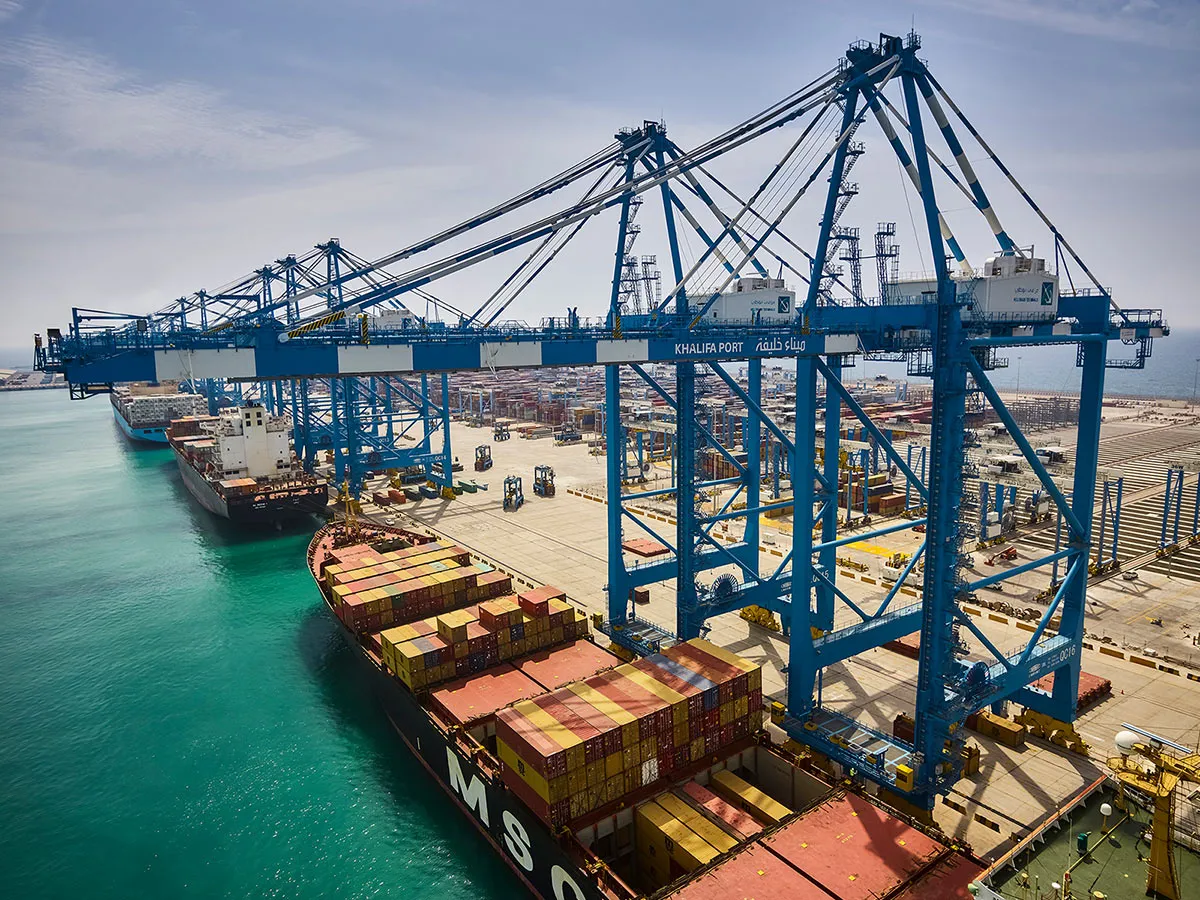
International conflicts weigh decisively on maritime dynamics: in the first quarter of 2026, transits through the Suez Canal fell by 47.2%, with a veritable collapse of 68% for container ships, and tensions in the Middle East have led to a drastic reduction in transits through the Strait of Hormuz. According to data provided by the Strait of Hormuz website, the current average is just 10 ships per day compared to 60 pre-conflict (-83%). The first effect has been a slowdown in operations at ports within the Gulf, balanced by the development of external ports along the coasts of the Arabian Peninsula (such as Khor Fakkan, Salalah and Jeddah).
In order to manage container traffic while avoiding transit through Hormuz, the Gulf countries are structuring new multimodal corridors, transforming external ports into strategic gateways to then distribute goods overland throughout the Persian Gulf basin.
The impact of US tariffs
In the United States, the economy recorded a recovery in the first quarter of 2026 (+1.6% GDP compared to the same period in 2025), a sign of recovery after the modest +0.5% in the last quarter of 2025. However, due to the tariff policy of the Trump Administration and the increase in energy costs, inflation is recording a rebound during 2026, after the drastic decline of recent years. Tariffs are showing the first strong effects on foreign trade: in the January-April 2026 period, US exports grew significantly (+11.3%), also thanks to a weak dollar, and imports fell (-5.4%), reducing the US trade deficit by about 50%, from 435 to 222 billion USD. Regarding Italy-USA relations, if in the first quarter the United States consolidated as our main trading partner (18.79 billion euros exported, +1.3% compared to the previous year), analyzing the sectors reveals discrepancies that show how the tariff policy of the Trump administration is beginning to have its first effects. In particular, 55.6% of Italian exports to the United States come from products belonging to four industrial areas – pharmaceuticals, machinery, transport vehicles, and food – but among the product areas most in difficulty are some food products, such as oils and fats (-33%), processed meat (-25%), bakery products (-18%), beverages (-24.2%), and the automotive sector (-21.8%).