As we speak there are advancements with Artificial Intelligence (AI) and Internet of Things (IOT) going on in the maritime industry. For it might be seen as a bane by many it has interesting things to offer for the good of shipping as a whole.
It has been long when cloud services for data collection had started, through internet of things (IOT). The problem back then was how to use that massive data base. Then came in the working model of Artificial Intelligence. The Neuro Networks as we know in AI processes all the data present in the cloud and give us a possible outcome.
The AI and IOT helps each other out to give a prediction of the future happenings. This technology together is referred to as AIOT. The AIOT analyzes data to give outcomes based on different machine learning by neuro networks. The analyses are to such an extent that humans are not even capable of addressing.
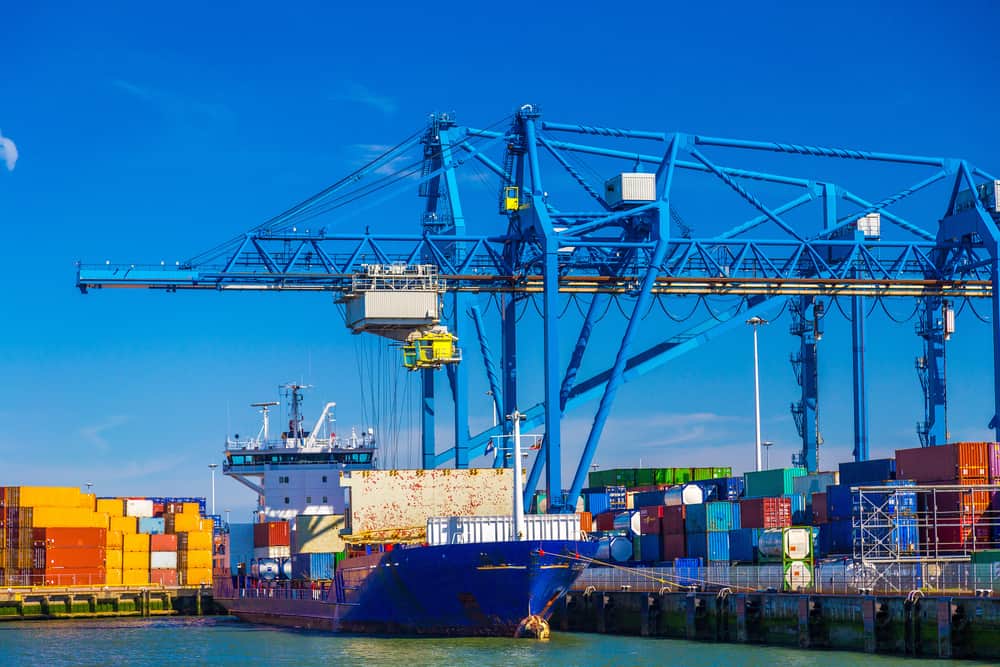
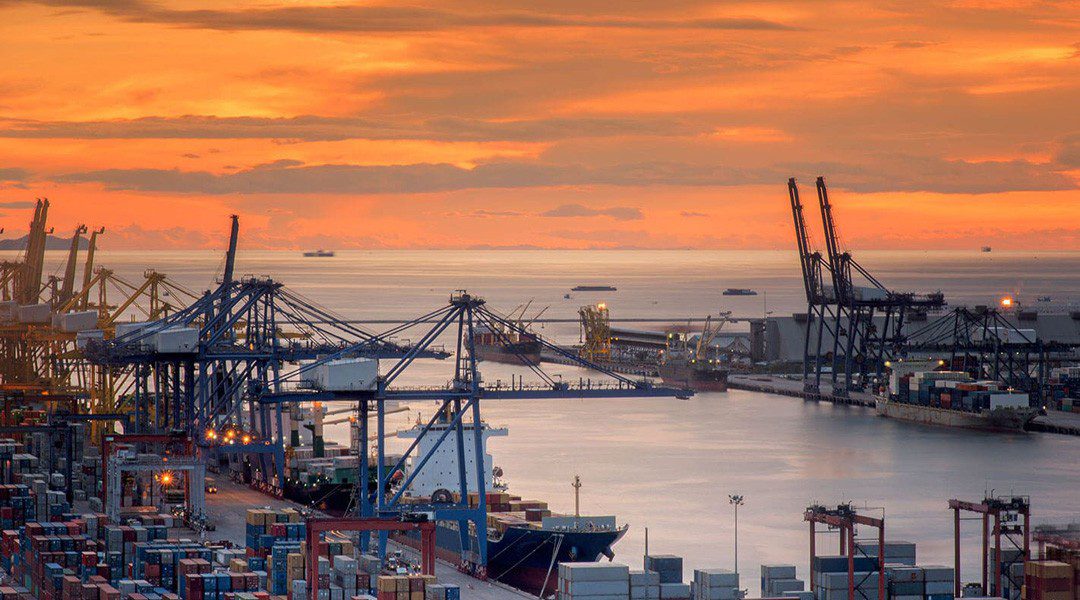
There has been a disruption in adaption of AIOT in the container terminal industry. The AI assists in container handling, planning and arrangement & day to day operations in the container terminal.
The AGVs (Automated guided vehicles) operate in auto with help of data input and machine learning.
This mode of automatic operation without human interference helps in smooth operation without disturbances. The neuro networks decide the best suitable placement of containers depending on the cargo (hazardous, non-hazardous, refrigerated and general), loading to ships or dispatching to ICD’s (Inland container depot), the time frame of these containers to be kept on terminal and so on.
Various container terminal has adapted it’s use and commit to an YOY transition to AIOT by 20%.
Developments have made to optimize AIOT to be used in the vessel navigation system. With advancements of sensors and camera technology a lot of data such as marine traffic, weather conditions and behavior of the sea waves related to can be gathered. Suppose the vessel is travelling from Indian to Australia, the vessel needs to cross The Indian Ocean- South China Sea- Philippines Sea through the Pacific. There are a lot of traffic zones and weather uncertainties in this route causing delays and uncertain vessel arrival time.
The Internet of things helps upload and download this data and information is shared by ships in that zone with ships heading to the same route to the same zone.
The deep learning algorithm of the vessel can analyze this data and through deep learning algorithm make decisions on route alternation and giving correct ETA (Estimated time of arrival). The ship starting its journey can alter the route, travel at optimized speed and give correct vessels estimated time of arrival (ETA).
In situations of critical manoeuver, the AIOT can give best possible actions to be taken to avoid any case of vessel collision, grounding or any other navigational mishap.
There have been situations where the ship reaches port but the cargo is not ready or the terminal is not vacant or the tide is not suitable for the vessel entry to port.
All this information if could have been analyzed earlier would have allowed the vessel to reach the destination port at a slower speed and hence reduced the fuel oil consumption.
This use of IOT and AI helps in minimizing bunker fuel consumption, hence reducing the impact on nature. The precise knowledge of port stay conditions and weather mapping would have helped reduce fuel consumption, helping the industry to be greener and improving the Energy efficiency design index of ships.
On the other hand, correct and precise vessel’s ETA helps to prepare the cargo at specific time reducing the unwanted cargo occupancy at the terminal. There is little to no time spend at anchorage and minimal port stay cost to vessel operator.
Tech startups have already made autonomous ships which have set sail across the Atlantic from UK to USA to record and analyses data related to sea waves, wind and weather conditions. The autonomous ships would be under observation by shore personnel and behavior and actions taken by the AIOT would be monitored to see for how they react to a situation.
The vessel’s engine room has already undergone a lot of advancements with unmanned ships and electronic engines coming up in majority. All operating machinery’s operational data and parameters are sent to an operating system in the engine control room using thermocouples, proximity sensors and variety of transmitters. This makes vessel data available at the control room. Machines can be started and stopped remotely from the engine control station located on shore. This information is transmitted through IOT devices.
The cloud servers use this information and make a pool of data for decoding machinery behavior across same machines across different vessels.
The neuro network which is studying the machine operation can learn and understand the outcomes from IOT application. The integration of AI into the same system can analyze and understand the machine operation and suggest for any abnormality in the machine operations and pinpoint the discrepancy in operation.
This process would help in reducing machinery downtime and enables continuous running of machinery. Spares consumption is also minimized with relevant spares being consumed.
Monthly machine operating cost can be reduced and as we know money saved is money earned.
Cargo handling and tank cleaning operations can be made easy using the same technology. Currently the industry follows standard operating procedures for tank cleaning operations as stated in tank cleaning guide and sometimes software such as Miracle. There are a lot of factors which vary the tank cleaning operation such as the nature and chemistry of the previous chemical, tank coating, sea water temperature, ambient temperature and so on.
Having sensors and AIOT to collect data of chemical effluent leaving tank, cleaning water temperature, adjacent tank temperatures can help analyze the best way to carry out tank cleaning using minimum fuel and get the work done thoroughly in a single go.
This ensures more reliable tank preparation in short time minimizing samples to fail and prevent contamination of the next cargo to be loaded.
Stress distribution across the hull can be made analyzed with more precision lowering the cases for hull fracture in bulk carriers. With a computer to continuously monitor and update the stresses being applied to the ship’s hull can help prevent any change of hull fracture.
In many cases the load distribution of the ship is calculated and cargo distribution plan agreed to. But while loading there can come a situation that the stress distribution is not favorable and there is a hull fracture even though the final calculation was fine.
As we speak of all the benefits the AI and IOT has to offer to the maritime industry the acceptance of a computer to give better intelligent solutions than a human being as an individual can be a controversial topic and subject to lot of rejection.
AIOT has to offer it has capability to analyze the data to an extent where human cannot.
On the other hand, humans have the gift of anticipation and knowhow which helps us to think beyond logic which helps us differentiate between right and wrong, for it is us who have created this technology.
It is for us to understand that any technology which helps save operating cost and is reduces the damage to the environment will eventually come to existence. AIOT will have to be implemented in phrases. To start with, this technology would work under human assistance and improve and become flawless one suitable day.
The regulating bodies such as IMO, flag states etc. would have a difficult time drafting rules and regulations for such ships. For the question remain during bleak times, who would be responsible for if there is a collision or a grounding or a marine pollution? Who would be penalized for the damages done?
AIOT might give us the ability to think beyond our abilities but then it is for us to manage the network and make it work to our advantage.
Soon we would see ships helping in decision making onboard ships and later there will come a time when ships would run in automation with shore assistance.
About The Author
Mr. Tejas Singh Nagi is a Marine Engineer( holding MEO Class I Certificate of Competency) and currently sailing as Second Engineer.
Back in school he was fascinated with machines and engines. Soon he decided that he wanted to do marine engineering to pursue his dream of running the biggest engines man had made. They were more like pieces of art made by artist engineers.It’s been 9 years since he has been in love with ships and he looks forward to dedicating his life to the maritime industry.