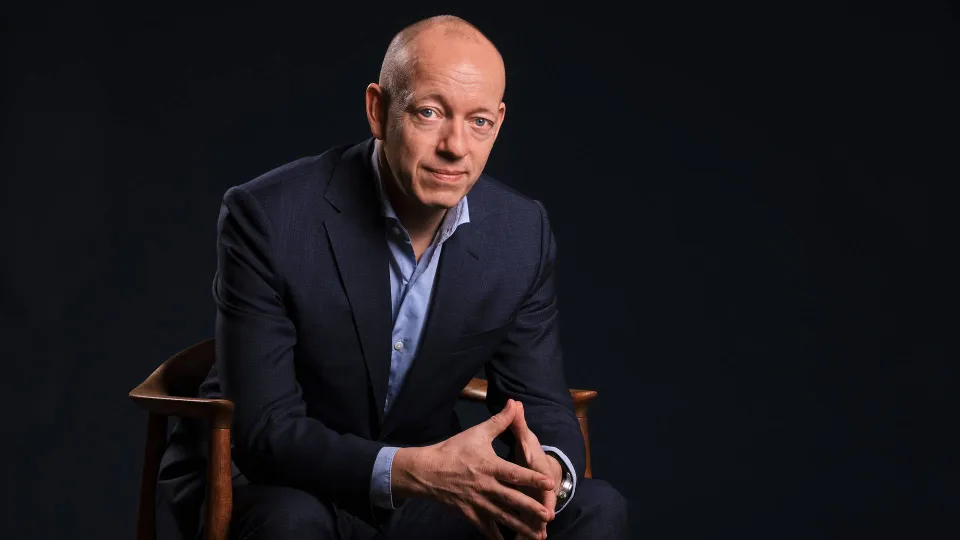
Norden’s decision to drop all trade with Russia in particular has to do with sending a clear signal to the country’s regime, though it does have a commercial basis, says company CEO Jan Rindbo to WPO. In the short term, the effect could be positive for shipping.
Norden Chief Executive Jan Rindbo doesn’t recall taking part in anything like current events, even if there have been international boycotts and sanctions like those imposed by the global community on North Korea.
But still, it was pretty unique for the longtime dry bulk and tanker CEO that the Danish carrier, in line with many others, quite unambiguously chose to close the door on Russia in terms of business.
For our part, it was mainly about the value-based part, meaning sending a clear signal to the regime
Jan Rindbo, CEO, Norden
In Norden’s case, the move will affect 7 percent of its combined dry bulk business in Russia and 4 percent of the tanker business in MR vessels.
However, Rindbo has no doubt that it was the right response to Russia’s brutal invasion of Ukraine.
”For our part, it was mainly about the value-based part, meaning sending a clear signal to the regime in line with many other companies. The commercial assessment, that the business was tied to higher risk and additional sanctions, was secondary,” says Rindbo in an interview with WPO upon presenting the carrier’s annual financial report.
Ships to sail longer
Russia and Ukraine are a source of the two main products that Norden and competitors transport, that is oil on tankers and grain on bulkers.
The economic part of the Russia boycott – and, right now, that no one can sail to Ukraine – could, however, turn out to be a short-term gain for carriers. Instead of carrying oil from Russia to European markets, tankers must sail further away, for instance, to the Persian Gulf, prolonging voyages, which become more expensive.
I’m nervous about a more divided world
Jan Rindbo, CEO, Norden
The same will apply to the dry bulk vessels freighting grain, which can no longer enter the Black Sea and call at Ukrainian ports but must instead go to South America for wheat or other grains.
In the longer term, however, it could have quite profound consequences if the global trading pattern that existed prior to the invasion and the surrounding world’s reaction is broken.
”I’m nervous about a more divided world, because that would mean less trade among countries, which makes everyone a loser,” says the CEO, referring to an East-West divide like that seen during the Cold War.
Even bigger profit this year
In terms of Norden’s own business, Rindbo says there is no significant risk of a negative effect in the short term, and the company’s expectation of 2022 remains that the result will be better than in 2021.
This year, the profit could amount to USD 280m. Within dry bulk, it’s first and foremost the hectic market and the bottlenecks generated that will be the drivers, just like last year. Moreover, the ship values that Norden has booked will have their first real positive effect on the Assets & Logistics business this year, the CEO says.
The interest in hiring dry bulkers, in general, has followed the major infrastructure projects and financial injections that many governments have performed during the Covid-19 pandemic.
This has prompted towering rates, which peaked in October last year with the Baltic Dry Index at almost 6,000, and they can’t exactly be said to have collapsed since. Today, the index approaches 2,200. The hot market will probably also make it easy to find contracts for those ships that won’t be sailing to Russia anymore.
When the war broke out, Norden had two vessels at Ukrainian ports. Now, one remains, in a port outside Odesa.