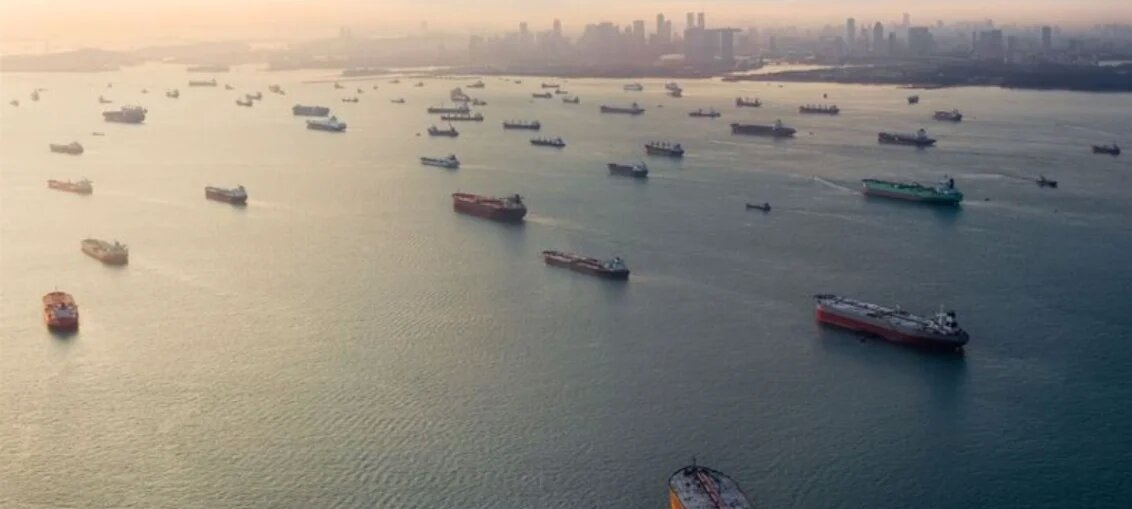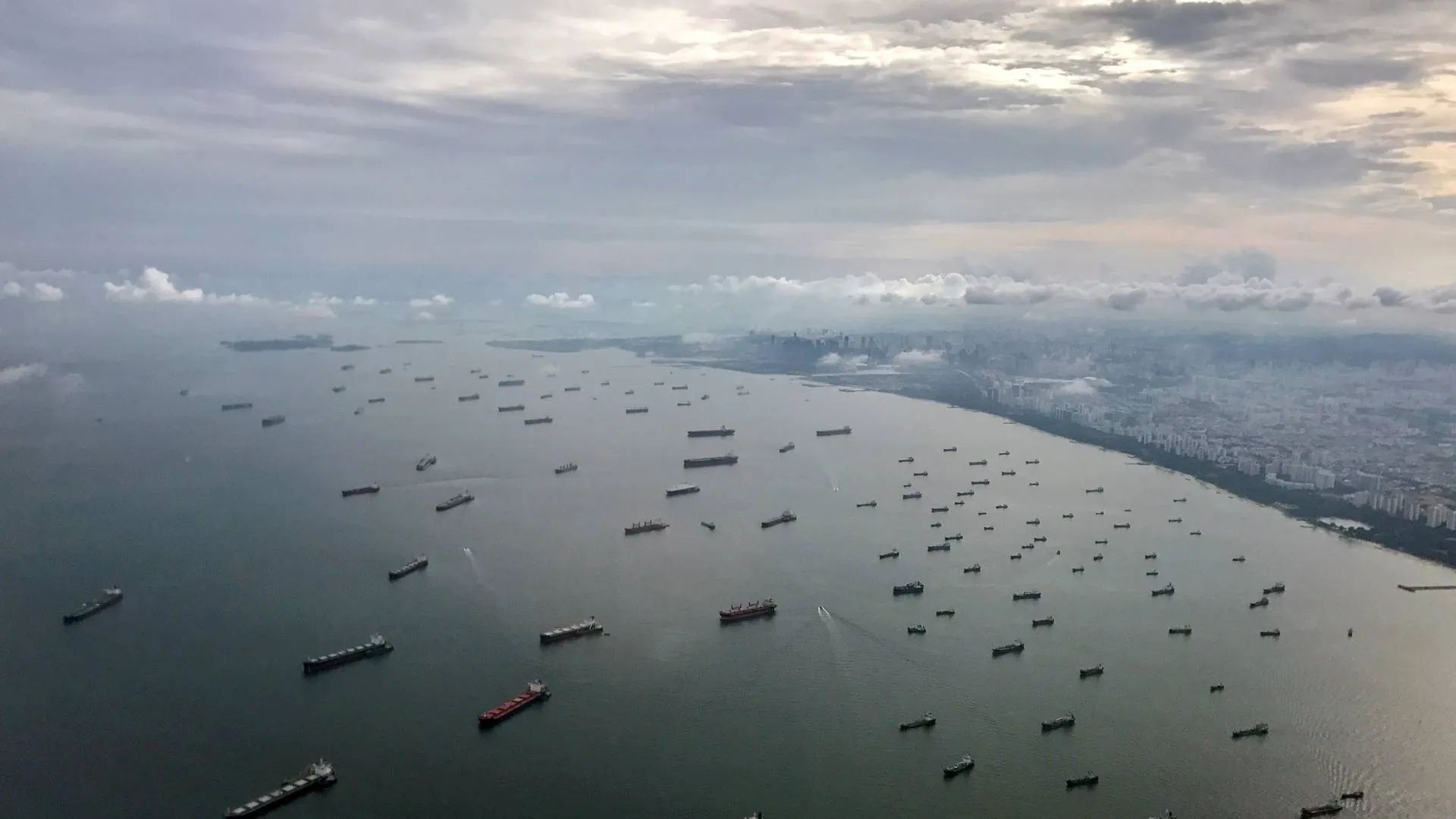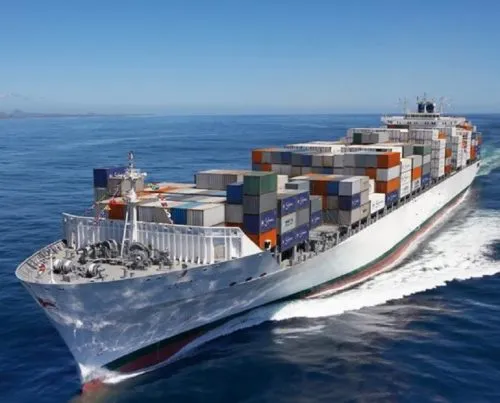
About 90 percent of the world’s trade in goods is transported in containers on ships across oceans, making maritime activity a key economic indicator. An investor can get an idea of a country’s economic health based on the types of products and the number of containers being shipped to and from its ports at any given time.
The economic impact of the intensifying trade war between Washington and Beijing appeared to deepen last month with factory activity and export orders weakening across Asia, but analysts warned the worst was yet to come.
The Harpex index, which tracks weekly container shipping rate changes and is a measure of global shipping activity, is now down 25 percent since its June peak. A DBS analysis of Asian supply chains for products bound for the United States shows the biggest exposures in machinery and electrical equipment in South Korea, Singapore, Malaysia, the Philippines and Taiwan.
Washington has already imposed tariffs on $250 billion worth of Chinese goods, and China has retaliated with duties on $110 billion worth of U.S. goods in a row sparked by U.S. President Donald Trump’s demands for sweeping changes to China’s intellectual property, industrial subsidies and trade policies.
The pressure on China’s economy is not just external. Economic growth cooled to its weakest quarterly pace since the global financial crisis at 6.5 percent, exhibiting lackluster domestic demand by Chinese standards.
According to the Seabury Global Ocean Trade Database, import volumes dropped significantly after additional tariffs were imposed. U.S. imports of Chinese steel and aluminum dropped 53 percent after tariffs on those products went into effect in March compared to March 2017, and imports on the $34 billion of Chinese goods dropped 21 percent since the July tariffs went into effect compared to the prior year.
The effect of the first round of tariffs can be seen by looking inside the Chinese containers being exported to the U.S. According to Ocean Trade Database, the amount of traded goods included on the $34 billion tariff list dropped 21 percent in July from the year before. For example, the number of transformers imported in July 2018 was 60 percent less than imported in July 2017.
Trade negotiations between the U.S. and China are an ongoing process with many unknowns and even more variables that can change the framework going forward. Based on the tariffs imposed so far and based on pre-announcements for possibly further action, U.S.-imposed tariffs seem to target indiscriminately all end consumer products imported from China. End consumer products are usually shipped as containerized cargo, and accordingly, the container line industry is expected to experience material adverse impact. Namely, East-West routes (whether trans-Pacific to the U.S. West Coast or via the Panama Canal to the U.S. East Coast or via the Indian and Atlantic Oceans) are expected to be the most impacted market segment by the tariffs.
Tariffs affecting the container line industry are expected to be material to all liner companies involved in the trade, whether Western companies (i.e. AP Moeller Maersk, MSC, etc.) or Chinese shipping companies, such as Cosco. As hinted in previous discussion, we suspect that Cosco may potentially find ways to increase its market share, especially for containers originating from China, at the expense of Western competitors. Again, depending on how ugly the so-called trade wars will play out.
The U.S. imports more than $500 billion per annum from China, and the Trump administration has so far imposed tariffs on approximately half of those imports, with further threats for escalation to impose tariffs on all imports in 2019. Computers, electronics, electrical equipment, apparel and textiles, furniture, plastics, and general manufacturing are the main imports – and all these products ship in containers, and all of them should be expected to see adjustments. Taking one step further down to the supply chain, if exports of these products to the U.S. are impacted, then, Chinese imports of raw materials and commodities that are used as input should be expected to decline, negatively impacting the tanker and dry bulk segments of the shipping industry.
Ship Deliveries
Vessel deliveries typically slow down towards the end of the year. If shipowners wait a few weeks, allowing the delivery to slip into the new year, the vessel is considered a whole year younger. Many sectors can expect a higher proportion of the orderbook to hit the water in future years.
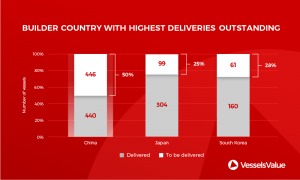
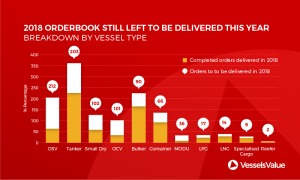
There are 1,966 vessels which have deliveries dates scheduled for 2018. However only 1,100 have hit the water so far this year, meaning 44% of the ’18 orderbook is outstanding.
Out of the three top shipbuilding countries, China still has 50% of their 2018 orders to deliver within the last two months of the year. Compared to Japan and South Korea, where 25% and 28% of their respective orderbooks is currently outstanding, Chinese yards could potentially slip 446 vessels into next year’s delivery schedule.
Ship types with the highest number of outstanding 2018 scheduled deliveries include all offshore vessels types (MODUs at 75% 2018 vessels still to be delivered, OSV 69%, OCV 67%) and the Small Dry sector at 54%.
Shippers brace up for 2019
The cost of hiring container ships has plunged 24 percent from a multi-year peak while raw material vessel rates have slumped 10 percent from a five-year high, adding to signs of slowing global trade with dangerous implications for the economy.
At the start of supply chains, dry-bulk carriers move raw materials like coal and iron ore from mines to smelters while container ships complete the cycle by carrying the vast majority of global manufactured goods from factories to consumers.
While much of world is focused on the stock market losses, the drop in shipping rates as trade declines because of the trade dispute between the United States and China, emerging market currency weakness and tighter credit conditions is an omen of slowing global economic growth.
Dry-bulk and container rates climbed to multi-year highs earlier this year, but have plunged since then as the trade war between the United States and China, in which both sides have slapped steep import tariffs hundreds of goods, has picked up pace.
Ship owners and freight forwarders, especially those focusing on only one to two markets, will need to prepare themselves as they tend to be more vulnerable to political changes. However, the good news for larger forwarders is that losing from one trade lane slowing down may mean another one picking up.