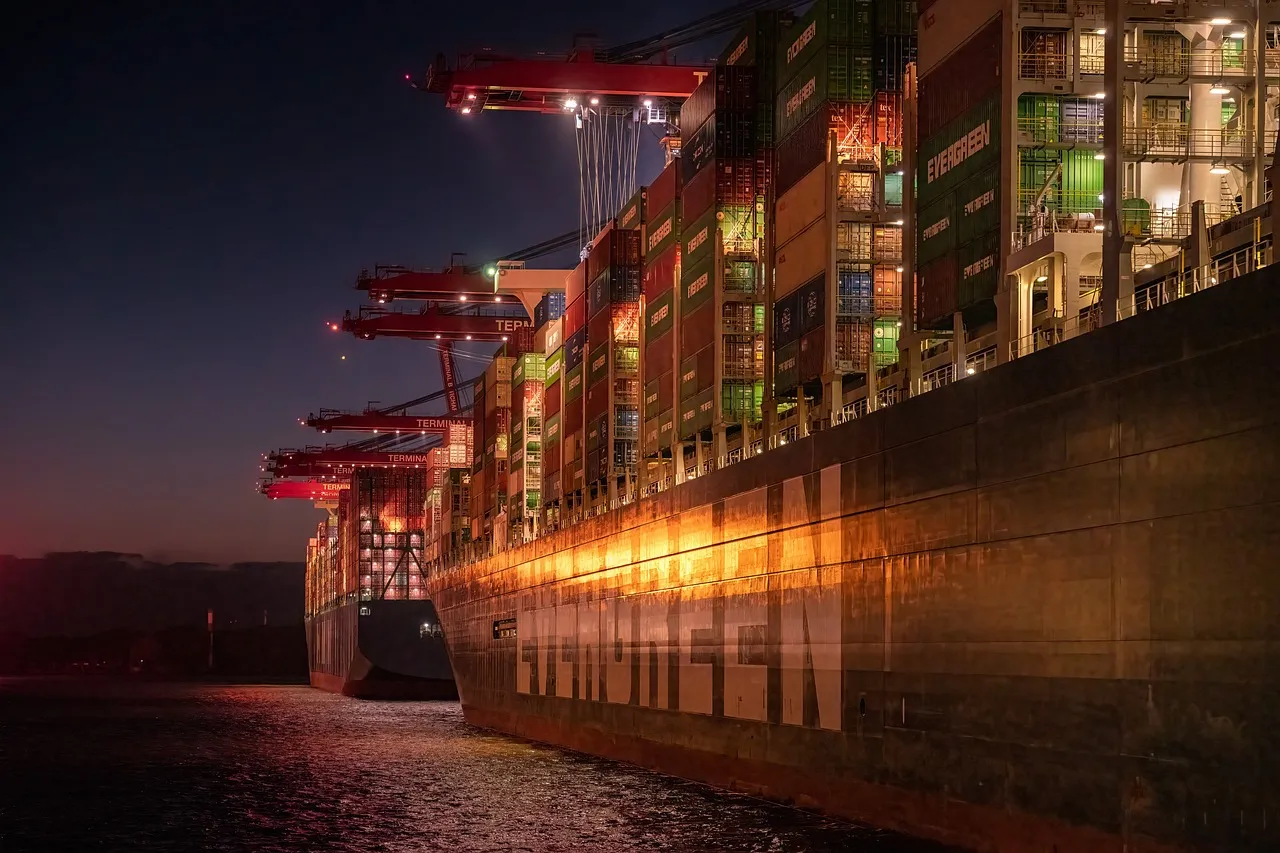

Summary:
Native to East Asia, the brown-winged camellia elephant (BMSB) has been found in China, Japan, and South Korea, and soon established populations in places such as North America and Europe. At present, it is not widely seen in Australia and New Zealand. This bug feeds on more than 300 species of plants and trees, can cause serious pests, harm local agriculture, and often invade vehicles and houses in large numbers in the fall, and emit a nasty odor. The Australian and New Zealand Agriculture and Forestry Safety Departments believe that BMSB is a seasonal “free rider pest” that is easy to hide in open groceries, enter with ships, form species invasion, and pose a biosecurity risk, so it is stipulated that September 1 to April 30 of the following year is the BMSB risk season.
1. BMSB seasonal measures
In order to strictly control the biological risk of pest invasion, Australian authorities have adopted BMSB seasonal measures, as indicated in the bill of lading Goods loaded during the BMSB risk season from target risk countries must be sanitized at an agency approved by the Australian Department of Agriculture, Fisheries and Forestry (DAFF) if they are target high-risk cargo, and if they are target risk cargo, they may be sampled.
All targeted high-risk cargo transported in bulk cargo, including flat and open-top containers, must be handled before arriving in Australia and are not handled shore after being ported, and untreated goods will be prohibited from unloading or forced departure. Modified FCL containers that are no longer sealed in full containers for built-in generators, filtration equipment, and portable quarters are considered as miscellaneous cargo.
If the target high-risk goods are transported in sealed containers, they can be sanitized before arrival at the port or external sanitized treatment on the spot after arrival. Reefer containers and hardtop sealed containers that are in operation or without power are considered sealed containers. Containers must be loaded in a way that is convenient for on-site handling, and unpacking is not allowed without processing. Targeted high-risk goods manufactured, packaged, and sealed in containers in non-target risk countries, but shipped from target risk countries; or if the goods are sealed in the container within 120 hours after the completion of pre-arrival processing (before December 1), you can fill in the DAFF sealing statement to explain the situation to the Australian authorities.
Goods that meet certain conditions are also exempt from BMSB seasonal measures, including:
Containerized goods packed and sealed before September 1 must fill in the DAFF sealing statement;
Goods transported to and stored in non-target risk countries before September 1 must provide relevant certificates as required;
New, unused and field-tested goods (NUFT goods), i.e. goods produced after December 1 classified as 82, 84, 85, 86, 87, 88, 89, and subject to BMSB NUFT declaration upon request;
Household goods and personal items imported under Form B534 as non-personal items (UPEs) are exempt from compulsory handling, but goods that require FID declaration (e.g. motor vehicles, motorcycles) still need to be sanitized. All UPEs shipments will undergo rigorous shore inspections, and in the case of Less than Container Load (LCL) in FAK containers, LCL declarations will be required to be submitted and subject to assessment inspection before unpacking.
During the BMSB risk season, DAFF also implements seasonal measures for all RoRo vessels berthing, loading or transshipment in target risk countries, requiring at least one crew inspection and answering relevant questions as part of the pre-arrival report, and one mandatory seasonal pest inspection upon arrival. These pests are small and tend to hide in hard-to-detect places, and crew inspections should focus on all cargo holds, decks and adjacent stairwells, the exterior surfaces of containers, the interior and exterior surfaces of machines and vehicles (if any), and the proximity to light sources. Unlike routine ship inspections, seasonal pest inspections are carried out only during the day, during which the bow springboard and hatch must remain closed and unloaded after the inspection is completed and approved. If live or large numbers of dead insects are found, pyrethrin thermal fumes and residual insecticides are also sprayed.
2. Target risk goods
The following goods are classified as target high-risk goods and must be sanitized in accordance with regulations, including:
44: Wood and wood products, charcoal;
45: cork and cork products;
57: Carpet and other textile floor coverings;
68: Stone, gypsum, cement, asbestos, mica or similar material products;
69: Ceramic products, including subchapters 1 and 2;
70: Glass and glassware;
72: Steel, including chapters 1, 2, 3 and 4;
73: Iron or steel products;
74: Copper and its products;
75: Nickel and its products;
76: Aluminum and its products;
78: Lead and its products;
79: Zinc and its products;
80: tin and its products;
81: Other base metals, metal ceramics and their products;
82: Base metal tools, utensils, cutlery, spoons and forks, base metal parts;
83: Other base metal products;
84: Nuclear reactors, boilers, machinery and mechanical appliances and their parts;
85: electrical mechanical equipment and parts thereof, tape recorders, television image and sound reproducers and their parts and accessories;
86: Railway or tram locomotives and their parts, railway or tram track fixtures and parts and accessories, various mechanical (including electromechanical) traffic signaling equipment;
87: Vehicles other than railways or trams and their parts and accessories;
88: Aircraft, spacecraft and their parts;
89: Ships, vessels and floating structures.
The following cargoes are classified as target risk cargo, only need to strengthen shore intervention through random inspection, and quarantine treatment is not mandatory, including:
27: Fossil fuels, mineral oils and their distilled products, asphalt substances, mineral waxes;
28: Organic or inorganic compounds made of inorganic chemicals, precious metals or rare earth metals, containing radioactive elements or isotopes, including subchapters 1, 2, 3, 4 and 5;
29: Organic chemicals, including chapters 1, 2, 3, 4, 5, 6, 7, 8, 9, 10, 12, and 13;
38: Other chemical products;
39: Plastics and their products, including chapters 1 and 2;
40: Rubber and its products;
48: paper and cardboard, pulp, paper or cardboard products;
49: Books, newspapers, pictures and other printed materials, manuscripts, typewritten manuscripts and drawings;
56: Fillers, felt and non-woven fabrics, special yarns, hemp ropes, fiber ropes, thick ropes, cables and their products.
For all other shipments that are not classified as target high-risk cargo and target risk cargo, BMSB seasonal measures do not apply. However, if these goods are part of a container or consignment containing high-risk target cargo or targeted risk cargo, then they are subject to these measures.
3. Target risk countries and regions
2024/25 BMSB risk season, including Albania, Andorra, Armenia, Austria, Azerbaijan, Belgium, Bosnia and Herzegovina, Bulgaria, Canada, China (enhanced vessel surveillance only), Croatia, Czech Republic, France, Japan (vessel surveillance only), Georgia, Germany, Greece, Hungary, Italy, Kazakhstan, South Korea (vessel surveillance only), Kosovo, Liechtenstein, Luxembourg, Montenegro, Moldova, Netherlands, Poland, Portugal, 41 countries and regions, including the Republic of North Macedonia, Romania, Russia, Serbia, Slovakia, Slovenia, Spain, Switzerland, Turkey, Ukraine, the United States, and Uzbekistan, are listed as target risk countries (regions).
In addition, China and the United Kingdom have been identified as emerging risk countries for BMSB, and shipments from China between September 1 and December 31 and from the United Kingdom between December 1 and April 30 may be randomly selected for shore inspection. In addition to the high-risk goods mentioned above, emerging risk countries are subject to random inspections when transporting items specified in ABF (Australian Boarder Force) sections 39, 94 and 95.
4. Sanitize treatment of BMSB
As part of Australia’s measures to control the risk of alien pests and diseases, DAFF requires sanitizing and quarantine treatments for biosecurity purposes in accordance with certain standards and procedures. For goods that are allowed to be handled onshore, DAFF provides a list of accredited service providers on its website, and for goods that must be handled offshore before landing, DAFF sets out a set of AusTreat rules that set out the registration and compliance requirements for service providers, as well as the processing methods that should be used.
Service providers conducting BMSB offshore processing in target risk countries must be registered under AusTreat and listed as “approved” on the provider list before they can be processed, and processing carried out by unapproved service providers in target risk countries will be considered invalid. Processing certificates issued by service providers in non-target risk countries, unless the provider is listed as “suspended” or “not certified” or “under review” on the list, are generally accepted by DAFF. At present, the only unit in China that has obtained DAFF accreditation qualification is China Central Inspection.
There are three DAFF-approved BMSB treatment methods, including heat treatment, methyl bromide fumigation, and sulfuryl fluorine fumigation. Each method has its own minimum standards, and specific methodology guidance and documentation templates are available on the DAFF website. Among them, heat treatment is suitable for all types and sizes of goods by heating the coldest surface of the goods to at least 56°C for at least 30 minutes; or for bulk cargo weighing less than 3,000 kg, heating the coldest surface to at least 60°C for at least 10 minutes, and bulk cargo weighing less than 3,000 kg must be certified in the waybill.
Methyl bromide fumigation and sulfuryl fluoride fumigation require at least 24g of medication per square meter, maintain a temperature of at least 10°C, last for at least 12 hours (but less than 24 hours), and the minimum reading should be 12g/m³ at the end; or 24g per square meter, maintain a temperature of at least 10°C for 24 hours or more, and the minimum reading should be 8g/m³ at the end. Regardless of duration, the concentration reading at the beginning must be higher than 24 g/m³. It is not allowed to increase the dose as compensation when the temperature drops below 10°C, nor is it allowed to add fumigants at the end of the treatment. If at any point during the treatment the fumigant concentration is lower than the minimum reading at the end, the treatment fails. Methyl bromide has a corrosive effect on aluminum, while sulfuryl fluorine does not affect the odor or color of metal, paper, and leather goods.
In addition, new phytosanitary treatment methods can also be declared according to DAFF requirements, but specific information such as the biological mode of action of the method on the target taxa, physical properties in the target commodity, application method, dose, time, temperature, monitoring method, experimental data, potential impact, etc.