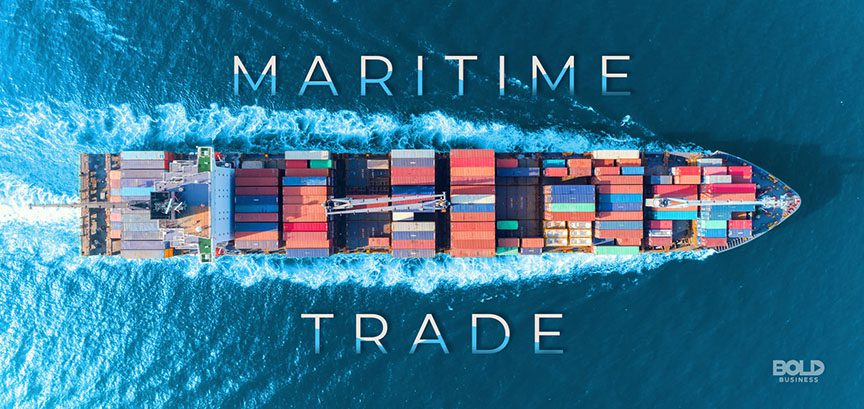
The successive crises of recent years have made the global shipping industry more acutely aware of its own vulnerability: from port congestion to blockages of key routes, geopolitical friction, terrorist attacks, piracy, and natural disasters caused by extreme weather. Any single point of failure can cause the global supply chain to tighten instantly, like a stretched cable.
The study “Systemic impacts of disruptions at maritime chokepoints,” published in the journal *Nature Communications*, points out that disruptions at key maritime chokepoints affect approximately $192 billion in maritime trade annually, with comprehensive losses from delays, rerouting, increased insurance, and rising freight costs amounting to about $14 billion. The researchers call for international cooperation and coordinated management to effectively prevent and mitigate future risks.
This research was completed by Dr. Jasper Verschuur, Dr. Johannes Lumma, and Prof. Jim Hall from the Oxford Programme for Sustainable Infrastructure Systems (OPSIS), with support from The Oxford Martin Systemic Resilience Initiative and the Gallagher Research Centre.
The research team analyzed 24 important global maritime chokepoints, including the Suez Canal, the Bab el-Mandeb Strait, and the Strait of Malacca, which carry a massive flow of global goods and energy. The study found that the direct economic losses caused by chokepoint blockages are approximately $10.7 billion per year, equivalent to 0.04% of global trade volume. The most significantly affected countries include Egypt, Yemen, Iraq, and Panama, which are highly dependent on these high-risk waterways.
Furthermore, route disruptions drive up global freight costs, imposing an additional cost of approximately $3.4 billion on countries worldwide; even nations not directly using the affected waterways will experience increased transport costs and higher end-consumer prices.
“The global economy almost relies on a few key maritime chokepoints,” stated the report’s lead author, Dr. Jasper Verschuur. “Once one of them encounters problems, the impact spreads rapidly across continents. Understanding these risks is the first step in building resilience for supply chains.”
The study also shows that human-made and natural risks are highly intertwined, with armed conflict, terrorist attacks, and tropical cyclones often occurring concurrently in the same regions. The Bab el-Mandeb Strait, the Bosporus Strait, and the Lombok Strait, among others, simultaneously face conflict and terrorist threats; meanwhile, about 40% of tropical cyclones affect multiple maritime chokepoints at once. In some regions, an increase in piracy can even trigger imitation in other areas.
This overlapping of risks means multiple chokepoints could be paralyzed simultaneously, leaving global shipping with no “diversion buffer,” and causing structural blockages to trade flows.
“The resonance of risks reflects the high interconnectivity of the global shipping system,” said Dr. Johannes Lumma. “An event in one region can amplify impacts on the other side. Clarifying these connections helps anticipate compound disruptions and prepare in advance.”
The study emphasizes that such chokepoint events can trigger chain reactions within the global trade network: from factories being forced to halt production due to missing components, to consumers facing price increases—the effects are pervasive.
The research team believes that countries and companies need to establish layered and diversified resilience strategies, tailored to the characteristics of the chokepoints they depend on. These include stockpiling emergency supplies, diversifying supply chains, investing in security, and developing insurance products that cover rare but severe events.
“Although maritime chokepoints are just tiny lines on the map, they almost dictate the operation of the global economy,” emphasized OPSIS Director and study co-author Professor Jim Hall. “Identifying the system’s weakest links is essential to help governments and businesses build strong defenses against future uncertainties.”