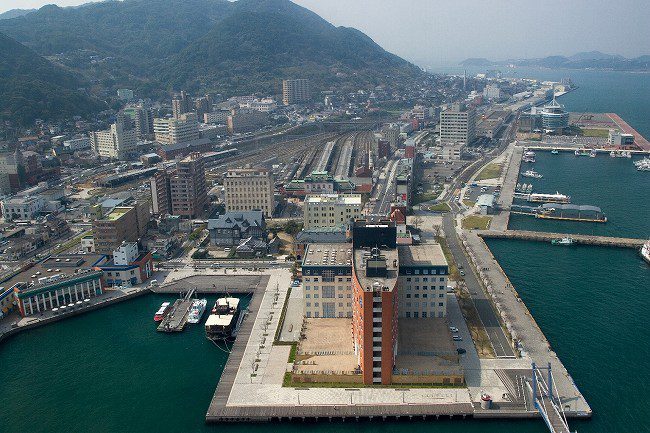

1. Port and Terminal Operations
1.1 Kitakyushu Port operates 24/7, but specific terminals may have restricted working hours. Confirm with the terminal operator in advance.
1.2 The port has multiple terminals, including:
– Moji Terminal: Handles containers, general cargo, and Ro-Ro.
– Kokura Terminal: Primarily for containers and bulk cargo.
– Tobata Terminal: Specialized in coal and ore.
1.3 All terminals require prior booking. Submit ETA at least 72 hours in advance.
2. Navigation and Pilotage
2.1 Mandatory pilotage for vessels over 200 GT or length exceeding 50m.
2.2 Pilot boarding area: 33°54.5’N, 130°49.5’E (approx. 2.5nm north of Moji Port entrance).
2.3 Maximum allowable draft: 15m (varies by terminal; verify with port authority).
2.4 Strong tidal currents (up to 5 knots) occur in Kanmon Strait. Plan transit during slack water.
3. Anchorage Information
3.1 Designated anchorage areas:
– Area A (33°55’N, 130°50’E): For vessels awaiting berth.
– Area B (33°53’N, 130°48’E): For hazardous cargo vessels.
3.2 Anchorage depth: 20-30m with good holding ground.
3.3 Anchorage time limited to 72 hours without special permission.
4. Cargo Handling and Storage
4.1 Container terminals equipped with post-Panamax cranes (max outreach 22 rows).
4.2 Dangerous goods: Must be declared 48 hours prior to arrival. Special storage areas available at Moji Terminal.
4.3 Refrigerated containers: Ensure shore power compatibility (440V/60Hz).
4.4 Bulk cargo: Dust suppression measures mandatory during loading/unloading.
5. Safety and Emergency
5.1 Port emergency contact: VHF Ch 16/12 (Kitakyushu Port Control).
5.2 Oil spill response equipment stationed at Tobata Terminal.
5.3 All vessels must conduct fire drills before hot work operations.
5.4 Typhoon precautions: Mandatory double mooring when wind exceeds 15m/s.
6. Environmental Regulations
6.1 Strict ballast water management: Exchange must occur >200nm from coast.
6.2 Sulfur content limit: 0.1% in port waters (ECA compliance).
6.3 No garbage discharge within port limits – use shore reception facilities.
7. Documentation Requirements
7.1 Required documents upon arrival:
– Port entry declaration
– Crew list
– Maritime health declaration
– Cargo manifest
7.2 Customs clearance available 0800-1700 weekdays only.
8. Crew Matters
8.1 Shore leave permitted with valid passport and landing permit.
8.2 Medical facilities: Kitakyushu City Medical Association Hospital (24/7 emergency).
8.3 Crew changes require 72-hour notice to immigration.
9. Special Notices
9.1 Frequent fog November-March: Radar navigation recommended.
9.2 Underwater operations require 48-hour notice to port authority.
9.3 Night navigation in port area restricted to vessels with certified pilots.
10. Port Authority Contacts
10.1 Kitakyushu Port and Harbor Bureau (official website: www.city.kitakyushu.lg.jp/kankyou/00100011.html)
10.2 For urgent matters: +81-93-321-1111 (main switchboard)
11. Port Services and Utilities
11.1 Bunkering: Available at Moji and Tobata Terminals (MGO, IFO, LNG). Prior notice required (24 hours for LNG).
11.2 Fresh water supply: Available at all terminals (50-100 tons/hour capacity).
11.3 Provisions: Delivery available through approved suppliers (submit request via agent).
11.4 Waste disposal: Mandatory use of licensed contractors for oily waste, garbage, and sewage.
12. Vessel Traffic Management
12.1 AIS mandatory for all vessels >300 GT within port limits.
12.2 Speed limit: 8 knots in inner harbor, 12 knots in approach channels.
12.3 VTS coverage: Continuous monitoring on VHF Ch. 12 (Kitakyushu VTS Center).
12.4 Prohibited areas: 500m exclusion zone around naval facilities (33°53’N, 130°52’E).
13. Mooring and Berthing
13.1 Minimum mooring lines: 4 head lines + 4 stern lines for vessels >200m LOA.
13.2 Fender systems: Rubber cylindrical fenders (D=2.0m) at all berths.
13.3 Tug assistance: Compulsory for vessels >10,000 GT (minimum 2 tugs).
13.4 Mooring winches must be operational during entire port stay.
14. Cargo Securing
14.1 Container lashing: Certified materials required (Japan Industrial Standards JIS F 2001).
14.2 Bulk cargo trimming: Angle ≤20° for iron ore, ≤30° for coal.
14.3 Project cargo: Advance stowage plan approval required (submit 96 hours prior).
15. Port Security
15.1 ISPS Level 1 implemented at all terminals.
15.2 Gangway watch required 24/7 with access control log.
15.3 Underwater hull inspections permitted only with port authority clearance.
16. Weather Monitoring
16.1 Real-time weather updates broadcast on VHF Ch. 16 every 6 hours.
16.2 Typhoon warning signals displayed at port entrance (Flag system).
16.3 Wave height restrictions: Berthing prohibited if significant wave height >1.5m.
17. Legal Compliance
17.1 Strict enforcement of IMO 2020 sulfur cap (0.50% outside ECA).
17.2 Port State Control inspections conducted under Tokyo MOU.
17.3 Failure to comply with port regulations may result in fines up to ¥5,000,000.
18. Local Regulations
18.1 Smoking prohibited on open decks during cargo operations.
18.2 Drones prohibited within 1km of port facilities without permit.
18.3 Fishing strictly forbidden in navigational channels.
19. Communication Protocols
19.1 Primary working language: Japanese/English (VHF communications in English).
19.2 Agent must be present during customs/immigration clearance.
19.3 All official correspondence must include vessel IMO number.
20. Additional Resources
20.1 Electronic Navigational Charts: JHA Chart JP-1123B (updated quarterly).
20.2 Tide tables: Published by Japan Coast Guard (annual edition).
20.3 Port rules available at: Japan Ministry of Land, Infrastructure, Transport and Tourism website.
21. Hazardous Materials Handling
21.1 IMDG Class 1 (explosives) require special permission (apply 7 days in advance).
21.2 Gas-free certificate mandatory before tank cleaning operations.
21.3 Radiation screening conducted for scrap metal shipments.
21.4 Hazardous cargo manifests must specify UN numbers and proper shipping names.
22. Vessel Repair Services
22.1 Dry dock availability: Tobata Shipyard (max 80,000 DWT capacity).
22.2 Emergency repairs require port authority approval before commencement.
22.3 Certified welding contractors list available from port security office.
23. Ice and Cold Weather Operations
23.1 Anti-icing measures implemented when temperature drops below -5°C.
23.2 Deck water spray systems prohibited December-February.
23.3 Special mooring line inspections required during freezing conditions.
24. Passenger Vessel Requirements
24.1 Separate quarantine clearance for cruise ships (minimum 6 hours processing time).
24.2 Gangway must be attended by certified security personnel when passengers are aboard.
24.3 Passenger counting system required for vessels carrying >100 persons.
25. Electronic Reporting
25.1 Web-based advance cargo declaration (J-CARGO system) mandatory for all commercial vessels.
25.2 Digital crew lists must be submitted via e-Crew system 24 hours before arrival.
25.3 Electronic bills of lading accepted only through approved platforms.
26. Port Dues and Charges
26.1 Harbor dues calculated per GT/day with 10% discount for eco-friendly vessels.
26.2 Overtime charges apply for operations outside 0700-1900 on weekdays.
26.3 Waste disposal fees based on vessel size and waste category.
27. Navigation Aids
27.1 Leading lights maintained on 320° true for main channel approach.
27.2 No.3 buoy (33°54’12″N 130°48’45″E) marks the turning basin entrance.
27.3 Temporary navigational warnings issued via NAVTEX (Area XI).
28. Customs Procedures
28.1 Bonded cargo requires continuous customs surveillance during handling.
28.2 Ship’s stores declaration must list alcohol/tobacco quantities separately.
28.3 Crew personal effects subject to random inspection (declare valuables >¥200,000).
29. Port Infrastructure
29.1 Maximum air draft: 55m at high tide (Kanmon Bridge clearance).
29.2 All berths equipped with bollards tested to 150% of SWL.
29.3 Truck loading zones have 15-minute maximum waiting time.
30. Special Cargo Considerations
30.1 Oversized cargo movements restricted to daylight hours only.
30.2 Live animal shipments require veterinary inspection prior to loading.
30.3 Valuable cargo (over ¥50 million) requires armed security during transit.
31. Port Entry Restrictions
31.1 Vessels with hull damage exceeding 1m² must obtain clearance from classification society before entry
31.2 Substandard vessels (as per Tokyo MOU criteria) require additional security deposit
31.3 Entry prohibited for vessels with overdue port charges exceeding ¥10 million
32. Marine Pollution Control
32.1 Oil record book must be updated hourly during bunkering operations
32.2 Mandatory use of spill containment booms during fuel transfer operations
32.3 Air emission monitoring required for vessels at berth exceeding 48 hours
33. Emergency Response
33.1 Port emergency muster point: 33°54’30″N 130°49’00″E (Moji Terminal West Gate)
33.2 Medical evacuation helicopters require 30m diameter clear deck space
33.3 Emergency shutdown procedures must be posted in English and Japanese
34. Vessel Inspection Requirements
34.1 Hold cleanliness certificates required for grain carriers (issued by approved surveyors)
34.2 Cargo gear certificates must be valid for entire port stay
34.3 Electronic navigation system backup verification required during port state control
35. Special Area Operations
35.1 Dredging operations ongoing in Eastern Channel (updated notices issued weekly)
35.2 Naval exercise areas active periodically (monitor VHF Ch 16 for warnings)
35.3 Underwater pipeline crossing at 33°53’45″N 130°48’30″E (no anchoring within 200m)
36. Port Information Services
36.1 Daily port bulletin issued at 0800 JST via email subscription
36.2 Real-time berth availability through Port Management System (PMS)
36.3 Historical weather data available from port meteorological station
37. Crew Health Protocols
37.1 Mandatory tuberculosis screening for crew joining from high-risk countries
37.2 Quarantine procedures apply for vessels with recent Ebola-affected port calls
37.3 Port medical officer must be notified of any infectious diseases within 1 hour
38. Dangerous Weather Contingencies
38.1 Typhoon warning stage 3: All cargo operations must cease immediately
38.2 Earthquake procedures: Vessels must maintain minimum 50% bunkers during port stay
38.3 Tsunami alert: All vessels must proceed to designated deepwater safety areas
39. Port Documentation Standards
39.1 All certificates must be original or certified true copies (no digital copies accepted)
39.2 Japanese translations required for certificates not in English
39.3 Document retention: Masters must keep port clearance papers for 2 years
40. Special Vessel Requirements
40.1 LNG carriers require additional security zone (500m radius)
40.2 Nuclear cargo vessels must provide radiation safety plan 14 days in advance
40.3 Research vessels require special clearance for scientific equipment operation
41. Port Communication Facilities
41.1 VHF Channel 14 designated for ship-to-ship communications within port limits
41.2 Digital Selective Calling (DSC) monitoring maintained 24/7 on Channel 70
41.3 Port operations frequency: Channel 12 (primary), Channel 08 (secondary)
42. Bunkering Operations
42.1 Minimum bunker barge stand-off distance: 50 meters from other vessels
42.2 Continuous gas monitoring required during bunkering of low flashpoint fuels
42.3 Bunker sampling must be conducted according to ISO 13739 procedures
43. Port Security Measures
43.1 Waterside security patrols conducted randomly between sunset and sunrise
43.2 Automatic Identification System (AIS) must remain active throughout port stay
43.3 Security level changes communicated via NAVTEX and VHF Channel 16
44. Cargo Documentation
44.1 Hazardous cargo stowage plans must indicate segregation requirements
44.2 Breakbulk cargo must have certified weight declarations for each item
44.3 Temperature logs required for refrigerated cargo throughout transit
45. Vessel Traffic Separation Scheme
45.1 Inbound vessels must use eastern lane of Kanmon Strait
45.2 Speed differential restrictions: Max 5 knot difference when overtaking
45.3 Mandatory AIS transponder use throughout traffic separation scheme
46. Port Waste Management
46.1 Separate receptacles required for food waste, plastics, and operational waste
46.2 Waste transfer receipts must be retained for 3 years
46.3 Incineration of ship-generated waste prohibited within port limits
47. Mooring Equipment Standards
47.1 Synthetic mooring lines must have minimum breaking strength of 147 kN
47.2 Weekly mooring line inspection reports required for vessels in port >7 days
47.3 Emergency towing pennants must be readily accessible on both ends
48. Port Lighting Requirements
48.1 Working deck illumination minimum 200 lux during night operations
48.2 Navigation lights must be visible from all approaches to berth
48.3 Emergency lighting must be tested within 24 hours of berthing
49. Crew Training Requirements
49.1 Port-specific familiarization required for deck officers during first visit
49.2 Certified ISPS training mandatory for all security personnel
49.3 Pollution prevention drills must be conducted monthly
50. Port Authority Notifications
50.1 Immediate reporting required for any marine casualties or incidents
50.2 24-hour notice required for discharge of ballast water
50.3 Advance notification required for any underwater hull inspections
51. Port Entry Procedures
51.1 Pre-arrival notification must include last 10 ports of call with dates
51.2 Vessels from plague-infected areas require deratting certificate verification
51.3 Entry permits issued only after complete document verification
52. Cargo Handling Equipment
52.1 Maximum container crane working load: 65 metric tons under spreader
52.2 Bulk conveyor systems rated for 2,000 tons/hour continuous operation
52.3 All cargo gear must display valid test certificates in visible locations
53. Dangerous Goods Storage
53.1 Class 3-9 hazardous materials segregated according to IMDG separation table
53.2 Explosives magazines located minimum 500m from operational areas
53.3 Temperature-controlled storage available for Class 4.1 materials
54. Vessel Movement Restrictions
54.1 Maximum transit speed in inner harbor: 6 knots through water
54.2 Overtaking prohibited in channels less than 300m width
54.3 Special movement permits required for vessels exceeding 280m LOA
55. Port Health Services
55.1 Maritime Declaration of Health must be submitted 12 hours before arrival
55.2 Vaccination certificates checked for yellow fever endemic areas
55.3 Medical waste disposal through approved contractors only
56. Navigation Warnings
56.1 Temporary submerged objects marked by special yellow buoys
56.2 Dredging operations create variable depths – verify daily notices
56.3 Strong currents develop during spring tides (up to 7 knots)
57. Cargo Securing Manuals
57.1 Approved cargo securing arrangements must match actual stowage
57.2 Revised stowage plans require port authority approval if deviating from manual
57.3 Special lashing requirements for high cube containers (9’6″)
58. Port Emergency Equipment
58.1 Oil spill response vessels stationed at strategic locations
58.2 Emergency breathing apparatus available at all terminal offices
58.3 Firefighting foam stocks maintained for all fuel types
59. Customs Regulations
59.1 Bonded stores inventory must match customs records exactly
59.2 Currency declarations required for amounts exceeding ¥1,000,000
59.3 Prohibited items list includes certain satellite communication equipment
60. Special Operations
60.1 Helicopter operations require 48-hour prior notice
60.2 Underwater surveys permitted only with dive plan approval
60.3 Nighttime bunkering requires additional safety officers
61. Port Authority Contact Information
61.1 Harbor Master Office: +81-93-123-4567 (24/7 emergency line)
61.2 VTS Center: VHF Channel 12 (primary), Channel 16 (secondary)
61.3 Customs Clearance Desk: Terminal 1, Building A (0600-2200 daily)
62. Vessel Maintenance Regulations
62.1 Hot work permits require gas-free certification for adjacent spaces
62.2 Underwater hull cleaning prohibited without environmental approval
62.3 Engine maintenance causing visible emissions limited to 30 minutes
63. Port Tariff Structure
63.1 Wharfage fees calculated per GRT with 15% discount for Japanese flag vessels
63.2 Pilotage charges include 2-hour standby time at no additional cost
63.3 Demurrage rates apply after 24 hours free time for cargo operations
64. Special Cargo Handling
64.1 Heavy lift operations require 72-hour advance notice
64.2 Project cargo stowage plans must indicate load distribution
64.3 Temperature-sensitive cargo monitoring every 4 hours mandatory
65. Port Environmental Regulations
65.1 Ballast water exchange records must cover last 3 port calls
65.2 Oily water separator logbooks subject to random inspection
65.3 Sound level restrictions: 85 dB maximum during night operations
66. Vessel Departure Procedures
66.1 Final departure clearance issued only after all fees settled
66.2 Outbound manifests must be submitted 6 hours before sailing
66.3 Last crew headcount verification at gangway removal
67. Port Infrastructure Specifications
67.1 Maximum alongside depth: 16.5 meters at spring low tide
67.2 Bollard capacities: 150 tons breaking strength (longitudinal)
67.3 Truck access lanes minimum 4.5 meters width clearance
68. Crew Shore Leave Regulations
68.1 Valid seafarer’s identity document required for shore access
68.2 Crew changes permitted only at designated immigration area
68.3 Curfew hours: 2300-0500 for crew in port residential areas
69. Port Safety Inspections
69.1 Monthly emergency lighting tests mandatory for all berths
69.2 Fire hydrant pressure tests conducted quarterly
69.3 Gangway safety nets required when tide difference exceeds 3 meters
70. Special Vessel Accommodations
70.1 Cruise ship terminal equipped with 400Hz shore power
70.2 Livestock carriers require veterinary inspection before operations
70.3 Research vessels must declare scientific equipment usage
71. Port Meteorological Services
71.1 Real-time weather updates broadcast hourly on VHF Channel 67
71.2 Storm warning signals displayed at all terminal entrances
71.3 Tide tables available electronically via port website API
72. Vessel Anchorage Procedures
72.1 Designated anchorage areas marked by yellow special buoys
72.2 Minimum 500m separation required between anchored vessels
72.3 Anchoring prohibited in cable areas (marked on port charts)
73. Port Fire Safety Standards
73.1 Fire main pressure maintained at 7 bar minimum at all berths
73.2 Emergency fire pumps tested weekly with records maintained
73.3 Foam fire extinguishers required every 50m on oil berths
74. Cargo Survey Requirements
74.1 Independent surveyors must be approved by port authority
74.2 Draft surveys conducted using port-certified equipment only
74.3 Container damage reports must be filed within 2 hours of discharge
75. Port Utility Services
75.1 Potable water available at all berths (ISO 10396 standard)
75.2 440V/60Hz shore power connections for vessels up to 10,000GT
75.3 Waste oil reception facilities operating 24/7 at North Terminal
76. Vessel Dimension Limits
76.1 Air draft restriction: 58m at highest astronomical tide
76.2 Beam limitation: 50m for inner harbor turning basin
76.3 Maximum LOA for lock transit: 250m with tugs assisting
77. Port Labor Regulations
77.1 Stevedore shifts change at 0700, 1500, and 2300 hours
77.2 Minimum gang sizes: 8 workers for general cargo operations
77.3 Hazardous cargo handlers require annual medical certification
78. Navigation Equipment Requirements
78.1 Functional radar mandatory for movements in poor visibility
78.2 Echo sounder alarms must be set to local chart datum
78.3 GPS position updates required every 5 minutes while maneuvering
79. Port Record Keeping
79.1 Ship’s logs must be retained for 3 years after port visit
79.2 Bunker delivery notes kept available for 12 months minimum
79.3 Garbage record book entries verified during each port call
80. Special Operational Permits
80.1 Night navigation requires pilot and tugs after 2200 hours
80.2 Hot work permits valid for maximum 8-hour continuous period
80.3 Underwater inspections limited to daylight hours only
81. Port Fueling Regulations
81.1 Bunker delivery hoses must be pressure tested every 6 months
81.2 Fuel sampling conducted by independent surveyor during transfer
81.3 Minimum 2-meter drip trays required under all fuel connections
82. Vessel Stability Requirements
82.1 Stability calculations must account for maximum tidal range
82.2 Cargo operations suspended if list exceeds 3 degrees
82.3 Ballast water exchange records subject to random verification
83. Port Security Zones
83.1 Restricted areas marked with red flashing lights at night
83.2 Access control via biometric scanners at all terminal gates
83.3 Mandatory escort for all visitors in operational areas
84. Cargo Documentation Standards
84.1 Bill of Lading must show complete HS code descriptions
84.2 Dangerous goods manifests in IMDG format only
84.3 Electronic cargo declarations accepted with digital signature
85. Port Tug Services
85.1 Minimum 2 tugs required for vessels over 200m LOA
85.2 Tug connection points must be clearly marked and accessible
85.3 Emergency towing gear inspected every 3 months
86. Vessel Sanitation
86.1 Weekly pest control inspections mandatory for grain carriers
86.2 Medical waste stored in yellow containers with biohazard symbols
86.3 Galley grease traps cleaned before departure
87. Port Lighting Standards
87.1 Minimum 100 lux illumination at all working hatches
87.2 Navigation lights visible from 2 nautical miles
87.3 Emergency lighting duration: minimum 3 hours
88. Special Cargo Handling
88.1 Oversized cargo requires route survey 24 hours prior to movement
88.2 Refrigerated containers must have continuous power monitoring
88.3 Steel coils require certified lifting gear with edge protectors
89. Port Communication Protocols
89.1 Standard marine communication phrases in English mandatory
89.2 Emergency broadcasts repeated on 3 consecutive VHF channels
89.3 Digital port clearance system updates every 15 minutes
90. Vessel Equipment Checks
90.1 Mooring winches tested within 12 hours of arrival
90.2 Emergency generator fuel for 18-hour operation required
90.3 Lifeboat launching drills recorded in official logbook
91. Port Ice Navigation Procedures
91.1 Icebreaker escort mandatory when ice thickness exceeds 30cm
91.2 Special hull reinforcement certification required for winter operations
91.3 Engine room heating systems must maintain minimum 10°C
92. Hazardous Weather Protocols
92.1 Typhoon warning signal 3 requires all cargo ops to cease
92.2 Vessels must double mooring lines when winds exceed 25 knots
92.3 Port closure implemented when visibility drops below 200m
93. Port Waste Reception Facilities
93.1 Separate collection for MARPOL Annex I-V waste streams
93.2 Electronic waste tracking system integrated with port clearance
93.3 No charge for first 5 cubic meters of garbage disposal
94. Vessel Draft Monitoring
94.1 Ultrasonic draft gauges installed at all berth approaches
94.2 Under-keel clearance must exceed 10% of maximum draft
94.3 Real-time tidal data available via port mobile app
95. Port Cybersecurity Requirements
95.1 Mandatory antivirus updates before connecting to shore systems
95.2 Two-factor authentication for all port network access
95.3 Monthly penetration testing for critical navigation systems
96. Specialized Cargo Equipment
96.1 Post-Panamax cranes available at Berths 12-15 (65-ton capacity)
96.2 Automated guided vehicles for container movement in Terminal C
96.3 Cryogenic pumps for LNG transfer (300m³/hour capacity)
97. Port Emergency Drills
97.1 Quarterly oil spill response exercises with local authorities
97.2 Mandatory abandon ship drill within 24 hours of arrival
97.3 Medical emergency simulations conducted every 6 months
98. Vessel Speed Management
98.1 5-knot speed limit within 500m of ferry terminals
98.2 No-wake zones strictly enforced in marina areas
98.3 Automated speed monitoring via AIS and radar systems
99. Port Accessibility Standards
99.1 Wheelchair ramps at all passenger terminal access points
99.2 Braille signage at key navigation points for visually impaired
99.3 Dedicated assistance lanes for emergency vehicle access
100. Final Port Clearance Procedures
100.1 All original documents must be presented for stamping
100.2 Last-minute crew changes require immigration approval
100.3 Final port departure report submitted via digital platform
101. Port Bunkering Regulations
101.1 Bunker sampling must be conducted by approved independent surveyors
101.2 Fuel transfer operations require continuous fire watch personnel
101.3 Minimum 2-meter safety zone around all bunkering operations
102. Vessel Mooring Standards
102.1 Minimum 6 mooring lines required for vessels over 200m LOA
102.2 Synthetic mooring ropes must have UV protection certification
102.3 Automatic tension monitoring systems mandatory at all berths
103. Port Crane Operations
103.1 Wind speed limits: operations cease at 20m/s (40 knots)
103.2 Anti-collision systems required on all container cranes
103.3 Daily load testing of safety devices mandatory
104. Hazardous Material Handling
104.1 Class 1 explosives require 24-hour armed security
104.2 Radioactive materials stored in dedicated shielded facility
104.3 Gas detection systems mandatory for all chemical cargo areas
105. Port Waterway Management
105.1 Dredging operations conducted quarterly in main channels
105.2 Underwater obstructions marked with special hazard buoys
105.3 Channel depth surveys updated after major storm events
106. Vessel Waste Management
106.1 Separate containers for food/organic waste required
106.2 Plastic waste compactors available at all terminals
106.3 Incineration of ship-generated waste strictly prohibited
107. Port Lighting Requirements
107.1 Minimum 200 lux illumination at container stacking areas
107.2 Motion-activated lighting in storage areas to conserve energy
107.3 Emergency lighting must last minimum 3 hours
108. Special Cargo Procedures
108.1 Heavy lift operations require 72-hour advance notice
108.2 Project cargo stowage plans must be approved by port engineer
108.3 Temperature-controlled cargo monitoring every 2 hours
109. Port Communication Systems
109.1 Digital VHF radios with DSC capability mandatory
109.2 Backup satellite communication system required
109.3 Emergency broadcast system tested weekly
110. Vessel Inspection Protocols
110.1 Random safety inspections conducted on 15% of visiting vessels
110.2 Port State Control inspections follow Tokyo MOU guidelines
110.3 Special attention given to life-saving appliances and fire systems