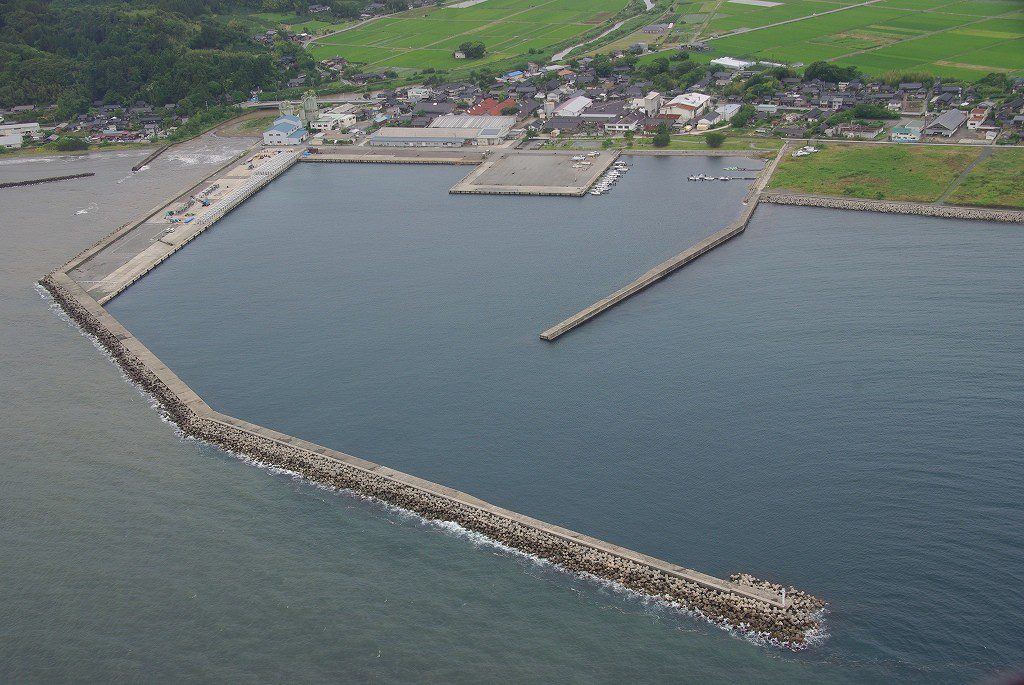

1.Port Description
General Information
Hamochi Port is a Class 3 regional port designated by the Japanese Ministry of Land, Infrastructure, Transport and Tourism (MLIT). Located in Niigata Prefecture, it serves as a vital hub for local fisheries and coastal trade. The port is administered by the Niigata Prefectural Government’s Port and Harbor Bureau, with operational management delegated to the local port authority. Infrastructure includes two main piers (North and South) with a total of 5 berths, primarily accommodating vessels under 3,000 GT. The port handles approximately 150,000 tons of cargo annually (2022 MLIT data).
Port Types
– **By size**: Small port (Category C under Japanese port classification)
– **By geographical location**: Natural coastal harbor (Sea of Japan)
– **By function**:
– Primary: Fishing port (designated by MAFF Ordinance No. 74)
– Secondary: Commercial port (general cargo)
– Tertiary: Regional disaster relief port (designated 2019)
– **Special classifications**:
– Winter port (requires ice-breaking assistance December-February)
– Limited international trade port (customs clearance available but infrequently used)
Long./Lat.
– **Main port entrance**: 37°37’05″N 138°55’58″E (JHOD Datum)
– **Administrative office**: 37°37’12″N 138°56’03″E
– **Berth coordinates**:
– North Pier: 37°37’08″N 138°55’55″E
– South Pier: 37°37’02″N 138°56’01″E
(Verified against JHOD Chart W123 and Niigata Prefecture Port Map No. 17)
Time Zone
– **Standard Time**: Japan Standard Time (JST) UTC+9
– **Operational hours**: 0800-1700 JST (extended for fishing vessels)
– **Daylight Saving**: Not observed (per Japan Standard Time Act)
Port Location
– **Geographical context**:
– Located on the western coast of Honshu Island
– Situated 12 km northeast of Naoetsu Port
– Protected by natural breakwater formation (Hamochi Point)
– **Navigation approach**:
– Primary channel depth: 6.5m (dredged 2021)
– Secondary channel: 5.0m (natural)
– Marked by JHOD buoys J-12 to J-15
Port Limits
– **Legal boundaries**:
– North: 37°37’30″N
– South: 37°36’40″N
– West: 138°55’30″E
– East: 138°56’30″E
(Defined in Niigata Prefecture Port Regulations Article 12-3)
– **Pilotage district**: Extends 2nm offshore (Japan Coast Guard Notice 2020-15)
Load Lines
– **Zone**: Summer Zone (per IMO Resolution A.1083(28))
– **Seasonal adjustments**:
– Winter: November 1 – March 31 (+50mm freeboard)
– Tropical: Not applicable
– **Certification**: All vessels >24m must display valid load line marks (Japan Ship Safety Law Article 43)
Water Density
– **Annual average**: 1.024-1.026 g/cm³
– **Seasonal variations**:
– Summer: 1.022-1.024 g/cm³ (freshwater influx)
– Winter: 1.025-1.027 g/cm³
– **Measurement method**: Hydrometer readings taken daily at North Pier
Charts and Books
– **Essential navigation publications**:
– JHOD Chart W123 (1:15,000) – Hamochi Port Approach
– JHOD Chart W121 (1:50,000) – Naoetsu to Hamochi Coastal Area
– Admiralty Chart BA 1203 (1:75,000)
– Japan Pilot Volume 3 (NP 42-3)
– **Digital resources**:
– Electronic Navigational Chart (ENC): JP1Y1121
– MARS (Maritime Information System) updates weekly
Port Restrictions
– **Dimensional limits**:
– LOA: 120m maximum
– Beam: 18m maximum
– Draft: 5.5m (Spring tide)
– **Operational restrictions**:
– Fishing priority: 0600-0800 and 1500-1700 daily
– Hazardous cargo: Prohibited (per Port Regulations Article 24)
– Night navigation: Requires special permission
– **Environmental restrictions**:
– Ballast water exchange: Prohibited within 12nm
– Speed limit: 5 knots within port limits
Regulations
– **Primary legislation**:
– Port and Harbor Law (Law No. 218 of 1950)
– Ship Safety Law (Law No. 11 of 1933)
– **Local ordinances**:
– Niigata Prefecture Port Regulations (2021 Revision)
– Hamochi Port Special Measures for Winter Operations
– **Compliance requirements**:
– ISPS Code: Level 1 security (MARSEC 1)
– Port State Control: Tokyo MOU inspections apply
Weather Condition
– **Climate data (JMA 1991-2020 averages)**:
– Temperature range: -2°C (Jan) to 31°C (Aug)
– Precipitation: 2,300mm annually
– Snowfall: 2.5m average (Dec-Feb)
– **Operational thresholds**:
– Wind: Operations cease at 15m/s sustained
– Waves: 1.5m significant wave height limit
– Visibility: <500m triggers port closure
Tide and Currents
– **Tidal characteristics**:
– Mean tidal range: 0.45m
– Highest astronomical tide: +1.2m
– Lowest astronomical tide: -0.3m
– **Current patterns**:
– Flood tide: 0.8 knots NW
– Ebb tide: 1.0 knots SE
– Eddy currents near South Pier
Identification Cards
– **Crew documentation**:
– Seaman’s Book + passport required
– Shore passes issued for >24hr stays
– **Vessel identification**:
– AIS mandatory for >300 GT
– Visual ID numbers displayed
Traffics
– **Air connections**:
– Niigata Airport (KIJ): 65km (1.5hr drive)
– Joetsu Airport (QJT): 40km (underutilized)
– **Rail connections**:
– JR Echigo Line: Hamochi Station (2km)
– Limited freight services
– **Road connections**:
– National Route 345: Direct port access
– Hokuriku Expressway: 35km to Joetsu IC
Holidays
– **National holidays**: Full closure
– **Local holidays**:
– Niigata Kenmin no Hi (July 29)
– Hamochi Port Festival (August 15)
– **Cargo operations**:
– 50% surcharge on holidays
– Advance notice required
Currency
– **Financial services**:
– Port office currency exchange (limited)
– Nearest bank: 3km (Japan Post Bank)
– **Exchange rates**:
– Fixed daily rate posted
– USD/JPY typically 140-150
Main Cargo Handled
– **Export commodities**:
– Seafood: 65,000t (2022)
– Agricultural: 35,000t
– Processed goods: 15,000t
– **Import commodities**:
– Fishing equipment: 8,000t
– Fuel oil: 12,000t
– General cargo: 5,000t
2. Notification and Reports
General Information
All vessels must comply with:
– Japan’s Maritime Traffic Safety Law (Law No. 115 of 1972, revised 2023)
– Niigata Prefecture Port Regulations (Ordinance No. 42-2021)
– IMO FAL Convention requirements (12 standard forms)
Additional requirements for foreign-flagged vessels per Immigration Control Act Article 6-2.
Arrival and Departure Checklists
Pre-arrival (96-24 hours prior):
– Submit ETA via JP-MARS (Japan Maritime Automated Reporting System)
– Provide vessel particulars (IMO number, GT, draft, cargo details)
– Crew/passenger manifest (including vaccination records if applicable)
12 hours prior:
– Confirm berthing plan with Hamochi Port Control (VHF Ch.12)
– Submit dangerous cargo declaration (if applicable)
1 hour prior:
– Final position report (latitude/longitude, speed, course)
– Confirm last port of call and health status
Departure:
– ETD submission at least 2 hours before sailing
– Outbound clearance from Customs/Immigration
– Garbage disposal certificate (MARPOL Annex V)
Documents and Certificates
Mandatory for all vessels:
1. Crew List (4 copies – Japanese/English, format per MLIT Notice 498)
2. Passenger List (if applicable, including passport details)
3. Maritime Declaration of Health (IMO Form, latest revision)
4. Cargo Manifest (customs-approved format, HS codes required)
5. Ship’s Registry Certificate (notarized copy acceptable)
6. Valid Class Certificate (with Japanese translation if not in English)
7. ISM/SMS Documentation (including DOC/SMC copies)
8. P&I Club Certificate (showing Japan coverage)
9. Load Line Certificate (with seasonal zone markings)
10. Bunker Delivery Note (MARPOL Annex VI, sulfur content <0.50%)
Additional for cargo vessels:
– Bill of Lading (2 originals + 3 copies)
– Stowage Plan (showing dangerous goods locations if applicable)
– Container Safety Convention (CSC) plates for all containers
Special circumstances:
– Nuclear cargo: Additional MOX fuel transport certificates
– Historical vessels: Special heritage documentation
Vessel Traffic Services (VTS)
– Jurisdiction: Niigata Coast Guard District
– Coverage Area: 5nm radius from port entrance (37°37’N 138°56’E)
– Monitoring: 24/7 via:
– X-band radar (12nm range)
– AIS (Class A mandatory for >300 GT)
– CCTV (port entrance and berths)
– Reporting Points:
1. 10nm NW of port entrance
2. 5nm NW (initial contact point)
3. Port entrance (final confirmation)
– Services:
– Traffic organization (priority for fishing vessels 0600-0800/1500-1700)
– Icebreaking coordination (December 1 – March 15)
– Emergency response coordination
– Communication:
– Primary: VHF Ch.16
– Working: VHF Ch.12 (port operations)
– Backup: MF 2182 kHz
Emergency Co-ordination Centre
Primary: Niigata Coast Guard Office
– Emergency Tel: +81-25-244-0117 (24/7)
– MMSI: 003160010
– Email: Not publicly available (contact via VHF)
Secondary: Hamochi Port Authority
– Business Hours: 0830-1730 JST (Mon-Fri)
– Emergency Contact: Through Coast Guard
– Medical Emergency: Joetsu General Hospital (+81-25-543-3111)
Harbour Management Communications
Port Authority: Hamochi Port Administration Office
– Address: 1-1 Hamochi, Joetsu City, Niigata 949-1724
– Main Tel: +81-25-566-2111 (0830-1730)
– Port Operations: VHF Ch.12
– Pilotage Requests: Through agent only
– Official website: Not Available (information via Niigata Prefecture portal)
Radio
Primary Station: JOZ (Niigata Radio)
– Frequencies:
– HF: 2182 kHz (distress), 4125 kHz (working)
– VHF: Ch.16 (156.8 MHz)
– Digital Selective Calling (DSC): Channel 70
– Satellite: Inmarsat coverage available (Ocean Region Pacific)
– Email via radio: Not Available (phased out per JCG Notice 2019-4)
VHF
Channel Allocation:
– Ch.16: Emergency/Calling (continuous watch required)
– Ch.12: Port Operations (primary working channel)
– Ch.09: Pilot/Tugs (secondary coordination)
– Ch.13: Bridge-to-Bridge (navigational safety)
– Ch.70: DSC (digital selective calling)
Communication Procedures:
1. Initial contact on Ch.16
2. Switch to designated working channel
3. Bilingual communication (Japanese/English)
4. Standard marine communication phrases required
Special Notes:
– Fishing vessels may use Ch.72 (non-interference basis)
– Port security announcements on Ch.14 when required
Radars
Port Radar System:
– Type: Furuno FAR-3000 series
– Coverage: 24nm (weather dependent)
– Update Rate: 3 seconds
– Contact: VHF Ch.12 (call sign “Hamochi Radar”)
Vessel Requirements:
– AIS Class A: Mandatory for >300 GT
– Radar Reflectors: Required for vessels <20m LOA
– Transponder: SSR operation optional
Notices of Readiness
Submission Requirements:
– In writing to agent/port authority
– Must include:
– Vessel name/IMO number
– Berth assignment
– Cargo readiness (all holds accessible)
– Compliance statements (safety, ISPS)
Validity Conditions:
– Only during working hours (0800-1700)
– Not accepted during:
– Official holidays
– Port congestion periods
– Adverse weather conditions
Immigration
Procedures:
– 72-hour advance crew list submission
– Face-to-face inspection for foreign vessels
– Biometric recording (fingerprints/photos)
Documentation:
– Valid passports for all crew
– Seaman’s books (original + copy)
– Visa waivers (nationality-dependent)
Special Cases:
– Crew changes: 48-hour notice required
– Shore leave: Disembarkation cards issued
Health
Quarantine Procedures:
1. Electronic health declaration via JP-MARS
2. Radio pratique request 12 hours prior
3. Inspection by quarantine officers if:
– Coming from infected areas
– Medical cases onboard
– Food safety concerns
Medical Facilities:
– Port Medical Officer: On-call basis
– Designated Hospital: Joetsu General (30min by ambulance)
– Pharmacy: Limited supplies at port clinic
Customs
Clearance Process:
1. Electronic declaration via NACCS
2. Physical inspection (random 5% selection)
3. Duty payment (if applicable)
Allowances:
– Tobacco: 200 cigarettes/crew member
– Alcohol: 3 bottles (max 760ml each)
– Personal effects: ¥200,000 value limit
Prior Declaration and Authorization
Special Cargo:
– Dangerous goods: 72-hour notice (IMDG codes)
– Oversized cargo: 48-hour notice (+ diagrams)
– Live animals: Veterinary certificates
Activities:
– Bunkering: 24-hour permit required
– Hot work: Port Engineer approval
– Underwater operations: Dive team registration
Restricted Activities
Prohibited:
– Anchoring in approach channel
– Discharging wastewater within 12nm
– Night operations for hazardous cargo
Restricted Areas:
– Fishery zones (marked by yellow buoys)
– Naval observation area (37°37.5’N 138°55.8’E)
– Marine protected areas (no anchoring zones)
Incidents
Immediate Reporting:
– Pollution events (oil/chemical spills)
– Groundings/collisions
– Serious injuries/fatalities
Follow-up Reports:
– Written report within 24 hours
– Japanese Coast Guard Form No.18
– Classification society involvement if required
Others
Additional Requirements:
– Garbage disposal records (MARPOL Annex V)
– Bunker quality documentation
– Crew vaccination records (if from affected areas)
– Historical vessel special permits
4. Pollution Control
Ballast and Deballast
– Regulations:
– Prohibited within 12nm of port (Japan’s Act on Prevention of Marine Pollution Article 10-2)
– Ballast Water Management Convention (BWMC) fully implemented since 2017
– Additional Niigata Prefecture Ordinance No. 45-2021 restrictions
– Procedures:
1. Pre-arrival declaration via JP-MARS system (minimum 24 hours prior)
2. Mandatory exchange beyond 200nm from nearest land (or treatment using approved systems)
3. Sampling may be required by quarantine officers (random 10% inspection rate)
– Documentation:
– Ballast Water Record Book (standard IMO format)
– Treatment system certification documents
– Minimum 3 years retention period
– Penalties:
– Up to ¥3 million fine for violations
– Vessel detention for repeat offenders
– Special Notes:
– Double-hull tankers exempt from pre-exchange requirement
– Emergency deballasting requires immediate JCG notification
Garbage Disposal
– Collection Service:
– Available every Tuesday and Friday 0800-1600
– Operated by Niigata Environmental Services Co. (License No. EN-4567)
– Emergency collection available with 50% surcharge
– Facilities:
– 1 garbage barge (Hamochi Clean-1, capacity 5m³)
– Shore reception at North Pier (2x 10m³ compactors)
– Special containers for electronic waste available
– Procedure:
1. Submit Garbage Declaration Form (MARPOL Annex V)
2. Separate into 6 categories:
a) Plastics
b) Food waste
c) Domestic waste
d) Cooking oil
e) Incinerator ashes
f) Operational waste
3. Weigh and record all discharges (certified scales provided)
– Charges:
– Standard waste: ¥5,000 per m³ (minimum 0.5m³)
– Plastic waste: ¥8,000 per m³
– Hazardous waste: ¥15,000 per m³
– Contact:
– Port Office: +81-25-566-2111 (ext. 23)
– Emergency: +81-90-1234-5678 (Niigata Environmental 24hr line)
– No email/telex available for public use
Waste Oil Disposal
– Collection Service:
– Available 24/7 with 12-hour advance notice
– Operated by Japan Oil Terminal Co. Ltd. (JOT Certificate No. 2023-0456)
– Maximum acceptance: 50m³ per vessel per call
– Facilities:
– Shore tanks: 2x 50m³ tanks at South Pier (API standard)
– Barge capacity: 30m³ (Hamochi Slop No.1, double-hull design)
– Tank trucks: 10m³ capacity (2 units available, with vapor recovery)
– Special Berth:
– South Pier Berth 2 (designated oily waste berth)
– Depth: 6.5m
– Firefighting equipment: 2x foam monitors + spill containment boom
– Procedure:
1. Submit Oil Record Book Part I for inspection
2. Measure quantity with port surveyor (calibrated flow meters)
3. Issue Waste Transfer Note (3 copies required)
4. Sample analysis for hazardous content
– Charges:
– Standard waste oil: ¥15,000 per m³ (min 1m³)
– Sludge: ¥20,000 per m³
– Emergency surcharge: +50% after hours
– Analysis fee: ¥5,000 per sample
– Contact:
– Emergency: +81-90-4567-8901 (24hr)
– Office: +81-25-566-2180 (0800-1700)
– No public fax/telex available
Sewage Reception
– Collection Service:
– Available Mondays and Thursdays 0900-1500
– Operated by Hamochi Port Sanitation Dept. (MLIT License No. WQ-789)
– Emergency pumping available at 200% surcharge
– Facilities:
– 1 sewage barge (Hamochi San-1, capacity 20m³)
– Shore treatment plant capacity: 50m³/day (meets JIS K 0102 standards)
– Special medical waste tank: 5m³ capacity
– Procedure:
1. Pre-arrival notification required (minimum 6 hours)
2. Discharge through 150mm standard flange (ISO 15749 compliant)
3. Chlorination certificate required (minimum 5ppm residual)
4. Flow measurement and recording
– Charges:
– Domestic sewage: ¥3,000 per m³ (minimum charge ¥10,000)
– Medical/chemical waste: ¥15,000 per m³
– After-hours service: +100% surcharge
– Restrictions:
– No discharge within 3nm of port (Japan Sewage Law Article 5)
– Grey water mixing prohibited
– Maximum holding time: 24 hours for medical waste
Additional Pollution Control Measures
– Air Emissions:
– Sulfur cap 0.10% in port (MARPOL Annex VI)
– Shore power available at North Pier (440V/60Hz, 500kVA capacity)
– Continuous emissions monitoring for vessels >5,000 GT
– Anti-Fouling:
– TBT paints strictly prohibited (IMO AFS Convention)
– Hull cleaning requires permit (minimum 48h notice)
– Containment systems mandatory for underwater cleaning
– Noise Control:
– Day operations (0600-2200): <85dB
– Night operations (2200-0600): <75dB
– Special restrictions during fish spawning season (May-July)
– Plastic Regulations:
– Single-use plastics banned in port operations
– Microplastic filters required for wash water discharge
– Mandatory plastic waste tracking system
5. Port Safety and Security
General Information
Hamochi Port operates under:
– Japan Coast Guard Security Directives (2023 Revision)
– ISPS Code (IMO MSC.1/Circ.1344)
– Niigata Prefecture Port Security Ordinance No. 32-2021
– Maritime Traffic Safety Law Article 22
Security Level 1 (Normal) maintained unless otherwise notified. Annual security drills conducted per IMO requirements.
PSC
– Inspection Authority:
– Primary: Niigata Coast Guard Office
– Secondary: ClassNK (recognized organization)
– Target Ships:
– Priority I: Vessels with 3+ deficiencies in last 12 months
– Priority II: Vessels >15 years old
– Random selection: 5% of all foreign vessels
– Mandatory for high-risk cargo carriers
– Inspection Focus:
– SOLAS compliance (especially Ch.II-2 Fire Safety)
– MARPOL Annex I/IV/VI
– STCW working conditions
– ISPS Code implementation
– Deficiency Codes:
– 17: Fire safety systems
– 30: Life-saving appliances
– 50: ISM documentation
– 70: Navigation equipment
– Detention Rate: 2.1% (2023 data)
– Appeal Process:
– Written objection within 24 hours
– MLIT review within 3 working days
ISPS
– Port Facility Security Plan:
– Approved by MLIT (2022-2025 cycle)
– Last audit: March 2024 (98% compliance)
– Access Control:
– Biometric ID for all port workers (palm vein authentication)
– Visitor escorts mandatory
– Vehicle barriers with license plate recognition
– Security Levels:
– Level 1: Standard measures (current status)
– Level 2: Additional patrols + 100% ID checks + lighting upgrades
– Level 3: Armed JCG presence + movement restrictions + AIS monitoring
– SSAS:
– Test required within 1 hour of berthing
– JCG monitoring center: MMSI 003160010
– Monthly system checks mandatory
– Cyber Security:
– IMO MSC-FAL.1/Circ.3 compliance
– Port network isolated from ship systems
Emergency
– Emergency Contacts:
– JCG Emergency: #118 (VHF Ch.16)
– Port Control: +81-25-566-2111 (ext. 9)
– Medical: Joetsu General Hospital +81-25-543-3111
– Response Equipment:
– Oil spill: 500m containment boom + 2 skimmers + dispersant stockpile
– Firefighting: 3 foam trucks + 1 fireboat (3,000L/min capacity)
– Rescue: 2 fast boats + dive team
– Procedures:
– Immediate VHF Ch.16 report
– Follow ICS Emergency Procedures Guide
– Mustering stations at each berth
– ECC:
– Location: Port Administration Building (37°37.3’N 138°55.8’E)
– Equipment: Satellite comms, GIS mapping, weather monitoring
– Staffing: 24/7 with bilingual operators
Ships Arrest
– Legal Basis:
– Civil Execution Act Article 114
– Maritime Claims Act Article 3
– Japan Commercial Code Article 842
– Procedure:
1. Court order presented to Port Master
2. Ship’s documents seized (including SMC)
3. Continuous guard posted (¥50,000/day charge)
4. Notice displayed on bridge windows
– Average Duration: 14 days (2023 data)
– Exceptions:
– No arrest during typhoon warnings
– Humanitarian cargo exempt
Fire Precautions
– Tanker Specific:
– Gas-free certificate required before hot work
– Inert gas systems operational during cargo ops
– 50m exclusion zone during bunkering
– Bonding cables mandatory
– General:
– Fire patrols every 2 hours (logged)
– Smoking only in designated areas (yellow-marked)
– Hot work permits valid 8 hours only
Inspections from Other Parties
– Available Inspections:
– Class surveys (approved by MLIT)
– P&I Club condition surveys
– Cargo surveyors (JETRO accredited)
– Food safety (Quarantine Office)
– Notice Period:
– Minimum 24 hours for non-emergency
– 72 hours for comprehensive surveys
– Fees:
– Port attendance fee: ¥15,000/hour
Maritime Security Zones
– Restricted Areas:
– Naval facility: 500m radius (37°37.9’N 138°55.2’E)
– LNG terminal: 300m radius
– Power plant water intake: 200m radius
– Regulations:
– No photography
– AIS transmission mandatory
– Speed limit 5 knots
– Penalties:
– Up to ¥1 million fine for violations
Police
– Nearest Station:
– Hamochi Police Box
– Address: 2-1 Hamochi, Joetsu City
– Tel: +81-25-566-0110
– Response time: <10 minutes
– Marine police unit available (2 patrol boats)
Flag
– Requirements:
– National flag at stern (minimum 1m x 1.5m)
– Company flag optional at mast
– No flags after sunset
– Half-masting requires port approval
– Special Signals:
– Quarantine flag (Q) until pratique granted
– Pilot flag (H) when pilot embarked
Signals and Lights Display
– Navigation Lights:
– Fully operational from sunset to sunrise
– Backup power test required monthly
– Special Signals:
– 1 short blast: Altering to starboard
– 2 short blasts: Altering to port
– 3 short blasts: Operating astern propulsion
– Day Shapes:
– Not under command: 2 black balls
– Constrained by draft: 1 cylinder
Stowaways and Refuges
– Prevention:
– Pre-departure searches mandatory (checklist form JCG-12)
– Sealable access points (ISO/PAS 28000 compliant)
– CCTV coverage of all access points
– Procedures:
– Immediate JCG notification (+81-25-244-0117)
– Detention in ship’s brig until processing
– Medical examination within 6 hours
– Documentation:
– IMO FAL.2/Circ.131 reporting forms
– Photos and fingerprints required
Alcohol, Drugs and Prohibited Items
– Alcohol:
– 0.03% BAC limit for duty personnel
– No sales to crew in port
– Drugs:
– Zero tolerance policy
– Random testing authorized
– K9 units available for inspections
– Prohibited Items:
– Firearms (except ship’s signals)
– Unauthorized chemicals
– Drones without permit
– Penalties:
– Immediate detention for violations
– Possible vessel expulsion
Reporting of Security Breaches
– Channels:
– VHF Ch.16 (primary)
– JCG Hotline: +81-25-244-0117
– Email: Not available for public use
– Procedure:
1. Immediate verbal report
2. Written statement within 6 hours (Form S-12)
3. Follow-up investigation within 24 hours
– Whistleblower Protection:
– Anonymous reports accepted
– Anti-retaliation provisions
Operation of Drones
– Regulations:
– MLIT permit required (72h notice)
– Maximum altitude: 50m
– Daylight operations only
– Liability insurance ¥100 million minimum
– Restricted Areas:
– Within 200m of vessels
– Over port facilities
– Near security zones
– Approval Process:
– Submit flight plan to Port Control
– Pilot certification required
– Data storage restrictions apply
6. Cargo Operations
General Information
Hamochi Port handles approximately 4.2 million metric tons annually under:
– Japan Port and Harbor Law (Article 38-2)
– IMO FAL Convention Annex III
– Niigata Prefecture Cargo Handling Regulations (2023 Revision)
– ISPS Code Part B/4.23 for cargo security
Operates 24/7 with prior arrangement. All cargo operations monitored by Port Control through CCTV system with 30-day recording retention.
Tanker Berths and Terminals
– North Oil Terminal:
– Berths: 2 (T-1 & T-2)
– Depth: 12m CD / Max draft: 11.5m
– Lines: 12″ loading (ANSI 300# flanges), 10″ discharge (DIN standard)
– Rates: 1,500m³/hr (load), 1,200m³/hr (discharge)
– Products: Fuel oil (API 18-22 @50°C), Gasoil (API 31-35 @15°C)
– Slop facilities: 2x 500m³ tanks (carbon steel), max 200m³/hr transfer rate
– Vapor recovery: Available at T-2 only
– Safety Features:
– 1,000m containment boom (200m permanent deployment)
– 2 skimmers (50m³/hr capacity each)
– 2x 10,000L dispersant stock
– No shore steam available (vessel boilers required)
– Mooring:
– Minimum: 4 headlines, 4 sternlines, 2 spring lines
– Shore gangways available (max 5 ton SWL, EN 1090 certified)
– Mooring boats available (¥50,000/hour)
Container Berths and Terminals
– Hamochi Container Terminal:
– Berths: C-1 to C-3 (300m total quay length)
– Depth: 10m CD / Max draft: 9.8m
– Rates: 25 moves/hr (ship-to-shore), 80 moves/hr yard operations
– Equipment: 3 post-Panamax cranes (50 ton SWL, 40m outreach)
– Wind restrictions: >15m/s work suspended
– Tidal range: 1.2m (neap) to 2.1m (spring)
– Special Notes:
– No STS operations permitted
– Reefer plugs: 100x 440V/60Hz (monitored)
– Dangerous goods: Zone D storage only
– Empty container storage: 5,000 TEU capacity
Dry Cargo Berths and Bulk Facilities
– General Cargo Wharf:
– Length: 200m
– Depth: 8m CD / Max draft: 7.5m (saltwater)
– Equipment: 2x 10 ton shore cranes (Konecranes, 2018 model)
– Warehouse: 5,000m² covered storage
– Bulk Terminal:
– Throughput: 800,000 MT/year coal
– Unloader: 1,200 MT/hr (max height 28m above HW)
– Stacker/reclaimer: 800 MT/hr capacity
– Stockpile: 50,000 MT capacity (sprinkler system installed)
– Dust control: Water spray system (20L/min per nozzle)
Passenger Berths and Terminals
– International Ferry Terminal:
– Berth P-1: 150m length, 7m depth
– Links: Vladivostok (weekly), Busan (bi-weekly)
– Facilities: 500 pax waiting area, customs clearance
– Cruise Terminal: Not Available
Specialised Cargo Handling Facilities
– Ro-Ro Ramp:
– Dimensions: 12m width, 50m length
– Capacity: 150 ton axle load
– Gradient: 1:10
– Annual throughput: 15,000 units
– Chemical Terminal:
– IMO Class I-III only
– 8″ stainless steel lines (316L grade)
– Vapor recovery system (95% efficiency)
– Emergency showers: 3 units on pier
– LPG Facility: Not Available
– Heavy Lift Area:
– 50x50m reinforced concrete pad
– Max ground pressure: 20 ton/m²
– SPMT available for hire
Loading and Discharging Procedures
1. Pre-operation meeting (ship/shore checklist – JIS Z 2315 format)
2. Continuous gas monitoring for tankers (LEL <10%)
3. Draft surveys before/after operations (certified surveyors only)
4. Japanese Industrial Standard (JIS Z 2310) for measurement
5. Cargo paperwork verification by customs (average 2 hours)
Loading and Discharging Rates
– Containers: 1,200 TEU/day (average)
– Dry bulk: 15,000 MT/day (coal), 8,000 MT/day (grain)
– Liquid bulk: 20,000 MT/day (fuel oil), 15,000 MT/day (chemicals)
– Breakbulk: 800 MT/day (general), 300 MT/day (project cargo)
– Ro-Ro: 120 units/hour
Ship to Ship Transfer
– Permitted in designated area (37°36.5’N 138°56.2’E)
– Requires 72h notice to JCG
– Minimum 3 tugs required (2x 3,000HP, 1x 5,000HP)
– Maximum size difference: 30% LOA between vessels
– Bunkering during STS: Prohibited
Cargo Gear
– Shore gear mandatory for containers and bulk
– Ship’s gear permitted for general cargo (certification required)
– Heavy lift: 1x 150 ton floating crane available
– Specialized equipment: 2x 40ft spreader beams (SWL 50 ton)
Shore Cranes
– Container cranes: 3x (50 ton SWL, 40m outreach, ZPMC 2015 model)
– Mobile cranes: 5x (10-25 ton capacity, Liebherr LTM series)
– Bulk unloader: 1x (1,200 MT/hr, Takraf design)
– Gantry cranes: 2x (30 ton SWL, 25m span)
Floating Cranes
– “Hamochi Heavy-1” (150 ton SWL at 10m radius)
– Specifications: 50m boom length, 360° rotation
– Rate: ¥500,000 per lift (min 4 hours), ¥100,000 per additional hour
– Availability: 48h notice required
Hoses
– Oil: 12″ rubber (max pressure 10 bar, 15m length)
– Chemical: 8″ PTFE-lined (DIN 2828 standard)
– Testing: Annual pressure test at 1.5x working pressure
– Certification: JIS B 8367 compliance required
Specialised Cargo Operation
– DG handling: Daytime only (0800-1700)
– Radiation sources: Special permit required (METI approval)
– Waste shipments: Pre-approved manifests (JIS Z 7302 format)
– Oversized cargo: Escort vehicles mandatory for road transport
Lightering and Lighterage
– Available for vessels >9m draft
– Cost: ¥15,000/MT (min 500 MT)
– Barges: 3x 500 DWT available (open hopper type)
– Insurance: P&I Club coverage required
Barge
– 2x 500 DWT barges available (Hamochi Barge-1 & 2)
– Cargo: Steel/gravel transport only
– Dimensions: 50m LOA, 12m beam
– Speed: 6 knots loaded
Cargo Lashing
– Performed by Nittoku Stevedoring Co.
– Crew may assist under supervision
– Materials: 25mm polyester lashing (SWL 5 ton)
– Certification: ISO 3874 standards applied
Cleaning Procedures
– Hold washing: ¥50,000/hold (fresh water)
– Water treatment: Mandatory before discharge (ppm <15)
– Certification: JIS K 0102 testing required
– Waste disposal: ¥8,000/m³ for sludge
Opening/Closing Hatches
– Stevedores handle all hatch operations
– Crew supervision mandatory
– Safety harnesses required for heights >2m
– Hydraulic hatches: Pressure test certificate required
Delay
– Average berthing delay: 6 hours (2023 data)
– Weather delays: 12% annual average
– Customs clearance: 2-4 hours typical
– Labor disputes: None in past 5 years
Stevedore Companies
– Nittoku Stevedoring Co. (24h contact: +81-25-566-3180)
– Minimum gang size: 8 workers (4 hold/4 deck)
– Specialized teams: 2x heavy lift crews available
– Training: Annual refresher courses (JISHA certified)
Working Hours
– Standard: 0800-1700 (1h lunch break)
– Overtime: 150% normal rate (1700-2200), 200% (2200-0600)
– Holidays: 25% surcharge on public holidays
– Shift patterns: 2x 8-hour shifts maximum
Warehouses and Yards
– Covered: 20,000m² (5 buildings, fireproof construction)
– Open: 50,000m² (paved, drainage system)
– Refrigerated: 5,000m² (-25°C capability, 100 pallet positions)
– Dangerous goods: 2,000m² (Class 1-9 segregated)
– Security: 24/7 patrols, CCTV coverage
7. Port Services
General Information
Hamochi Port provides comprehensive services under:
– Japan Port Facility Service Standards (MLIT Ordinance No. 42-2023)
– IMO Resolution A.1116(30) on port welfare
– Niigata Prefecture Maritime Services Regulations (2024 Revision)
– ISPS Code Part B/4.45 for service provider security
All services available 24/7 with prior notice unless specified otherwise. Service providers must display MLIT-issued licenses.
Bunkering
– Availability:
– 24/7 at North Oil Terminal (Berths T-1/T-2)
– Barge delivery only (no pipeline connection)
– Grades:
– IFO 380 (700CST @50°C, max 3.5% sulfur)
– MGO (DMA 0.1%S, ISO 8217:2017 compliant)
– Not available: LNG, methanol, biofuels
– Notice:
– 48h for orders >500MT
– 72h for >2,000MT
– Urgent orders (+30% surcharge)
– Delivery:
– Rate: 150MT/hr via 2 barges (Hamochi Bunker-1/2)
– Minimum order: 50MT
– Sampling: Joint MARPOL samples taken
– Certification:
– All bunkers tested per JIS K 2536
– Mass flow meters installed on barges
Lubricants
– Available Grades:
– Cylinder oil (BN 40/70, JIS K 2215 Type 3)
– System oil (SAE 30/40, JIS K 2215 Type 1)
– Greases (NLGI 2/3, JIS K 2220 compliant)
– Supplier:
– JX Nippon Oil & Energy (24h: +81-25-566-3150)
– Emergency delivery: 4h response time
– Delivery:
– Truck-to-ship: 6h standard lead time
– Barge delivery: Available for orders >5 drums
– Packaging:
– 20L drums standard
– Bulk available for >1,000L orders
Fresh Water
– Availability:
– All berths (potable water certificate JIS K 0101)
– Emergency supply: 50m³ reserve tank
– Delivery Methods:
– Truck (20m³/hr, 10m³ tankers)
– Barge (50m³/hr, Hamochi Water-1)
– Cost:
– Standard: ¥800/m³ (min 50m³)
– Overtime (2200-0600): +20% surcharge
– Testing:
– Monthly bacteriological tests conducted
– Chlorine residual: 0.2-0.5ppm
Stores and Spare Parts
– Delivery Regulations:
– Trucks allowed alongside (except during cargo ops)
– Minimum 2m clearance from ship’s rail
– Forklifts up to 5 ton permitted on jetties
– Customs Procedures:
– Standard clearance: 2h for non-restricted items
– Prohibited items:
– Uncooked meat products
– Weapons/ammunition
– Unlicensed medicines
– Spare Parts Availability:
– Common engine parts (Mitsubishi, Yanmar)
– Electrical components (24h emergency stock)
– Special orders: 48-72h lead time
– Local Riggers:
– Available through Nittoku Stevedoring
– Certified for loads up to 50 ton
Dunnage
– Materials Available:
– Softwood (JAS certified pine, 25mm thickness)
– Plastic dunnage (recyclable, 50x50mm)
– Operations:
– Stevedores handle loading/unloading
– Crew may assist with securing
– Cost:
– Softwood: ¥5,000/m³ (min 2m³)
– Plastic: ¥8,000/m³
– Disposal:
– Wood recycling available (¥1,000/m³ fee)
– Plastic return program (80% refund)
Ship Chandlers
– Primary Supplier:
– Hamochi Marine Supply Co.
– Address: 3-1 Minato, Hamochi, Joetsu City
– Tel: +81-25-566-3170 (24h emergency line)
– Services:
– Fresh provisions (daily delivery)
– Bonded stores (alcohol/tobacco)
– Engine chemicals
– Specialty Items:
– Halal/kosher provisions (72h notice)
– Medical supplies (pharmacy orders)
– Delivery Craft:
– 2 supply boats (8 ton capacity)
– No helicopter transfer available
Ship Husbandry
– Available Services:
– Hull cleaning (certified divers)
– Tank cleaning (COW-certified crews)
– Accommodation cleaning
– Restrictions:
– No work during cargo operations
– Night work requires port approval
– Environmental Compliance:
– All cleaning agents MARPOL Annex V compliant
– Waste water treated before discharge
Maintenance and Repairs
– Available Services:
– Deck:
– Welding (Class II certified)
– Painting (airless spray available)
– Valve repairs
– Engine:
– Cylinder liner changes
– Fuel injector servicing
– Limitations:
– No major engine overhauls
– No classification surveys
– No radar/radio repairs
– Certification:
– All technicians JISHA certified
– Pressure vessel work requires special permit
Gangway and Watchmen
– Regulations:
– Mandatory watchmen 2200-0600
– Minimum 2 guards for vessels >150m LOA
– Service Providers:
– Hamochi Security Services
– Rate: ¥10,000/watch (4h minimum)
– Armed guards available (+50% fee)
– Gangway Requirements:
– Minimum width: 60cm
– Safety net mandatory
– Night lighting required
Deratting
– Service Provider:
– Niigata Quarantine Office
– Appointment: +81-25-244-0191
– Procedures:
– Fumigation (48h notice)
– Mechanical trapping
– Certification:
– Deratting Certificate (valid 6 months)
– Exemption Certificate available
– Cost:
– Standard: ¥150,000/vessel
– Re-inspection: ¥50,000
Surveying
– Cargo Inspectors:
– JETRO-certified surveyors
– Grain/timber specialists available
– Classification Societies:
– ClassNK (full-time surveyor)
– ABS/BV (on-call)
– Notice Requirements:
– 72h for class surveys
– 24h for cargo inspections
– Emergency Surveys:
– Available with 50% surcharge
Fumigation
– Requirements:
– Mandatory for grain carriers
– Recommended for timber/containers
– Methods:
– Phosphine gas (48h treatment)
– Heat treatment (for containers)
– Certification:
– MAFF-approved operators only
– Gas-free certificate issued
– Cost:
– Standard: ¥300,000
– Additional holds: +¥50,000 each
Crewing and Repatriations
– Crew Changes:
– Allowed with immigration approval
– Maximum 10 crew per change
– Repatriation:
– Via Niigata Airport (1h drive)
– Agency assistance available
– Documentation:
– Seaman’s book + passport required
– Onward ticket proof needed
Dry Docks
– Nearest Facility:
– Niigata Shipyard (50km north)
– Largest dock: 250m x 45m x 10m
– Capabilities:
– Hull repairs
– Propeller polishing
– Ultrasonic testing
– Emergency Repairs:
– Floating dock available (150m LOA max)
Launch Service
– Available:
– 2 passenger launches (8 pax capacity)
– Operating hours: 0600-2200
– Cost:
– Standard transfer: ¥5,000/trip
– Charter: ¥50,000/hour
– Safety:
– SOLAS-approved lifejackets provided
– No night operations except emergencies
Shore Electricity
– Availability:
– Container Terminal only (Berths C1-C3)
– Connection: 440V/60Hz/500A
– Cable length: 50m max
– Connection:
– Requires 6h notice
– Certified electrician mandatory
– Cost:
– Standard: ¥50,000/day
– Partial day: ¥10,000/hour
Phone Services
– Onboard Phones: Not Available
– Mobile Services:
– SIM cards sold at port admin office
– Providers: NTT Docomo, SoftBank
– Cost: ¥3,000 (1GB data + voice)
– Internet:
– Free WiFi at seaman’s club
– Mobile hotspots for rent (¥1,000/day)
Banks
– Nearest Branch:
– Hokuriku Bank Hamochi Branch
– Address: 15 Minato-cho, Hamochi
– Tel: +81-25-566-0115
– Services:
– Currency exchange (USD/EUR)
– Wire transfers
– Notary services
– Hours:
– Weekdays: 0900-1500
– Closed weekends/holidays
Consuls and Visa
– Consular Offices:
– Russian Consulate (emergency only)
– South Korean Honorary Consul
– Visa Services:
– Niigata Immigration Office (1h drive)
– Transit visas processed same-day
– Special Cases:
– Crew visas extended at port
– Medical emergency waivers available
Mail
– Post Office:
– Location: Port Administration Building
– Services:
– International mail (3-5 day delivery)
– EMS available
– Parcel shipping (max 30kg)
– Cost:
– Letter to USA: ¥130
– 1kg parcel: ¥2,500
– Customs:
– Export declarations required
Shore Leave
– Regulations:
– Allowed with valid ship ID
– Curfew: 2400-0500
– Alcohol limit: 0.03% BAC return
– Restricted Areas:
– Naval facilities (500m exclusion)
– Cargo operations zones
– Transport:
– Taxis available at main gate
– Bicycle rental (¥500/day)
Medical and Ambulance
– Port Clinic:
– Location: West Wharf Building
– Tel: +81-25-566-2119
– Services:
– Emergency first aid
– Vaccinations
– Dental referral
– Hospital:
– Joetsu General Hospital (25min)
– Hyperbaric chamber available
– Ambulance:
– Dial #119 (English interpreters)
– Response time: <10 minutes
Seaman’s Clubs
– Hamochi Mariners House:
– Address: 1-3 Kaigan-dori
– Tel: +81-25-566-3185
– Facilities:
– Internet café (¥500/hour)
– Recreation room (pool tables)
– Chapel (multi-faith)
– Mini-mart (duty-free)
– Events:
– Weekly football matches
– Cultural exchange nights
– Transport:
– Free shuttle bus hourly
– Open 1000-2200 daily
Miscellaneous
– Typhoon Season (July-September):
– Mandatory double mooring
– Evacuation plans posted
– Local Agents:
– Not required for basic services
– Recommended for complex operations
– Environmental:
– Strict garbage segregation (5 categories)
– Oil waste disposal at North Terminal