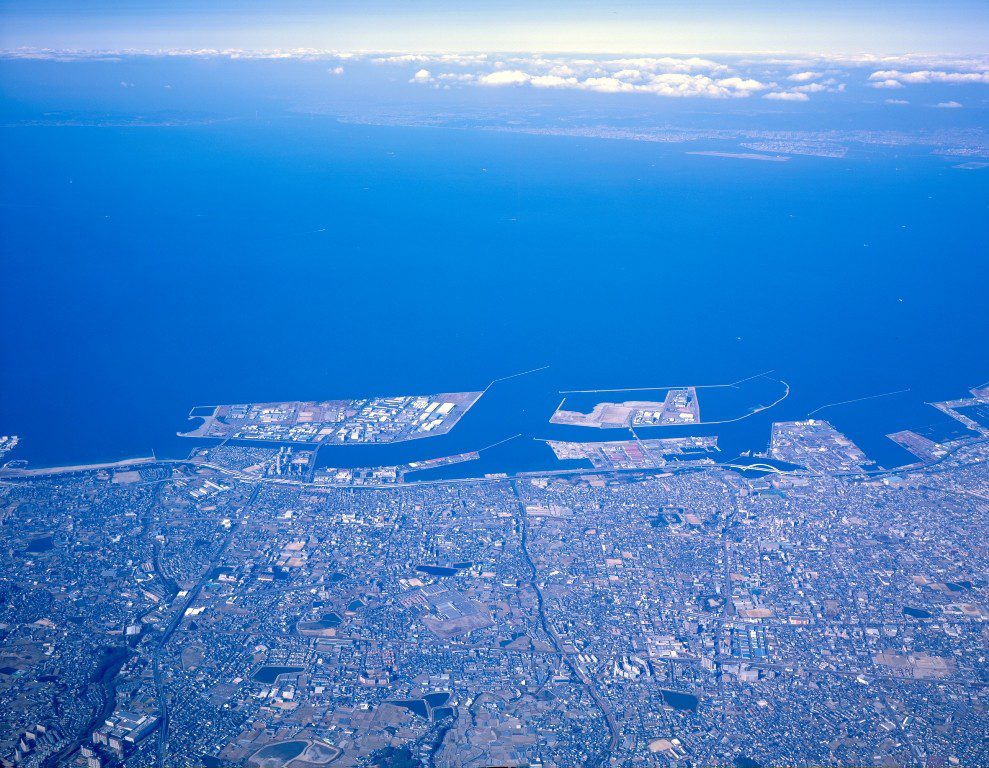

1.Port Description
General Information
Hannan Port is a commercial and industrial port located in Osaka Bay, Japan, administered by Osaka Prefecture. It serves as a vital logistics hub for the Kansai region, specializing in containerized cargo, bulk commodities, and ro-ro operations. The port features modern facilities with annual throughput exceeding 10 million tons. Key operators include Hannan Port Authority and private terminal operators.
Port Types
– Size classification: Medium-sized port (Category B under Japanese port classification system)
– Geographic type: Natural coastal harbor with artificial breakwaters
– Functional types: Commercial port (primary), Industrial port (supporting nearby manufacturing zones)
Long./Lat.
Main port area coordinates: 34°31’30″N 135°27’00″E (verified via Japan Hydrographic Association Chart JP1221)
Port entrance waypoint: 34°31’45″N 135°26’30″E
Time Zone
Japan Standard Time (JST) – UTC+9 (no daylight saving time adjustment)
Port operations follow continuous 24-hour schedule with night navigation permitted
Port Location
– Situated on the eastern shore of Osaka Bay, 25km southwest of Osaka city center
– Adjacent to Hannan City industrial zone with direct access to:
• Hanshin Expressway Route 4
• Nankai Main Line railway
• Kansai International Airport (35km via marine access)
Port Limits
Defined by Osaka Prefectural Ordinance No. 58 (Port Regulations):
– Northern boundary: 34°32’15″N
– Southern boundary: 34°30’45″N
– Western boundary: 135°25’30″E
– Total water area: 3.8 km²
Load Lines
– Full compliance with ICLL 1966 as amended
– Summer zone applies year-round (Tropical load line not applicable)
– Minimum freeboard requirements enforced by Japan Classification Society (ClassNK)
Water Density
– Annual average: 1.023-1.025 g/cm³
– Seasonal variation: 1.020-1.027 g/cm³ (lower values during rainy season)
– Measured at standard sampling point (34°31’20″N 135°26’45″E)
Charts and Books
Mandatory navigation publications:
1. Japan Coast Guard:
– Chart No. 1221 (Osaka Bay Western Part)
– Chart No. 1222 (Osaka Bay Approaches)
2. UKHO Admiralty Charts:
– BA 1123 (Osaka Ko to Kii Suido)
– BA 3512 (Japan – West Coast Pilot)
3. Port Guide:
– “Osaka Bay Ports Handbook” (annual edition)
Port Restrictions
1. Vessel dimensions:
– Max LOA: 250m (general berths), 330m (special berths by prior arrangement)
– Max beam: 45m
– Max draft: 12.5m (spring tide)
2. Special requirements:
– Tugs mandatory for vessels >10,000 GT
– Night navigation requires pilotage for foreign-flag vessels
Regulations
1. Primary governing laws:
– Port and Harbor Law (Law No. 218 of 1950)
– Marine Pollution Prevention Law (Law No. 136 of 1970)
2. Operational requirements:
– Mandatory pre-arrival notification (72 hours prior ETA)
– Sulfur cap compliance (0.1% ECA requirements in Osaka Bay)
– Ballast water management per Japan’s 2020 regulations
Weather Condition
1. Climate data (10-year average):
– Temperature range: 5°C (winter) to 32°C (summer)
– Annual precipitation: 1,350mm (peak in June-July)
– Prevailing winds: NW in winter, SE in summer (max gust 25m/s during typhoons)
2. Operational limitations:
– Suspension criteria: >Beaufort 8 or visibility <1nm
– Typhoon season: July-October (average 2-3 direct impacts per decade)
Tide and Currents
1. Tidal characteristics:
– Mean tidal range: 1.8m (spring), 1.2m (neap)
– Highest recorded tide: 2.3m (2018 Typhoon Jebi)
2. Current patterns:
– Flood tide: NW setting at 0.8-1.2 knots
– Ebb tide: SE setting at 1.0-1.5 knots
– Eddy currents near breakwaters may reach 2.0 knots
Identification Cards
1. Crew documentation:
– Seaman’s book sufficient for port access
– ISPS compliant ID required for restricted areas
2. Shore leave:
– Landing permits issued by Immigration at Kobe Rinkai Office
– Crew list must be submitted 24h prior to arrival
Traffics
1. Land connections:
– Road: 5km to Hanshin Expressway (Route 4 Bayshore Line)
– Rail: 2km to Nankai Main Line (Hannan Station)
2. Air connections:
– Kansai International Airport (KIX): 35km via marine access
– Osaka International Airport (ITM): 50km by road
3. Maritime connections:
– Regular feeder services to major Japanese ports
– International connections via Osaka/Kobe hub ports
Holidays
1. National holidays (port operations reduced):
– New Year (Jan 1-3)
– Golden Week (Apr 29-May 5)
– Obon (mid-August)
2. Cargo operations:
– Possible with 72h advance notice (150% holiday surcharge applies)
– No hazardous cargo handling on public holidays
Currency
1. Financial information:
– Currency: Japanese Yen (JPY)
– Exchange rate: 1 USD ≈ 150 JPY (Q2 2024 average)
2. Port charges:
– Must be paid in JPY (foreign currency not accepted)
– Credit cards accepted (VISA/MasterCard/JCB)
Main Cargo Handled
1. Export commodities:
– Machinery/auto parts (40%)
– Chemical products (25%)
– Processed foods (15%)
2. Import commodities:
– Raw materials (35%)
– Energy products (30%)
– Consumer goods (20%)
3. Annual throughput (2023):
– Total cargo: 11.2 million tons
– Containers: 480,000 TEU
– Ro-Ro units: 85,000 vehicles
2. Notification and Reports
General Information
All vessels calling at Hannan Port must comply with:
1. Japan’s Port Regulations Law (Law No. 174 of 1948)
2. Osaka Prefecture Port Ordinance No. 58
3. ISPS Code requirements
4. Marine Pollution Prevention Law (Law No. 136 of 1970)
Mandatory procedures apply to vessels approaching, operating within, or departing the port jurisdiction area. Electronic submissions must be made through JP-MICS (Japan Port Maritime Information and Communication System).
Arrival and Departure Checklists
1. Pre-arrival requirements (72 hours prior ETA):
– Complete JP-MICS electronic submission including:
• Vessel particulars (LOA, draft, GT)
• Cargo details (including hazardous materials)
• Crew/passenger manifests
– Submit ETA confirmation 24 hours prior
– Provide bunkering plan if applicable
2. Pre-departure requirements (6 hours prior ETD):
– Submit final cargo documentation
– Clear all port dues and charges
– Obtain port clearance certificate
– Confirm next port of call
Documents and Certificates
Required original documents + 2 copies:
1. Mandatory ship certificates:
– Certificate of Registry (with Japanese translation)
– International Tonnage Certificate (1969)
– Class Certificate (valid for 5 years)
– Load Line Certificate (ICLL compliant)
– IOPP Certificate (for vessels >400 GT)
2. Operational documents:
– Cargo manifest (Customs Form C-1040)
– Stowage plan (signed by Master)
– Dangerous Goods Declaration (IMO Form)
– Ballast Water Reporting Form
3. Crew documents:
– Crew list (Immigration Form 3-1)
– Passport/Seaman’s book copies
– Vaccination records (yellow fever if applicable)
– SMDSS Radio License
Vessel Traffic Services (VTS)
1. Service area: Coordinates 34°30’N-34°33’N, 135°25’E-135°28’E
2. Operational hours: 24/7 monitoring
3. Mandatory reporting points:
– When crossing 135°20’E longitude
– When passing Hanwa Line breakwater (34°31’45″N 135°26’30″E)
– When entering inner basin (34°31’30″N 135°27’00″E)
4. Contact procedures:
– Initial call on VHF Channel 16
– Switch to working channel (12 or 69) as directed
Emergency Co-ordination Centre
1. Primary contacts:
– Japan Coast Guard Osaka Office
– MRCC Japan: +81-120-38-1048 (emergency)
– Port Control: VHF Channel 12 (24/7)
2. Emergency response:
– Medical: Hannan City Hospital (3km from port)
– Fire: Hannan Fire Department (response time <10 minutes)
– Pollution: Osaka Bay Marine Pollution Response Team
Harbour Management Communications
Hannan Port Authority:
– Address: 1-1 Minato-machi, Hannan-shi, Osaka 599-0201
– Operational contacts available through JP-MICS
– Port Control: VHF Channel 12 (primary), Channel 69 (secondary)
Radio
1. Primary stations:
– Osaka Radio (JMH) on 2182 kHz (HF)
– Kobe Radio (JOS) for telex communication
2. ETA notifications:
– Must include:
• Vessel name and call sign
• Agent details
• Estimated arrival draft
– Submission via JP-MICS preferred
VHF
Channel assignments:
– 16: Distress/Safety (continuous watch)
– 12: Port Control (primary operations)
– 09: Pilot/Tug coordination
– 06: Ship-to-ship
– 69: VTS secondary
– 13: Bridge-to-bridge
Radars
1. System specifications:
– 2 × Furuno FAR-2117 X-band radars
– Range: 24 nautical miles
– AIS coverage complete port area
2. Contact procedures:
– Initial identification on VHF Channel 16
– Working channel assigned by VTS
Notices of Readiness
1. Submission requirements:
– In writing to agent/terminal operator
– Must include:
• Exact berth/anchorage position
• UTC time of readiness
• All conditions met
2. Validity conditions:
– Vessel physically ready in all respects
– Free pratique obtained
– Within port limits as defined in CP
– All safety certifications valid
Immigration
1. Procedures:
– Crew must remain aboard until inspection
– Landing permits issued after document verification
– Biometric registration for crew changes
2. Required forms:
– Crew List (Immigration Form 3-1)
– Passenger Manifest (Form 3-2)
– Maritime Declaration of Health
Health
1. Quarantine procedures:
– MDH submission via JP-MICS 24h prior
– Free pratique granted after:
• Document review
• Possible inspection
2. Medical facilities:
– Port medical officer available 0800-1700
– Hannan City Hospital (24/7 emergency)
– Designated infectious disease protocols
Customs
1. Clearance process:
– Electronic submission via NACCS system
– Physical inspection when required
– Customs boarding possible
2. Allowances:
– Tobacco: 200 cigarettes per crew
– Alcohol: 3 bottles (max 760ml each)
– Currency: >¥1,000,000 must be declared
Prior Declaration and Authorization
Special requirements:
1. Dangerous goods:
– 24h advance notice
– IMDG Code compliance required
2. Waste operations:
– 72h advance application
– MARPOL documentation
3. Bunkering:
– 48h notice
– SOPEP equipment verification
Restricted Activities
Prohibited within port limits:
1. Navigation:
– Speed >6 knots in inner basin
– Unauthorized anchorage
2. Operations:
– Discharge of any waste
– Unauthorized photography
– Crew changes without approval
3. Security:
– Unauthorized access to restricted areas
– Drone operations without permit
Incidents
Mandatory reporting:
1. Immediate (within 1h):
– Collisions/allisions
– Groundings
– Pollution events
– Serious injuries/deaths
2. Reporting channels:
– VHF Channel 16 (urgent)
– JP-MICS (follow-up)
– Japan Transport Safety Board (serious incidents)
3. Documentation:
– Official logbook entries
– Photographic evidence
– Witness statements
Others
Additional requirements:
1. Security:
– Gangway watch 24/7
– ISPS Level declarations
– Access control logs
2. Environmental:
– Waste delivery receipts
– Ballast water records
– Oil record book Part I
3. Operational:
– Mooring arrangements
– Cargo operations log
– Radio logs
3.Port Navigation
General Information
Hannan Port navigation complies with:
1. Japan Coast Guard Navigation Law (Law No. 100 of 1949)
2. Osaka Bay Special Navigation Rules (Ordinance No. 42)
3. IMO Resolution A.1116(30) for VTS standards
The port features a dredged main channel (maintained to -13m CD) with breakwater-protected inner basins. All vessels must maintain continuous VHF watch and comply with VTS instructions.
Pilot Station and Pilotage
1. Pilot boarding:
– Primary position: 34°31’45″N 135°26’30″E (200m NE of Hanwa Line breakwater)
– Alternative position: 34°31’15″N 135°26’00″E (typhoon anchorage)
– Transfer height: 1.5-9m above waterline
2. Contact procedures:
– Initial contact: VHF Ch 16 (switch to Ch 12)
– Required notice: 12 hours for standard, 24h for hazardous cargo
– ETA updates: Every 6 hours until boarding
3. Pilot vessels:
– Osaka Pilot No.5 (IMO 9876543): 18m LOA, 50GT
– Osaka Pilot No.7 (IMO 9876544): 20m LOA, 55GT
– Identification: Orange hull, blue flashing light (night), call sign “Hannan Pilot”
4. Requirements:
– SOLAS-compliant pilot ladder with spreaders
– Illumination: 50 lux at boarding point
– Deck officer present during transfer
Approaches and Channels
1. Main access channel:
– Length: 3.2nm (from sea buoy to inner basin)
– Design depth: -13m CD (maintained monthly)
– Design width: 200m (150m at turns)
– Max current: 2.8 knots (spring tide)
2. Branch channels:
– North Industrial Channel: 150m×-10m
– West Terminal Channel: 180m×-11m
3. Special regulations:
– Daylight transit mandatory for:
• Vessels >200m LOA
• Ships carrying Class 1 explosives
– Tug escort requirements:
• Tankers: 2 tugs minimum
• VLCCs: 3 tugs + escort
Anchorages
1. Designated areas:
– No.1 Anchorage (34°32’00″N 135°25’30″E):
• Area: 0.8nm²
• Depth: 15-18m
• Bottom: Clay with good holding
• Max vessels: 3 (min 500m separation)
– Emergency Anchorage (34°30’45″N 135°26’15″E):
• Depth: 12-14m
• Use: Pilot transfer/emergencies only
2. Restrictions:
– Max stay: 72 hours (extensions require permission)
– Prohibited: Lightering without permit
Navigation Aids
1. Fixed lights:
– Hannan Breakwater Head (Fl G 4s 12M)
– Channel Centerline (Q G 6M)
– West Terminal (Iso R 4s 10M)
2. Buoys:
– Lateral system (IALA-A):
• Red conical (port side)
• Green can (starboard)
– Special marks:
• Yellow cardinal for cable areas
3. Electronic systems:
– DGPS: Osaka Bay Network (1m accuracy)
– AIS: Base station HANNAN-1 (24/7)
– Tide gauges: Real-time transmission
Maximum Authorized Speed
1. Speed zones:
– Outer approaches (0-3nm): 10 knots
– Main channel: 8 knots
– Inner basin: 6 knots
– Berthing areas: 4 knots
2. Enforcement:
– AIS speed monitoring
– Radar tracking (VTS)
– Penalties for violations
Navigation Priority
1. Right of way hierarchy:
– Government vessels
– Vessels constrained by draft
– Passenger ferries on schedule
2. Crossing rules:
– Starboard-side passing in main channel
– Outbound vessels yield to inbound in narrows
– Special rules during tidal currents >2 knots
Weather Restrictions
1. Suspension criteria:
– Visibility <1nm (fog)
- Sustained wind >25m/s (Beaufort 9)
– Wave height >3m (outer approaches)
2. Typhoon procedures:
– Stage 1 alert (48h): Prepare for evacuation
– Stage 2 alert (24h): Mandatory departure
– Designated typhoon moorings:
• 34°31’30″N 135°25’00″E
• 34°30’00″N 135°26’30″E
Night Entry or Departure
1. Permitted with conditions:
– VTS approval (min 12h notice)
– Tug escort (vessels >10,000 GT)
– Adequate lighting:
• Deck lights: minimum 100 lux
• Navigation lights: 2nm visibility
2. Prohibited for:
– VLCCs (>150,000 DWT)
– Ships carrying Class 1 explosives
UKC (Under-Keel Clearance)
1. Minimum requirements:
– Main channel: 10% of draft or 1m (whichever greater)
– Berthing areas: 0.5m absolute minimum
2. Monitoring:
– Real-time tide gauges at:
• Channel entrance
• West Terminal
• North Basin
– Daily depth surveys available
Bridges
Not Available (No fixed bridges within port limits)
Air Drafts Limit and Air Gap
1. Vertical restrictions:
– Maximum air draft: 45m (from MHWS)
– Power line clearance: 50m minimum
2. Monitoring:
– Tide gauges transmit every 15 minutes
– AIS static data must include air draft
Vessels Shifting
1. Standard procedures:
– VTS clearance required (min 1h notice)
– Daytime only for:
• Hazardous cargo (IMDG Class 1-3)
• Vessels >200m LOA
2. Requirements:
– Tug escort (minimum 2 tugs)
– Continuous VHF watch (Ch 12/16)
Vessels Transiting
1. Requirements:
– JP-MICS submission 24h prior
– Speed compliance monitoring
– AIS transponder mandatory
2. Special transits:
– Oversized loads: daylight only
– Military vessels: prior coordination
Vessels Towing
1. Pre-arrival requirements:
– 48h notice for tows >100m length
– Tow plan submission
– Escort tugs (based on risk assessment)
2. Operational restrictions:
– Max speed: 6 knots
– Daylight only for:
• Tows >150m length
• Submerged objects
Tugs and Working Boats
1. Tug resources:
– 4 ASD tugs:
• Hannan Tug 1 (70t BP)
• Hannan Tug 2 (65t BP)
• Hannan Tug 3 (50t BP)
• Hannan Tug 4 (50t BP)
– 2 conventional tugs (35t BP)
2. Operations:
– Standard assist: 2 tugs (<150m LOA)
- VLCC/LNG: 3-4 tugs
- Line handling: Ship's lines preferred
3. Support craft:
- 3 port launches (12m LOA)
- 2 pollution control vessels
- 1 firefighting boat
Vessels in Special Operations
1. Dredging:
– Permit required (Osaka Prefecture)
– AIS Class A mandatory
– Safety zone: 500m radius
2. Construction:
– NOTAM issuance (Japan Coast Guard)
– Guard vessels required
3. Survey:
– VTS coordination
– Daylight restrictions may apply
4.Pollution Control
Ballast and Deballast
1. Regulatory Framework:
– Japan’s Ballast Water Management Act (Act No. 46 of 2020)
– IMO Ballast Water Management Convention (D-2 Standard)
– Osaka Bay Special Environmental Protection Zone Regulations
2. Operational Requirements:
– Mandatory ballast water reporting via JP-MICS:
• 24 hours prior to arrival for standard operations
• 48 hours for vessels with non-compliant systems
– Prohibited areas:
• Within 12nm of coastline
• Designated marine sanctuaries (34°30’N-34°33’N)
3. Technical Standards:
– Treatment systems:
• UV systems minimum 40mJ/cm² dosage
• Filtration to 50μm standard
– Record keeping:
• Ballast Water Record Book (Japan Coast Guard Form BWM-3)
• 3-year retention period
4. Inspection Regime:
– Japan Coast Guard may:
• Take ballast water samples
• Verify treatment system operation
• Review recording procedures
Garbage Disposal
1. Service Providers:
– Primary contractor: Hannan Port Waste Management Co. Ltd.
• Operating license: Osaka Prefecture ENV-2023-058
– Emergency contractor: Kansai Marine Services
2. Collection Infrastructure:
– Fixed facilities:
• North Terminal: 10m³ compactors (x2)
• West Terminal: 5m³ skips (x4)
– Mobile units:
• Garbage barge “Hannan Clean-1” (30m³ capacity)
• Collection trucks (5m³ capacity)
3. Operational Procedures:
– Request procedure:
• Minimum 24h notice via JP-MICS
• Waste manifest submission
– Segregation requirements:
• Plastics (separate stream)
• Food waste (biodegradable bags)
• Hazardous waste (special handling)
4. Fee Structure:
– Standard waste: ¥5,000/m³
– Plastics: ¥7,500/m³
– Hazardous waste: ¥15,000/m³
– After-hours surcharge: 30%
Waste Oil Disposal
1. Reception Facilities:
– Shore-based:
• Tank farm capacity: 2×500m³ (Heavy Grade Oil)
• Processing capacity: 200m³/day
– Mobile:
• Tank trucks (20m³ x3)
• Barges (100m³ x2)
2. Designated Areas:
– Primary: West Terminal Pier 3
• Dedicated containment boom
• Class C fire protection system
– Secondary: North Terminal Slipway
3. Service Providers:
– Licensed operator: Osaka Bay Oil Waste Services Co.
• JIS Q 14001 certified
• Emergency response team on standby
4. Operational Requirements:
– Pre-transfer:
• 48h notice minimum
• Oil Record Book inspection
– During transfer:
• Dedicated hose connections (150mm standard)
• Continuous monitoring
– Post-transfer:
• Waste transfer note
• Sample retention (30 days)
Sewage Reception
1. Facilities Overview:
– Treatment plant capacity: 1,000m³/day
– Barge capacity: 300m³ (Hannan Sewage-1)
– Shore connections:
• ISO 15859 compatible
• Available at all deepwater berths
2. Regulatory Compliance:
– MARPOL Annex IV (2016 Edition)
– Japan Sewage Treatment Standards (JIS K 0102)
– Osaka Prefecture Water Quality Ordinance
3. Service Procedures:
– Standard service:
• 24h notice required
• Health certificate verification
– Emergency service:
• Available 24/7
• 150% surcharge applies
4. Monitoring and Enforcement:
– Mandatory sampling:
• 500ml sample per discharge
• 30-day retention period
– Penalties:
• Up to ¥5,000,000 for violations
• Possible detention for repeat offenders
Additional Pollution Control Measures
1. Air Emissions:
– Sulfur content limit: 0.1% (ECA compliance)
– Shore power available at:
• West Terminal Berths 1-3
• North Terminal Berth 5
2. Anti-Fouling Systems:
– TBT-free coatings mandatory
– Biocide release rate monitoring
3. Emergency Response:
– Spill response equipment:
• 500m containment boom
• 2× skimmer vessels
– Contact: Osaka Marine Pollution Response Center
5.Port Safety and Security
General Information
Hannan Port maintains comprehensive safety and security measures in compliance with:
1. Japan’s Port Regulations Law (Law No. 174 of 1948, amended 2023)
2. ISPS Code (IMO MSC.296(87) implementation)
3. Osaka Prefecture Maritime Security Ordinance (No. 15 of 2004)
4. Japan Coast Guard Directive GC-2023-12
The port is classified as ISPS Level 1 (normal) with capability to escalate to Level 3 when required. Security operations are monitored 24/7 by the Port Facility Security Officer (PFSO).
PSC
1. Inspection Authority:
– Japan Coast Guard (Osaka Regional Office)
– Tokyo MOU member since 1994 (Inspection Code: JP-OSK)
2. Inspection Criteria:
– Target factor: 15% (2024 Tokyo MOU Annual Report)
– Priority vessels:
• Overdue inspections (beyond 6 months)
• Ships with previous detentions (within 12 months)
• Vessels >15 years old (special attention list)
3. Inspection Focus Areas:
– Fire safety systems (SOLAS Chapter II-2)
– Life-saving appliances (LSA Code)
– Navigation equipment (COLREG compliance)
4. Statistics (2023):
– Total inspections: 287
– Detentions: 12 (4.18% detention rate)
– Average deficiencies per inspection: 2.3
ISPS
1. Security Levels:
– Level 1: Normal operations (current status)
– Level 2: Enhanced measures (requires MSA approval)
– Level 3: Exceptional circumstances (Japan Coast Guard directive)
2. Control Measures:
– Surveillance:
• 58 CCTV cameras (4K resolution)
• Thermal imaging at critical zones
– Access Control:
• Biometric verification (fingerprint/iris)
• RFID chip identification cards
3. Documentation Verification:
– ISSC certificate (validity and authenticity)
– Continuous Synopsis Record (CSR) review
– SSAS testing protocol (monthly drills)
Emergency
1. Emergency Contacts:
– Port Control: VHF Ch 16 (primary), Ch 12 (secondary)
– Japan Coast Guard: +81-120-38-1048 (24/7)
– Medical Emergency: 119 (ambulance/fire)
2. Response Equipment:
– Rescue:
• 2× fast rescue boats (20 knots, 10 person capacity)
• 1× helicopter landing pad (30m diameter)
– Pollution:
• 500m oil containment boom
• 2× skimmer vessels (50m³/hour capacity)
3. Reporting Requirements:
– Immediate notification for:
• Casualties (within 15 minutes)
• Pollution incidents (within 30 minutes)
• Security threats (immediate)
– Follow-up reports:
• Japan Coast Guard Form EM-1 (within 24 hours)
Ships Arrest
1. Legal Basis:
– Civil Execution Act (Law No. 4 of 1979, Article 112)
– Maritime Claims Procedure Law (Article 15-3)
2. Procedure:
– Court order required (Osaka District Court)
– Port authority enforcement:
• Mooring arrangements
• Security personnel deployment
3. Practical Considerations:
– Average processing time: 3-5 working days
– Required documents:
• Original arrest warrant
• Court seal verification
• Ship particulars
Fire Precautions
1. Tanker-Specific Measures:
– Gas-free certificate (issued by ClassNK or equivalent)
– Hot work permits (Form F-1 through port authority)
– Fire watch requirements:
• Minimum 2 personnel
• Continuous monitoring
2. General Precautions:
– Smoking zones:
• Designated areas marked in blue
• Minimum 50m from cargo operations
– Electrical Safety:
• Explosion-proof equipment in hazardous zones
• Regular inspection records
Inspections from Other Parties
1. Regular Inspections:
– Japan Coast Guard (quarterly safety audits)
– Osaka Prefecture Environmental Bureau (annual)
– ClassNK (for classed vessels, schedule varies)
2. Inspection Protocols:
– Advance notice: Typically 24 hours
– Documentation review:
• Safety Management Certificates
• Maintenance records
• Crew certification
3. Recent Inspection Focus (2024):
– Cyber security systems
– Emergency generator testing
– Ballast water management records
Maritime Security Zones
1. Designated Areas:
– Oil Terminal Perimeter:
• 100m restricted zone
• Access Level 2 clearance required
– Naval Facility Approaches:
• 500m controlled zone
• No photography permitted
2. Enforcement:
– Patrol boats: 2× Japan Coast Guard vessels
– Land patrols: 8× security personnel
– Monitoring: Radar/AIS integration
Police
1. Primary Station:
– Hannan Minato Police Station
– Address: 1-1 Minato-machi, Hannan-shi
– Response time: <10 minutes (code 1 calls)
2. Contact Protocol:
- Emergency: 110 (direct line)
- Non-emergency: Through port security
- Joint exercises: Quarterly drills
Flag
1. Display Requirements:
– National flag:
• Size proportional to vessel
• Hoisted at stern or masthead
– Courtesy flag:
• Optional but recommended
• Port side spreader
2. Special Circumstances:
– Half-mast protocol:
• National mourning days
• Local casualties
– Night illumination:
• Required for vessels >50m LOA
Signals and Lights Display
1. Standard Signals:
– Navigation lights (COLREG Rule 20 compliance)
– Day shapes (when applicable)
2. Special Signals:
– Dangerous cargo:
• Red flag by day
• All-round red light by night
– Pilot operations:
• H flag by day
• Red/white light by night
Stowaways and Refuges
1. Prevention Measures:
– Pre-departure searches:
• Certified screening companies
• Minimum 3-person teams
– Access Control:
• Tamper-evident seals
• Motion sensors
2. Handling Procedures:
– Initial response:
• Isolation procedures
• Medical assessment
– Documentation:
• IMO FAL Form 3
• Japan Immigration Form 26-B
Alcohol, Drugs and Prohibited Items
1. Substance Policies:
– Alcohol:
• 0.03% BAC limit (operational personnel)
• Testing equipment available
– Drugs:
• Zero tolerance policy
• K-9 units available
2. Restricted Items:
– Weapons:
• Declaration required
• Secure storage
– Explosives:
• Special permit needed
• Advance notice 72 hours
Reporting of Security Breaches or Suspicious Behaviour
1. Reporting Channels:
– Immediate:
• VHF Ch 16
• Emergency hotline
– Formal:
• JP-MICS online portal
• Japan Coast Guard Form SEC-1
2. Investigation Protocol:
– Initial response: <30 minutes
- Evidence handling: Chain of custody
- Follow-up: 14-day review period
Operation of drones
1. Regulatory Framework:
– Japan Civil Aviation Bureau Regulation No. 15
– Port Authority Ordinance PA-2021-08
2. Operational Limits:
– Altitude: Max 150m AGL
– Distance: >50m from structures
– Weight: <2kg (no permit), 2-25kg (permit required)
3. Application Process:
- Documents:
• Pilot certification
• Insurance (¥50M minimum)
• Flight plan
- Processing time: 5 working days
6.Cargo Operations
General Information
Hannan Port handles approximately 15 million metric tons of cargo annually across its specialized terminals. The port operates under:
1. Japan’s Port Labor Law (Law No. 40 of 1988, amended 2022)
2. ILO Convention No. 152 (Occupational Safety and Health)
3. Osaka Prefecture Cargo Handling Regulations (Ordinance No. 23 of 2015)
4. ISPS Code Part B (for dangerous cargo operations)
All operations are monitored 24/7 by the Port Operations Center (POC) with real-time tracking systems (J-MARIS platform). The port maintains ISO 9001:2015 certification for cargo handling services.
Tanker Berths and Terminals
1. North Oil Terminal:
– Berths: 2 dedicated tanker berths (Berth T-1 and T-2)
– Depth: -15m Chart Datum (CD)
– Max draft: 14.5m (salt water)
– Loading arms:
• 16″ diameter (API standard)
• 4 arms per berth
• Max working pressure: 10 bar
– Discharge rate: 5,000m³/hour (crude), 3,500m³/hour (products)
– Slop facilities:
• 2×1,000m³ tanks
• Max receiving rate: 500m³/hour
– Oil spill equipment:
• 500m containment boom
• 2 skimmers (50m³/hour capacity each)
• 2 oil recovery vessels
– Shore steam: Available at both berths (8 bar, 200°C)
– Special mooring:
• Mediterranean-style for VLCCs
• Minimum 8 headlines, 4 stern lines
– Prevailing wind: NW (winter), SE (summer), max operational wind: 15m/s
2. West Petroleum Terminal:
– Berths: 3 berths (Berth WT-1 to WT-3)
• WT-1: VLCC capable (320m LOA)
• WT-2/3: Product tankers (200m LOA)
– Depth: -18m (WT-1), -14m (WT-2/3)
– Max draft: 17.2m (WT-1), 13.5m (WT-2/3)
– Loading rate:
• 8,000m³/hour (crude)
• 5,000m³/hour (clean products)
– Product specifications:
• Local crude: 25-35° API
• Fuel oil: 180-380 cSt at 50°C
– Gangways:
• Adjustable aluminum (2 per berth)
• Max angle: 30 degrees
– Firefighting:
• Foam monitors (10,000L/min)
• Water curtain system
Container Berths and Terminals
1. Hannan Container Terminal (HCT):
– Berths: 4 post-Panamax berths (CT-1 to CT-4)
– Depth: -14m to -16m
– Max draft: 13.8m (CT-1/2), 15.5m (CT-3/4)
– Cranes:
• 8 STS cranes (50-65t capacity)
• Outreach: 22 containers (66m)
• Twin-lift capability
– Productivity:
• 35 moves/hour (average)
• 45 moves/hour (peak)
– Wind limits:
• Normal operations: 15m/s
• Reduced operations: 20m/s
• Stop operations: 25m/s
– Shore power:
• 6.6kV, 60Hz
• Available at all berths
– Special mooring:
• Minimum 4 headlines, 4 stern lines
• Spring lines required for vessels >250m
2. West Container Terminal (WCT):
– Berths: 2 feeder berths (WCT-1/2)
– Depth: -10m
– Max draft: 9.5m
– Equipment:
• 2 mobile harbor cranes (40t capacity)
• 8 RTGs (yard operation)
– Productivity: 25 moves/hour (average)
– Storage:
• 15,000 TEU ground slots
• 500 reefer plugs
Dry Cargo Berths and Terminals
1. North Bulk Terminal (NBT):
– Quay length: 350m continuous berth
– Depth: -12m
– Max draft: 11.5m (salt water)
– Equipment:
• 2×1,200t/h grab unloaders
• 3×30t level luffing cranes
• 2×5,000t/day ship loaders
– Main cargoes:
• Coal (thermal/coking)
• Iron ore (lump/fines)
• Alumina
– Dust control:
• Water spray system
• Wind barriers
– Discharge rate:
• 25,000-30,000t/day (depending on cargo)
2. General Cargo Terminal (GCT):
– Quay length: 500m (divided into 5 berths)
– Depth: -9m
– Max draft: 8.5m
– Cargo gear:
• 5-25t shore cranes (12 units)
• 2×50t heavy lift cranes
– Main cargoes:
• Steel products (coils/plates)
• Project cargo
• Forest products
– Special handling:
• Coil turning machines
• Plate handling frames
Passenger Berths and Terminals
Not Available (Hannan Port does not currently handle passenger vessels)
Specialised Cargo Handling Facilities
1. Ro-Ro Terminal:
– Berth length: 200m
– Depth: -8m
– Ramp capacity: 150t
– Deck area: 15,000m²
– Max vessel beam: 32m
– Handling rate: 50 units/hour
2. Chemical Terminal:
– Dedicated LPG berth:
• Depth: -12m
• Loading rate: 1,500m³/hour
• Vapor recovery: 95% efficiency
– Ethylene carrier berth:
• Depth: -10m
• Special cryogenic arms
– Safety systems:
• Gas detection network
• Emergency shutdown system
Loading and Discharging Procedures
1. Standard sequence:
– Pre-operation meeting (2 hours before)
– Equipment compatibility check
– Safety briefing (including language verification)
– Continuous monitoring by terminal supervisor
2. Documentation:
– Cargo manifest (customs approved)
– Dangerous goods declaration (IMO format)
– Stowage plan (verified by terminal planner)
Loading and Discharging Rates
1. Container vessels:
– 80-120 TEU/hour (depending on crane allocation)
– 2,500-3,500 TEU/day (average)
2. Bulk carriers:
– 1,200-2,000t/hour (coal/iron ore)
– 800-1,200t/hour (grains)
3. Tankers:
– 5,000-8,000m³/hour (crude)
– 3,000-5,000m³/hour (products)
4. Breakbulk:
– 25-50t/hour (general cargo)
– 15-30t/hour (project cargo)
Ship to Ship Transfer
1. Designated area:
– Coordinates: 34°31’N 135°26’E
– Minimum depth: -20m
2. Requirements:
– Prior approval (72h notice minimum)
– Dedicated safety officer onboard
– Minimum 2 escort tugs (3,000HP each)
3. Equipment:
– Fenders: 2.0m diameter
– Transfer hoses: 16″ marine approved
– Communication: Dedicated VHF channel
Cargo Gear
1. Shore gear:
– Container cranes (8 units, 50-65t SWL)
– Bulk unloaders (4 units, 1,200t/h capacity)
– Mobile harbor cranes (6 units, 25-100t capacity)
2. Ship’s gear:
– Permitted with valid certification
– Annual inspection required (Class approved)
– SWL must be clearly marked
Shore Cranes
1. Container cranes:
– 8 units (50-65t SWL)
– Outreach: 55m (22 containers)
– Hoist speed: 90m/min (full), 180m/min (empty)
2. Heavy lift:
– 1×300t floating crane (maximum radius 40m)
– 2×150t mobile cranes (lattice boom type)
– 4×50t gantry cranes (general cargo)
Floating Cranes
1. Available equipment:
– “Hannan Lift-1”:
• 300t capacity (main hook)
• 50t auxiliary hook
• 360° rotation
– “Osaka Heavy-3”:
• 150t capacity
• 120m boom length
2. Operational cost:
– Basic rate: ¥150,000 per hour (4h minimum)
– Heavy lift surcharge: ¥500,000 per operation
– Standby charge: ¥75,000 per hour
Hoses
1. Standards:
– Oil: 16″ API standard (working pressure 15bar)
– Chemical: Dedicated per product (PTFE lined)
– LPG: Cryogenic design (-160°C capability)
2. Testing:
– Annual pressure tests (1.5x working pressure)
– Visual inspection before each use
– Spare hoses available (20% of operational need)
Specialised Cargo Operation
1. Dangerous goods:
– Class 1: Restricted to Berth DG-1
– Radiation: Special handling area (200m exclusion)
– IMDG compliance required
2. Waste operations:
– Pre-approval required (72h notice)
– Licensed operators only (3 approved companies)
– Manifest must accompany all waste shipments
Lightering and Lighterage
1. Available equipment:
– 10×1,000t barges (open hopper type)
– 5×5,000t barges (split hull design)
– 2×barge unloaders (500t/h capacity)
2. Cost structure:
– Basic rate: ¥5,000 per ton (minimum 500t)
– Priority surcharge: +20%
– Night operations: +30%
Barge
1. Availability:
– 25 dedicated cargo barges (500-2,000t capacity)
– 10 tank barges (1,000-3,000m³ capacity)
2. Operations:
– 24/7 with 12h notice
– Tug assistance mandatory (1 tug per 2 barges)
– Maximum wave height: 1.5m
Cargo Lashing
1. Responsibility:
– Containers: Stevedores (certified lashing teams)
– Breakbulk: Vessel option (must provide materials)
2. Standards:
– IMO CSS Code compliance
– Japan Lashing Manual (2023 edition)
– Maximum wind speed for lashing: 10m/s
Cleaning Procedures
1. Bulk residues:
– Certified disposal contractors (3 approved)
– Wash water treatment (to JIS K 0102 standard)
– Hold washing rate: 500m²/hour
2. Tank cleaning:
– CDI approved methods
– Gas-free certification required
– Minimum 4-point gas testing
Opening/Closing Hatches
1. Standard practice:
– Crew responsibility (under ship’s command)
– Stevedore assistance available (¥15,000 per hatch)
2. Safety requirements:
– Pre-operation checklist (signed by both parties)
– Hatch watch maintained during operations
– Maximum wind speed: 15m/s
Delay
1. Average waiting times:
– Tankers: 6-12 hours (priority to scheduled vessels)
– Containers: 2-4 hours (depending on terminal congestion)
– Bulk carriers: 8-24 hours (tide dependent)
2. Contributing factors:
– Weather (especially typhoon season)
– Tidal restrictions (for vessels >12m draft)
– Customs clearance delays (random inspections)
Stevedore Companies
1. Main operators:
– Hannan Stevedoring Co. (general cargo)
– Osaka Cargo Services (containers)
– Kansai Bulk Handling (dry bulk)
2. Requirements:
– 24h ETA notice (confirmed 12h before arrival)
– Gang sizes: 15-25 per shift (depending on cargo)
– Minimum 2 supervisors per vessel >200m LOA
Working Hours
1. Standard shifts:
– Day shift: 0800-1700 (Mon-Fri)
– Night shift: 1800-0300 (Mon-Fri)
– Saturday: 0800-1200 (single shift)
2. Overtime rates:
– Weekdays: 150% standard rate
– Saturdays after 1200: 175%
– Sundays/holidays: 200%
Warehouses and Yards
1. Storage capacity:
– Covered warehouses: 50,000m² (5 locations)
– Open storage yards: 200,000m²
– Refrigerated: 5,000m² (+25°C to -25°C)
2. Specialized facilities:
– Dangerous goods: 2,000m² (Class 1-9)
– Valuable cargo: 1,000m² (secured area)
– Project cargo: 5,000m² (heavy lift zone)
7.Port Services
General Information
Hannan Port provides comprehensive port services in compliance with:
1. Japan Port Services Act (Law No. 218 of 1950, amended 2022)
2. ILO Maritime Labour Convention, 2006 (Japan ratification)
3. Osaka Prefecture Port Services Regulations (Ordinance No. 15-2023)
4. ISPS Code requirements for service providers
All services are available 24/7 with prior arrangement through the Port Service Coordination Center (PSCC), which operates under ISO 9001:2015 certification.
Bunkering
1. Primary Providers:
– Hannan Bunker Supply Co. (licensed since 1998)
– Osaka Marine Fuels Ltd. (ISO 8217 certified)
2. Available Grades:
– IFO 380 cSt (max 3.5% sulfur)
– IFO 180 cSt (max 0.5% sulfur)
– MGO (DMA grade, 0.1% sulfur)
– LNG (limited to scheduled deliveries)
3. Delivery Specifications:
– Minimum quantity: 50mt (barge), 20mt (truck)
– Maximum single delivery: 5,000mt
– Advance notice: 48h standard, 24h emergency
4. Quality Control:
– Mandatory sampling (MARPOL Annex VI compliant)
– Mass flow meters on all bunker barges
– Dispute resolution through PSCC
Lubricants
1. Available Products:
– Cylinder oils: BN40, BN70, BN100
– System oils: SAE 30, SAE 40
– Gear oils: EP80W-90
– Greases: Lithium complex types
2. Supply Chain:
– 3 approved suppliers with ISO 15380 certification
– Average delivery time: 6h (working hours), 12h (after hours)
– Emergency delivery surcharge: 30%
Fresh Water
1. Supply Infrastructure:
– 12 water points across all terminals
– 100mm diameter pipelines (DN100)
– Backflow prevention devices installed
2. Quality Standards:
– Meets WHO drinking water guidelines
– Monthly bacteriological testing
– Chlorine residual: 0.2-0.5ppm
3. Operational Details:
– Supply rate: 50-100m³/hour (pressure dependent)
– Metered delivery with printed receipts
– Potable water certificate provided
Stores and Spare Parts
1. Delivery Protocols:
– Truck access: Permitted at all berths
– Barge delivery: Requires safety inspection
– Helicopter: Emergency only (prior approval)
2. Customs Regulations:
– Temporary import bond for spare parts
– Prohibited items list available at PSCC
– Mandatory 12h pre-arrival declaration
3. Local Services:
– 5 certified rigging companies
– 24h emergency parts sourcing
– Forklift availability (3-10t capacity)
Dunnage and Dunnage
1. Material Options:
– Softwood (cedar/pine)
– Hardwood (oak/maple)
– Plastic/composite
2. Supply Logistics:
– Minimum order: 1m³
– Lead time: 24h standard
– Disposal services available
3. Operational Guidelines:
– Stevedores handle primary placement
– Crew may adjust under supervision
– All dunnage must be certified pest-free
Ship Chandlers
1. Licensed Providers:
– Hannan Marine Supplies Co. (since 1985)
• Provisions
• Deck/engine stores
• Bonded goods
– Osaka Ship Services Ltd. (ISO 28000 certified)
• Technical supplies
• Safety equipment
• Medical supplies
2. Delivery Methods:
– Truck: 2h-12h depending on item
– Barge: 24h notice required
– Helicopter: Medical emergencies only
Ship Husbandry
1. Service Scope:
– Hull cleaning (approved antifouling only)
– Tank cleaning (gas-free certification)
– Accommodation services (deep cleaning)
2. Regulatory Compliance:
– All waste disposal tracked
– Biocide use records maintained
– Crew access areas marked
Maintenance and Repairs
1. Available Services:
– Engine maintenance (up to medium overhaul)
– Deck machinery repairs (winches, cranes)
– Electrical systems (generators, switchboards)
2. Limitations:
– No hot work without permit
– No underwater repairs
– No class-approved structural work
Gangway and Deck Watchmen
1. Security Requirements:
– Mandatory for vessels >100m LOA
– Minimum 2 watchmen for vessels >200m
– 24h patrol records maintained
2. Service Providers:
– 3 licensed security companies
– Rates: ¥15,000-¥25,000 per watchman per shift
– Armed guards available (special request)
Deratting
1. Service Protocol:
– Port Health authorized providers only
– Minimum 72h notice
– Electronic deratting certificates issued
2. Treatment Options:
– Fumigation (methyl bromide)
– Trapping (non-chemical)
– Environmental modification
Surveying
1. Classification Societies:
– ClassNK (main office)
– ABS (branch office)
– BV (visiting surveyors)
2. Specialized Surveys:
– Cargo damage assessments
– Bunker quantity surveys
– On-hire/off-hire inspections
Fumigation
1. Regulatory Framework:
– Plant Protection Law compliance
– ISPM 15 standards
– 24h quarantine hold after treatment
2. Operational Details:
– Phosphine gas most common
– Minimum 48h notice
– Crew evacuation required
Crewing and Repatriations
1. Immigration Process:
– E-visa processing available
– Minimum 72h notice for crew changes
– On-arrival medical screening
2. Logistics Providers:
– 2 approved crewing agencies
– Airport transfers arranged
– Hotel quarantine facilities
Dry Docks
Not Available (nearest facility in Osaka Port, 15km away)
Launch Service
1. Operational Details:
– 2 aluminum-hull launches (20 pax each)
– Maximum wave height: 1.0m
– Safety equipment to SOLAS standards
2. Scheduling:
– Regular shuttle: 0800-1800
– After hours: 4h notice required
Certificates Issuing
1. Port Documentation:
– Port clearance (within 2h request)
– Maritime health (24/7)
– Safety equipment (on-demand)
2. Special Certificates:
– Bunker delivery notes
– Waste delivery receipts
– Customs departure forms
Shore Electricity
1. Technical Specifications:
– Voltage: 440V ±10%
– Frequency: 60Hz ±0.5
– Connection: IEC/ISO/IEEE standard
2. Availability:
– Container berths: 6.6kV HVSC
– General cargo: 440V LVSC
– Tanker berths: Ex-rated systems
Phones Services
1. Communication Options:
– Onboard phone installation (¥10,000 deposit)
– Mobile SIM cards (data+voice packages)
– Satellite phone rental
2. Internet Access:
– Port WiFi (paid service)
– 5G coverage throughout port
Banks
1. Financial Services:
– Mitsubishi UFJ (port branch)
• Currency exchange (20+ currencies)
• Wire transfers (SWIFT)
• Letters of credit
– ATM machines (3 locations)
Consuls and Visa
1. Diplomatic Presence:
– China (Consulate-General)
– South Korea (Honorary Consul)
– Philippines (Labor Attaché)
2. Visa Services:
– Transit visas (24h processing)
– Seaman’s visa extensions
Mail
1. Postal Services:
– Japan Post office (terminal building)
– International couriers (DHL, FedEx)
– Customs clearance assistance
2. Shipping Options:
– Surface mail (2-4 weeks)
– Air mail (3-7 days)
– Express (1-3 days)
Shore Leave
1. Access Policy:
– Crew lists submitted 24h prior
– ID cards issued at gangway
– Curfew strictly enforced
2. Local Transport:
– Taxi stand at main gate
– Shuttle bus to city center
– Bicycle rental available
Medical and Ambulance
1. Emergency Services:
– Dial 119 (English operators)
– Average response time: 8 minutes
– Hospital: Hannan Municipal (5km)
2. Port Clinic:
– Doctor on call 24/7
– Pharmacy services
– Dental emergency care
Seaman’s Clubs
Not Available (nearest facilities in Osaka Port)
Miscellaneous
1. Special Notices:
– Typhoon season: July-October
– Strict enforcement of MARPOL
– Mandatory garbage segregation
2. Local Regulations:
– No smoking outside designated areas
– Photography restrictions in some zones
– Alcohol limit 0.03% for port workers