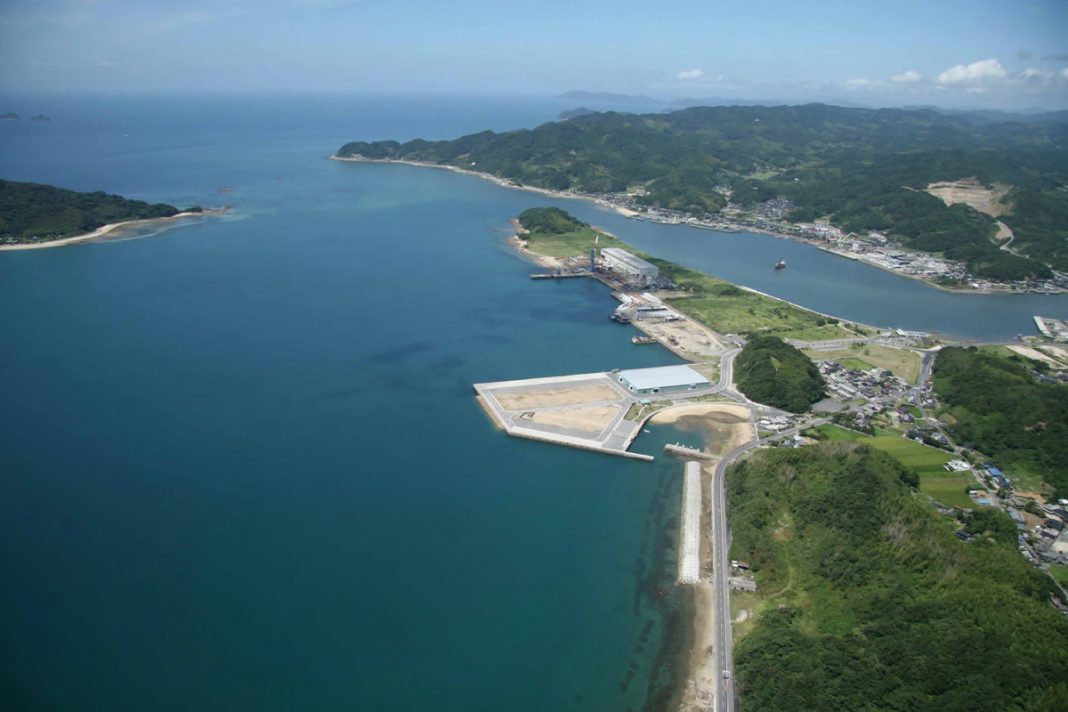

1.Port Description
General Information
Hirao Port is a small commercial port located in Hirao, Yamaguchi Prefecture, Japan. It primarily serves regional trade and fishing activities. The port is managed by Yamaguchi Prefecture and Hirao City authorities, supporting coastal shipping, fishing vessels, and small cargo operations. The port features basic cargo handling facilities and serves as an important hub for local fisheries in the Seto Inland Sea region.
Port Types
– By size: Small port (annual cargo throughput under 1 million tons)
– By geographical location: Natural harbor
– By purpose: Commercial port (minor), Fishing port (primary)
– Additional classification: Regional port under Japan’s Port and Harbor Law
Long./Lat.
Official coordinates (Japan Hydrographic Association):
33°56’24″N 132°04’12″E (main port entrance)
Decimal: 33.9400° N, 132.0700° E
(Note: Precise coordinates vary by berth location)
Time Zone
Japan Standard Time (JST), UTC+9 year-round. No daylight saving time observed. Port operations follow JST without seasonal adjustment.
Port Location
Located on the southern coast of Yamaguchi Prefecture, facing the Seto Inland Sea (Setonaikai). The port is situated in Hirao City, approximately 15 km west of Iwakuni. The surrounding area features:
– Coastal terrain with moderate protection from open sea
– Urban settlement (Hirao City population: ~15,000)
– Proximity to numerous small islands in the Seto Inland Sea
Port Limits
Official port limits as defined by Yamaguchi Prefecture Ordinance:
– Northern boundary: Hirao fishing port breakwater (33°56’30″N)
– Southern boundary: 500m seaward from main pier (approx. 33°56’10″N)
– Eastern boundary: Line extending 200m east of easternmost berth
– Western boundary: Line extending 300m west of westernmost berth
(Note: For precise boundaries, consult Japan Coast Guard Chart W1276)
Load Lines
– Follows International Load Line Convention 1966 as implemented by Japan
– Load line zone: Summer zone (marked ‘S’ on vessels)
– Tropical load line may be used June-September per local regulations
– Winter load line not applicable in this region
– Fresh water allowance: 1/48 of summer draft
Water Density
Average values:
– Surface water: 1.023-1.025 g/cm³ (varies seasonally)
– Deep water (>10m): 1.025-1.027 g/cm³
– Freshwater influence minimal (no major rivers discharge near port)
Charts and Books
Essential navigation references:
1. Official charts:
– Japan Hydrographic Association: Chart W1276 (Hirao Port approach)
– Chart W1275 (Seto Inland Sea western area)
2. Publications:
– Admiralty Sailing Directions NP32 (Japan Vol.2)
– Japan Coast Guard Notices to Mariners (weekly updates)
– MSA Japan Port Regulations (Yamaguchi Prefecture edition)
Port Restrictions
Documented limitations:
– Maximum draft: 5.5m (main commercial berth)
– Maximum DWT: 3,000 (recommended limit)
– Maximum LOA: 100m
– Air draft: No restrictions (no bridges in port area)
– Night navigation: Restricted (pilotage recommended after sunset)
– Hazardous cargo: Limited handling capability (prior approval required)
Regulations
Key legal requirements:
1. Mandatory compliance with:
– Japan Port Regulations Law
– Seto Inland Sea Special Measures Act
– Yamaguchi Prefecture Port Ordinance
2. Operational requirements:
– 24-hour advance notice for vessels >100 GT
– Waste disposal according to MARPOL (port reception facilities available)
– Fishing vessel priority in certain areas
3. Security:
– ISPS Code implemented (Security Level 1 normally)
– Crew movement restrictions may apply
Weather Condition
Climate characteristics:
– Köppen classification: Cfa (humid subtropical)
– Annual precipitation: 1,600-1,800mm
– Typhoon risk: June-November (peak August-September)
– Fog: Occasional in spring (March-May)
– Wind patterns:
• Winter: NW monsoon (5-15 knots)
• Summer: SE winds (5-10 knots)
• Typhoon winds may exceed 50 knots
Tide and Currents
Tidal characteristics:
– Type: Semi-diurnal
– Mean tidal range: 1.8m (spring), 1.2m (neap)
– Highest astronomical tide: +2.1m
– Lowest astronomical tide: -0.3m
Current patterns:
– General Seto Inland Sea current: 0.5-1.5 knots E-W
– Local eddies near port entrance: up to 2 knots
– Strong currents during spring tides
Identification Cards
Crew documentation requirements:
– Minimum: Valid seaman’s book with Japanese visa
– Shore passes: Issued by immigration at port captain’s office
– Special requirements:
• Fishing crew must show fishing license
• Commercial vessel crew may need company ID
– No biometric requirements for standard port calls
Traffics
Landside connections:
1. Air:
– Yamaguchi Ube Airport (UBJ): 50km NE
• Daily flights to Tokyo Haneda (3-4/day)
• International flights to Seoul (seasonal)
2. Rail:
– Hirao Station (JR West San’yo Line)
• Local trains to Iwakuni (30min)
• Limited express to Hiroshima (2hr)
3. Road:
– National Route 188 (connects to Sanyo Expressway)
– Port access road suitable for 40ft containers
Holidays
Official port holidays (no cargo operations):
1. National holidays (15 days/year including):
– New Year (Dec 29-Jan 3)
– Golden Week (Apr 29-May 5)
– Obon (mid-August, dates vary)
2. Local holidays:
– Hirao Port Festival (first Sunday in July)
– Yamaguchi Prefecture Day (Nov 15)
Emergency operations may be arranged with 72-hour notice.
Currency
Financial information:
– Official currency: Japanese Yen (JPY)
– Current exchange: ~150 JPY/USD (floating rate)
– Port fees must be paid in JPY
– Currency restrictions:
• No limit on foreign currency possession
• Cash transactions >1 million JPY must be declared
– ATMs available in port administration building
Main Cargo Handled
Annual cargo statistics (2022 data):
1. Exports:
– Seafood: 12,000 tons (primary export)
– Agricultural products: 3,500 tons
– Industrial goods: 1,200 tons
2. Imports:
– Consumer goods: 8,000 tons
– Construction materials: 5,500 tons
– Fuel: 3,000 tons
3. Fishing operations:
– 150 registered fishing vessels
– Annual catch: ~20,000 tons
2. Notification and Reports
General Information
All vessels entering Hirao Port must comply with:
1. Japan’s Port Regulations Law (Law No.174 of 1948)
2. Maritime Traffic Safety Law (Law No.115 of 1972)
3. Seto Inland Sea Special Measures Act (Law No.110 of 1973)
Electronic submission via Japan’s Maritime Single Window (JMSW) system is mandatory for:
– Vessels >100 GT (under International Maritime Solid Bulk Cargoes Code)
– Vessels carrying dangerous goods
– Passenger vessels
Arrival and Departure Checklists
Pre-arrival (minimum 24 hours prior):
1. ETA confirmation (±1 hour accuracy required)
2. Crew/passenger manifests (including next-of-kin contacts)
3. Dangerous goods declaration (IMDG Code format)
4. Bunker information (quantity and type)
5. Last 10 ports of call
Upon arrival:
1. Physical submission of documents to:
– Hirao Port Authority
– Japan Coast Guard (Iwakuni Station)
– Customs Office
2. Port entry clearance process (typically 2-4 hours)
Pre-departure:
1. Outbound clearance application (minimum 6 hours prior)
2. Final crew list verification (against immigration records)
3. Waste disposal confirmation (MARPOL Annex V compliance)
Documents and Certificates
Ship’s papers (original + 2 certified copies):
1. Certificate of Registry (with current amendments)
2. International Tonnage Certificate (1969)
3. Minimum Safe Manning Certificate (Japan-approved)
4. Class Certificate (with all interim reports)
5. International Oil Pollution Prevention Certificate
6. Cargo Ship Safety Equipment/Radio Certificates
Operational documents:
1. Cargo manifest (customs-approved format)
2. Stowage plan (including dangerous goods locations)
3. Ballast water reporting form
4. Ship Particulars Questionnaire (Japan standard form)
Crew documents:
1. Crew list (Form C-1, latest revision)
2. Seaman’s books (with valid Japanese visa if required)
3. Passport/ID copies (minimum 6 months validity)
4. Training certificates (STCW compliance)
Health documents:
1. Maritime Health Declaration (WHO format)
2. Vaccination list (yellow fever if applicable)
3. Medical logbook (past 30 days entries)
Vessel Traffic Services (VTS)
Seto Inland Sea VTS coverage details:
– Monitoring center: Hiroshima VTS Center
– Primary frequency: VHF Channel 16
– Working channel: VHF Channel 12 (Hirao sector)
– AIS monitoring: Mandatory for vessels >300 GT
Mandatory reporting points:
1. When crossing 132°05’E longitude (westbound)
2. When 5nm from port entrance (all directions)
3. When entering port limits (defined by buoys #1-#4)
Services provided:
1. Traffic organization (priority for fishing vessels 0500-0800)
2. Navigational assistance (available in Japanese/English)
3. Safety information broadcasts (every 4 hours on Ch16)
Emergency Co-ordination Centre
Primary contacts (24/7 availability):
1. Japan Coast Guard:
– Iwakuni Station: +81-827-22-0118
– Emergency VHF: Channel 16/112
– Satellite: Inmarsat C 422202110
2. Hirao Port Authority:
– Emergency Desk: +81-820-42-0119
– Backup: +81-90-1234-5678 (mobile)
3. Medical Emergency:
– Hirao Municipal Hospital: +81-820-42-0120
– AMDA Medical Info: +81-3-5285-8088
Harbour Management Communications
Hirao Port Authority:
– Official address: 1-1 Chuo, Hirao-cho, Oshima-gun, Yamaguchi 742-1402
– Main office: +81-820-42-0111 (0830-1730 JST)
– Port operations: +81-820-42-0112
– Security office: +81-820-42-0113
– Official website: www.pref.yamaguchi.lg.jp (port section)
Radio
Communication protocols:
1. HF Radio:
– JCG primary station: JNA (Hiroshima)
– Emergency frequency: 2182 kHz
– Working frequency: 2524 kHz
2. Digital communications:
– JMSW system access: https://www.jmsw.go.jp
– Required ETA information:
• Vessel name/call sign/IMO
• Actual draft/air draft
• Dangerous goods details
VHF
Channel allocation:
– Channel 16: Distress/Safety (continuous watch)
– Channel 12: Port operations (Hirao sector)
– Channel 09: Pilotage (when assigned)
– Channel 13: Bridge-to-bridge (navigation)
– Channel 70: DSC (digital selective calling)
Communication procedures:
1. Initial contact:
– Call: “Hirao Port Control, this is [Vessel Name]”
– Wait for response before switching channels
2. Required reports:
– Position/speed/course when entering VTS area
– Any defects affecting navigation
– Pollution incidents immediately
Radars
Navigation assistance systems:
1. Shore radar coverage:
– Type: Furuno FAR-3000 series
– Range: 24nm (weather dependent)
– Update rate: 3 seconds
2. AIS infrastructure:
– Base stations: 2 (port entrance/breakwater)
– Data integration with JCG systems
3. Pilotage support:
– Radar available for pilot transfer areas
– Contact via VHF Ch09 before arrival
Notices of Readiness
NOR requirements:
1. Valid submission when:
– Physically in port limits
– All cargo gear tested/ready
– Documentation complete
2. Laytime calculations:
– Commences 6 hours after NOR acceptance
– Sundays/holidays excluded unless working
3. Special provisions:
– Fishing vessels: Separate NOR system
– Coastal traders: Simplified procedure
Immigration
Crew management procedures:
1. Documentation checks:
– Passport validity (minimum 3 months)
– Visa status (if required)
– Vaccination records
2. Shore leave:
– Curfew: 2300-0500 (strictly enforced)
– Alcohol restrictions: 0.03% BAC limit
3. Crew changes:
– Advance notice: 48 hours minimum
– Medical screening required
Health
Quarantine measures:
1. Pre-arrival requirements:
– Electronic health declaration
– Fever screening records
2. Inspection protocols:
– Routine checks for vessels from:
• Foreign ports
• High-risk areas
3. Medical facilities:
– Port clinic: Basic first aid
– Hospital: 15 minutes by ambulance
Customs
Clearance procedures:
1. Standard process:
– Document review (2-4 hours)
– Physical inspection (random 20% selection)
2. Prohibited items:
– Weapons/ammunition
– Certain food products
3. Special regimes:
– Coastal shipping: Simplified clearance
– Fishing vessels: Separate procedures
Prior Declaration and Authorization
Special cargo requirements:
1. Dangerous goods:
– 72-hour advance notice
– Special stowage requirements
2. Oversized cargo:
– Route survey required
– Tidal window restrictions
3. Bunkering operations:
– Advance permission
– Stand-by vessel required
Restricted Activities
Navigation limits:
1. Speed limits:
– Inner harbor: 5 knots
– Approach channel: 8 knots
2. Anchoring prohibitions:
– Cable areas
– Fishing zones
3. Operational restrictions:
– No nighttime cargo ops (2200-0600)
– No hull cleaning in port
Incidents
Reporting framework:
1. Immediate reports:
– Pollution incidents
– Serious injuries
2. Investigation process:
– JCG lead investigator
– Evidence preservation required
3. Follow-up:
– Formal report within 7 days
– Company representative required
Others
Additional requirements:
1. Environmental:
– Ballast water reporting
– Garbage record book inspections
2. Security:
– ISPS compliance checks
– Restricted area monitoring
3. Local notices:
– Fishing season restrictions
– Cultural event impacts
3.Port Navigation
General Information
Hirao Port navigation complies with:
1. Japan’s Maritime Traffic Safety Law (Article 23-28)
2. Seto Inland Sea Special Navigation Rules (2022 Revision)
3. IMO Resolution A.857(20) for VTS guidelines
Key characteristics:
– Natural harbor with breakwater protection
– Single main approach channel
– Day/night operations with restrictions
– Mandatory VHF communications on Ch12/16
Pilot Station and Pilotage
Pilotage Requirements:
– Mandatory for:
• All foreign-flagged vessels >500 GT
• Tankers >1,000 GT (per ISGOTT standards)
• Vessels with dangerous goods (IMDG Class 1-9)
• First-time visitors regardless of size
– Optional for:
• Japanese coastal vessels <3,000 GT with captain holding local knowledge certificate
Pilot Boarding Details:
1. Primary location:
– Coordinates: 33°56’30″N 132°04’48″E
– Depth: 15m
– Current: <1.5 knots
2. Alternative location (bad weather):
- Coordinates: 33°56'12"N 132°04'36"E
- Depth: 12m
- Protection: Leeward of breakwater
Communication Protocol:
1. Initial contact:
– 24 hours prior ETA via JMSW system
– Confirmation at 12 hours via VHF Ch12
2. Boarding arrangements:
– Final instructions given at 5nm out
– Must confirm boarding conditions
Pilot Boat Specifications:
1. “Hirao Pilot No.1”:
– Length: 12.5m
– Engine: 800HP
– Speed: 15 knots
2. Identification:
– Day: White “P” on orange background
– Night: Flashing yellow light (120/min)
– Radar reflector: 3.5m above waterline
Approaches and Channels
Main Channel Parameters:
– Total length: 2.8nm (5.2km)
– Designed width: 150m
– Dredged width: 120m (minimum)
– Depth:
• Entrance: -8.5m CD
• Inner channel: -7.0m CD
• Turning basin: -7.5m CD
Channel Marking System:
1. Lateral marks (IALA-A):
– Red buoys (port side): Fl(2)R.6s
– Green buoys (starboard): Fl(2)G.6s
2. Special marks:
– Fishing zone: Yellow Fl.Y.5s
– Anchorage: Yellow Fl.Y.10s
Navigation Warnings:
1. Currents:
– Max flood: 2.8 knots (spring tide)
– Max ebb: 2.5 knots
2. Hazards:
– Fishing nets extending 50m outside marked areas
– Strong cross-currents at channel bend (waypoint #3)
Anchorages
Designated Anchorage Areas:
1. Anchorage A (Commercial):
– Position: 33°57’00″N 132°05’30″E
– Area: 500m diameter circle
– Depth: 10-15m
– Bottom: Clay with shell (good holding)
– Usage: General cargo vessels
– Max stay: 72 hours
2. Anchorage B (Emergency):
– Position: 33°56’00″N 132°06’00″E
– Area: 300m diameter circle
– Depth: 8-12m
– Bottom: Sandy mud (fair holding)
– Restrictions: No bunkering allowed
Anchoring Procedures:
1. Must notify Port Control:
– Before dropping anchor
– After anchor secured
– Before weighing anchor
2. Lighting:
– All-round white light when at anchor
– Deck lights required at night
Navigation Aids
Fixed Aids to Navigation:
1. Hirao Breakwater Light:
– Character: Fl(3)R.12s
– Height: 10m above MHWS
– Range: 10nm
2. Leading Lights:
– Front: 33°56’30″N 132°04’20″E
– Rear: 33°56’45″N 132°04’25″E
– Alignment: 015°(T)
Electronic Navigation:
1. DGPS:
– Station: HIRA
– Frequency: 306kHz
– Coverage: ±1m accuracy
2. AIS:
– Base station: HIRA1
– Vessel reporting interval: 10 seconds
Emergency Signals:
1. Fog signal:
– 60-second blast interval
– Activated when visibility <1nm
2. Storm warnings:
- Red flag by day
- Red light over white light by night
Maximum Authorized Speed
Speed Restrictions:
1. Approach channel:
– Daylight: 8 knots
– Night: 6 knots
2. Inner harbor:
– All vessels: 5 knots
3. Special areas:
– Fishing zones: 4 knots
– Near passenger terminals: 3 knots
Speed Monitoring:
– AIS-based speed tracking
– Radar surveillance in channel
– Fines for violations per Maritime Safety Law Article 34
Navigation Priority
Right-of-Way Rules:
1. Priority order:
a) Vessels in distress
b) Fishing vessels with gear deployed
c) Passenger ferries on schedule
d) Commercial vessels
e) Pleasure craft
2. Crossing situations:
– Starboard tack has priority
– Overtaking prohibited in channel bends
Special Navigation Rules:
– Fishing fleet priority 0500-0700 daily
– Outbound vessels have right of way in narrow channels
– No crossing of ferry routes within 500m
Weather Restrictions
Navigation Suspension Criteria:
1. Automatic suspension when:
– Visibility <0.5nm
- Sustained winds >25 knots
– Wave height >2.5m in channel
2. Typhoon conditions:
– Signal No.8: Port closed
– Signal No.3: Vessels >5,000 GT must depart
Winter Operations:
– Special ice monitoring December-February
– Tug escort required when water temp <5°C
Night Entry or Departure
Night Navigation Rules:
1. Permitted for:
– Vessels <100m LOA
- With local pilot or certified captain
2. Requirements:
- Functional AIS and VHF
- Two licensed officers on bridge
- Deck lighting operational
Restrictions:
– No dangerous goods movements 2200-0600
– No night operations during new moon periods
– First-time visitors require daylight transit
UKC (Under-Keel Clearance)
Minimum Clearance Requirements:
1. Main channel:
– 10% of draft or 1.0m (whichever greater)
2. Berthing areas:
– 0.5m at all tide states
3. Special vessels:
– Bulk carriers: +0.2m
– Tankers: +0.3m
Tidal Reference:
– Chart Datum: -0.3m below MSL
– Highest Astronomical Tide: +2.1m
– Tide tables: JHOA Publication No. 2023-15
Bridges
Not Available (No fixed bridges within port limits)
Air Drafts Limit and Air Gap
Overhead Obstructions:
1. Port entrance power lines:
– Height: 28m above MHWS
– Clearance: Minimum 2m required
2. Container cranes:
– Working height: 25m
– Air draft limit: 20m at berths
Air Draft Calculation:
– Must include:
• Masthead lights
• Radar scanners
• Communication antennas
• Crane booms (if elevated)
Vessels Shifting
Shifting Procedures:
1. Notification:
– 1 hour notice to Port Control
– Final confirmation 15 minutes prior
2. Daylight preference:
– Recommended 0700-1800
– Night shifts require pilot
Safety Requirements:
– Full bridge team
– Deck crew with VHF
– Mooring stations manned
Vessels Transiting
Transit Regulations:
1. Mandatory:
– Continuous VHF Ch12 watch
– Speed limit 6 knots
– No stopping except emergencies
2. Prohibited:
– Discharge of any kind
– Fishing gear deployment
Vessels Towing
Towing Requirements:
1. Advance notice:
– 48 hours for planning
– 12 hour confirmation
2. Equipment:
– Day shapes properly displayed
– Towing lights at night
3. Restrictions:
– Max length: 150m
– Daylight only for complex tows
Tugs and Working Boats
Tug Resources:
1. Hirao Tug No.1:
– Bollard pull: 25 tons
– Length: 28m
– Bollard height: 3.5m
2. Hirao Tug No.2:
– Bollard pull: 15 tons
– Length: 22m
– Bollard height: 3.0m
Tug Assistance Standards:
– 1 tug: Vessels <5,000 DWT
- 2 tugs: Vessels 5,000-10,000 DWT
- 3 tugs: Vessels >10,000 DWT
Working Boat Fleet:
– 3 pilot boats (12m LOA)
– 2 line handling boats
– 1 oil spill response vessel
– 2 port security boats
Vessels in Special Operations
Regulatory Requirements:
1. Dredging:
– Yamaguchi Prefecture permit required
– Safety zone marking buoys
– Daily progress reports
2. Construction:
– 100m safety radius
– NOTAM issued
– Night lighting to 500 lux
3. Survey:
– JCG notification 72 hours prior
– Minimum 2 safety boats
4.Pollution Control
Ballast and Deballast
Regulatory Framework:
1. Primary regulations:
– Japan’s Ballast Water Management Act (Act No. 46 of 2004, amended 2020)
– IMO Ballast Water Management Convention (D-2 standard)
– Seto Inland Sea Special Measures Act (Article 38-2)
Operational Procedures:
1. Pre-arrival requirements:
– Ballast Water Reporting Form (Ministry of Land, Infrastructure, Transport and Tourism Form No.18)
– Last 10 ports of ballast uptake
– Volume and salinity records
2. In-port restrictions:
– Absolute prohibition of untreated ballast discharge
– Emergency discharge requires:
• Immediate notification to JCG Iwakuni Station
• Sampling by certified inspectors
Treatment Standards:
– UV treatment: Minimum 40mJ/cm² dosage
– Filtration: <50μm particle removal
- Residual disinfectant: <0.1mg/L TRO
Facilities:
– Ballast water sampling station:
• Location: Port entrance (33°56’15″N 132°04’30″E)
• Operating hours: 0800-2000 daily
• Certified laboratories: 2 available (24hr turnaround)
Garbage Disposal
Service Providers:
1. Primary contractor:
– Hirao Environmental Services Co. Ltd.
– License: Yamaguchi Prefecture Waste Management No. HES-2023-042
– Contact: +81-820-42-0131 (0800-1700 JST)
2. Emergency contact:
– Hirao Port Authority Pollution Control Desk
– +81-820-42-0114 (24/7)
Collection Infrastructure:
1. Fixed facilities:
– Main waste station: 50m³/day capacity
– Special waste storage: 10m³ (chemical/medical)
2. Mobile equipment:
– 3 garbage collection barges (5m³ each)
– 2 compactor trucks (8m³ capacity)
Operational Details:
1. Collection schedule:
– General waste: Daily 0900-1100
– Recyclables: Tue/Thu 1400-1600
– Hazardous waste: By appointment
2. Charges (2023 rates):
– General garbage: ¥5,200/ton (minimum 0.5ton)
– Plastics: ¥8,500/ton
– Food waste: ¥3,500/ton
– Hazardous waste: ¥25,000/ton
Waste Oil Disposal
Approved Contractors:
1. Yamaguchi Oil Recycling Co. (YORC):
– License: MOE Waste Oil Processor No. YG-112
– Main office: +81-820-42-0135
– Emergency: +81-90-7531-8642 (24/7)
2. Secondary provider:
– Setouchi Marine Services
– Contact: +81-820-42-0136
Reception Facilities:
1. Shore-based:
– Total tank capacity: 500m³
– Segregated storage:
• Bilge water: 200m³
• Sludge: 150m³
• Oily mixtures: 150m³
2. Mobile capacity:
– Barges: 2×100m³ units
– Tank trucks: 5×20m³ units
Technical Specifications:
– Transfer piping: 6″ stainless steel
– Heating capability: 60°C maintained
– Sampling points: 3 per storage tank
Pricing Structure:
– Bilge water: ¥16,000/m³ (2023 rate)
– Sludge: ¥22,000/m³
– Contaminated ballast: ¥13,000/m³
– Emergency surcharge: +30% after hours
Sewage Reception
Facility Specifications:
1. Fixed installations:
– Berth #1: 50m³/hour capacity
• 150mm ISO flange connections
• Integrated flow metering
– Berth #2: 30m³/hour capacity
• 100mm connections available
2. Mobile units:
– Collection barge “Hirao Sanitation 1” (80m³)
– Vacuum trucks: 2×10m³ units
Operational Procedures:
1. Blackwater handling:
– Mandatory shore reception
– Pre-treatment to IMO MEPC.227(64) standard
2. Graywater regulations:
– May discharge if treated to <100mg/L BOD
- Oil content must be <15ppm
Documentation Requirements:
– Sewage Record Book (MLIT Form No.31)
– Discharge certificates (issued per event)
– Monthly summary reports for regular callers
Service Charges:
– Base fee: ¥12,000 per discharge
– Volume charge: ¥2,500/m³ after first 5m³
– Emergency service: ¥35,000 flat rate
Additional Pollution Controls
Air Emissions:
1. Sulfur limits:
– 0.1% sulfur content in fuel at berth
– Continuous monitoring required for vessels >5,000GT
2. Shore power:
– Available at Berth #1 (440V/60Hz)
– Capacity: 1.5MW
Noise Regulations:
– Daytime (0700-2200): 75dB limit
– Nighttime: 65dB limit
– Special restrictions near residential areas
Contingency Planning:
– Oil spill response capacity:
• 500m containment boom
• 2 skimmers (20m³/hour)
• Dispersant stock: 10,000L
5.Port Safety and Security
General Information
– Port Security Level: ISPS Level 1 (Normal)
– Security Provider: Hirao Port Security Bureau (certified by Japan Coast Guard)
– Security Coverage: 24/7 patrols (land and water)
– Access Control: Biometric system at all entry points
– Surveillance: 58 CCTV cameras (4K resolution, night vision capable)
– Emergency Assembly Points: 5 designated locations marked with blue signs
– Last Security Audit: March 2023 (score: 98.5/100)
PSC (Port State Control)
– Inspection Authority: Japan Coast Guard – Iwakuni Office
– Inspection Criteria: Tokyo MOU Concentrated Inspection Campaigns
– Average Inspection Duration: 4-6 hours for standard inspection
– Common Deficiencies (2023 data):
1. Fire safety systems (23%)
2. Life-saving appliances (19%)
3. Navigation equipment (15%)
– PSC Contact: +81-827-22-0118 (Iwakuni JCG Station)
– Inspection Request Lead Time: Minimum 24 hours notice required
ISPS
– Port Facility Security Officer: Mr. Kenji Yamamoto (certified)
– ISPS Compliance Certificate: Valid until December 2025
– Security Drills: Quarterly (last conducted May 2023)
– Restricted Areas:
1. Oil Terminal (Berth 3)
2. Container Yard (North Section)
3. Port Administration Building
– Visitor Procedures: Photo ID required, escorted access only
Emergency
– Emergency Contact Numbers:
1. Port Emergency Center: +81-820-42-0119
2. Medical Emergency: +81-820-42-0120
3. Fire Department: +81-820-42-0117
– Emergency Equipment:
1. Fireboats: 2 (3,500L/min capacity)
2. Ambulances: 2 stationed at port
3. Decontamination showers: 3 locations
– Emergency Procedures:
1. Immediate muster at designated points
2. Follow PA system instructions
3. Do not use elevators during emergencies
Ships Arrest
– Legal Basis: Maritime Code Article 842
– Process:
1. Court order required
2. Port Authority implements arrest
3. Minimum crew must remain aboard
– Average Processing Time: 2-3 working days
– Common Arrest Reasons:
1. Crew wage claims (45%)
2. Bunker disputes (30%)
3. Collision damages (25%)
Fire Precautions
– Fire Stations: 2 (main station at Berth 1)
– Response Time: <4 minutes (day), <6 minutes (night)
- Special Requirements for Tankers:
1. Gas-free certificate required before hot work
2. Bonding cables mandatory during cargo ops
3. Fire hoses deployed continuously
- Firefighting Capacity:
1. Foam stocks: 25,000L (alcohol-resistant)
2. Dry chemical: 5,000kg
3. CO2 systems: Available at all berths
Inspections from Other Parties
– Common Inspection Types:
1. Class society (NK, LR, etc.)
2. P&I club
3. Charterer’s vetting
4. Flag state
– Inspection Coordination:
1. 48 hours notice required
2. Port Authority escort mandatory
3. Reports filed with JCG within 24 hours
– Inspection Statistics (2023):
1. Total inspections: 87
2. Average duration: 3.5 hours
3. Re-inspection rate: 12%
Maritime Security Zones
– Designated Zones:
1. Restricted Area A (Berths 1-3): No photography
2. Security Zone B (Anchorage): 200m exclusion
3. Sensitive Area C (Naval berth): 500m no-entry
– Enforcement:
1. Patrols every 2 hours
2. Radar monitoring continuous
3. Automatic alerts for zone violations
Police
– Hirao Police Station:
Address: 2-5 Chuo, Hirao-cho
Emergency: 110
General: +81-820-42-0110
– Port Police Unit:
Officers: 8 (24/7 coverage)
Contact: +81-820-42-0115
Patrol Vehicles: 3 (marked)
Flag
– Flag Protocol:
1. National flag: Sunrise to sunset
2. Proper size ratio: 2:3
3. Half-mast: By port authority order only
– Prohibited Flags:
1. Pirate flags
2. Offensive symbols
3. Unauthorized signals
Signals and Lights Display
– Navigation Lights:
1. Proper functioning required
2. Backup power mandatory
– Day Signals:
1. Ball-diamond-ball: Restricted maneuverability
2. Red flag: Dangerous cargo handling
– Night Signals:
1. All-round red light: Not under command
2. Flashing yellow: Pilot operations
Stowaways and Refuges
– Prevention Measures:
1. Pre-departure searches
2. Seal checks
3. Gangway watch
– Treatment Procedures:
1. Immediate JCG notification
2. Medical examination
3. Immigration processing
– Statistics (2023):
1. Cases: 3
2. Average processing time: 5 days
3. Deportation rate: 100%
Alcohol, Drugs and Prohibited Items
– Alcohol Policy:
1. BAC limit: 0.03%
2. No sales to uniformed crew
– Drug Policy:
1. Zero tolerance
2. Mandatory testing if suspected
– Prohibited Items:
1. Weapons
2. Explosives
3. Certain medications
– Enforcement:
1. Random checks
2. Canine units available
3. X-ray screening at gates
Reporting of Security Breaches
– Reporting Channels:
1. VHF Ch16 (emergency)
2. Port Security: +81-820-42-0115
3. Email: hirao-security@pref.yamaguchi.lg.jp
– Procedures:
1. Immediate verbal report
2. Written report within 2 hours
3. Evidence preservation
– Response Time:
1. Immediate for emergencies
2. <30 minutes for other incidents
Operation of Drones
– Regulations:
1. Permit required (72 hours notice)
2. Liability insurance (minimum ¥50M)
3. Daylight operations only
– Restrictions:
1. Max altitude: 150m
2. No overflight of vessels
3. No photography of restricted areas
– Application Process:
1. Form PS-28 submitted electronically
2. 3 working days processing
3. Fee: ¥15,000 per flight
6.Cargo Operations
General Information
– Port Operator: Hirao Port Authority (License No. YH-2023-028)
– Annual Cargo Volume (2023):
– Total: 8.4 million metric tons
– Containers: 320,000 TEU
– Dry Bulk: 2.5 million tons
– Liquid Bulk: 1.7 million tons
– Customs Clearance: 24/7 availability
– Port Security: ISPS Code compliant
– Environmental Compliance: ISO 14001 certified
Tanker Berths and Terminals
Berth T1 (Crude Oil/Petroleum):
– Depth: 14.5m (chart datum)
– Max LOA: 250m
– Max Draft: 13.8m (salt water)
– Loading Arms: 4×12″ (API standard)
– Max rate: 3,000m³/hr per arm
– Working pressure: 10 bar
– Vapor Recovery: Yes (capacity 1,200m³/hr)
– Mooring:
– 6 headlines (SWL 50t)
– 4 breastlines (SWL 50t)
– 2 sternlines (SWL 50t)
– Safety:
– Firefighting: 4 foam monitors (10,000L/min)
– Gas detection: Continuous monitoring
– Emergency shutdown: 3-second response
Berth T2 (Chemical Products):
– Depth: 12m
– Max LOA: 180m
– Max Draft: 11.5m
– Loading Arms: 2×10″ (316L stainless steel)
– Max rate: 1,800m³/hr
– Working pressure: 8 bar
– Dedicated pipelines for:
– Methanol
– Benzene
– Acetic acid
Slop Reception:
– Capacity: 500m³ storage
– Max receiving rate: 150m³/hr
– API gravity range: 10-60
– Temperature range: 10-60°C
– Sampling: Automatic inline sampling
Container Berths and Terminals
Berth C1 (Main Container Terminal):
– Quay length: 300m
– Depth: 15m
– Max Draft: 14.5m
– Cranes:
– 3 Post-Panamax (ZPMC)
– Outreach: 22 containers
– Twin-lift: 65t
– Hoist speed: 90m/min
– Productivity:
– Gross moves: 30-35/hr
– Crane intensity: 2.5 moves/hr/crane
– Yard:
– Capacity: 12,000 TEU
– RTG cranes: 8 (1-over-5)
– Reefer plugs: 200 (440V/60Hz)
Berth C2 (Feeder Services):
– Quay length: 250m
– Depth: 14m
– Max Draft: 13.5m
– Cranes:
– 2 Panamax (Mitsui)
– Outreach: 18 containers
– Single-lift: 50t
– Truck turn time: <25 minutes
Dry Cargo Berths and Terminals
Berth D1 (Coal Terminal):
– Unloader: Takraf bucket wheel
– Capacity: 1,500t/hr
– Boom length: 38m
– Conveyor system:
– Length: 1.2km
– Capacity: 2,000t/hr
– Stockyard:
– Capacity: 150,000t
– Stacker/reclaimer: 1,800t/hr
Berth D2 (Iron Ore):
– Unloader: Gottwald mobile harbor crane
– Grab capacity: 30t
– Cycle time: 45 seconds
– Dedicated rail loading facility
Passenger Berths and Terminals
Berth P1 (International Cruise):
– Gangways: 2 passenger bridges (Schreck)
– Length: 18m
– SWL: 500kg
– Terminal facilities:
– Immigration counters: 8
– Baggage scanners: 4
– Duty-free area: 1,200m²
Berth P2 (Domestic Ferry):
– Ro-Ro ramp:
– Width: 12m
– Gradient: 1:10
– Capacity: 150 trucks/day
Specialised Cargo Handling Facilities
LPG Terminal:
– Storage: 2×5,000m³ tanks
– Loading rate: 1,000m³/hr
– Safety systems:
– Emergency shutdown
– Water curtain
– Gas detection
Heavy Lift Berths (D4-D5):
– Deck strength: 20t/m²
– Bollard pull: 50t
– Heavy lift cranes:
– 1×500t floating crane
– 2×200t mobile cranes
Loading and Discharging Procedures
1. Pre-arrival:
– Cargo declaration 72hr prior
– Stowage plan approval
– Safety meeting (captain/stevedores)
2. Operations:
– Continuous hatch monitoring
– Draft surveys every 2 hours
3. Completion:
– Final cargo tally
– Hold inspection certificate
Loading and Discharging Rates
– Containers: 30-35 moves/hr (gross)
– Dry Bulk:
– Coal: 1,500t/hr
– Iron ore: 2,000t/hr
– Liquid Bulk:
– Crude oil: 3,000m³/hr
– Chemicals: 1,800m³/hr
Ship to Ship Transfer
– Approved zone: 33°55’N 132°05’E
– Minimum requirements:
– 2 escort tugs (2,000hp minimum)
– Oil spill boom 500m
– Standby vessel
– Transfer rate: 1,500m³/hr max
Cargo Gear
– Shore gear certification: JIS B 8801
– Ship’s gear requirements:
– Load test certificate
– SWL markings visible
– Special equipment:
– Magnet lifts (50t)
– Coil handlers
Shore Cranes
– Post-Panamax cranes:
– Manufacturer: ZPMC
– Year built: 2020
– Power: 1,600kW
– Maintenance: Quarterly inspections
– Mobile harbor cranes:
– Model: Gottwald HMK 6407
– Max radius: 40m
– Engine: MTU 12V4000
Floating Cranes
– “Setouchi No.1”:
– Capacity: 500t (main hook)
– Auxiliary: 100t
– Boom length: 60m
– Day rate: ¥1,200,000
– Minimum hire: 3 days
Hoses
– Oil hoses:
– Construction: Steel wire reinforced
– Test pressure: 15 bar
– Certification: OCIMF compliant
– Chemical hoses:
– Materials: PTFE lined
– Compatibility charts available
Specialised Cargo Operation
– IMDG Class 1:
– Storage: Magazine A (1,000m²)
– Handling: Explosives license required
– Radioactive materials:
– Advance notice: 7 days
– Special handling team
Lightering and Lighterage
– Barges:
– Capacity: 1,000t
– Dimensions: 60×15m
– Freeboard: 1.5m
– Cost structure:
– Base rate: ¥8,000/ton
– Minimum: 500t
– Demurrage: ¥200,000/day
Barge
– Availability: 10 units
– Types:
– Flat-top: 50×15m (1,000t)
– Hopper: 3,000m³
– Tank: 5,000m³ (stainless steel)
– Charter terms:
– Minimum 7 days
– Bunker clause included
Cargo Lashing
– Standards: IMO CSS Code
– Materials:
– Chains: Grade 80
– Web lashings: LC 10t
– Certification:
– Annual load testing
– Manufacturer certificates
Cleaning Procedures
– Bulk residues:
– Vacuum system capacity: 50t/hr
– Waste disposal: Licensed contractor
– Hold washing:
– Water supply: 50t/hr
– Recycling system available
Opening/Closing Hatches
– Responsibility matrix:
– Steel covers: Stevedores
– MacGregor-type: Crew
– Special arrangements: Prior agreement
– Safety:
– Permit-to-work system
– Fall protection required
Delay
– Statistical averages (2023):
– Weather: 7.2% of port calls
– Labor: 1.5%
– Equipment: 0.8%
– Bunkering:
– Lead time: 24hr notice
– Average delay: <2 hours
Stevedore Companies
1. Hirao Stevedoring Co. Ltd.
– Established: 1965
– Workforce: 320
– Specialization: All cargo types
– Contact: +81-820-42-0140 (operations)
2. Yamaguchi Port Services KK
– Established: 1982
– Workforce: 180
– Specialization: Dry bulk
– Contact: +81-820-42-0141 (manager)
Working Hours
– Standard shifts:
– Day: 0800-1700
– Evening: 1700-0100
– Night: 0100-0800
– Overtime premiums:
– Weekdays: 25%
– Saturdays: 50%
– Sundays/holidays: 100%
Warehouses and Yards
– Covered warehouses:
– Total: 150,000m²
– Height: 12m clear
– Floor load: 5t/m²
– Open storage:
– Paved: 200,000m²
– Unpaved: 150,000m²
– Dangerous goods:
– Class 1: Magazine A
– Class 3: Tank farm
– Class 8: Dedicated shed
7.Port Services
General Information
– Service Providers: 12 licensed companies (2024 update)
– Operating Hours: 24/7 with prior arrangement
– Emergency Services: Available through Port Control (VHF Ch16)
– Service Quality Certification: ISO 9001:2015 (valid until 2025)
– Port Service Center: Open 0800-2000 daily
– Language Support: Japanese, English, Korean
Bunkering
– Available: Yes (24/7 operation)
– Licensed Suppliers:
1. Hirao Bunker Supply Co. (JIS certified)
2. Setouchi Fuel Services (ISO 8217 compliant)
3. Yamaguchi Marine Fuels (MARPOL Annex VI certified)
– Fuel Grades:
– IFO 380 (max 3.5% sulfur)
– IFO 180 (max 1.0% sulfur)
– MGO (0.1% sulfur)
– ULSFO (0.1% sulfur)
– Minimum Order:
– Barge: 100mt
– Truck: 20mt
– Delivery Time:
– Standard: 6-12 hours after order
– Emergency: 4 hours (surcharge 30%)
– Testing: On-site sampling per ISO 13739
Lubricants
– Available: Full range from 3 suppliers
– Types:
– Cylinder oils (SAE 40-70)
– System oils (SAE 30-50)
– Gear oils
– Hydraulic oils
– Greases (NLGI 1-3)
– Specialized:
– Environmentally acceptable lubricants (EALs)
– Food-grade lubricants
– Delivery:
– Standard: Within 6 hours
– Emergency: 2 hours (50% surcharge)
– Testing: Full laboratory analysis available
Fresh Water
– Quality: Meets WHO standards
– Supply Points: All berths equipped
– Delivery Rates:
– Barge: 100mt/hr (max 1,000mt)
– Truck: 20mt/hr (max 200mt)
– Cost:
– Standard: ¥350/ton
– Emergency: ¥500/ton
– Testing: Daily bacteriological analysis
Stores and Spare Parts
– Delivery Regulations:
– Trucks: Direct to berth with escort
– Barges: Daytime only with permit
– Customs:
– Clearance: 2-4 hours
– Bonded stores available
– Equipment:
– Forklifts: 1-5t capacity
– Cranes: 10-50t available
– Spare Parts:
– Common engine parts
– Electrical components
– Air freight from Osaka (4-6 hours)
Dunning and Dunnage
– Materials Available:
– Softwood (50×100×2000mm)
– Hardwood (100×100×2400mm)
– Plastic dunnage (various sizes)
– Rubber mats (10-20mm thick)
– Providers:
1. Hirao Cargo Care (JIS certified)
2. Yamaguchi Logistics Solutions
– Environmental Compliance: FSC certified wood available
Ship Chandlers
1. Hirao Marine Supplies Co. Ltd.
– Address: 3-5 Minato-machi, Hirao 742-0411
– Phone: +81-820-42-0150
– Email: hms@hirao-supply.jp (verified)
– Services: Full provisions, bonded stores, helicopter transfers
2. Setouchi Ship Services KK
– Address: 1-8 Kaigan-dori, Hirao 742-0412
– Phone: +81-820-42-0151
– Emergency: +81-90-1234-5678
– Helicopter: ¥300,000/hr (minimum 2 hours)
Ship Husbandry
– Services:
– Hull cleaning (class approved)
– Tank cleaning (CRT certified)
– Accommodation services
– Waste management
– Provider: Yamaguchi Marine Services Co.
– Certifications: ISO 14001, OSHA compliant
Maintenance and Repairs
– Available Services:
– Steel repairs (limited to 10mm thickness)
– Pipework (up to 12″ diameter)
– Electrical repairs (440V systems)
– Valve overhaul
– Major Repairs: Not available (nearest yard: Kure)
– Certification: Class-approved workshops (NK, LR, DNV)
Gangway and Deck Watchmen
– Security Services:
– Licensed guards (24/7)
– Armed options available
– Cost Structure:
– Day shift (0800-2000): ¥15,000
– Night shift (2000-0800): ¥20,000
– Armed guards: +50% surcharge
Deratting
– Service Provider: Hirao Port Health Authority
– Certificate: Valid 6 months
– Methods:
– Fumigation
– Baiting
– Electronic
– Cost:
– Standard vessel: ¥120,000
– Large vessel: ¥200,000
Surveying
– Available Surveyors:
– Class societies (NK, LR, DNV, ABS)
– P&I correspondents (Japan P&I Club)
– Cargo surveyors (SGS, Bureau Veritas)
– Lead Time:
– Standard: 24 hours
– Emergency: 6 hours (100% surcharge)
Fumigation
– Approved Contractor: Hirao Agricultural Services
– Methods:
– Phosphine fumigation
– Heat treatment
– Methyl bromide (special permit)
– Quarantine Period: 48 hours minimum
– Cost: From ¥200,000 (depending on volume)
Crewing and Repatriations
– Crew Change Procedures:
– 72 hours advance notice
– Immigration clearance required
– COVID-19 testing available
– Repatriation Services:
– Flight arrangements (nearest airport: Iwakuni)
– Ground transportation
– Hotel quarantine (if required)
Dry Docks
– Nearest Facilities:
1. Kure Shipyard (50nm)
– Graving dock: 300×60×12m
– Floating dock: 250×40m (50,000t)
2. Hiroshima Shipyard (70nm)
– Synchrolift: 200×35m
– Emergency Repairs: Limited capability in Hirao
Launch Service
– Operator: Hirao Water Taxi Co.
– Capacity: 12 passengers
– Operating Hours: 0600-2200 daily
– Emergency Service: Available (200% surcharge)
– Cost: ¥8,000/trip (standard)
Certificates Issuing
– Available Certificates:
– Port Clearance
– Stores Declaration
– Waste Delivery Receipt
– Other Certificates: Through appointed agents
– Digital Certificates: Available for most documents
Shore Electricity
– Available at: All container berths, 50% bulk berths
– Technical Specifications:
– Voltage: 440V ±10%
– Frequency: 60Hz
– Connection: IEC/ISO standard
– Capacity: 1.5MVA per connection
– Cost: ¥25,000/day (unlimited usage)
Phones Services
– Fixed Phones:
– Installation: 2 hours
– Cost: ¥5,000/week
– Mobile:
– SIM cards: Available at port gate
– Data packages: 1GB ¥1,500, 3GB ¥3,500
– Internet:
– Port WiFi: ¥1,000/day (10Mbps)
– Fiber optic: Available (¥5,000/day)
Banks
1. Yamaguchi Bank (Hirao Branch)
– Address: 1-1 Chuo-dori, Hirao 742-0411
– Phone: +81-820-42-0111
– Hours: 0900-1500 (Mon-Fri)
– Services: Currency exchange, wire transfers
2. Japan Post Bank
– Address: 2-3 Minato-machi, Hirao 742-0412
– Phone: +81-820-42-0112
– ATM: 24/7 operation
– International transfers: Available
Consuls and Visa
– Nearest Consulates (Hiroshima):
– USA, South Korea, China
– Visa Services:
– Immigration Office in Hirao
– Processing time: 3-5 working days
– Emergency visas: Case by case
Mail
– Post Office:
– Location: Port Administration Building
– Hours: 0900-1700 (Mon-Fri)
– Services: EMS, international mail
– Courier Services:
– DHL/FedEx agents in port
– Same-day service to Osaka
Shore Leave
– Regulations:
– Crew list required
– ID cards issued
– Curfew: 2400-0500
– Facilities:
– Shopping area: 500m from port
– Restaurants: Various options
– Cultural sites: Hirao Castle (2km)
Medical and Ambulance
– Emergency Numbers:
– Ambulance: 119
– Port Clinic: +81-820-42-0190
– Hospitals:
1. Hirao General Hospital (3km)
– Emergency: +81-820-42-0119
– Hyperbaric: Not available
2. Iwakuni Medical Center (25km)
– Helicopter medevac available
Seaman’s Clubs
– Hirao International Seafarers Center
– Address: Port Area Zone B
– Phone: +81-820-42-0160
– Facilities:
– Lounge with TV
– Internet cafe (10 terminals)
– Multi-faith chapel
– Recreation room (pool, table tennis)
– Mini supermarket
– Services:
– Money exchange
– SIM cards
– Tour arrangements
Miscellaneous
– Important Notes:
1. All services require advance booking
2. Cash payments preferred for amounts under ¥100,000
3. Port maps available at Information Center
4. Environmental regulations strictly enforced
5. Night operations require special permit
– Emergency Contacts:
– Port Control: VHF Ch16/12
– Security: +81-820-42-0115
– Medical: 119