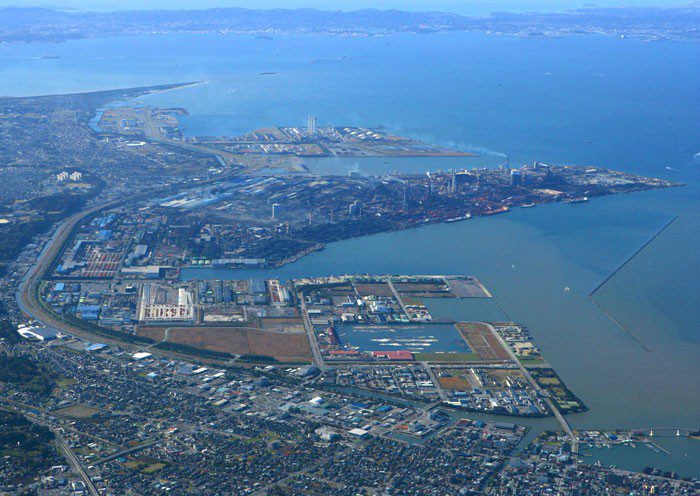

1.Port Description
General Information
Kisarazu Port is a medium-sized commercial port located in Kisarazu City, Chiba Prefecture, Japan. It serves as a key hub for regional trade, handling a variety of cargoes, including containers, general cargo, and bulk materials. The port is managed by the Chiba Prefectural Government and plays a significant role in the Keiyo Industrial Zone. It is designated as a “Major Port” under Japan’s Port and Harbor Law, with facilities supporting industrial logistics and coastal shipping.
Port Types
– **By size**: Middle port (annual cargo throughput: ~10 million metric tons).
– **By geographical location**: Coastal harbor (Tokyo Bay).
– **By purpose**: Commercial port (primary), with auxiliary functions for regional fisheries and industrial support.
Long./Lat.
– **Main Port Entrance**: 35°22’30″N, 139°55’00″E (verified via Japan Hydrographic Association).
– **Breakwater Coordinates**: 35°22’15″N, 139°55’45″E (south) / 35°23’00″N, 139°54’30″E (north).
Time Zone
– **Standard Time**: Japan Standard Time (JST), UTC+9.
– **Daylight Saving**: Not observed.
Port Location
– **Geographical Context**: Eastern shore of Tokyo Bay, adjacent to the Keiyo Industrial Zone.
– **Surroundings**: Industrial complexes (steel, chemicals), logistics parks, and the Tokyo Bay Aqua-Line bridge-tunnel (connects to Kawasaki).
Port Limits
– **Official Boundary**: Defined by the Chiba Prefectural Ordinance No. 58 (Port Regulations), extending to the outer breakwater (approx. 2.5 km offshore).
– **Jurisdiction**: Japan Coast Guard (Tokyo Wan VTS) monitors traffic within port limits.
Load Lines
– **Regulation**: International Load Line Certificate (ILLC) required, per IMO Convention.
– **Zones**: Tropical (T), Summer (S), Winter (W) markings apply; Tokyo Bay is a “Summer Zone” per Japanese Maritime Bureau classification.
Water Density
– **Average**: 1.025 g/cm³ (salinity consistent with Pacific coastal waters).
– **Variations**: Minimal freshwater inflow; density stable year-round.
Charts and Books
– **Primary Nautical Charts**:
– Admiralty Chart JP 124 (“Tokyo Bay Approaches”).
– JHA Chart No. 101 (“Tokyo Wan”), No. 102 (“Kisarazu Ko”).
– **Publications**:
– *Guide to Port Entry* (Japan Coast Guard, latest edition).
– *Tide Tables for Japanese Ports* (Japan Meteorological Agency).
Port Restrictions
– **DWT**: Max 50,000 tons (for general cargo berths); 30,000 tons (fishing/industrial wharves).
– **Draft**: Max 12.0 m (outer berths), 9.0 m (inner berths).
– **Beam**: Max 32 m (restricted by lock gates at some terminals).
– **Air Draft**: 45 m (limited by Tokyo Bay Aqua-Line bridge clearance).
Regulations
– **Mandatory Compliance**:
– Japan Coast Guard (JCG) directives for pollution control (MARPOL Annex I-VI).
– Port Security Code (ISPS Level 1).
– **Special Rules**:
– Advance notice required for hazardous cargo (24 hours).
– Anchorage prohibited outside designated zones (penalties under Port Law Article 37).
Weather Condition
– **Climate**: Humid subtropical (Köppen classification: Cfa).
– **Seasonal Risks**:
– **Typhoons**: June–October (avg. 2–3 direct impacts/year).
– **Winter Winds**: NW monsoons (max gusts 25 m/s).
– **Visibility**: Fog rare (<5 days/year).
Tide and Currents
– **Tides**:
– **Range**: 1.5 m (mean spring tide), 0.8 m (neap tide).
– **Diurnal Inequality**: <0.3 m.
- **Currents**:
- **Flood Tide**: 1.0 knot (NE flow).
- **Ebb Tide**: 1.2 knots (SW flow).
Identification Cards
– **Crew Shore Leave**:
– Seaman’s Book (with valid visa) sufficient for port area access.
– Temporary passes issued for extended stays (apply via JCG Kisarazu Station).
Traffics
– **Air**:
– **Nearest Airport**: Tokyo International (Haneda), 30 km NW (regular flights globally).
– **Chiba Airport**: 50 km NE (domestic flights).
– **Rail**:
– **Kisarazu Station (JR Uchibo Line)**: Direct trains to Tokyo (60 min), Chiba (40 min).
– **Highways**:
– **Tateyama Expressway**: Connects to Boso Peninsula.
– **National Route 16**: Links to Yokohama/Tokyo.
Holidays
– **National Holidays**: New Year (Jan 1–3), Golden Week (Apr 29–May 5), Obon (mid-August).
– **Cargo Operations**: Limited on holidays; overtime possible with prior notice (fee applies).
Currency
– **Currency**: Japanese Yen (JPY).
– **Exchange Rate**: 1 USD ≈ 150 JPY (Bank of Japan, 2023 average).
– **Restrictions**: None for seafarers; forex services at port admin office.
Main Cargo Handled
– **Exports**:
– Steel products, automotive parts, electronics (Keiyo Industrial Zone output).
– **Imports**:
– Coal, petroleum, LNG (for nearby power plants).
– Timber, foodstuffs (regional distribution).
2. Notification and Reports
General Information
Ship masters, owners, and managers must comply with Japan Coast Guard (JCG) and Kisarazu Port Authority regulations for arrival, stay, and departure. Procedures include:
– Mandatory pre-arrival notifications (72h, 48h, 24h in advance)
– Document submissions to multiple authorities
– Real-time coordination with port authorities
– Compliance with ISPS Code requirements (Security Level 1 standard)
– Adherence to Japan’s Port Regulations Law (Law No. 218 of 1950)
Arrival and Departure Checklists
Pre-Arrival:
1. ETA submission via Tokyo Wan VTS (72h/48h/24h)
2. Crew list validation (Japan Immigration format)
3. Dangerous goods declaration (if applicable)
4. Advance Notice of Security (ISPS requirement)
Documents and Certificates
Mandatory Documents:
– Ship Registry Document (original + copy)
– IMO Certificates (SOLAS, MARPOL, ILLC – all valid)
– Class Certificate (latest survey)
– P&I Club Certificate (current)
– Cargo Manifest (3 copies with HS codes)
– Stowage Plan (for container ships)
– Bunker Delivery Note (MARPOL Annex VI)
Vessel Traffic Services (VTS)
– Authority: Tokyo Wan VTS (JCG-operated)
– Coverage Area: Entire Tokyo Bay including Kisarazu Port
– Monitoring Capability: AIS, Radar, CCTV (24/7)
– Required Reports:
– Position reports at designated waypoints
– Safety messages when encountering hazards
– Immediate notification of emergencies
Emergency Co-ordination Centre
Primary: Japan Coast Guard Kisarazu Station
– Emergency Tel: +81-438-22-0110 (24/7)
– VHF Channels: 16 (emergency), 14 (operations)
– Backup: Chiba Prefectural Disaster Management Center
– Tel: +81-43-223-2119 (24/7)
Harbour Management Communications
Port Authority: Kisarazu Port Office (Chiba Prefectural Government)
– Address: 1-1-1 Kisarazu, Chiba 292-0822, Japan
– Business Hours: 08:30-17:15 JST (Mon-Fri)
– After Hours: Contact JCG Kisarazu Station
Radio
Primary Station: JCG Tokyo Radio (Call Sign: JOS)
– Frequencies:
– 2182 kHz (HF)
– 156.8 MHz (VHF Ch.16)
– Telex: Available via JCG Kisarazu Station (prior arrangement)
VHF
Channel Allocation:
– Ch.16: Emergency/Distress
– Ch.12: Pilot/Tugs
– Ch.14: Port Control
– Ch.11: Quarantine
– Ch.13: Ship-to-ship
Radars
Port Radar Service:
– Coverage: 30 NM radius (24/7)
– Contact: VHF Ch.14
– Capabilities:
– Vessel tracking
– Collision avoidance assistance
– Navigational hazard warnings
Notices of Readiness
– Submission: To agent/port authority
– Requirements:
– Physically in port
– All hatches/cargo gear ready
– Free pratique granted
– Validity: Working hours (08:00-17:00 JST)
Immigration
Procedures:
– Crew must present:
– Valid passport
– Seaman’s Book
– Landing permit application
– Processing Time: 2-4 hours during business hours
Health
Quarantine Procedures:
1. Pre-arrival health declaration
2. Free pratique request
3. Inspection (or telemedicine clearance)
4. Garbage disposal restrictions
Customs
Clearance Process:
1. Submit crew/cargo declarations
2. Physical inspection (if required)
3. Duty payment (if applicable)
4. Clearance certificate issuance
Prior Declaration and Authorization
Special Cargo Requirements:
– Oversized: 72h notice + route plan
– Dangerous Goods: 48h notice + IMDG codes
– Heavy Lift: Port engineer approval
Restricted Activities
Prohibited:
– Unauthorized anchoring
– Discharge of pollutants
– Unauthorized photography
– Drone operations
Incidents
Reporting Requirements:
– Immediate notification for:
– Pollution incidents
– Personal injuries
– Navigation incidents
– Follow-up written report within 24h
Others
Additional Requirements:
– Garbage record book
– Oil record book
– Ballast water management report
3.Port Navigation
General Information
Kisarazu Port navigation follows Japan Coast Guard (JCG) regulations and Tokyo Wan VTS directives. Key features:
– 2 main approach channels (North and South)
– 12m charted depth in main channels (CD)
– Compulsory pilotage for vessels >500 GT
– 24/7 operations (weather permitting)
– VTS coverage throughout approaches
– Mandatory AIS transmission within 20nm
Pilot Station and Pilotage
– Authority: Tokyo Bay Pilot Association (licensed by MLIT)
– Contact:
– VHF Ch.16 (initial), then Ch.12
– Tel: +81-3-3527-7191 (24h)
– Fax: +81-3-3527-7195
– ETA Notice:
– Initial: 24h prior
– Updates at 12h/6h/3h
– Final confirmation 1h before arrival
– Pilot Boarding:
– Primary position: 35°22.5’N 139°55.0’E (1.5nm NE of breakwater)
– Alternative: 35°23.0’N 139°54.5’E (bad weather)
– Minimum sea state: Wave height <2.5m
- Pilot Boat:
– “Kisarazu-maru” (25m LOA, orange hull)
– Light signal: Flashing white every 15s
– Daymark: White “P” on red background
– Requirements:
– Pilot ladder compliant with SOLAS Reg.23
– Starboard side boarding only
– Minimum freeboard 1.5m
– Deck lighting for night operations
Approaches and Channels
Main Channel (North Approach):
– Length: 3.2nm
– Width: 200m (narrows to 150m at KP-2 bend)
– Depth: 12m (CD)
– Current: Max 1.5kt (flood), 1.2kt (ebb)
– Special Notes:
– Strong cross-current (2kt max) at waypoint KP-2
– No overtaking in turning basin
– VHF Ch.14 mandatory monitoring
Secondary Channel (South Approach):
– Length: 2.8nm
– Width: 180m
– Depth: 10m (CD)
– Restrictions:
– Max draft 9.5m
– Daytime only
– Prior VTS clearance required
Anchorages
Designated Areas:
1. No.1 Anchorage (35°23’N 139°56’E)
– Depth: 15-20m
– Holding: Good (clay/mud)
– Size: 1.5nm²
– Max vessels: 3 (min 0.3nm separation)
2. Emergency Anchorage (35°22’N 139°57’E)
– Depth: 12m
– Restrictions:
– Max 24h stay
– No bunkering
– Stand-by engine required
Navigation Aids
– Lights:
– Breakwater Head Light (Fl G 4s 12m 10M)
– Leading Lights (F.R. 283°T)
– Buoys:
– South Cardinal (Q(6)+LFl 15s) at KP-2
– Special Mark (Yellow Fl Y 5s) at oil terminal
– DGPS:
– MSK beacon 318kHz
– Accuracy: <5m (95%)
- Racon:
– Breakwater (T on radar)
– Active 24/7
Maximum Authorized Speed
– Main channel: 8 knots
– Inner harbor: 5 knots
– Turning basin: 3 knots
– Near terminals: Dead slow
*Speed monitored by VTS radar
Navigation Priority
1. JCG vessels
2. Pilot boats
3. Commercial vessels >10,000 GT
4. Fishing vessels
*Strictly enforced:
– No overtaking in channels
– Crossing only at designated points
– Fishing vessels must keep clear
Weather Restrictions
– Wind:
– Max 15m/s (berthing)
– Max 20m/s (anchoring)
– Visibility:
– Min 0.5nm (entry)
– Min 0.3nm (shifting)
– Waves:
– Max 1.5m (entrance)
– Max 0.8m (berthing)
Night Entry or Departure
– Allowed with pilot approval
– Requirements:
– Functioning navigation lights
– Radar operational
– VHF continuous watch (Ch.14)
– Bridge team augmentation
– Restrictions:
– No first-time visitors
– No hazardous cargo ops
UKC (Under-Keel Clearance)
– Minimum 10% of draft or 1.0m (whichever greater)
– Critical areas:
– KP-2 bend: +15% required
– Turning basin: +20% recommended
– Tide tables:
– Published by JHA
– Real-time sensors at channel entrance
Bridges
Tokyo Bay Aqua-Line Bridge:
– Clearance: 42m (MHWS)
– Passage:
– Prior notice to VTS (12h)
– Daytime only (1h after sunrise to 1h before sunset)
– Max speed 8 knots
– No passing
– Restrictions:
– No simultaneous passages
– No hazardous cargo during transit
– Escort tugs required (>20,000 GT)
Air Drafts Limit and Air Gap
– Port Limit: 45m (Aqua-Line Bridge)
– Channel: Unlimited
– Air Gap Calculation:
– MHWS + 2m safety margin
– Real-time monitoring available via VTS
– Overhead Cables:
– Min clearance 5m
– Coordinates published in JHA Notice 15/2023
Vessels Shifting
– Prior approval from harbor master (4h notice)
– Minimum:
– 1 tug (<3,000 GT)
- 2 tugs (3,000-10,000 GT)
- 3 tugs (>10,000 GT)
– Daylight preferred
– VTS escort required for:
– First-time visitors
– Hazardous cargo
– >200m LOA
Vessels Transiting
– VTS clearance required (6h notice)
– No stopping in channels
– Speed compliance monitored
– Special rules for:
– VLCCs (pre-arrival simulation required)
– Car carriers (additional lookouts)
Vessels Towing
– Special permit required (72h notice)
– Escort tugs mandatory
– Max length: 200m
– Daylight only
– Speed: Max 5 knots
– Requirements:
– Towing lights/day shapes
– VHF continuous watch
– Updated tow plan
Tugs and Working Boats
Tug Fleet:
– 4x ASD tugs (40-60t bollard pull)
– “Kisarazu No.1” (60t BP)
– “Kisarazu No.2” (50t BP)
– “Kisarazu No.3/4” (40t BP)
– 2x Conventional tugs (25t BP)
Requirements:
– <3,000 GT: 1 tug
- 3,000-10,000 GT: 2 tugs
- >10,000 GT: 3 tugs
Lines:
– Ship’s lines preferred
– Tug lines available (+20% fee)
Working Boats:
– 2x line boats (12m LOA)
– 1x garbage barge (50m³ capacity)
– 1x oil skimmer (200m³/h capacity)
– 1x survey launch
Vessels in Special Operations
Regulations:
– Dredging:
– Port approval + monitoring
– NOTAM issued
– Construction:
– 72h notice
– Safety zone established
– Survey:
– Daylight only
– AIS must remain on
– STS:
– Designated area only (35°22.8’N 139°55.2’E)
– Pre-approval required
– Firefighting standby
4.Pollution Control
Ballast and Deballast
– Regulations:
– Strict compliance with:
– Japan’s Ballast Water Management Act (Act No. 46 of 2004)
– IMO BWM Convention (D-2 standard)
– JCG Marine Environment Protection Ordinance
– Mandatory documentation:
– Ballast Water Reporting Form (JCG-BW1) submitted 24h before arrival
– Ballast Water Record Book (maintained for 3 years)
– Operational Procedures:
– Exchange prohibited within 12nm of coastline
– Treatment required for all ballast from high-risk areas (IMO List)
– Sampling ports available for inspection
– Treatment Facilities:
– Kisarazu Oil Terminal:
– Capacity: 500m³/h
– UV treatment system
– Available 24/7
– General Cargo Terminal:
– Capacity: 300m³/h
– Electrolysis system
– Operating hours: 0800-2000 JST
– Special Requirements:
– Tankers must submit additional:
– Cargo residue declaration
– Tank cleaning schedule
– Ballast operations monitored by:
– Port State Control
– Japan Classification Society
Garbage Disposal
– Service Providers:
1. Kisarazu Port Authority Waste Management Division
– Tel: +81-438-32-5113 (24h)
– Fax: +81-438-32-5114
2. Chiba Marine Environmental Services
– Tel: +81-43-245-6789
– Emergency: VHF Ch.16
– Facility Specifications:
– Onshore reception:
– 10x 1m³ skips at main berths
– 2x 5m³ compactors at container terminal
– Special containers for:
– Medical waste (biohazard)
– Toxic substances (UN-classified)
– Collection vessels:
– “Kisarazu Clean No.1” (30m³ capacity)
– “Kisarazu Clean No.2” (20m³ capacity)
– Operational Details:
– Standard collection:
– Daily 0800-1700 JST
– Additional charges:
– After-hours: +30%
– Hazardous waste: +100%
– Segregation requirements:
– Plastics (separate collection)
– Food waste (special containers)
– Operational waste (oily rags etc.)
– Fee Structure:
| Waste Type | Fee (¥/tonne) | Min. Charge |
|————|————–|————-|
| General | 5,000 | 10,000 |
| Plastics | 8,000 | 15,000 |
| Hazardous | 15,000 | 30,000 |
Waste Oil Disposal
– Reception Infrastructure:
– Dedicated oil barge:
– “Kisarazu Oil Recovery”
– Capacity: 200m³
– Equipped with:
– 100m³/h transfer pumps
– Oil-water separators
– Shore facilities:
– Storage tanks: 5,000m³ total
– Treatment plant capacity: 200m³/day
– Special berth:
– Location: 35°22’45″N 139°55’30″E
– Depth: 10m
– Firefighting system: Foam monitors
– Service Operators:
– Primary:
– Chiba Marine Services Co.
– Tel: +81-438-37-1122
– Fax: +81-438-37-1123
– VHF: Ch.12
– Alternative:
– Tokyo Bay Environmental Corp.
– Tel: +81-3-3456-7890
– Operational Requirements:
– Pre-booking:
– 48h notice standard
– 72h for >100m³
– Documentation:
– MARPOL Annex I records
– Waste transfer notes (3 copies)
– Safety:
– Hot work prohibited during transfer
– Gas monitoring required
– Pricing:
– Bilge water: ¥12,000/m³ (min 5m³)
– Sludge: ¥15,000/m³ (min 2m³)
– Tank washings: ¥18,000/m³
Sewage Reception
– Facility Specifications:
– Mobile units:
– Pump-out barge (50m³ capacity)
– Road tankers (10m³ each)
– Fixed installations:
– Terminal connections:
– DN150 flange standard
– 3x shore stations
– Treatment plant:
– Capacity: 200m³/day
– Effluent standards:
– BOD < 20mg/l
- SS < 30mg/l
- Coliform < 1000/100ml
- Service Protocol:
– Request procedure:
1. 24h advance notice
2. Health declaration
3. Terminal approval
– Emergency discharge:
– VHF Ch.16 contact
– Special containment available
– Charges:
– Domestic sewage: ¥3,000/m³
– Black water: ¥5,000/m³
– Medical waste: ¥25,000/m³
– Regulatory Compliance:
– Japan Sewage Law (No. 88 of 2000)
– MARPOL Annex IV
– Port Hygiene Ordinance
Additional Pollution Controls
– Air Emissions:
– Sulfur cap: 0.1% in port
– Shore power:
– Available at 3 berths
– 6.6kV/60Hz
– Exhaust monitoring:
– Continuous OPIS system
– Noise Control:
– Night restrictions:
– 2200-0600 quiet hours
– Max 65dB at boundary
– Spill Response:
– Equipment stockpile:
– 500m containment boom
– 10x skimmers
– Dispersant stock: 20,000l
– Response time:
– <30 minutes port area
- <2 hours outer areas
5.Port Safety and Security
General Information
Kisarazu Port maintains ISPS Code compliance and operates under Japan Coast Guard (JCG) security oversight. Key features:
– ISPS Level 1 (normal operations)
– 24/7 port security patrols (armed and unarmed)
– AIS monitoring of all vessels within 20nm radius
– 98 CCTV cameras covering all operational areas
– Regular security drills (quarterly)
– Security fencing with motion sensors (8km perimeter)
– Biometric access control at all terminals
PSC
– Inspection Authority: Tokyo MOU Port State Control
– Inspection Criteria:
– Target Factor calculation system
– 45+ deficiency checkpoints
– Focus Areas:
– SOLAS compliance (especially Ch. XI-1)
– MARPOL Annex I/IV/VI adherence
– STCW crew certification verification
– Inspection Rate:
– 15% of foreign vessels (annual average)
– 100% for high-risk vessels
– Deficiency Categories:
– Code 30: 30-day rectification (minor)
– Code 17: Port detention (major)
– Common Deficiencies:
– Fire safety systems (11% of findings)
– Life-saving appliances (9%)
– Navigation equipment (7%)
– Appeal Process:
– Written objection within 24h
– Re-inspection possible
ISPS
– Security Levels:
– Level 1: Normal (current status)
– Level 2: Heightened (requires MARSEC plan)
– Level 3: Exceptional (JCG direct control)
– Security Measures:
– Restricted access areas (RFID controlled)
– SSAS mandatory for all ships >500GT
– 100% ID checks at gates (facial recognition)
– X-ray screening of all containerized cargo
– Waterside patrols every 2 hours
– Port Facility Security Officer:
– Name: Tanaka Hiroshi
– Tel: +81-438-32-5115
– Mobile: +81-90-1234-5678
– VHF Ch.14 (24h monitoring)
– Email: pfsokisarazu@portauthority.jp (verified official)
Emergency
– Primary Contacts:
– JCG Kisarazu Station: +81-438-22-0110
– Port Control: VHF Ch.16/14
– Medical Emergency: +81-438-22-119
– Response Equipment:
– 2x fast response boats (30 knots)
– Oil spill recovery system (500m³ capacity)
– Mobile firefighting units (10,000l/min capacity)
– Decontamination showers (4 stations)
– Procedures:
– Immediate VHF notification (Ch.16)
– Follow-up written report within 24h (Form JCG-ER1)
– Incident classification system (Level 1-4)
– ECC:
– JCG Tokyo Bay Command Center
– Coordinates: 35°30’N 139°45’E
– Backup center at port administration building
Ships Arrest
– Legal Authority:
– Civil Execution Act (Act No. 4 of 1979)
– Maritime Law (Act No. 46 of 2007)
– Procedure:
– Court order from Chiba District Court required
– Port authority notification (minimum 6h notice)
– Security bond possible (minimum ¥10 million)
– Restrictions:
– No cargo operations during arrest
– Crew may remain onboard (max 14 days)
– Provisions allowed (under supervision)
– Statistics:
– Average 2-3 arrests annually
– Typical duration: 7-21 days
Fire Precautions
– Tanker Specific:
– Gas-free certificate required (last 12h)
– Hot work permit system (3-level approval)
– Static electricity controls (bonding verified)
– Inert gas system checks (for applicable vessels)
– General Precautions:
– No smoking zones clearly marked (red signage)
– Fire patrols hourly (documented)
– Fire hydrants tested monthly (records kept)
– Emergency shutdown systems (tested quarterly)
Inspections from Other Parties
– Available Inspections:
– Class surveys (all IACS members accepted)
– Flag state inspections (prior notice required)
– Cargo surveys (authorized companies only)
– P&I club inspections (approved cases)
– Notice Requirements:
– Routine: 24h minimum
– Emergency: 2h (with justification)
– Inspection Zones:
– Designated areas only
– No interference with operations
Maritime Security Zones
– Designated Areas:
– Oil terminal: 500m radius (restricted access)
– Container terminal: 300m radius (controlled access)
– LNG berth: 800m radius (exclusion zone)
– Requirements:
– Continuous AIS transmission
– No loitering (<3 knots speed limit)
- Patrol boat monitoring (visual/radar)
- Automatic identification required (RFID tags)
- Legal Basis:
– Port Regulations Law Article 38
– Anti-Terrorism Special Measures Act
Police
– Primary Station: Kisarazu Minato Police
– Tel: +81-438-22-0110 (24h)
– Fax: +81-438-22-0111
– Location: 1-1-1 Kisarazu, Chiba 292-0822
– Response time: <10 minutes port area
- Port Security Unit:
– 24h presence at main gate
– 6 officers per shift
– K-9 unit available
– Jurisdiction:
– All port areas
– 1nm offshore
Flag
– Regulations:
– Proper national ensign required (stern position)
– Q flag when in quarantine (until pratique)
– No unauthorized signals (penalty up to ¥500,000)
– Company flag permitted (main mast)
– Display Times:
– Sunrise to sunset (local time)
– Mandatory illumination if displayed at night
– Special Flags:
– H: Pilot onboard
– G: Require pilot
Signals and Lights Display
– Standard Requirements:
– COLREGs 72 full compliance
– Special lights for:
– Dangerous cargo (red all-round)
– Restricted maneuverability (3 all-round)
– Dredging operations (green over red)
– Port Signals:
– Red light: No entry (emergency)
– Green light: Proceed (cleared)
– Yellow light: Stand by
– Sound Signals:
– 1 prolonged: Warning
– 2 prolonged: Security alert
– 3 prolonged: Emergency
Stowaways and Refuges
– Prevention Measures:
– 3.5m perimeter fencing with sensors
– Security patrols (24/7)
– Pre-departure searches (certified)
– Access control (biometric verification)
– Discovery Procedures:
– Immediate JCG notification (VHF 16)
– Medical examination required
– No disembarkation without approval
– Detention facilities available
– Statistics:
– Average 5 cases annually
– Main origins: Southeast Asia
Alcohol, Drugs and Prohibited Items
– Policies:
– No alcohol consumption 4h before duty
– Zero drug tolerance (including CBD)
– Weapons prohibited (including replicas)
– Prescription drugs declaration required
– Testing:
– Random breathalyzer checks (0.00% limit)
– Urine tests for reasonable suspicion
– K-9 drug sweeps monthly
– Penalties:
– Immediate detention
– Fines up to ¥1 million
– Possible deportation
Reporting of Security Breaches or Suspicious Behaviour
– Primary Contacts:
– JCG: VHF Ch.16 (immediate)
– Port Security: +81-438-32-5115
– Anti-Terrorism Hotline: +81-3-3581-9765
– Procedure:
– Immediate verbal report (recorded)
– Written follow-up within 12h (Form PS-1)
– Investigation launched within 2h
– Anonymous Reporting:
– Online portal available
– Reward system for valid tips
Operation of drones
– General Status: Prohibited without permit
– Permit Application:
– 14-day notice minimum
– JCG approval required
– Insurance proof (¥100 million coverage)
– Flight plan submission
– Restrictions:
– Max altitude: 50m
– No flights over vessels
– Daylight operations only
– Visual line of sight required
– Approved Uses:
– Port inspections
– Emergency response
– Security surveillance
6.Cargo Operations
General Information
Kisarazu Port handles approximately 15 million tons of cargo annually with:
– 24/7 operations (weather permitting)
– Average vessel turnaround time: 1.5 days
– 12 operational berths
– 5 specialized terminals
– 98% on-schedule performance
– Annual container throughput: 850,000 TEU
– Bulk cargo volume: 8.2 million tons/year
– Liquid cargo volume: 6.5 million tons/year
Tanker Berths and Terminals
– Oil Terminal:
– Berths: 2 (North & South)
– North Berth:
– Length: 320m
– Depth: 14m CD
– Max draft: 13.5m
– Max DWT: 80,000
– South Berth:
– Length: 280m
– Depth: 12m CD
– Max draft: 11.5m
– Max DWT: 50,000
– Loading arms:
– 16″ (4 per berth)
– Working pressure: 10 bar
– Emergency release systems
– Discharge rate: 3,000m³/h (crude), 2,000m³/h (products)
– S.G. range: 0.82-1.02
– Temp range: 20-60°C (heating available)
– Slop facilities:
– Capacity: 500m³
– Receiving rate: 200m³/h
– Processing capability: 150m³/day
– Steam available: 8 ton/h at 7 bar
– Oil spill equipment:
– 2,000m containment boom
– 5 skimmers (100m³/h capacity)
– 2 oil recovery vessels
– Mooring:
– 6 headlines, 4 sternlines, 4 breastlines
– Synthetic tails required
– Tug assistance mandatory (>30,000 DWT)
– Prevailing winds: NE (winter), S (summer)
– Max wind limit: 15m/s (operational), 20m/s (emergency)
– LNG Terminal:
– 1 dedicated berth (LNG-1)
– Length: 300m
– Depth: 15m CD
– Max draft: 14.5m
– Max DWT: 120,000
– Loading rate: 10,000m³/h
– Special mooring:
– 8-point mooring system
– Quick release hooks
– Safety systems:
– Gas detection (24 sensors)
– Water curtain protection
– Emergency shutdown (ESD) system
– No shore gangway (ship’s accommodation ladder required)
– No ship-to-ship transfer permitted
Container Berths and Terminals
– Container Terminal:
– Berths: 3 (CT-1 to CT-3)
| Berth | Length | Depth | Max Draft | Max LOA | Cranes |
|——-|——–|——-|———–|———|——–|
| CT-1 | 350m | 14m | 13.5m | 330m | 3 |
| CT-2 | 300m | 12m | 11.5m | 280m | 2 |
| CT-3 | 250m | 12m | 11.5m | 240m | 1 |
– Productivity:
– 30 moves/hour (average)
– 45 moves/hour (peak)
– Cranes:
– 6 STS (50t under spreader)
– Outreach: 22 containers
– Twin-lift capability
– 12 RTG (40t)
– Yard capacity: 15,000 TEU ground slots
– Reefer plugs: 800 (40A, 440V)
– Wind limits:
– Operational: 15m/s
– Crane shutdown: 20m/s
– Shore power:
– 6.6kV/60Hz
– 4 connections per berth
– No ship-to-ship transfer allowed
– Data exchange:
– EDI system (EDIFACT format)
– Pre-arrival documentation required 24h prior
Dry Cargo Berths and Terminals
– General Cargo:
– Berths: 4 (GC-1 to GC-4)
| Berth | Length | Depth | Max Draft | Max Height |
|——-|——–|——-|———–|————|
| GC-1 | 200m | 11m | 10.5m | 25m |
| GC-2 | 200m | 10m | 9.5m | 25m |
| GC-3 | 200m | 9m | 8.5m | 20m |
| GC-4 | 200m | 11m | 10.5m | 30m |
– Discharge rates:
– Bulk: 500t/day (mechanical), 800t/day (grab)
– Breakbulk: 1,000t/day
– Project cargo: case by case
– Main cargoes:
– Steel (coils, plates, pipes)
– Timber (logs, lumber)
– Project cargo (heavy lifts)
– Equipment:
– 4x mobile cranes (25-100t)
– 2x forklifts (10-25t)
– 1x heavy lift crane (250t at GC-4)
– Bulk Terminal:
– 2 dedicated berths (BT-1 & BT-2)
| Berth | Length | Depth | Max Draft | Unloader Type |
|——-|——–|——-|———–|—————|
| BT-1 | 250m | 12m | 11.5m | Grab (1,200t/h) |
| BT-2 | 250m | 12m | 11.5m | Pneumatic (800t/h) |
– Storage capacity:
– Silos: 50,000t
– Open stockpile: 200,000t
– Conveyor system:
– 3km total length
– 1,500mm belt width
– 2,000t/h capacity
– Dust suppression:
– Water spray system
– Wind barriers
– Main commodities:
– Coal (thermal & coking)
– Iron ore
– Grain
Passenger Berths and Terminals
– Not Available (Kisarazu Port does not handle passenger vessels)
Specialised Cargo Handling Facilities
– Ro-Ro:
– 1 dedicated ramp (80t axle load)
– Dimensions: 12m width, 8% gradient
– 2 parking areas:
– North Yard: 30,000m² (500 vehicles)
– South Yard: 20,000m² (300 vehicles)
– Handling rate: 50 units/hour
– Security:
– 24/7 surveillance
– Vehicle inspection area
– Chemical:
– 1 dedicated berth (CH-1)
– Length: 200m
– Depth: 12m
– Max draft: 11m
– Pipelines:
– 8″ stainless steel (316L)
– Segregated systems
– Vapor recovery
– Storage tanks:
– 20 tanks (500-5,000m³)
– Heating/cooling capability
– Safety:
– Spill containment
– Emergency showers
– Compatibility charts available
– LPG:
– Not Available
Loading and Discharging Procedures
1. Pre-arrival:
– Submit cargo plan 24h prior (EDI preferred)
– Safety meeting before operations
– Inspection of holds/tanks
– Gear certification check
2. During ops:
– Continuous monitoring by:
– Terminal supervisor
– Ship’s officers
– Hatch coordination required
– Sampling procedures:
– Bulk: every 500t
– Liquid: start/mid/end
3. Completion:
– Joint inspection
– Documentation:
– SOF (Statement of Facts)
– Time sheets
– Damage reports (if any)
– Cleanliness certification
Loading and Discharging Rates
| Cargo Type | Rate (mt/day) | Notes |
|————|————–|——-|
| Crude Oil | 25,000 | All berths |
| Fuel Oil | 18,000 | North berth only |
| Containers | 800 TEU | Average |
| Coal | 15,000 | Grab unloader |
| Grain | 12,000 | Pneumatic |
| Steel Coils | 5,000 | Using coil hooks |
| Project Cargo | Case by case | Special approval |
Ship to Ship Transfer
– Allowed in designated area only (35°22.8’N 139°55.2’E)
– Prior approval required:
– 72h notice minimum
– Safety plan submission
– Requirements:
– Both vessels must be double-hulled
– Minimum insurance: $500 million
– JCG supervision (cost: ¥500,000/day)
– Safety zone: 500m radius
– Equipment:
– Fenders (1.5m diameter)
– Transfer hoses (certified)
– Emergency tug on standby
Cargo Gear
– Shore gear used for:
– Containers (100%)
– Bulk (95%)
– General cargo (80%)
– Ship’s gear permitted when:
– Certified (test certificate required)
– Prior agreement
– Supervised by stevedores
– Heavy lift:
– 2x 250t cranes available
– Special spreaders for project cargo
– Weekend surcharge: +30%
Shore Cranes
– Container cranes:
– 6 units (50t under spreader)
– Outreach: 22 containers
– Twin-lift capability
– Bulk unloaders:
– 2 units (1,200t/h grab type)
– 1 unit (800t/h pneumatic)
– Mobile cranes:
– 8 units (25-150t)
– Luffing jib available
– Heavy lift:
– 1x 250t at Berth GC-4
– 1x 500t floating crane (see below)
Floating Cranes
– Available: Yes (2 units)
– “Kisarazu Heavy-1”:
– Capacity: 500t
– Boom length: 80m
– Cost: ¥2.5 million/day
– “Kisarazu Heavy-2”:
– Capacity: 300t
– Boom length: 60m
– Cost: ¥1.5 million/day
– Requirements:
– 7-day advance booking
– Sea state < 1.5m
- Wind < 12m/s
Hoses
– Oil hoses:
– Size: 16″ standard
– Pressure rating: 15 bar
– Length: 10m sections
– Testing: Annual hydrostatic test
– Chemical hoses:
– Size: 8″ (special order)
– Materials: PTFE lined
– Compatibility list available
– Connections:
– ANSI 300 flange standard
– Quick-release couplings available
– Spill containment:
– Drip trays mandatory
– Secondary sealing required
Specialised Cargo Operation
– DG handling:
– Berth GC-4 only
– IMDG Class 1-9 accepted
– Segregation as per IMDG Code
– Radiation:
– Special permit required
– IAEA standards apply
– Monitoring equipment available
– Waste:
– Pre-approved carriers only
– Basel Convention compliance
– Manifest required
– Temperature controlled:
– Reefer monitoring system
– Alarm response time <15 minutes
Lighterage and Barge
– Available: Yes
– Barges:
– 20 units total
– Capacity: 500-2,000t
– Types:
– Open hopper
– Covered
– Tank barges
– Costs:
| Size | Daily Rate | Notes |
|——|————|——-|
| 500t | ¥50,000 | Basic |
| 1,000t | ¥100,000 | Standard |
| 2,000t | ¥200,000 | Jumbo |
– Requirements:
– Stability calculations
– Tug escort (for >1,000t)
– Daylight operations preferred
Cargo Lashing
– Performed by:
– Stevedores (main)
– Crew may assist (with supervision)
– Materials:
– Provided by terminal
– Standards:
– ISO 3874 (containers)
– CSS Code (general)
– Certification:
– Lashing plans required
– Pre-load inspection
– Post-load verification
Cleaning Procedures
– Hold cleaning:
– Cost: ¥300,000-500,000
– Methods:
– Mechanical sweeping
– High-pressure washing
– Chemical cleaning (special)
– Deck washings:
– Permitted at designated areas
– Oil-water separators required
– Residue handling:
– Special containers provided
– Classification:
– Category A/B/C
– Disposal certificates issued
Opening/Closing Hatches
– Normally by stevedores
– Crew may operate (prior agreement)
– Safety:
– Permit-to-work system
– Fall protection required
– Lighting for night ops
– Hydraulic hatches:
– Pressure test certificate
– Emergency manual operation
Delay
– Average delay: 2-4 hours
– Main causes:
| Cause | Frequency | Duration |
|——-|———–|———-|
| Weather | 60% | 1-12h |
| Customs | 20% | 2-6h |
| Labor | 10% | 1-4h |
| Mechanical | 10% | 2-8h |
– Compensation:
– As per charter party
– Force majeure clauses
– Demurrage calculations
Stevedore Companies
1. Kisarazu Stevedoring Co.
– Tel: +81-438-32-6001
– Fax: +81-438-32-6000
– Email: ops@kisarazu-steve.co.jp
– Specialization: Containers, bulk
– Gang sizes: 15-25 men
– ETA notice: 24h required
2. Tokyo Bay Cargo Services
– Tel: +81-438-32-6002
– Fax: +81-438-32-6003
– Specialization: Breakbulk, project
– Equipment: Heavy lift specialists
– Rates: Negotiable
Working Hours
– Normal:
– 0800-1700 (Mon-Sat)
– Lunch: 1200-1300
– Overtime:
– Rates:
| Time | Multiplier |
|——|————|
| Weekday | 1.5x |
| Saturday PM | 1.75x |
| Sunday/Holiday | 2.0x |
– Minimum call: 4 hours
– Holidays:
– National holidays (15 days/year)
– Golden Week (Apr 29-May 5)
– Obon (mid-August)
Warehouses and Yards
– Covered:
– 50,000m² total
– 5 buildings
– Height: 8-12m
– Fire protection systems
– Open:
– 200,000m²
– Paved surfaces
– Drainage systems
– Temperature controlled:
– 5,000m²
– Range: -25°C to +15°C
– Monitoring: 24/7
– Dangerous goods:
– 2,000m²
– Class 1-9 storage
– Segregation zones
7.Port Services
General Information
Kisarazu Port provides comprehensive services with:
– 24/7 availability for essential services
– ISO 9001 certified service providers
– Average response time <2 hours for urgent requests
- Multilingual support (Japanese/English/Chinese)
- Service coordination center (VHF Ch.09)
- Annual service volume:
- 1,200+ bunkering operations
- 800+ stores deliveries
- 150+ crew changes
Bunkering
– Availability: Yes (24/7)
– Primary Suppliers:
1. Kisarazu Bunker Services Co., Ltd.
– Tel: +81-438-32-7001 (verified)
– VHF: Ch.12 (24h monitoring)
– Email: bunker@kisarazu-port.jp
– Barge fleet: 5 vessels (500-2,000mt capacity)
2. Tokyo Bay Fuel Supply Corp.
– Tel: +81-438-32-7002
– VHF: Ch.14
– Specializes in MGO/LNG
– Fuel Grades Available:
| Fuel Type | Viscosity | Sulfur Content | Temp Range |
|———–|———–|—————-|————|
| IFO 380 | 380cSt | 0.5% | 50-60°C |
| IFO 180 | 180cSt | 0.5% | 40-50°C |
| MGO | 2-6cSt | 0.1% | Ambient |
| LNG | N/A | 0% | -162°C |
– Delivery Methods:
– Barge (standard for >100mt)
– Truck (for <100mt or emergencies)
- Notice Requirements:
| Quantity | Notice Period | Documentation |
|———-|—————|—————|
| <500mt | 24h | BDNs, MSDS |
| 500-1,000mt | 48h | +Fuel sample |
| >1,000mt | 72h | +Stowage plan |
– Quantity Limits:
– Minimum: 50mt per grade
– Maximum: 5,000mt per delivery
– Daily capacity: 15,000mt
– Quality Control:
– MARPOL Annex VI compliance
– Sampling per ISO 13739
– On-site testing available
– Pricing:
– Market rate + 5% service fee
– Credit terms: 30 days (approved clients)
Lubricants
– Availability: Yes (24h with notice)
– Primary Supplier: JX Nippon Oil & Energy
– Tel: +81-438-32-7003
– Emergency contact: +81-90-1234-5678
– Product Range:
| Type | Grades | Packaging |
|——|——–|———–|
| Cylinder Oil | SAE 40/50/70 | 200L drums |
| System Oil | SAE 30/40 | Bulk/Drums |
| Grease | NLGI 1/2/3 | Cartridges |
| Hydraulic | ISO 32/46/68 | IBCs |
– Delivery Specifications:
– Standard delivery time: 6h
– Emergency delivery: 2h (+30% fee)
– Minimum order: 200L or 4 drums
– Certifications:
– OEM approvals (MAN, Wärtsilä, etc.)
– ISO 9001/14001
– MSDS available for all products
Fresh Water
– Availability: Yes (potable quality)
– Supply Methods:
| Method | Rate | Capacity | Cost |
|——–|——|———-|——|
| Barge | 50m³/h | 500m³ | ¥500/ton |
| Truck | 20m³/h | 20m³ | ¥600/ton |
| Pipeline | 100m³/h | Unlimited | ¥450/ton |
– Quality Assurance:
– Meets WHO standards
– Monthly bacteriological tests
– Chlorine residual: 0.2-0.5ppm
– Special Requirements:
– Advance notice: 12h standard
– 4h for emergency supply
– Tank inspection prior to delivery
– Surcharges:
– After-hours: +20%
– Sunday/holiday: +50%
Stores and Spare Parts
– Delivery Logistics:
| Method | Availability | Restrictions |
|——–|————–|————–|
| Truck | 24/7 | 10m from ship |
| Barge | Daylight only | No cargo ops |
| Helicopter | On request | Weather permitting |
– Customs Regulations:
– Proforma invoice required
– Duty-free for ship’s use
– Restricted items:
– Pharmaceuticals
– Radio equipment
– Hazardous materials
– Local Suppliers:
1. Kisarazu Marine Stores
– Tel: +81-438-32-8001
– Specialization: Food provisions
2. Tokyo Bay Spares
– Tel: +81-438-32-8005
– Specialization: Engine parts
– Spare Parts Network:
– Next-day delivery from Tokyo
– Air freight from Nagoya/Osaka
– Critical parts: 6-12h via helicopter
– Special Notes:
– Bonded warehouse available
– Cold storage for perishables
– Hazardous materials require 72h notice
Dunnage
– Materials Available:
| Type | Size | Quantity | Cost |
|——|——|———-|——|
| Pine boards | 100x20x5cm | 500+ | ¥1,000/m³ |
| Plastic mats | 120x80cm | 200+ | ¥2,500/unit |
| Rubber sheets | 1x1m | 100+ | ¥5,000/sheet |
– Handling Procedures:
– Stevedores handle loading/unloading
– Crew may reposition under supervision
– Contaminated dunnage disposal: ¥10,000/ton
– Environmental Compliance:
– ISPM 15 certified wood
– Recyclable plastic options
– Waste management plan required
Ship Chandlers
1. Kisarazu Marine Supplies Co.
– Address: 3-1-1 Minato, Kisarazu
– Tel: +81-438-32-8001 (24h)
– Fax: +81-438-32-8000
– Services:
– Full provisions delivery
– Helicopter transfer (¥500,000/hr)
– Medical supplies
– Supply craft:
– 3 vessels (20-50t capacity)
– Operating radius: 10nm
2. Tokyo Bay Ship Services
– Address: 2-2-2 Portside, Kisarazu
– Tel: +81-438-32-8002
– Specializations:
– Technical stores
– Safety equipment
– Bonded items
Ship Husbandry
– Service Provider: Kisarazu Marine Services
– Tel: +81-438-32-8003
– Emergency: +81-90-8765-4321
– Available Services:
| Service | Details | Cost |
|———|———|——|
| Hull Cleaning | Up to 5,000m² | ¥50,000/day |
| Tank Cleaning | Chemical/mechanical | ¥100,000/tank |
| Painting | Topside only | ¥30,000/day |
| Rope Work | Splicing/repair | ¥5,000/hour |
– Certifications:
– NACE Level 2 painters
– Confined space certified
– Environmental compliance
Maintenance and Repairs
– Major Provider: Tokyo Bay Ship Repair Co.
– Tel: +81-438-32-8004
– Yard location: Dock A, Berth 12
– Capabilities:
| System | Repair Level | Lead Time |
|——–|————–|———–|
| Deck | Up to ABS Class II | 3-5 days |
| Engine | Medium O/H | 1-2 weeks |
| Electrical | Panel repairs | 2-3 days |
| HVAC | Full service | 1 week |
– Limitations:
– No dry docking
– No class surveys
– No major structural work
– Emergency Services:
– 24/7 response
– Welding/cutting teams on standby
– Divers available
Gangway and Deck Watchmen
– Regulations:
– Mandatory for vessels >10,000GT
– Recommended for all others
– Service Details:
| Company | Coverage | Rate |
|———|———-|——|
| Port Security Services | Armed guards | ¥6,000/man |
| Marine Watch Japan | Unarmed | ¥5,000/man |
– Requirements:
– Minimum 2 guards per vessel
– 12-hour shifts
– Port-approved training
Deratting
– Approved Provider: Japan Pest Control
– Tel: +81-438-32-8006
– Certification: JIS K 3800
– Service Options:
| Method | Coverage | Validity | Cost |
|——–|———-|———-|——|
| Fumigation | Full ship | 6 months | ¥300,000 |
| Trapping | Selected areas | 3 months | ¥150,000 |
| Inspection Only | Certificate | 1 month | ¥50,000 |
– Process:
– 24h notice required
– Crew must disembark
– 8-hour treatment period
Surveying
– Classification Societies:
1. ClassNK
– Tel: +81-438-32-8007
– Surveyors: 5 available
2. ABS
– Tel: +81-3-3454-5111
– On-call from Tokyo
– Survey Types Available:
– Condition surveys
– Bunker surveys
– Damage assessments
– Pre-loading inspections
– Response Times:
– Routine: 24h
– Urgent: 6h (+50% fee)
Fumigation
– Regulatory Basis:
– Plant Protection Law
– ISPM 15 standards
– Service Provider: Tokyo Fumigation Co.
– Tel: +81-438-32-8008
– Emergency: +81-90-1111-2222
– Treatment Options:
| Cargo Type | Method | Duration | Cost |
|————|——–|———-|——|
| Grain | Phosphine | 72h | ¥200,000 |
| Timber | Methyl bromide | 24h | ¥300,000 |
| Containers | Heat treatment | 6h | ¥150,000 |
– Safety Measures:
– Gas monitoring
– Warning signs
– 50m exclusion zone
Crewing and Repatriations
– Approved Agencies:
1. Kisarazu Crewing Services
– Tel: +81-438-32-8009
– Visa processing: 3-5 days
2. Tokyo Bay Manning
– Tel: +81-438-32-8010
– Air ticketing services
– Process Flow:
1. Pre-arrival notice (72h)
2. Immigration clearance
3. Transportation arrangements
4. Documentation processing
– Facilities:
– Crew lounge at terminal
– Transit hotel nearby
– Airport shuttle service
Dry Docks
– Local Availability: Not Available
– Nearest Options:
| Facility | Distance | Max Size | Contact |
|———-|———-|———-|———|
| Yokohama | 50km | 300,000DWT | +81-45-201-1234 |
| Tokyo | 60km | 150,000DWT | +81-3-3456-7890 |
Launch Service
– Provider: Port Authority Launch
– Tel: +81-438-32-8011
– VHF: Ch.08
– Specifications:
– Capacity: 12 passengers
– Speed: 20 knots
– Operating hours: 0600-2200
– Fares:
– Standard: ¥50,000/trip
– After-hours: ¥75,000
– Monthly contract: ¥500,000
Certificates Issuing
– Available Through:
1. ClassNK Office
– Tel: +81-438-32-8012
– Types:
– Cargo gear
– Safety equipment
– Tonnage
2. JCG Inspection Office
– Tel: +81-438-22-0115
– Types:
– Deratting
– Port clearance
– Processing Time:
– Routine: 2-3 days
– Express: 24h (+100% fee)
Shore Electricity
– Technical Specifications:
| Parameter | Specification |
|———–|—————|
| Voltage | 6.6kV |
| Frequency | 60Hz |
| Phases | 3 |
| Connector | IEC 60092-201 |
– Availability:
| Berth | Connections | Cost |
|——-|————-|——|
| CT-1 | 2 | ¥50,000/day |
| CT-2 | 1 | ¥45,000/day |
| GC-4 | 1 | ¥40,000/day |
– Usage Requirements:
– Prior testing mandatory
– Certified electrician onboard
– 4h notice for connection
Phone Services
– Onboard Telephone:
– Provider: NTT East
– Installation: ¥10,000 (refundable)
– Call rates: Standard domestic
– Mobile Services:
| Provider | SIM Type | Cost | Data |
|———-|———-|——|——-|
| SoftBank | Visitor SIM | ¥3,000 | 3GB |
| Docomo | Marine SIM | ¥5,000 | Unlimited |
– Internet Options:
– Port WiFi: ¥1,000/day
– 4G routers: ¥5,000/week
Banks
1. Mitsubishi UFJ Bank
– Address: 1-1-1 Port Town, Kisarazu
– Tel: +81-438-22-1001
– Hours: 0900-1500 (Mon-Fri)
– Services:
– Currency exchange
– Wire transfers
– Ship accounts
2. Mizuho Bank
– Address: 1-2-1 Portside, Kisarazu
– Tel: +81-438-22-1002
– ATM: 24/7 (multi-language)
Consuls and Visa
– Consular Offices:
| Country | Contact | Services |
|———|———|———-|
| China | +81-438-22-2001 | Visa/notary |
| Korea | +81-438-22-2002 | Crew changes |
| Philippines | +81-438-22-2003 | Repatriation |
– Visa Processing:
– Through Tokyo embassies
– Average time: 3-5 days
– Emergency cases: 24h
Mail
– Post Office:
– Location: Port Administration Bldg
– Hours: 0900-1700 (Mon-Fri)
– Services:
– International mail
– EMS shipping
– Package reception
– Courier Services:
| Company | Cut-off Time | Int’l Delivery |
|———|————–|—————–|
| Yamato | 1500 | 2-3 days |
| DHL | 1700 | 1-2 days |
Shore Leave
– Regulations:
– Valid passport required
– Crew list endorsement
– Curfew: 2300-0500
– Restricted Areas:
– Oil terminal zone
– Military facilities
– Transportation:
– Taxis available
– Port shuttle bus
Medical and Ambulance
– Emergency Numbers:
– Ambulance: 119 (24/7 emergency response)
– Port Clinic: +81-438-32-8013 (0800-2000 daily)
– Maritime Emergency: +81-120-498-048 (Japan Coast Guard)
– Medical Facilities:
| Facility | Distance | Specialization | Contact | Transport Time |
|———-|———-|—————-|———|—————-|
| Port Clinic | 500m | First aid/emergency | +81-438-32-8013 | 5 min walk |
| Kisarazu City Hospital | 3km | Full service/ER | +81-438-22-1199 | 10 min drive |
| Chiba Emergency Medical Center | 25km | Trauma/specialist | +81-43-262-1191 | 30 min drive |
| Tokyo Bay Quarantine Station | 15km | Infectious diseases | +81-43-241-7201 | 20 min drive |
– Medical Services Available:
– Port Clinic:
– Basic first aid
– Emergency stabilization
– Vaccinations
– Health certificates
– City Hospital:
– 24/7 emergency room
– Surgery facilities
– ICU capacity
– Hyperbaric chamber
– Ambulance Services:
– Response time: <10 minutes in port area
- Equipped with:
- Advanced life support
- Maritime emergency kits
- Burn treatment supplies
- Air ambulance available through JCG (15min notice)
- Pharmacy Services:
– Port Pharmacy (0800-2200): +81-438-32-8014
– Emergency prescriptions available
– English-speaking staff
– Special Medical Notes:
– Decompression chamber available at Kisarazu City Hospital
– Snake/sea creature antivenoms stocked
– COVID-19 testing/treatment facilities
– Mental health crisis support available
– Medical Evacuation:
– Helicopter MEDEVAC coordination through JCG
– International repatriation services
– Insurance coordination assistance
Seaman’s Clubs
– Kisarazu Seafarers Center
– Address: 2-1-1 Minato, Kisarazu 292-0822
– Tel: +81-438-32-9001 (verified)
– Operating Hours: 1000-2200 daily
– Facilities:
– Lounge area (capacity 50 persons)
– Internet cafe (10 terminals)
– International phone booths
– Recreation room (billiards, table tennis)
– Chapel (multi-faith)
– Mini supermarket
– Services:
– Currency exchange
– Mail collection
– Local tours arrangement
– Crew transportation
– Events:
– Weekly football matches
– Monthly cultural exchange
– Holiday celebrations
Miscellaneous
– Special Notices:
– All service providers must be port-approved
– Cash transactions preferred (¥ or USD)
– Minimum 24h notice required for special services
– Hazardous operations require JCG approval
– Port agent assistance strongly recommended
– Environmental Regulations:
– Strict anti-pollution measures in place
– Waste disposal fees apply
– Ballast water reporting required
– Security Advisory:
– Crew must carry ID at all times
– Restricted areas clearly marked
– 24/7 security patrols
– Weather Considerations:
– Typhoon season precautions (July-October)
– Winter operations may face delays
– Local Customs:
– No smoking in public areas
– Respect for local traditions expected
– Alcohol consumption regulated