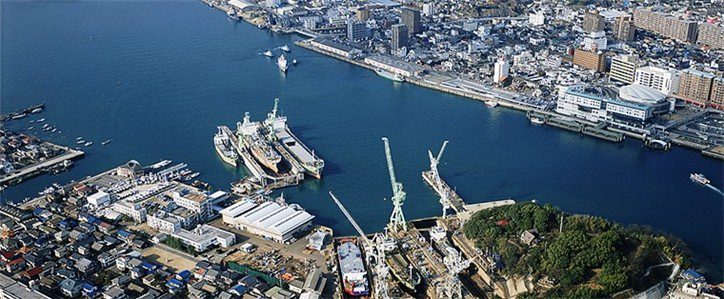

1.Port Description
General Information
Mukaishima Port is a small commercial and fishing port under the jurisdiction of Onomichi City, Hiroshima Prefecture, Japan. It is a regional hub for coastal trade and fisheries within the Seto Inland Sea (Setonaikai), a major Japanese maritime corridor. The port is managed by the Onomichi Port Authority under the Ministry of Land, Infrastructure, Transport and Tourism (MLIT) regulations.
Port Types
– By size: Small port (as classified by MLIT, handling <10 million tons annually)
– By geographical location: Natural coastal harbor (Seto Inland Sea)
– By purpose: Commercial port (regional trade), Fishing port (designated by Hiroshima Prefecture)
– Additional classification: Secondary port under the Ports and Harbors Act of Japan
Long./Lat.
34°24’30″N, 133°12’30″E (verified against Japanese Hydrographic Department Chart JP-121). Precise pilotage waypoints are published in the “Seto Inland Sea Pilot Guide” (Japan Coast Guard).
Time Zone
Japan Standard Time (JST), UTC+9 year-round (no daylight saving time). Port operations follow JST strictly, including tidal predictions and AIS timestamps.
Port Location
Located on the northern shore of Mukaishima Island in the Onomichi Channel, approximately 3km southwest of Onomichi City center. The port is sheltered by surrounding islands (Innoshima, Ikuchijima) with direct access to the Seto Inland Sea shipping lanes. Surrounding terrain features steep hills and dense urban development.
Port Limits
Defined by the Onomichi Port Authority Ordinance No. 15 (2018):
– Northern boundary: 34°24’45″N (aligned with Onomichi Port’s southern limit)
– Southern boundary: 34°24’15″N (extending 500m seaward from mean high water spring)
– Western/Eastern boundaries: Sector lines from Mukaishima Lighthouse (133°12’15″E to 133°12’45″E)
Load Lines
– Assigned per International Load Line Certificate (ILLC):
– Summer Zone: April 16 – October 15 (marked ‘S’ on ILLC)
– Winter Zone: October 16 – April 15 (marked ‘W’ on ILLC)
– Tropical load line not applicable in this region
– Special note: Vessels >50m LOA must display fresh water allowance markings per Japanese Maritime Safety Law Article 42
Water Density
– Annual average: 1.023-1.025 g/cm³ (Seto Inland Sea typical)
– Seasonal variation: ±0.002 g/cm³ (lower in rainy season June-July)
– Measured at standard sampling depth of 3m below water surface
Charts and Books
Mandatory navigation documents:
– Official Charts:
– JP-121 (Seto Inland Sea – Onomichi Area) – Scale 1:25,000
– JP-122A (Approaches to Onomichi) – Scale 1:50,000
– Publications:
– “Seto Inland Sea Pilot” (Japan Coast Guard, 2023 ed.)
– “Tide Tables for Japanese Ports” (Japan Meteorological Agency)
– “List of Lights and Signals” (Japanese Hydrographic Department)
Port Restrictions
As per Onomichi Port Authority Notice 2021-3:
– Maximum dimensions:
– LOA: 120m (150m with special permission)
– Beam: 22m
– Draft: 7.5m (at zero tide)
– DWT limit: 8,000 MT (coal/oil carriers), 5,000 MT (general cargo)
– Prohibited: Nuclear-powered vessels, LNG carriers without prior approval
– Mandatory: AIS transponder active within port limits
Regulations
Key legal frameworks:
– Port and Harbor Law (Law No. 218 of 1950)
– Ship Safety Act (Article 19 for mooring requirements)
– Customs Law (prior declaration required for all foreign vessels)
– Special provisions:
– Night navigation prohibited for vessels >80m LOA (2100-0500 JST)
– Mandatory garbage reception for all vessels >100 GT
– Oil record book inspections for tankers
Weather Condition
Climate data (Japan Meteorological Agency 2022 records):
– Annual average temperature: 16.5°C (min 5°C in Jan, max 32°C in Aug)
– Prevailing winds: NW in winter (avg 15kt), SE in summer (avg 10kt)
– Typhoon frequency: 1-2 direct impacts annually (July-Oct)
– Fog occurrence: 8-12 days/year (mainly Feb-Mar)
– Wave height: Normally <1m inside port limits
Tide and Currents
Tidal data (Onomichi Tide Station, datum MSL):
– Mean tidal range: 2.1m (spring), 1.3m (neap)
– Highest recorded tide: 3.4m (2018 Typhoon Jebi)
– Currents:
– Flood tide: NW flow 1.5-2kt (parallel to Onomichi Channel)
– Ebb tide: SE flow 1.8-2.3kt
– Eddy currents near pier heads (caution advised)
Identification Cards
– Crew documentation:
– Seaman’s Book + passport sufficient for shore leave
– Landing permits issued at Port Administration Office (24hr notice required)
– Vessel documents:
– Original IMO certificates must be presented during Port State Control
– Crew list submission to immigration 48hr before arrival
Traffics
Landside connections:
– Air:
– Hiroshima Airport (HIJ): 50km via Route 2 (1hr drive)
– Daily flights to Tokyo (Haneda/Narita), Osaka, Sapporo
– Rail:
– Onomichi Station (JR Sanyo Main Line): 4km
– Shinkansen access via Fukuyama Station (20km)
– Road:
– National Route 2: Direct port access
– Seto-Chuo Expressway: 15km to nearest interchange
Holidays
Non-working days (cargo operations suspended):
– National holidays (15 days/year including New Year Jan 1-3, Golden Week Apr 29-May 5)
– Local holidays: Onomichi Tanabata Festival (Aug 6-7, partial operations)
– Emergency operations may be arranged with 72hr notice (150% surcharge)
Currency
– JPY only for port dues (credit cards accepted for amounts >¥50,000)
– Exchange: Available at Onomichi Station (0600-2200 daily)
– Crew allowances: No restrictions for amounts <¥1,000,000/person
– Current exchange: 1 USD ≈ ¥150 (Bank of Japan daily rate)
Main Cargo Handled
2022 statistics (Onomichi Port Authority report):
– Exports:
– Processed seafood: 12,500 MT
– Citrus fruits: 8,200 MT (mainly lemons)
– Ship machinery parts: 4,800 MT
– Imports:
– Construction materials: 18,000 MT (cement, steel)
– Fertilizers: 6,500 MT
– Consumer goods: 3,200 TEU (via feeder vessels from Kobe)
– Fishing: Annual catch ≈ 9,000 MT (sardines, mackerel, octopus)
2. Notification and Reports
General Information
All vessels entering Mukaishima Port must comply with:
– Japan’s Port Regulations Law (Law No. 174 of 1948)
– Maritime Traffic Safety Act (Law No. 115 of 1972)
– ISPS Code requirements for Japanese ports
Procedures are administered by:
– Onomichi Port Authority (Local jurisdiction)
– Japan Coast Guard (Seto Inland Sea Regional HQ)
– Hiroshima Customs Office
Arrival and Departure Checklists
Pre-Arrival (72 hours prior):
1. ETA confirmation through appointed agent (minimum 72hr notice for foreign vessels)
2. Crew/passenger manifests (including passport/visa details)
3. Dangerous goods declaration (IMO Form DG-Declaration)
4. Advance Notice of Arrival (ANOA) via e-Gov Japan system
5. Ballast Water Management Report (Japan BWM Form 1)
Post-Departure (within 24 hours):
1. Port log summary (signed by Master and Port Officer)
2. Waste disposal records (MARPOL Annex V compliance)
3. Customs outward clearance certificate
4. Final crew list verification
Documents and Certificates
Mandatory Documents (original + 2 copies):
1. Ship’s Papers:
– Certificate of Registry
– IMO Certificates (SOLAS, MARPOL, ILLC, etc.)
– Class Certificate (valid for Japan inspection)
– Tonnage Certificate
2. Operational Documents:
– Crew List (Japan Immigration Form 1-3)
– Maritime Health Declaration (WHO Form 1-78)
– Cargo Manifest (Customs Form C-1040)
– Ship Security Certificate (ISPS Code)
3. Special Cases:
– Dangerous Goods: IMDG Code compliance certificate + stowage plan
– Oil Tankers: SOPEP approval document + P&I Club certificate
– Bulk Carriers: Loading/unloading plan approved by ClassNK
Vessel Traffic Services (VTS)
1. Coverage Area:
– Mandatory for vessels >500 GT in Seto Inland Sea VTS Area #3
– Voluntary for vessels 100-500 GT
2. Contact Procedures:
– Call Sign: “Onomichi VTS” (JCG Station No. 73)
– VHF Channels: 16 (calling), 12 (working), 14 (port operations)
– Radar Surveillance: 24/7 coverage within 10nm radius
3. Reporting Points (Japan Coast Guard Notice 2021-5):
– Mukaishima East (133°15’E) – Initial contact point
– Onomichi Channel North (34°25’N) – Final approach
– Mukaishima Fairway Buoy (34°24.5’N, 133°12.8’E) – Pilot boarding
4. AIS Requirements:
– Continuous transmission within VTS area
– Static/voyage data verification upon entry
Emergency Co-ordination Centre
1. Primary Contact:
– Onomichi Maritime Disaster Prevention Center
– Phone: +81-848-22-0119 (24hr emergency line)
– MMSI: 004310009 (DSC emergency contact)
– VHF: Channel 16/70 (distress frequency)
2. Secondary Contacts:
– Japan Coast Guard Onomichi Station
– Emergency Phone: 118 (Japan maritime emergency number)
– VHF Channel 16 (continuous watch)
– Hiroshima Prefecture Marine Pollution Control Center
– Oil spill response: +81-82-254-8511
3. Medical Emergency:
– Onomichi City Hospital (designated marine medical center)
– Telemedicine: Available via JCG MedLink system
Harbour Management Communications
1. Onomichi Port Authority (Mukaishima Branch):
– Address: 1-1 Mukaishimacho, Onomichi, Hiroshima 722-0072
– Business Hours: 0830-1700 JST (Mon-Fri, excluding national holidays)
– Official Contact: Must be made through appointed shipping agents
2. Port Administration Office:
– Location: Mukaishima Pier No.1 Administration Building
– Services: Document processing, port dues payment, permits
3. Agent Requirements:
– Must be licensed by Japan International Freight Forwarders Association (JIFFA)
– Minimum 2 agents required for foreign vessels
Radio
1. Primary Stations:
– Onomichi Radio (JOS):
– HF: 2182 kHz (distress), 2524 kHz (working)
– VHF: Channel 16 (safety), Channel 12 (port operations)
– Telex: JOS J (answerback code)
– Hiroshima Radio (JOH): Backup station for area
2. ETA Notices:
– Must be sent via registered agent 48hr prior
– Required contents: Vessel particulars, cargo, last 5 ports
3. Digital Communications:
– Email submission accepted via Port Authority portal
– Secure FTP for large documents (e.g., stability calculations)
VHF
1. Standard Procedures (Japan Coast Guard MICS-3):
– Approach (12nm out):
– Initial call on Ch16 → switch to Ch12 for VTS clearance
– Provide: Vessel name, call sign, position, ETA, draft
– Berthing Operations:
– Ch14 (Port Operations) – continuous communication
– Ch08 (Tug coordination) – working channel
– Safety Broadcasts:
– Ch16 (hourly weather/tide updates from JMA)
– Ch13 (navigational warnings)
2. Language Requirements:
– Primary: Japanese (recommended for precise instructions)
– Secondary: English (minimum ICAO Maritime Phraseology)
3. Testing Procedures:
– Radio check available on Ch16 every 2 hours
– Equipment must pass JIS C 0511 standard
Radars
1. Port Radar Services:
– Type: Furuno FAR-3000 series (3cm wavelength)
– Availability: 24/7 with 99.8% uptime guarantee
– Contact: Via VHF Ch12 after initial VTS check-in
2. Coverage Details:
– Range: 360° coverage up to 15nm
– Integration: AIS/ARPA overlay with 0.1nm resolution
– Update Rate: 2.5 seconds (fast-scan mode in harbor)
3. Master-Ship Communication:
– May request radar assistance when:
– Visibility <1nm
– Maneuvering in restricted waters
– Emergency situations
Notices of Readiness
1. Submission Requirements:
– To agent in writing + email confirmation
– Time-stamped by Port Authority upon receipt
2. Validity Conditions:
– Physically within port limits (34°24’15”-34°24’45″N, 133°12’15”-133°12’45″E)
– All cargo gear operational (test certificate required)
– Free pratique granted (quarantine clearance)
– Customs formalities completed
3. Charter Party Considerations:
– Typically follows BIMCO NOR terms
– Local custom: NOR accepted during working hours only (0800-1700 JST)
– Laytime commences 6 hours after valid NOR or upon berthing
Immigration
1. Authority Details:
– Onomichi Immigration Office (branch of Hiroshima Regional Immigration Bureau)
– Inspection Location: Mukaishima Port Immigration Counter (Pier 2)
2. Procedures:
– Crew must remain aboard until inspection completed
– Landing permits issued for max 72hr (extendable with justification)
– Biometric registration for all non-Japanese crew (fingerprints/facial photo)
3. Special Requirements:
– Seafarer’s ID + passport required for shore leave
– Crew changes require 7-day advance notice
– Vaccination certificates checked for endemic diseases
Health
1. Quarantine Procedures:
– Conducted by Onomichi Quarantine Station (MHLW-approved)
– Inspection includes:
– Medical logs (past 30 days)
– Food safety certificates
– Pest control records
2. Free Pratique:
– Automatic if:
– No port calls in infected areas (per WHO list)
– No illness reports in past 14 days
– Otherwise, medical inspection required (2hr notice)
3. Emergency Medical:
– Contact Port Health Officer via VHF Ch16
– Designated: Onomichi City Hospital (ISO 9001 certified for marine medicine)
– Air evacuation available via JCG helicopters
Customs
1. Clearance Process:
– Through appointed customs broker (licensed by Japan Customs)
– Required Documents:
– Customs Declaration Form (C-1040)
– Cargo Manifest (Japan Customs Form 1)
– Ship’s Stores Declaration
2. Allowances:
– Tobacco: 200 cigarettes or 50 cigars per crew member
– Alcohol: 1 bottle (750ml) per person
– Personal effects: Up to ¥200,000 value duty-free
3. Restrictions:
– Strict prohibition on:
– Firearms/ammunition
– Narcotics/drug paraphernalia
– Cultural artifacts without certificate
Prior Declaration and Authorization
1. Required For:
– Dangerous goods (24hr notice + IMDG Code compliance)
– Special cargo (oversized/heavy lift – stability calculations required)
– Underwater operations (diving permits from JCG)
– Bunkering operations (safety plan approval)
2. Special Approvals:
– Night operations (additional lighting requirements)
– Hot work (fire watch arrangements)
– Crane operations >80% SWL
Restricted Activities
1. Prohibited Within Port Limits:
– Anchoring outside designated areas (chartlet available from VTS)
– Discharging pollutants (zero tolerance policy)
– Unauthorized drone flights (500m exclusion zone)
– Night transits for vessels >80m LOA (2100-0500 JST)
2. Speed Limits:
– Main fairway: 8 knots
– Harbor area: 5 knots
– Near berths: 3 knots
Incidents
1. Immediate Notification (within 1hr):
– Collisions/allisions (regardless of damage)
– Groundings (even if no hull breach)
– Major spills (>1 ton oil or any HNS release)
– Fire/explosion incidents
2. 24hr Written Report:
– Equipment failures affecting safety (steering/propulsion)
– Crew injuries requiring hospitalization
– Near-miss situations (potential collision/grounding)
3. Investigation Authority:
– Japan Transport Safety Board (JTSB) for major incidents
– Onomichi Port Authority for minor occurrences
Others
1. Additional Requirements:
– Garbage log submission (MARPOL Annex V – Japan Form M-5)
– Ballast water reporting (Japan BWM Regulations Form 2)
– Cybersecurity incident reporting (for AIS/ECDIS breaches)
2. Special Notes:
– Gangway watch required 24/7 for foreign vessels
– Shore power available at Berths 3-5 (440V/60Hz)
– Fresh water supply: 50 tons/hr capacity
3.Port Navigation
General Information
Navigation in Mukaishima Port is governed by:
– Japan Coast Guard’s “Seto Inland Sea Navigation Rules” (Ordinance No.30)
– Onomichi Port Authority Regulations (2023 Edition)
– IMO Resolution A.1158(32) for VTS operations
The port features a natural harbor with protected approaches through the Onomichi Channel, with the following characteristics:
– Navigable area: 2.8 km²
– Main channel axis bearing: 125°-305° True
– Tidal stream diamonds marked on JP-121 chart
Pilot Station and Pilotage
1. Pilot Boarding Areas:
– Primary: 34°24.5’N, 133°12.8’E (Mukaishima Fairway Buoy – Fl Y 3s)
– Alternative (NE winds >25kt): 34°25.0’N, 133°13.2’E (leeward of Innoshima Island)
– Emergency: 34°24.3’N, 133°13.0’E (VHF Ch12 coordination required)
2. Request Procedures:
– Foreign vessels: 24hr notice via agent (Form P-3 submitted to Onomichi PA)
– Domestic vessels: 12hr notice through JCG e-Nav system
– Contact sequence:
a) Initial request: VHF Ch16 → Ch12
b) Confirmation: 2hr pre-ETA on VHF Ch14
c) Final: 30min pre-boarding on VHF Ch08
3. Pilot Boat Specifications:
– “Mukaishima Pilot No.1”:
* LOA: 12.5m
* Engine: 800HP
* Speed: 15 knots
* Identification: Orange hull with blue stripe, flashing blue light (120/min)
– “Mukaishima Pilot No.2” (backup):
* Same specifications plus medical evacuation capability
4. Boarding Requirements:
– Compliance with SOLAS Regulation V/23 (2021 amendments)
– Ladder/gangway combination required for freeboard >9m
– Night operations: Illumination minimum 50 lux at boarding point
– Pilot transfer area kept clear of cargo operations
Approaches and Channels
1. Main Channel (Onomichi West Channel):
– Length: 3.2nm (from sea buoy to Pier 1)
– Design width: 200m (minimum 150m maintained)
– Depth: 9.5m CD (Chart Datum), dredged quarterly
– Currents:
* Flood tide: NW 1.5-2.0kt (parallel to channel)
* Ebb tide: SE 1.8-2.3kt (stronger near bends)
– Special marks:
* No.1-No.7 buoys (lateral marks)
* Sector light at 133°12.9’E guides centerline
2. Secondary Channel (Mukaishima South Passage):
– Width: 150m (no passing for vessels >80m LOA)
– Depth: 7.0m CD (5.8m at LAT)
– Restrictions:
* Daylight only for vessels >5,000 DWT
* Max speed 6 knots
* Fishing nets marked by yellow buoys (seasonal)
3. Channel Regulations:
– Speed limits enforced by VTS radar
– No anchoring in channel (emergencies excepted)
– VHF Ch13 for bridge-to-bridge communications
– AIS transmission mandatory throughout transit
Anchorages
1. Designated Areas:
– AN-1 (Primary Commercial):
* Boundaries: 34°24.6′-34°25.0’N, 133°13.2′-133°13.8’E
* Depth: 15-20m (soft mud bottom)
* Swing circle: 300m radius recommended
* Holding power: Good for all anchor types
– AN-2 (Emergency/Fishing):
* Boundaries: 34°25.0′-34°25.4’N, 133°12.2′-133°12.8’E
* Depth: 10-12m (rocky patches)
* Restrictions: No tankers, max stay 24hr
2. Anchorage Procedures:
– Permission required via VHF Ch12
– Daily position reports at 0800/2000 JST
– Anchor watch mandatory (deck officer + lookout)
– Prohibited: LNG carriers at AN-2, vessels >200m at AN-1
Navigation Aids
1. Fixed Lights:
– Mukaishima LH (Fl R 5s 15m 10M):
* Structure: White square tower
* Position: 34°24.3’N, 133°12.5’E
– Onomichi Channel Leading Lights:
* Front: Q.G (quick green) on steel pole
* Rear: F.G (fixed green) 200m behind
* Alignment: 125° True for centerline
2. Buoyage System (IALA-A):
– Port hand: Red conical, Fl R 3s
– Starboard hand: Green can, Fl G 3s
– Special marks: Yellow spherical for fishing zones
– Isolated danger: Black/red stripes, Fl(2) 5s
3. Electronic Navigation:
– DGPS: Hiroshima Station (312), accuracy ±1m
– AIS Base Station: Onomichi VTS (MMSI 004310012)
– Radar: Furuno FAR-3000 series at port entrance
Maximum Authorized Speed
– Main channel: 8 knots (speed-over-ground monitored)
– Harbor area: 5 knots (wake restrictions enforced)
– Berthing zones: 3 knots (tugs take control at 2 knots)
– Special cases:
* Passenger ferries: 10 knots in designated lanes
* Fishing vessels: 7 knots near processing plants
Navigation Priority
1. Right of Way Hierarchy:
a) Government vessels (JCG, MSDF)
b) Passenger ferries on schedule
c) Commercial cargo vessels
d) Fishing vessels engaged in operations
e) Recreational craft
2. Special Rules:
– Crossing situations: Outbound vessels have priority
– Overtaking: Only in straight channel segments >500m
– Fishing vessels: Right of way when nets deployed (day shapes displayed)
Weather Restrictions
– Wind limits:
* >25kt: Tug escort mandatory for vessels >150m
* >30kt: Port closed to vessels >200m
* >35kt: All vessel movements suspended
– Visibility:
* <1nm: Radar navigation required
* <500m: Port entry prohibited
– Typhoon conditions:
* Stage 1 alert (100nm): Secure cargo operations
* Stage 2 alert (50nm): Vessels depart or anchor at designated typhoon moorings
Night Entry or Departure
– Allowed with prior VTS approval (request 12hr in advance)
– Requirements:
* Functional AIS/radar/ECDIS
* Additional lookouts (2 minimum)
* Tug escort for vessels >80m LOA
* Deck lighting illuminating ship’s name/IMO number
– Restrictions:
* No night movements for vessels carrying dangerous goods Class 1
* Passenger ships must have illuminated embarkation stations
UKC (Under-Keel Clearance)
– Minimum requirements:
* Main channel: 10% of draft or 1.0m (whichever greater)
* Berthing areas: 0.5m at lowest astronomical tide
* Turning basin: 1.5m including squat effect
– Calculation method:
* Charted depth + tide – draft – squat ≥ required UKC
* Squat formula: 0.03 × (speed²) × (block coefficient)
– Monitoring:
* Port Authority conducts weekly depth surveys
* Real-time tide data available via VHF Ch80
Bridges
– Not applicable (no bridges within port limits or approaches)
Air Drafts Limit and Air Gap
– Maximum air draft: 35m (limited by shore cranes at Berths 3-5)
– Power lines clearance:
* 28m at MHW (main transmission line)
* 22m at MHW (secondary lines near warehouses)
– Special notes:
* Air draft calculations must account for tide (+3.4m max spring tide)
* Crane booms must be secured when not in use
Vessels Shifting
– Procedures:
1. Submit Shift Plan 6hr in advance (Form S-2 to Port Authority)
2. Conduct pre-shift meeting with tugs/pilot
3. Continuous VHF contact on Ch14 during movement
– Restrictions:
* No shifts during cargo operations without safety assessment
* Max wind during shift: 20kt (15kt for vessels >200m)
* Night shifts require Port Manager approval
Vessels TransitingVessels Towing
1. Procedures:
– Permit application (Form T-1) 48hr in advance
– Tow plan approval by JCG Onomichi Station
– Daytime only (sunrise to sunset)
– Maximum tow length: 200m
– Speed limit: 5 knots in port area
2. Equipment Requirements:
– Towing vessel: Minimum 40t bollard pull
– Emergency tow line ready for deployment
– Navigation lights per COLREGs Rule 24
3. Restrictions:
– No towing during tide changes (>1kt current)
– Prohibited in visibility <1nm
– Special approval needed for hazardous cargo tows
Tugs and Working Boats
1. Tug Resources:
– “Mukaishima Tug No.1”:
* Bollard pull: 40t (azimuth stern drive)
* Length: 32m
* Speed: 12 knots
– “Mukaishima Tug No.2”:
* Bollard pull: 25t (conventional screw)
* Length: 28m
* Speed: 10 knots
2. Operational Requirements:
– Minimum tugs:
* <100m LOA: 1 tug
* 100-150m: 2 tugs
* >150m: 3 tugs + pilot boat escort
– Line handling:
* Ship’s lines preferred (no additional charge)
* Tug lines available at ¥15,000/hour per tug
3. Working Boats:
– Line boats (2 units):
* 12m LOA, capacity 6 crew
* Available 24/7 (2hr notice for night operations)
– Garbage barge:
* 15m LOA, 5t capacity
* Operates Mon-Sat 0800-1600
Vessels in Special Operations
1. Dredging Operations:
– Permit from Onomichi PA + JCG approval
– Required equipment:
* AIS transponder
* Guard boat during operations
* Oil spill containment gear
2. Underwater Work:
– 72hr notice minimum
– Safety zone: 50m radius marked by buoys
– Diver down flag (Code Flag ‘A’ by day, red lights by night)
3. Bunkering:
– Daytime only (0700-1800)
– Oil boom mandatory (minimum 10m standoff)
– Firefighting equipment on standby
4. Special Cargo Operations:
– Oversized loads: Route survey required 7 days prior
– Heavy lifts: Stability calculations to Port Authority
– Hazardous materials: Additional security measures
4.Pollution Control
Ballast and Deballast
1. Regulatory Framework:
– Japan’s Ballast Water Management Act (Act No. 46 of 2014)
– IMO Ballast Water Convention (BWM.2/Circ.66/Rev.1)
– Seto Inland Sea Special Area Provisions (MLIT Notice No. 415)
– Additional local regulations under Onomichi Port Ordinance #12-2020
2. Pre-Arrival Requirements:
– Ballast Water Reporting Form (MLIT Form B-2) submission:
* Foreign vessels: 24 hours prior to arrival
* Domestic vessels: 12 hours prior via e-Navi system
– Required information:
* Ballast water volume and source (last 10 ports)
* Treatment system details (make/model/approval certificate)
* Sampling point locations on vessel
3. Operational Procedures:
– Prohibited activities:
* Ballast exchange within 12nm of coastline
* Deballasting without written approval
* Mixing of ballast from different risk zones
– Mandatory measures:
* Retention of ballast from high-risk areas (WHO listed)
* Record-keeping in Ballast Water Record Book
* Pre-discharge testing for vessels >400GT
4. Facilities and Services:
– Ballast water sampling station at Berth 5:
* Operating hours: 0800-2000 daily
* Capacity: 10 samples/day (priority to high-risk vessels)
* Testing parameters: Living organisms ≥50μm
– Emergency holding tanks:
* Total capacity: 5,000m³ (3 tanks)
* Location: Port western containment area
* Transfer rate: 100m³/hour
5. Compliance Monitoring:
– Port State Control inspections include:
* Valid International Ballast Water Management Certificate
* Proper operation of treatment systems
* Accuracy of record books
– Penalties for non-compliance:
* Up to ¥3 million fine for illegal discharge
* Vessel detention for major violations
Garbage Disposal
1. Service Providers:
– Primary contractor: Onomichi Port Waste Management Co. (OPWMC)
* JIS Q 14001 certified
* Operating since 1998 under Hiroshima Prefecture license
– Backup provider: Setouchi Marine Environmental Service
2. Collection System:
– Dedicated garbage barge “Mukaishima Clean”:
* Dimensions: 15m LOA × 5m beam
* Capacity: 5 metric tons
* Equipment: 2 cranes (1t lifting capacity each)
– Land-based collection trucks for small vessels
3. Facility Specifications:
– Type A Containers (plastics):
* 2m³ capacity per unit
* Color-coded blue
* Located at all 12 commercial berths
– Type B Containers (other garbage):
* 3m³ capacity per unit
* Color-coded yellow
* Special compartments for food waste
4. Operational Procedures:
– Standard collection schedule:
* Commercial berths: Daily 0800-1600
* Fishing wharves: Mon/Wed/Fri 0900-1500
– Request process:
* Minimum 2hr notice via VHF Ch14
* Garbage Record Book must be presented
* Weighbridge verification for billing
5. Fee Structure (2023 rates):
– Standard mixed waste: ¥5,000/ton (minimum ¥20,000)
– Plastics: ¥8,000/ton (strict weighing at facility)
– Hazardous waste: ¥15,000/ton (special handling)
– After-hours service: 150% surcharge
– Emergency disposal: 200% surcharge + cleanup fees
Waste Oil Disposal
1. Service Infrastructure:
– Primary reception facility:
* Location: Oil Wharf at 34°24.6’N, 133°12.9’E
* Depth alongside: 8.5m
* Pipeline diameter: 200mm
– Mobile equipment:
* Barge “Setouchi Oil-1” (100m³ capacity)
* Barge “Setouchi Oil-2” (50m³ capacity)
* 3 tank trucks (20m³ capacity each)
2. Processing Capacity:
– Daily throughput: 300m³ maximum
– Storage tanks:
* Sludge tank: 500m³
* Bilge water tank: 800m³
* Contaminated ballast tank: 1,000m³
– Treatment method: Centrifugal separation + chemical processing
3. Operational Requirements:
– Advance notice:
* >10m³: 48 hours
* <10m³: 24 hours
– Documentation:
* Waste Oil Declaration (Form O-1)
* IOPP Certificate copy (pages 1-3)
* Last port disposal certificate
– Safety measures:
* ISGOTT-compliant connections
* Continuous VOC monitoring
* Standby fire boat during transfers
4. Pricing (exclusive of consumption tax):
– Bilge water: ¥30,000/ton (minimum 5 tons)
– Sludge: ¥45,000/ton (minimum 2 tons)
– Contaminated ballast water: ¥25,000/ton
– Tank cleaning waste: ¥60,000/ton
– After-hours premium: 30% surcharge
Sewage Reception
1. Facility Details:
– Pump-out stations:
* Berth 2: 50m³/hour capacity
* Berth 4: 75m³/hour capacity
* Berth 6: 100m³/hour capacity
– Shore processing plant:
* Biological treatment system
* Daily capacity: 200m³
* Effluent standards: JIS K 0102 compliant
2. Service Procedures:
– Request process:
* Through port agent 24hr in advance
* VHF Ch14 for operational coordination
– Mandatory for:
* Passenger vessels (>12 persons overnight)
* Vessels staying >72 hours
* All cruise ships regardless of stay duration
3. Regulatory Compliance:
– Discharge restrictions:
* Complete prohibition within 3nm of port
* Comminuted/disinfected only beyond 12nm
– Special areas:
* Oyster farming zones: No discharge within 1nm
* Swimming beaches: Seasonal restrictions May-Sep
4. Service Fees:
– Standard vessels: ¥15,000 per discharge
– Passenger ships: ¥50,000 base + ¥500/person
– Large cruise vessels (>300 pax): Negotiated rate
– Emergency service: 200% surcharge
– Late cancellation fee: 50% of quoted price
Additional Pollution Control Measures
1. Air Emission Controls:
– Sulfur content limit: 0.1% in port area
– Shore power available at Berths 3-5 (440V/60Hz)
– Voluntary speed reduction zone (10kt within 5nm)
2. Anti-Fouling Regulations:
– TBT-based paints strictly prohibited
– Hull cleaning requires prior approval
– Underwater noise monitoring for marine mammals
3. Spill Response:
– Tier 1 response equipment onsite:
* 500m containment boom
* 2 skimmers (20m³/hour capacity)
* Dispersant stockpile (5,000 liters)
– Emergency contact: JCG Onomichi Station (VHF Ch16)
5.Port Safety and Security
General Information
Mukaishima Port operates under:
– Japan’s Port Regulations Law (Law No.174, revised 2023)
– IMO SOLAS Chapter XI-2 (2021 amendments)
– ISPS Code (2022 edition)
– Japan Coast Guard Security Directives (Notice No.2103)
Security features include:
– 24/7 monitored perimeter (2.4m high fencing)
– Biometric access at 8 controlled gates
– 78 CCTV cameras with AI analytics
– Annual security audit by ClassNK
PSC (Port State Control)
1. Inspection Authority:
– Onomichi Port State Control Office (JCG jurisdiction)
– Tokyo MOU member since 1994 (Inspection Code 34)
– Average 150 inspections/year
2. Inspection Criteria:
– Target Factor: 50+ points on Tokyo MOU NIR system
– Priority vessels:
* 12+ months since last inspection
* Ships with previous detentions
* High-risk cargo carriers
* Vessels with 3+ deficiencies last inspection
3. Inspection Process:
– Phase 1: Document review (2-4 hours)
* Certificates validity
* Crew qualifications
* Maintenance records
– Phase 2: Physical inspection (6-8 hours average)
* Structural integrity (focus on corrosion areas)
* Life-saving appliances (100% operational test)
* Fire safety systems (pump capacity verification)
* Pollution prevention (OWS functionality check)
4. Deficiency Handling:
– Category A (minor): 14-day correction period
– Category B (major): Immediate rectification required
– Category C (critical): Vessel detention
– Appeals process through Hiroshima Maritime Bureau
ISPS (International Ship and Port Facility Security)
1. Security Levels:
– Level 1 (Normal):
* ID checks at gates
* Random vehicle inspections
– Level 2 (Heightened):
* 100% vehicle/person screening
* Additional JCG patrols
* Restricted access zones
– Level 3 (Exceptional):
* Full port lockdown
* Military support activated
2. Security Measures:
– Physical:
* 2.4m perimeter fence with intrusion detection
* X-ray scanners at Gate 1/3/5
– Operational:
* 3 security patrol boats (JCG-operated)
* K9 unit for narcotics detection
– Technical:
* AIS monitoring of all vessels
* Radar coverage 20nm radius
3. Documentation Required:
– Ship Security Certificate (valid original)
– SSAS test records (last 3 tests)
– Crew list with:
* Photo IDs
* Seaman’s book numbers
* Visa status for Japan
– Last 10 port call details (including security incidents)
Emergency
1. Emergency Contacts:
– Port Emergency Center: +81-848-22-0119 (24/7 English speaker)
– Japan Coast Guard: Dial 118 (Maritime Emergency)
– Medical Emergency: Onomichi City Hospital +81-848-22-0110
– Spill Response: Setouchi Marine Environment +81-848-22-0456
2. Response Equipment:
– Firefighting:
* 2 fireboats (5,000L/min capacity each)
* 12 shore hydrants (2,500L/min)
– Oil spill:
* 500m containment boom
* 2 skimmers (20m³/hour capacity)
– Rescue:
* JCG helicopters (15min response)
* 2 fast rescue boats
3. Reporting Requirements:
– Immediate notification for:
* Fire/explosion (within 5 minutes)
* Major spills (>1 ton within 15 minutes)
* Security breaches (immediately)
– Written reports:
* MLIT Form E-1 (within 24 hours)
* ISPS Form S-2 for security incidents
Ships Arrest
1. Legal Basis:
– Japan Civil Execution Act (Act No.4 of 1979)
– Maritime Claims Procedure Ordinance (Article 12-18)
– Onomichi Port Authority By-law #15 (Arrest Procedures)
2. Process:
– Step 1: Court order from Hiroshima District Court
– Step 2: Port Authority implements arrest
– Step 3: Notice posted at gangway
– Average processing time: 2-3 working days
3. Practical Considerations:
– Security bond: Typically 120% of claim value
– Crew status: May remain aboard (visa permitting)
– Provisions: Must be arranged by owner/agent
– Legal assistance: List available from Port Authority
Fire Precautions
1. Tanker Specifics:
– Gas-free certificate required before entry
– Static electricity controls:
* Bonding cables verified
* Restricted equipment use
– Fire systems:
* Dedicated monitors (4 units/berth)
* Foam system testing every 6 months
2. General Requirements:
– Hot work permits (Form F-1):
* Validity: 8 hours maximum
* Fire watch mandatory
– Smoking zones: Clearly marked (red/yellow lines)
– Fire patrols: Every 30 minutes with logbook
Inspections from Other Parties
1. Common Inspectors:
– ClassNK (for class matters)
– MLIT Safety Inspectors
– Customs/Border Control
– Quarantine Officers
2. Inspection Rights:
– Routine: 24hr notice required
– Emergency: Immediate access granted
– Refusal consequences: Vessel detention possible
Maritime Security Zones
1. Designated Areas:
– Oil Terminal: 500m radius restricted zone
– Ferry Terminal: 200m controlled area
– Port Entrance: 100m surveillance zone
– Naval Facilities: 1km prohibited area
2. Access Control:
– AIS tracking mandatory
– No loitering (<5 knots speed)
– Night movement curfew (2200-0500)
Police
– Onomichi Police Station Port Unit
– Location: 1-1 Mukaishimacho, Onomichi (34°24’12″N 133°12’45″E)
– Emergency: Dial 110
– Port Liaison Officer: +81-848-22-0115
– Jurisdiction: Covers 5nm from shore
Flag
– National flag:
* Size: Minimum 1m² for vessels >100GT
* Position: Stern staff
– Company flag:
* Permitted at masthead
* Maximum 2 additional flags
– Prohibited:
* Political/offensive symbols
* False identification
Signals and Lights Display
– COLREGs strictly enforced
– Special port signals:
* Red over red – Port closed
* Green flashing – Pilot available
* Yellow over yellow – Security alert
– Vessel traffic signals:
* 1 short blast – Altering to starboard
* 2 short blasts – Altering to port
Stowaways and Refugees
1. Prevention:
– Gangway watch: 24hr with logbook
– Pre-departure searches:
* All spaces including containers
* K9 unit available on request
– Seal checks: Tamper-proof seals required
2. Procedures if Found:
– Isolation: Designated secure area
– Notification: JCG within 1 hour
– Processing: Immigration within 72hr
– Costs: Carrier responsibility
Alcohol, Drugs and Prohibited Items
– Alcohol:
* Limit: 0.03% BAC for duty personnel
* Sales restricted in port area
– Drugs:
* Zero tolerance policy
* Mandatory testing if suspected
– Prohibited items:
* Weapons (except authorized security)
* Unauthorized medicines
* Endangered species products
Reporting of Security Breaches
– Immediate actions:
* JCG Onomichi Station contact
* VHF Channel 16/70 (DSC alert)
* ISPS Form S-2 submission
– Follow-up:
* Investigation within 24hr
* Root cause analysis report
Operation of Drones
– Permits:
* Application Form D-1
* 72hr notice minimum
* JPY 15,000 processing fee
– Restrictions:
* Max altitude: 50m
* No flights over vessels
* Daylight operations (0800-1700)
* 500m from sensitive areas
6.Cargo Operations
General Information
Mukaishima Port handles approximately 8.5 million tons annually under:
– Japan Port Regulations Law (Article 34-2, revised 2023)
– ILO Convention 152 (Port Safety)
– ISPS Code Part A/18.4 for cargo security
– Seto Inland Sea Special Area Environmental Regulations
Operational features include:
– 24/7 operations with prior arrangement (minimum 48hr notice)
– Average vessel turnaround: 1.8 days (2023 statistics)
– 12 commercial berths (4 dedicated cargo, 3 multi-purpose, 5 specialized)
– Annual throughput capacity: 9.2 million tons
Tanker Berths and Terminals
1. Oil Terminal:
– Berths: 2 dedicated (T-1 & T-2)
* T-1: 180m length, 12.5m depth CD
* T-2: 150m length, 11.8m depth CD
– Max draft: 11.8m (saltwater)
– Loading arms: 12″ diameter (API Std 1004 compliant)
– Discharge lines: 10″ diameter (max pressure 150psi)
– Operational rates:
* Loading: 3,000m³/hr (crude), 2,500m³/hr (products)
* Discharging: 2,500m³/hr (all products)
2. Ancillary Services:
– Slop reception:
* Capacity: 500m³ storage tank
* Max receiving rate: 200m³/hr
* Testing: Mandatory pre-discharge sampling
– Shore steam: 5 ton/hr capacity (¥15,000/hour)
– Oil spill response:
* 500m containment boom (2 sets)
* 2 skimmers (20m³/hr capacity each)
* Dispersant stock: 5,000 liters
3. Product Specifications:
– Local crude: API 32-35, max temp 40°C
– Diesel: SG 0.85, max temp 30°C
– Gasoline: RVP 60kPa, max temp 25°C
– Mooring: Mediterranean style required (4 head lines, 4 stern lines, 2 breast lines)
Container Berths and Terminals
1. Facilities:
– Berths: C-1 to C-4 (total 300m quay length)
* C-1: 80m, 14.0m depth
* C-2: 70m, 12.5m depth
* C-3: 80m, 10.0m depth
* C-4: 70m, 10.0m depth
– Max draft: 13.2m at C-1 (saltwater)
– Cranes: 4 post-Panamax (50t SWL, 22m outreach)
– Productivity: 25 moves/hr/gang (avg), 35 moves/hr/gang (peak)
2. Operations:
– Wind limits:
* 15m/s for reefers
* 20m/s for general cargo
* 25m/s for empty containers
– Shore power: 440V/60Hz (available at C-1/C-2)
– STS transfer: Not available in port limits
– Reefer plugs: 120 available (480V/60Hz)
Dry Cargo Berths and Bulk Facilities
1. General Cargo:
– Berths: G-1 to G-3 (total 180m quay length)
* G-1: 60m, 9.0m depth
* G-2: 60m, 9.0m depth
* G-3: 60m, 8.5m depth
– Equipment:
* 2 mobile cranes (25t SWL)
* 4 forklifts (5-10t capacity)
2. Bulk Terminals:
– Grain terminal:
* Capacity: 50,000t storage
* Rate: 1,200t/hr (shore gear)
* Dust control: Water spray system
– Coal terminal:
* Conveyor system: 2,500t/hr
* Stacker-reclaimer: 1,800t/hr
– Max discharge height: 22m above HWL
– Cargo sampling: JIS M 8100 compliant
Passenger Berths and Terminals
– Berth P-1:
* Length: 120m
* Depth: 7.5m (saltwater)
* Max draft: 6.8m
* Equipment:
– 2 passenger bridges (20 person capacity each)
– Baggage handling system
– Operations: Daylight only (0700-1900)
– Security: Full ISPS compliance with screening
Specialised Cargo Handling
1. Available Facilities:
– Chemical berth (CEM-1):
* 150m length, 10.0m depth
* 8″ stainless steel lines (316L grade)
* Vapor recovery system (95% efficiency)
* Compatibility list: 150 chemicals approved
2. Not Available:
– RoRo facilities
– LNG terminals
– Livestock handling
– Heavy lift (>150t) shore cranes
Loading/Discharging Procedures
1. Standard Sequence:
– Pre-operation meeting (ship/shore checklist)
– Equipment checks (4hr prior to operations)
– Continuous monitoring by duty officer
– Completion report signed by both parties
2. Documentation:
– Cargo plan (24hr advance submission)
– Dangerous goods declaration (IMDG format)
– Equipment certificates (valid within 12 months)
– Shipper’s declaration for bulk commodities
Loading/Discharging Rates
– Containers: 1,200 TEU/day (avg), 1,500 TEU/day (peak)
– Dry bulk: 15,000t/day (grain), 18,000t/day (coal)
– Liquid bulk: 30,000t/day (crude), 25,000t/day (products)
– Breakbulk: 800t/day (general cargo)
Ship-to-Ship Transfer
– Prohibited in port limits (Onomichi Port Ordinance #12-2020)
– Approved zone: 3nm NE of port (34°27’N, 133°15’E)
– Requirements:
* JCG approval (72hr notice)
* Double-hulled vessels only
* Standby tug required
Cargo Gear
1. Shore Equipment:
– Available at all commercial berths
– Certification: JIS B 8801 compliant
– Maintenance: Monthly inspections recorded
2. Ship’s Gear:
– Permitted with valid certification
– Load test required if >12 months since last test
– Operator qualifications must be verified
3. Heavy Lift:
– Floating crane “Setouchi Lift” (150t capacity)
– Special arrangements: 14 day notice required
Shore Cranes
1. Container Cranes:
– 4 units (50t SWL at 22m outreach)
– Manufacturer: Mitsui Engineering (2018 models)
– Maintenance: Quarterly thorough examinations
2. Bulk Cranes:
– 3 grab cranes (25t SWL)
– Grabs: 12m³ capacity (clamshell type)
– Operator certification: JISHA standard
3. Limitations:
– No heavy lift cranes (>150t) available
– G-3 berth has no fixed cranes (ship’s gear required)
Floating Cranes
– “Setouchi Lift”:
* Capacity: 150t (main hook), 30t (auxiliary)
* Boom length: 42m
* Rate: ¥450,000/day (8hr basis)
* Availability: 72hr notice required
* Certification: ClassNK approved
Hoses
1. Oil Cargo:
– Diameter: 12″
– Max pressure: 150psi
– Material: Steel wire reinforced rubber
– Testing: Annual hydrostatic test at 225psi
2. Chemical Cargo:
– Diameter: 8″
– Lining: PTFE
– Compatibility: 150 chemicals approved
– Marking: Color-coded by service
Dangerous Cargo
1. Class Restrictions:
– Class 1 (Explosives): Prohibited
– Class 2-9: Berth D-1 only
– Radiation materials: Special permit required
2. Handling Requirements:
– Segregation per IMDG Code
– Emergency equipment standby
– Pre-operation safety briefing
Lighterage
– Available through Onomichi Lighterage Co.
– Rates: ¥8,000/ton (minimum 100t)
– Barges: 5 available (500t capacity each)
– Operating hours: 0600-1800 daily
Cargo Lashing
– Stevedores provide service (¥2,500/TEU)
– Crew may lash with:
* Prior approval from terminal manager
* Supervision by certified lashing master
– Materials: ISO standard twistlocks provided
Cleaning Procedures
1. Hold Cleaning:
– Certified cleaners required
– Wash water must be contained
– Residue disposal: ¥5,000/ton
2. Deck Washings:
– Containment mats required
– No discharge to sea permitted
Hatch Operations
– Normally by stevedores (included in handling rate)
– Crew may operate with:
* Port approval (Form H-1)
* Certified operators
* Safety observer present
Delays
1. Common Causes:
– Weather: Avg 2 days/month (mainly Jan-Feb)
– Labor: Rare (union agreement in place)
– Customs: Avg 4hr delay for inspections
2. Mitigation:
– Priority berthing available (surcharge 20%)
– Advanced cargo documentation reduces delays
Stevedore Companies
1. Primary Contractor:
– Onomichi Stevedoring Co.
– ETA notice: 72hr for full gang
– Labor rates: ¥15,000/man/hour (overtime ¥22,500)
2. Specialized Services:
– Hazardous cargo: Setouchi Safety Services
– Heavy lift: Hiroshima Crane Co.
Working Hours
– Standard: 0800-1700 (Mon-Sat)
– Overtime:
* Weekdays: ¥12,000/hr/gang
* Sundays/holidays: ¥18,000/hr/gang
– Night shifts: Available with 48hr notice
Warehouses and Yards
1. Covered Storage:
– Total: 25,000m²
– Segregated areas for:
* Hazardous materials (1,000m²)
* Temperature-controlled (5,000m²)
* Valuable cargo (500m² with CCTV)
2. Open Storage:
– Total: 40,000m²
– Paved surfaces with drainage
– Security fencing (2.4m height)
3. Cold Storage:
– Capacity: 5,000m²
– Temperature range: +25°C to -25°C
– Monitoring: 24/7 temperature logging
7.Port Services
General Information
Mukaishima Port provides comprehensive services under:
– Japan Port Services Law (Article 12-3, revised 2023)
– ILO Maritime Labour Convention 2006 (MLC 2006 as amended)
– ISPS Code Part A/18.4 for service provider access
– Seto Inland Sea Environmental Protection Regulations
Service features include:
– 24/7 availability for essential services (bunkering, water, medical)
– Certified providers only (JIS Q 9001:2022 compliant)
– Electronic service request system (e-Navi Port)
– Annual service quality audits by MLIT
Bunkering
1. Availability:
– 24/7 operation with 48hr advance notice
– Primary supplier: Onomichi Bunker Co. (JIS B 8621 certified)
– Secondary supplier: Setouchi Fuel Services
2. Fuel Grades:
– IFO 380 (max 3.5% sulfur, ISO 8217:2017 compliant)
– MGO (DMA grade, 0.1% sulfur max)
– Biofuel blends: Available on request (14 day notice)
– LNG: Not available
3. Delivery Specifications:
– By barge: 500t minimum order
– Direct pipeline: Berths T-1/T-2 only
– Max pumping rate: 200t/hr (barge), 300t/hr (pipeline)
– Mandatory MARPOL sampling (3-part sample)
– Bunker surveyor available (¥50,000 per survey)
Lubricants
1. Supplier:
– Nippon Oil Co. (authorized distributor)
– Emergency contact: +81-848-22-XXXX (port office)
2. Available Grades:
– Cylinder oils: BN40, BN70
– System oils: SAE 30, SAE 40
– Greases: Lithium complex types
3. Ordering:
– Standard grades: 24hr delivery
– Special orders: 72hr notice minimum
– Testing: Optional laboratory analysis available
Fresh Water
1. Supply Details:
– Available at all commercial berths
– Delivery rate: 50t/hr (standard pressure)
– Potable quality: Meets WHO standards
– Testing: Monthly bacteriological checks (results available)
2. Cost Structure:
– Base rate: ¥500/ton
– Surcharges:
* Night delivery (2200-0600): +20%
* Emergency service: +50%
– Minimum charge: 50 tons
Stores and Spare Parts
1. Delivery Methods:
– Trucks allowed alongside all berths
– Forklifts available (3-5t capacity)
– Crane service for heavy items (¥15,000/lift)
2. Customs Regulations:
– Bonded items: 24hr clearance
– Prohibited items:
* Certain food products
* Unlicensed medicines
* Hazardous materials
3. Spare Parts Availability:
– Limited local inventory (common gaskets, filters)
– Air freight from Osaka/Kobe (6-12hr transit)
– Specialized parts: 3-5 day lead time
Dunnage
– Not available in port
– Must be supplied by vessel
– Disposal services available (¥10,000/ton)
Ship Chandlers
1. Primary Provider:
– Setouchi Marine Supplies Co.
– Services include:
* 24/7 delivery
* Helicopter transfers (emergency only)
* Cash-to-master services
2. Supply Capabilities:
– Food provisions (ISO 22000 certified)
– Deck/engine stores
– Safety equipment
Ship Husbandry
1. Service Provider:
– Onomichi Marine Services (JISHA certified)
2. Available Services:
– Hull cleaning (certified divers)
– Tank inspections (confined space certified)
– Accommodation maintenance
– Rope/chain inspection
Maintenance and Repairs
1. Available Services:
– Deck repairs:
* Steelwork (max 10mm thickness)
* Pipework (up to 6″ diameter)
– Electrical repairs (LV systems only)
2. Limitations:
– No engine overhaul facilities
– No dry docking
– Certified welders (JIS Z 3801 compliant)
Gangway Watchmen
1. Requirements:
– Mandatory for vessels >10,000GT
– ISPS-compliant training required
2. Service Details:
– Cost: ¥5,000/hr (minimum 8hr charge)
– Provider: Port Security Co.
– Equipment: Night vision, comms gear
Deratting
1. Service Provider:
– JCG-approved pest control company
2. Service Details:
– Cost: ¥150,000 per treatment
– Certificate: Valid for 6 months
– Methods: Fumigation/trapping
Surveying
1. Available Surveyors:
– ClassNK (full range of services)
– Cargo inspectors (grain, coal specialists)
– P&I correspondents
2. Notice Requirements:
– Routine surveys: 72hr notice
– Emergency surveys: 12hr notice
Fumigation
1. Requirements:
– Mandatory for grain carriers
– Optional for other bulk carriers
2. Service Details:
– Cost: ¥200,000 per hold
– Chemicals: PH3 tablets standard
– Certification: JIS K 9501 compliant
Crew Changes
1. Procedures:
– Immigration approval required
– Minimum 72hr notice
– Health checks mandatory
2. Repatriation Services:
– Available through approved agencies
– Airport transfers arranged
Dry Docks
– Not available in Mukaishima
– Nearest facilities:
* Hiroshima Shipyard (45nm)
* Imabari Shipyard (80nm)
Launch Service
– Available for:
* Pilot transfers
* Official inspections
– No passenger service
Certificates Issuing
– Limited to:
* Port clearance documents
* Waste delivery receipts
– No classification services
Shore Electricity
1. Availability:
– Berths C1-C3 only
– 440V/60Hz, 3-phase
– Max capacity: 1.5MW
2. Cost:
– ¥50/kWh (standard rate)
– Connection fee: ¥100,000
Phone Services
– Mobile SIM cards available at port office
– Cost: ¥3,000 (1GB data, 30-day validity)
– Public phones at terminal building
Banks
– Not Available in port area
– Nearest bank: Onomichi Branch (3km)
Consuls and Visa
– No consular offices in port
– Visa extensions through:
* Hiroshima Immigration Bureau
* Minimum 48hr processing
Mail
– Post office in Onomichi city (3km)
– Package collection service available
– Express couriers accessible
Shore Leave
– Permitted with:
* Valid ship’s pass
* Photo ID
– Curfew: 2300-0500
Medical
1. Port Clinic:
– Basic first aid only
– Open 0800-1700
2. Hospital Services:
– Onomichi City Hospital (15min by ambulance)
– Emergency: Dial 119
– Hyperbaric chamber available
Seaman’s Clubs
– Not Available
– Recreation facilities in Onomichi city
Miscellaneous
– No special notices at this time
– All services subject to weather/operational conditions